


3 weeks ago
If you set a high value on liberty, you must set a low value on everything else.

4 months 1 week ago
After experience had taught me that all the usual surroundings of social life are vain and futile; seeing that none of the objects of my fears contained in themselves anything either good or bad, except in so far as the mind is affected by them, I finally resolved to inquire whether there might be some real good having power to communicate itself, which would affect the mind singly, to the exclusion of all else: whether, in fact, there might be anything of which the discovery and attainment would enable me to enjoy continuous, supreme, and unending happiness.
▼
Source
source
I, 1
2 weeks ago
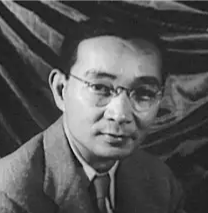
The world I believe is far too serious, and being far too serious, is it has need of a wise and merry philosophy.
▼
Source
source
Ch. I : The Awakening, p. 13

4 months 1 week ago
At present they philosophers seem to be in a very lamentable condition, and such as the poets have given us but a faint notion of in their descriptions of the punishment of Sisyphus and Tantalus. For what can be imagin'd more tormenting, than to seek with eagerness, what for ever flies us; and seek for it in a place, where 'tis impossible it can ever exist?
▼
Source
source
Part 4, Section 3
2 months 2 days ago
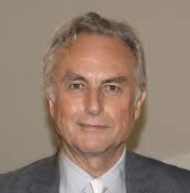
No doubt some of your cousins and great-uncles died in childhood, but not a single one of your ancestors did. Ancestors just don't die young!
▼
Source
source
Ch. 3. Immortal Coils
3 months 6 days ago
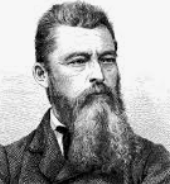
We have busied ourselves and contented ourselves long enough with speaking and writing; now at last we demand that the word become flesh, the spirit matter; we are as sick of political as we are of philosophical idealism; we are determined to become political materialists.
▼
Source
source
Lecture I, Occasion and Context
5 months 1 week ago
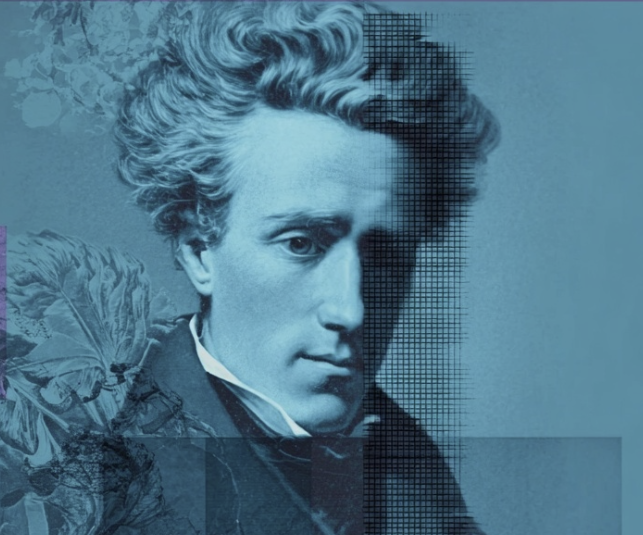
A line by Thomas à Kempis which perhaps could be used as a motto sometime. He says of Paul: Therefore he turned everything over to God, who knows all, and defended himself solely by means of patience and humility . . . . He did defend himself now and then so that the weak would not be offended by his silence.

4 months 1 week ago
The value which the workmen add to the materials, therefore, resolves itself in this case into two parts, of which the one pays their wages, the other the profits of the employer upon the whole stock of materials and wages which he advanced.
▼
Source
source
Chapter VI, p. 58.
4 months 1 week ago
We see in tragedy the noblest men, after a long conflict and suffering, finally renounce forever all the pleasure of life and the aims till then pursued so keenly, or cheerfully and willingly give up life itself.
▼
Source
source
Book 1
2 weeks 3 days ago
Human nature is full of riddles, and one of these riddles is this: How is it that people who have been crushed by the sheer weight of slavery and cast to the bottom of the pit can nevertheless find strength to rise up and free themselves, first in spirit then in body, while those who soar unhampered over the peaks of freedom suddenly appear to lose the taste for freedom, lose the will to defend it, and hopelessly confused and lost almost begin to crave slavery?
▼
Source
source
"Argentina's President Javier Milei Loves Being the Skunk at the Garden Party" (at 47m35s), Honestly with Bari Weiss, 6 June 2024.
1 month 6 days ago
I agree with Paul that love is more important than faith and hope; but so are honesty, integrity, and moral courage. The world needs less faith and more love and nobility.
▼
Source
source
Preface
2 months 4 days ago
Adversity shows whether we have friends, or only the shadows of friends.
▼
Source
source
Maxim 35
4 months 1 week ago
He who seeks equality between unequals seeks an absurdity.
▼
Source
source
Ch. 9, Of Aristocracy, Continuation

2 months 4 days ago
There is absolutely no inevitability, so long as there is a willingness to contemplate what is happening.
▼
Source
source
[A chapter sub-heading attributed by McLuhan to Alfred North Whitehead]

4 months 1 week ago
All mortals are equal; it is not their birth,But virtue itself that makes the difference.
▼
Source
source
Ériphyle Act II, scene I (1732); these lines were also later used in Voltaire's Mahomet, Act I, scene IV (1741)
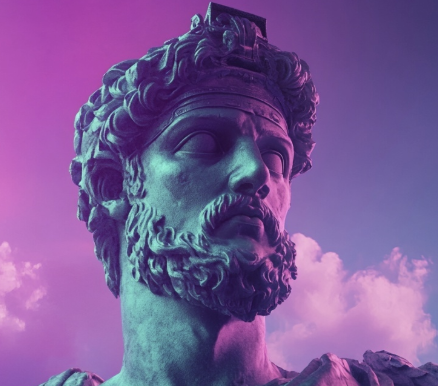
3 days ago
Look within. Within is the fountain of the good, and it will ever bubble up, if thou wilt ever dig.
▼
Source
source
VII, 59

4 months 1 week ago
We do not live for idle amusement. I would not run round a corner to see the world blow up.
▼
Source
source
p. 491
6 days ago
When, in the Course of human events, it becomes necessary for one people to dissolve the political bands which have connected them with another, and to assume among the powers of the earth, the separate and equal station to which the Laws of Nature and of Nature's God entitle them, a decent respect to the opinions of mankind requires that they should declare the causes which impel them to the separation.

4 months 2 days ago
Our language can be seen as an ancient city: a maze of little streets and squares, of old and new houses, and of houses with additions from various periods; and this surrounded by a multitude of new boroughs with straight regular streets and uniform houses.
▼
Source
source
§ 18
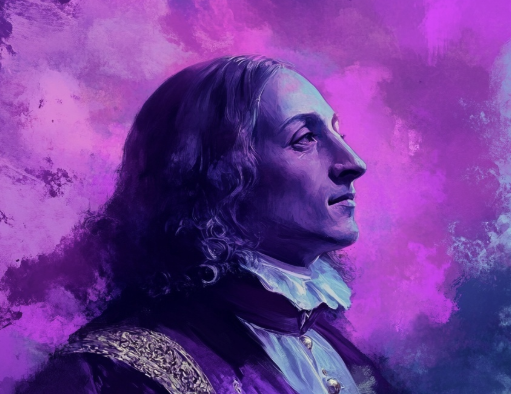
4 months 2 weeks ago
If they have entered into the spirit if these rules, and if the rules have made sufficient impression on them to become rooted and established in their minds, they will feel how much difference there is between what is said here and what a few logicians may perhaps have written by chance approximating to it in a few passages of their works.
2 weeks ago
Love for distance and order, the ability to subordinate one's individualistic and passionate element to principles, the ability to take action and work above mere personhood, a feeling of dignity devoid of vanity are features of the true warrior spirit as essential as those which refer to actual combat.
▼
Source
source
pp. 114-115
2 months 4 weeks ago
What has been shown by Machiavelli, who is often (like Nietzsche) congratulated for tearing off hypocritical masks, brutally revealing the truth, and so on, is not that men profess one thing and do another (although no doubt he shows this too) but that when they assume that the two ideals are compatible, or perhaps are even one and the same ideal, and do not allow this assumption to be questioned, they are guilty of bad faith (as the existentialists call it, or of "false consciousness," to use a Marxist formula) which their actual behavior exhibits. Machiavelli calls the bluff not just of official morality-the hypocrisies of ordinary life-but of one of the foundations of the central Western philosophical tradition, the belief in the ultimate compatibility of all genuine values. His own withers are unwrung. He has made his choice. He seems wholly unworried by, indeed scarcely aware of, parting company with traditional Western morality.
2 weeks 1 day ago
Zeal to do all that is in one's power is, in truth, a proof of piety.
▼
Source
source
Fragment of a Letter to a Priest

3 weeks 6 days ago
No man who has once heartily and wholly laughed can be altogether irreclaimably bad.
▼
Source
source
Bk. I, ch. 4.
2 months 2 days ago
Them that die will be the lucky ones!
▼
Source
source
Ch. 20, Silver's Embassy.

2 months 4 weeks ago
Loren von Stein thus turned the dialectic into an ensemble of objective laws calling for social reform as the adequate solution of all contradictions and neutralized the critical elements of the dialectic.
▼
Source
source
P. 388
5 months 1 week ago
It will be easy for us once we receive the ball of yarn from Ariadne (love) and then go through all the mazes of the labyrinth (life) and kill the monster. But how many are there who plunge into life (the labyrinth) without taking that precaution?
1 week ago
I possess no weapon but love. With that I have come to do battle. Help me!
1 month ago
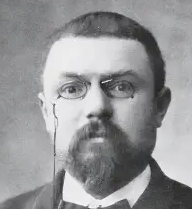
It is the simple hypotheses of which one must be most wary; because these are the ones that have the most chances of passing unnoticed.
▼
Source
source
Thermodynamique: Leçons professées pendant le premier semestre 1888-1889 (1892), Preface
3 months 2 days ago
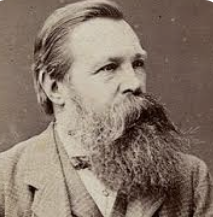
The slave is sold once and for all; the proletarian must sell himself daily and hourly. The individual slave, property of one master, is assured an existence, however miserable it may be, because of the master's interest. The individual proletarian, property as it were of the entire bourgeois class which buys his labor only when someone has need of it, has no secure existence. This existence is assured only to the class as a whole.
2 months 4 days ago
The business of art is no longer the communication of thoughts or feelings which are to be conceptually ordered, but a direct participation in an experience. The whole tendency of modern communication...is towards participation in a process, rather than apprehension of concepts.
▼
Source
source
Letter to Harold Adam Innis (14 March 1951), published in Essential McLuhan (1995), edited by Eric McLuhan and Frank Zingrone, p. 73
6 days ago
The object of walking is to relax the mind. You should therefore not permit yourself even to think while you walk; but divert your attention by the objects surrounding you. Walking is the best possible exercise. Habituate yourself to walk very far. The Europeans value themselves on having subdued the horse to the uses of man; but I doubt whether we have not lost more than we have gained, by the use of this animal. No one has occasioned so much, the degeneracy of the human body. An Indian goes on foot nearly as far in a day, for a long journey, as an enfeebled white does on his horse; and he will tire the best horses. There is no habit you will value so much as that of walking far without fatigue.

4 months 2 weeks ago
Once conform, once do what others do because they do it, and a kind of lethargy steals over all the finer senses of the soul.

4 months 1 week ago
I have learned to seek my happiness by limiting my desires, rather than in attempting to satisfy them.
▼
Source
source
Attributed to John Stuart Mill in The Phrenological Journal and Science of Health, Vol. LXXXV (September 1887), p. 170
3 weeks ago
Our minds must have relaxation: rested, they will rise up better and keener. Just as we must not force fertile fields (for uninterrupted production will quickly exhaust them), so continual labor will break the power of our minds. They will recover their strength, however, after they have had a little freedom and relaxation.
4 months 5 days ago
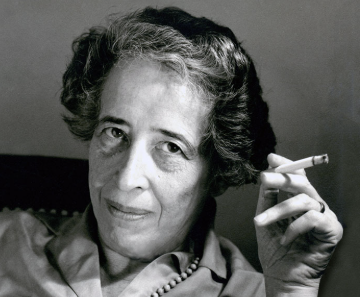
In an ever-changing, incomprehensible world the masses had reached the point where they would, at the same time, believe everything and nothing, think that everything was possible and that nothing was true. [...] under such conditions, one could make people believe the most fantastic statements one day, and trust that if the next day they were given irrefutable proof of their falsehood, they would take refuge in cynicism; instead of deserting the leaders who had lied to them, they would protest that they had known all along that the statement was a lie and would admire the leaders for their superior tactical cleverness.
3 months 4 days ago
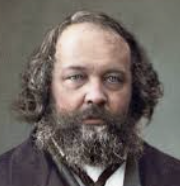
The modern state, in its essence and objectives, is necessarily a military state, and a military state necessarily becomes an aggressive state. If it does not conquer others it will itself be conquered, for the simple reason that wherever force exists, it absolutely must be displayed or put into action. From this again it follows that the modern state must without fail be huge and powerful; that is the indispensable condition for its preservation.
3 weeks 6 days ago
Every pitifulest whipster that walks within a skin has had his head filled with the notion that he is, shall be, or by all human and divine laws ought to be, 'happy.' His wishes, the pitifulest whipster's, are to be fulfilled for him; his days, the pitifulest whipster's, are to flow on in an ever-gentle current of enjoyment, impossible even for the gods. The prophets preach to us, Thou shalt be happy; thou shalt love pleasant things, and find them. The people clamor, Why have we not found pleasant things? ...God's Laws are become a Greatest Happiness Principle. There is no religion; there is no God; man has lost his soul.
▼
Source
source
Bk. III, ch. 4.

4 months 5 days ago
"Ah, Psyche," I said, "have I made you so little happy as that?"
▼
Source
source
Orual

2 months 3 weeks ago
The essence of education is that it be religious. Pray, what is religious education? A religious education is an education which inculcates duty and reverence. Duty arises from our potential control over the course of events. Where attainable knowledge could have changed the issue, ignorance has the guilt of vice. And the foundation of reverence is this perception, that the present holds within itself the complete sum of existence, backwards and forwards, that whole amplitude of time, which is eternity.

1 month 1 week ago
Human beings act, certainly. But none of them knows why they act as they do. There is a scattering of facts, which can be known and reported. Beyond these facts are the stories that are told. Human beings may behave like puppets, but no one is pulling the strings.
▼
Source
source
In The Puppet Theatre: Puppetry, Conspiracy and Ouija Boards (p. 136)


4 months 3 weeks ago
The members of Christ, many though they be, are bound to one another by the ties of charity and peace under the one Head, who is our Saviour Himself, and form one man. Often their voice is heard in the Psalms as the voice of one man; the cry of one is as the cry of all, for all are one in One.
▼
Source
source
p.430

3 days ago
Descartes, a genius made to blaze new paths and to go astray in them, supposed with some other philosophers that God is the only efficient cause of motion, and that every instant He communicates motion to all bodies. But this opinion is but an hypothesis which he tried to adjust to the light of faith; and in so doing he was no longer attempting to speak as a philosopher or to philosophers. Above all he was not addressing those who can be convinced only by the force of evidence.
▼
Source
source
Ch. V Concerning the Moving Force of Matter
3 months 2 days ago
It is important to understand what I mean by semiosis. All dynamic action, or action of brute force, physical or psychical, either takes place between two subjects, - whether they react equally upon each other, or one is agent and the other patient, entirely or partially, - or at any rate is a resultant of such actions between pairs. But by "semiosis" I mean, on the contrary, an action, or influence, which is, or involves, a cooperation of three subjects, such as a sign, its object, and its interpretant, this tri-relative influence not being in any way resolvable into actions between pairs.
▼
Source
source
"Pragmatism" (1907) in The Essential Peirce : Selected Philosophical Writings (1998) edited by the Peirce Edition Project, Vol. 2, p. 411, Indiana University Press.
2 months 3 weeks ago
It appears that liberty is bound up with imperfection, with a right to imperfection. Socialism leads to the same type of authoritarian state as Theocracy. ... One must choose: either Socialism or liberty of spirit, the liberty of man's conscience. ... Socialism uses a "sacred" authority and establishes a "sacred" society in which there is no place for the "lay," for the free, for choice, for the unrestrained activity of human forces.
▼
Source
source
pp. 188-189

4 months 2 weeks ago
Cosmus, Duke of Florence, was wont to say of perfidious friends, that "We read that we ought to forgive our enemies; but we do not read that we ought to forgive our friends."
▼
Source
source
No. 206
5 months 1 week ago
Since... nature is a principle of motion and mutation... it is necessary that we should not be ignorant of what motion is... But motion appears to belong to things continuous; and the infinite first presents itself to the view in that which is continuous. ...Frequently ...those who define the continuous, employ the nature or the infinite, as if that which is divisible to infinity is continuous.
3 months 2 weeks ago
Things essentially incorporeal, because they are more excellent than all body and place, are every where, not with interval, but impartibly. Things essentially incorporeal are not locally present with bodies but are present with them when they please; by verging towards them so far as they are naturally adapted so to verge. They are not, however, present with them locally, but through habitude, proximity, and alliance. Things essentially incorporeal, are not present with bodies, by hypostasis and essence; for they are not mingled with bodies. But they impart a certain power which is proximate to bodies, through verging towards them. For tendency constitutes a certain secondary power proximate to bodies.

4 months 6 days ago
The mere word 'design' by itself has no consequences and explains nothing. It is the barrenest of principles. The old question of whether there is design is idle. The real question is what is the world, whether or not it have a designer - and that can be revealed only by the study of all nature's particulars.
▼
Source
source
Lecture III, Some Metaphysical Problems Pragmatically Considered
CivilSimian.com created by AxiomaticPanic, CivilSimian, Kalokagathia