
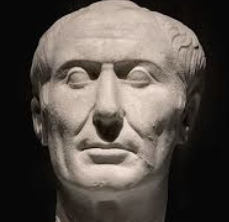
Publilius Syrus — The Voice of Roman Wisdom in a Single Line (c. 85–43 BCE)
Publilius Syrus was not a philosopher in the academic sense, but few thinkers have distilled moral insight more sharply. A former slave who rose to fame on the Roman stage, Syrus became the master of the aphorism — compressing entire ethical worlds into a single sentence. His lines are brief, ruthless, and enduring, reminders that wisdom does not always arrive wrapped in systems, but sometimes strikes like a blade.
From Enslavement to the Roman Stage
Publilius Syrus was born in Syria and brought to Rome as a slave. Educated and eventually freed, he found his place not in the Senate or the schools, but in popular entertainment.
He became a celebrated writer of mimes — short theatrical pieces depicting everyday life, moral conflict, and human folly. Unlike lofty tragedy, these performances spoke directly to the people, using wit and realism rather than mythic grandeur.
His background gave him a unique vantage point: he knew power from below, hypocrisy from proximity, and human weakness without illusion.
“Fortune favors the bold.”
The Aphorism as Moral Weapon
What survives of Publilius Syrus today is not his plays, but hundreds of short maxims — sharp observations about power, friendship, anger, pride, fate, and self-deception.
These sayings were later collected and copied by Roman and medieval scribes, often used as moral instruction for students. Each line stands alone, yet together they form a stark portrait of human nature: ambitious, fragile, resentful, hopeful, and often blind to itself.
Syrus does not console. He exposes.
“Anyone can hold the helm when the sea is calm.”
Power, Fear, and Moral Cost
Many of Syrus’s maxims focus on power — how it corrupts judgment, isolates rulers, and breeds fear rather than loyalty. Having lived both under domination and near those who wielded it, he understood its psychological toll.
Power without restraint, he suggests, destroys both the oppressed and the oppressor. Tyranny poisons trust. Authority without justice is brittle.
“He who has lost shame has lost everything.”
Self-Mastery and Inner Freedom
Syrus repeatedly returns to the theme of self-control. The greatest danger, he implies, is not external misfortune but internal disorder.
Anger enslaves. Greed blinds. Pride invites downfall. True freedom comes not from escaping circumstance, but from governing oneself within it.
In this, Syrus anticipates Stoic ethics — though his tone is sharper, less forgiving.
“The worst kind of exile is to be a stranger to oneself.”
Brevity as Truth
Syrus’s genius lies in compression. He strips away explanation, argument, and ornament. What remains is judgment.
His maxims demand participation. The reader must unfold them, test them against life, and decide whether they wound or illuminate.
In an age of grand rhetoric, Syrus trusted the sentence.
“Speech is the mirror of the soul.”
Legacy — Wisdom That Refuses to Age
Though he left no philosophical system, Publilius Syrus has never vanished. His lines reappear in Renaissance handbooks, Enlightenment moral collections, and modern quotations — often without attribution.
His endurance proves a quiet truth: insight that touches human nature directly does not expire. It waits.
Syrus reminds us that wisdom need not be long, gentle, or comforting. Sometimes it only needs to be exact.
“A good reputation is more valuable than money.”
CivilSimian.com created by AxiomaticPanic, CivilSimian, Kalokagathia