
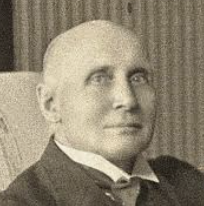
Alfred North Whitehead — The Philosopher of Process, Creativity, and Becoming (1861–1947)
Alfred North Whitehead was the philosopher who refused to believe that reality sits still. Where much of Western thought sought permanence, substance, and fixed foundations, Whitehead saw motion, relation, and creativity. His philosophy of process challenges the idea that the world is made of static things, insisting instead that everything — from atoms to societies to God — is an event in the act of becoming.
From Mathematics to Metaphysics
Born in England and educated at Cambridge, Whitehead began his career as a mathematician. His early work was rigorous, technical, and exacting, culminating in Principia Mathematica, co-authored with Bertrand Russell — one of the most ambitious attempts ever made to ground mathematics in pure logic.
Yet this triumph did not satisfy him. Whitehead came to believe that logical precision alone could not capture the richness of reality. Mathematics clarified structure, but life, experience, and nature demanded something more expansive. In midlife, he turned decisively toward philosophy — not as abstraction, but as cosmology.
“The science of mathematics presents the most fascinating of intellectual spectacles.”
The Fallacy of Misplaced Concreteness
One of Whitehead’s most enduring ideas is his critique of what he called the fallacy of misplaced concreteness. This occurs when abstract models — equations, categories, or concepts — are mistaken for the concrete reality they describe.
Modern science, Whitehead argued, often forgets that its objects are abstractions. When we treat space, time, matter, or causality as fixed substances rather than useful simplifications, we distort the world we aim to understand.
Philosophy’s task is to restore contact with the fullness of experience that abstraction leaves behind.
“We have mistaken the map for the territory.”
Process Philosophy — Reality as Event
At the heart of Whitehead’s mature philosophy is a radical claim: the basic units of reality are not things, but events. He called these events actual occasions.
An actual occasion is a moment of experience — a process of becoming that integrates influences from the past and contributes something novel to the future. Even what we call “matter” is, at its deepest level, a society of such events.
Nothing simply is. Everything happens.
“The actual world is a process, and the process is the becoming of actual entities.”
Creativity — The Ultimate Principle
Whitehead placed creativity at the very foundation of reality. Creativity is not a property of minds alone, but the universal principle by which novelty enters the world.
Each event inherits the past and transforms it. The future is not predetermined — it is genuinely open. The universe is not a closed mechanism, but an ongoing experiment.
Order exists, but only because creativity repeatedly risks disorder.
“Creativity is the universal of universals characterizing ultimate matter of fact.”
God and the World — A Radical Theology
Whitehead’s philosophy includes a concept of God, but not the traditional omnipotent ruler of classical theology. God, for Whitehead, is part of the process — not outside it.
He described God as having two natures. The primordial nature orders possibilities, offering the world patterns of value. The consequent nature feels every event, taking the world into divine experience.
God does not coerce the world. God persuades. Power is replaced by lure.
“God is the great companion — the fellow sufferer who understands.”
Science, Civilization, and the Modern World
Whitehead was deeply concerned with the cultural consequences of science. In Science and the Modern World, he traced how scientific abstractions, once useful, had hardened into metaphysical dogma.
He warned that civilizations decline when imagination is stifled and education becomes mere technical training. Progress requires speculative courage — the willingness to rethink fundamental assumptions.
Philosophy, for Whitehead, exists to keep thought alive.
Style, Obscurity, and Difficulty
Whitehead’s writing is notoriously difficult. His concepts are unfamiliar, his terminology idiosyncratic, his system vast.
But the difficulty reflects ambition. He was not refining a corner of philosophy — he was rebuilding its foundations. To read Whitehead is to feel that one is encountering a universe trying to think itself.
Legacy — A Philosophy for a Living World
Whitehead’s influence extends across disciplines: process theology, ecology, systems theory, physics, education, and metaphysics. Thinkers concerned with emergence, complexity, and relational reality continually rediscover his insights.
In an age of environmental crisis and mechanized thinking, Whitehead offers a vision of the world as alive, interdependent, and creative. Reality is not a machine. It is a conversation in motion.
“The art of progress is to preserve order amid change and to preserve change amid order.”
CivilSimian.com created by AxiomaticPanic, CivilSimian, Kalokagathia