
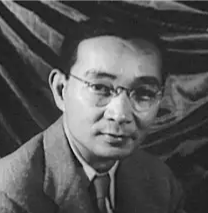
Lin Yutang — The Art of Living and the Meeting of East and West (1895–1976)
Lin Yutang was a Chinese writer, philosopher, and linguist whose warm, humorous, and deeply humane essays introduced the wisdom of Chinese civilization to a vast Western readership.
Equally at home in Chinese and English, in Confucian ethics and Western liberalism, he became one of the twentieth century's great cultural bridges — a man who belonged fully to two worlds and reduced neither to a caricature of the other.
His central concern: that the good life is not a problem to be solved but an art to be practiced — and that Chinese civilization had accumulated a wisdom about this art that the modern West urgently needed.
The Importance of Living
Published in 1937, "The Importance of Living" became an immediate international bestseller — a wide-ranging, genial celebration of the art of living well.
Drawing on Taoism, Confucianism, and his own irreverent good sense, Lin argued that Western civilization had become dangerously obsessed with efficiency, progress, and busyness — losing sight of the simple pleasures that make life worth living.
He championed idleness not as laziness but as the condition of genuine reflection and enjoyment — the space in which a person actually inhabits their own life rather than merely rushing through it.
Tea, loafing, the pleasures of a comfortable chair — these were not frivolities but philosophical positions.
"If you can spend a perfectly useless afternoon in a perfectly useless manner, you have learned how to live."
Taoism and the Wisdom of Half-and-Half
Lin was not a systematic philosopher but a philosopher of the middle path — what he called the wisdom of "half-and-half."
He distrusted fanaticism of every kind: the fanatic reformer as much as the rigid traditionalist, the earnest idealist as much as the cynical materialist. The good life required a Taoist ease — a willingness to go with the grain of things rather than constantly straining against them.
His Taoism was not the mystical withdrawal of the hermit but the practical wisdom of a man who had learned to take the world lightly without taking it less seriously than it deserved.
To laugh at life, he insisted, was not to diminish it but to see it clearly.
"A wise man has no rigid principles. He lives by the mood of the moment, and that mood is always on the side of humanity."
The Cultural Bridge
Lin came of age in a China torn between tradition and modernity, between Confucian order and Western liberalism. He refused the binary — insisting that a person could be genuinely Chinese and genuinely modern simultaneously, that neither identity required the destruction of the other.
His essays on Chinese culture never descended into romanticization. He was equally capable of sharp criticism — of foot-binding, of bureaucratic corruption, of the suffocating aspects of Confucian social obligation.
What he offered Western readers was not an exotic East but a recognizable human civilization that had thought deeply about questions the West had neglected.
The encounter he staged was between equals, not between the modern and the primitive.
"I am not afraid of tomorrow, for I have seen yesterday and I love today."
Humor as Philosophy
Lin regarded humor as one of the deepest human capacities — not a decoration on the surface of life but evidence of a mind that had achieved perspective.
He wrote that the ability to laugh at oneself was the surest sign of psychological maturity, and that a civilization without humor was a civilization that had lost its sense of proportion.
His own prose embodied this conviction — learned without being solemn, serious without being heavy, always shot through with the warmth of a man who genuinely liked being alive.
Humor, for Lin, was a form of wisdom — the laughter of a person who has seen enough to stop being surprised by the world's contradictions and has chosen delight over despair.
"The secret of contentment is knowing how to enjoy what you have, and to be able to lose all desire for things beyond your reach."
Legacy — A Voice for the Human Scale
Lin Yutang's reputation faded somewhat in the ideologically charged decades after his peak fame — too genial for the revolutionaries, too Chinese for the Western mainstream, too uncommitted for those who demanded that writers choose sides.
But his work endures because the questions he asked do not date: How should a person spend a day? What is leisure actually for? What does a civilization lose when it sacrifices depth for speed?
In an age of relentless productivity culture and digital overload, Lin's defense of the unhurried life reads less like nostalgia than prophecy.
He remains one of the wisest voices on the oldest of all philosophical questions — not how to change the world, but how to live in it.
"Besides the noble art of getting things done, there is the noble art of leaving things undone. The wisdom of life consists in the elimination of nonessentials."
CivilSimian.com created by AxiomaticPanic, CivilSimian, Kalokagathia