
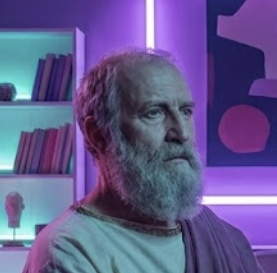
Porphyry — The Ascetic Architect of Neoplatonism (c. 234–305 CE)
Porphyry is philosophy with a spine. A rigorous systematizer of Plato, a fierce critic of superstition, and an uncompromising advocate of ethical self-discipline, he believed truth was not merely to be contemplated, but embodied through restraint, clarity, and intellectual honesty.
Student of Plotinus, Editor of a Tradition
Born in Tyre (modern Lebanon), Porphyry studied in Athens before becoming the most important student of Plotinus, the founder of Neoplatonism. His greatest historical service was editorial: he organized, clarified, and preserved Plotinus’ teachings into the Enneads.
Without Porphyry, Neoplatonism might have dissolved into rumor. With him, it became a durable philosophical system that would shape late antiquity, medieval Islam, Christian theology, and Renaissance metaphysics.
“Philosophy is the purification of the soul.”
Logic Before Metaphysics — The Isagoge
Porphyry’s Isagoge, an introduction to Aristotle’s logic, became one of the most influential textbooks in history. Its famous discussion of genera and species— whether universals exist in reality, in thought, or merely in language— set the stage for medieval debates that would last a thousand years.
He carefully avoids metaphysical commitment, treating logic as a tool rather than a doctrine. This restraint made the work usable across philosophical and theological camps, from pagan Platonists to Christian scholastics.
“Logic does not give us truth, but prepares the mind to receive it.”
Ascetic Ethics and the Case for Vegetarianism
Porphyry took ethics seriously enough to change his life. In On Abstinence from Animal Food, he argues that eating animals dulls compassion, strengthens violent impulses, and anchors the soul to bodily desire.
His vegetarianism is not sentimental. It is metaphysical. The soul seeks liberation from material entanglement, and cruelty—however normalized—binds it further to the lower world.
“As long as we are enslaved to the belly, we cannot be free in mind.”
Religion Without Credulity
Porphyry was deeply religious and deeply rational. He accepted traditional rituals as symbolic aids, yet rejected miracle-mongering, magical thinking, and theological incoherence.
His lost work Against the Christians criticized literalism, historical inconsistency, and the abandonment of philosophy for blind faith. The book was later destroyed by Christian emperors, a quiet testament to how threatening careful reasoning can be.
“The divine is not honored by ignorance, but by understanding.”
Legacy — Discipline as a Path to the One
Porphyry represents a rare philosophical posture: mystical without obscurity, ascetic without hatred of life, rational without reductionism.
His vision insists that clarity, compassion, and self-restraint are not moral accessories, but the very mechanisms by which the soul ascends toward unity. Philosophy, for Porphyry, is not an argument you win— it is a life you refine.
“The goal is likeness to the divine, as far as humanly possible.”
CivilSimian.com created by AxiomaticPanic, CivilSimian, Kalokagathia