
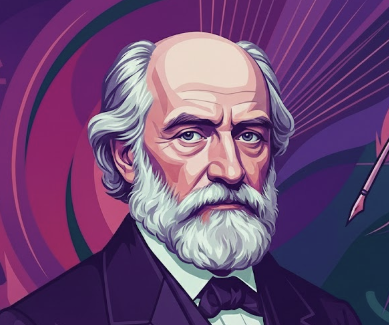
Arthur Schopenhauer — The Philosopher of Will and Suffering (1788–1860)
Schopenhauer peered into the engine-room of human existence and concluded that the world is driven not by reason but by a blind, striving force he called “the will.” His bleak honesty made him a misfit in his own time — and a prophet to later generations.
A Life Formed by Restlessness and Disillusion
Born in Danzig to a wealthy merchant family, Schopenhauer abandoned the business path expected of him to pursue philosophy. He studied in Göttingen and Berlin, absorbing Kant's work while growing skeptical of academic optimism. His temperament — sharp, solitary, uncompromising — shaped a life spent largely outside the university mainstream.
“Every man takes the limits of his own field of vision for the limits of the world.”
The World as Will — A Universe Powered by Blind Striving
Schopenhauer’s masterwork, The World as Will and Representation, argued that the world we perceive is merely a representation shaped by our minds. Beneath this surface lies the true essence of reality: an irrational, ceaseless, insatiable will driving all living beings to strive, desire, struggle — and suffer.
This idea placed suffering at the core of existence, not as an accident of life but as its fundamental feature. It was a direct challenge to the cheerful rationalism that dominated European thought.
“Life swings like a pendulum backward and forward between pain and boredom.”
Art, Compassion, and the Escape from Suffering
Despite his famous pessimism, Schopenhauer believed there were temporary ways to escape the tyranny of the will. Art — especially music — suspends desire and offers a quiet, contemplative relief. Ethical compassion, too, arises from recognizing the same will at work in all creatures, dissolving the illusion of separateness.
These ideas created a bridge between Western philosophy and Eastern thought, particularly Buddhism and Vedanta, both of which deeply influenced him.
“Compassion is the basis of morality.”
A Misunderstood Outsider Who Became Hugely Influential
Schopenhauer lectured alongside Hegel in Berlin, but while Hegel drew crowds, Schopenhauer’s classroom remained nearly empty. He withdrew from academic life and spent his later years in Frankfurt, writing, walking, and caring for his beloved poodles.
Only after his death did his ideas gain wide recognition, influencing Nietzsche, Freud, Wagner, Tolstoy, and much of existentialism and psychoanalysis. His dark view of human nature resonated with a modern world grappling with anxiety, disillusionment, and the search for meaning.
“To desire immortality is to desire the perpetuation of a great mistake.”
Legacy — The Pessimist Who Clarified the Human Condition
Schopenhauer’s philosophy remains a stark mirror held up to the human condition. By placing desire and suffering at the center of life, he forced later thinkers to confront truths they preferred to ignore. His work continues to speak to those who sense that beneath the surface of civilization lies something restless, hungry, and unresolved.
In recognizing this, he offered not despair but lucidity — a clear view of life, unsoftened and unsentimental, yet illuminated by moments of compassion and aesthetic insight.
“A man can do what he wills, but he cannot will what he wills.”
CivilSimian.com created by AxiomaticPanic, CivilSimian, Kalokagathia