


3 months 3 weeks ago
The task of universal pragmatics is to identify and reconstruct universal conditions of possible mutual understanding.
▼
Source
source
p. 21

2 months 1 week ago
Every daring attempt to make a great change in existing conditions, every lofty vision of new possibilities for the human race, has been labelled Utopian.
▼
Source
source
"Socialism: Caught in the Political Trap", a lecture (c. 1912), published in Red Emma Speaks, Part 1 (1972) edited by Alix Kates Shulman

3 months 3 weeks ago
If God had looked into our minds he would not have been able to see there whom we were speaking of.
▼
Source
source
Pt II, p. 217
1 month 4 weeks ago
It is a very hard undertaking to seek to please everybody.
▼
Source
source
Maxim 675

4 months ago
Wherever you are it is your own friends who make your world.
▼
Source
source
As quoted in The Thought and Character of William James (1935) by Ralph Barton Perry, Vol. II, ch. 91
2 months 3 weeks ago
Prosperity, both for individuals and for states, means possessions; and possessions mean burdens and harness and slavery; and slavery for the mind, too, because it is not only the rich man's time that is pre-empted, but his affections, his judgement, and the range of his thoughts.
▼
Source
source
"The Irony of Liberalism"
1 month 3 weeks ago
There is no need to make an inventory of the times. It is demoralizing to describe ourselves to ourselves yet again. It is especially hard on us since we believe (as we have been educated to believe) that history has formed us and that we are all mini-summaries of the present age.
▼
Source
source
Mozart: An Overture (1992), pp. 13-14

2 months 2 weeks ago
The fear of being alone, or of being unloved, had caused women of all races to passively accept sexism and sexist oppression.

4 months 1 day ago
For the world to become philosophic amounts to philosophy's becoming world-order reality; and it means that philosophy, at the same time that it is realized, disappears.

1 month 3 weeks ago
It would be deeply depressing if the only way children could get moral values was from religion. Either from scripture, and God knows we don't want them to get it from scripture, I mean, just look at scripture. Or, from being afraid of God, being intimidated by God. Anybody who is good for only those two reasons is not really being good at all. Why not teach children things like the Golden Rule, do as you would be done by, how would you like it if other children did that to you, so why do you do it to them... I think it's depressing that anybody should suggest that you actually need God in order to be moral. I would hope that our morals come from a better source than that, and therefore they are genuinely moral rather than based on outmoded scripture, or based on fear.
▼
Source
source
BBC,
3 weeks 6 days ago
Between ourselves and our real natures we interpose that wax figure of idealizations and selections which we call our character.
▼
Source
source
Ch. VI: "Some Necessary Iconoclasm", p. 168.

4 months 1 week ago
They are splendidly built [Italian Hospitals], the best food and drink are at hand, the attendants are very diligent, the physicians are learned, the beds and coverings are very clean, and the bedsteads are painted. As soon as a sick man is brought in, all his clothes are taken off in the presence of a notary and are faithfully kept for him. He is then laid in a handsomely painted bed with clean sheets. Two physicians are fetched at once. Attendants come with food and drink, served in immaculate glass vessels; these are not touched with as much as a finger but are brought on a tray.
▼
Source
source
3930

2 weeks 1 day ago
Mucius might have accomplished something more successful in that camp, but never anything more brave.
1 month 3 weeks ago
To preserve permanent good health, the state of mind must be taken into consideration.
▼
Source
source
3rd Part

4 months 1 day ago
An early morning walk is a blessing for the whole day.
▼
Source
source
April 20, 1840

3 months 1 week ago
We ought so to behave to one another as to avoid making enemies of our friends, and at the same time to make friends of our enemies.
▼
Source
source
As quoted in Diogenes Laërtius, Lives and Opinions of Eminent Philosophers, "Pythagoras", Sect. 23, as translated in Dictionary of Quotations (1906) by Thomas Benfield Harbottle, p. 320

3 months 3 weeks ago
The pleasure is only for a little moment, and it [passes] like a dream, and a man at the end thereof finds death through knowing it.
▼
Source
source
Maxim no. 18. Translated by Sir E. A. Wallis Budge, Teaching Of Amenem Apt Son Of Kanekht (London: Martin Hopkinson and Company Ltd, 1924) p. 58
4 months 2 days ago
But there is only one thing which gathers people into seditious commotion, and that is oppression.
▼
Source
source
A Letter Concerning Toleration

4 months 1 day ago
For want of the apparatus of propositional functions, many logicians have been driven to the conclusion that there are unreal objects. It is argued, e.g., by Meinong, that we can speak about "the golden mountain," "the round square," and so on; we can make true propositions of which these are the subjects; hence they must have some kind of logical being, since otherwise the propositions in which they occur would be meaningless. In such theories, it seems to me, there is a failure of that feeling for reality which ought to be preserved even in the most abstract studies. Logic, I should maintain, must no more admit a unicorn than zoology can; for logic is concerned with the real world just as truly as zoology, though with its more abstract and general features.
▼
Source
source
Ch. 16: Descriptions
2 months 1 week ago
Man is a masterpiece of creation if for no other reason than that, all the weight of evidence for determinism notwithstanding, he believes he has free will.
▼
Source
source
J 249
Just now
While the art of printing is left to us science can never be retrograde; what is once acquired of real knowlege can never be lost.
▼
Source
source
Letter to William Green Mumford
Just now
I allow nothing for losses by death, but, on the contrary, shall presently take credit four per cent. per annum, for their increase over and above keeping up their own numbers.
▼
Source
source
On his profits from slavery as quoted in The Dark Side of Thomas Jefferson, by Henry Wiencek, Smithsonian Magazine,

1 month 1 week ago
Humans already massively intervene in Nature, whether through habitat destruction, captive breeding programs for big cats, "rewilding", etc. So the question is not whether humans should "interfere", but rather what ethical principles should govern our interventions.
▼
Source
source
The Antispeciesist Revolution, Institute for Ethics and Emerging Technologies, 26 Jul. 2013



3 months 4 weeks ago
It seems to me that I may be living too long. Indeed: my nearest relations have all died, and so have some of my best friends, and even some of my best pupils. However, I do not have a reason to complain. I am grateful and happy to be alive, and still be able to continue with my work, if only just. My work seems to me more important than ever.
▼
Source
source
As quoted in "At 90, and Still Dynamic : Revisiting Sir Karl Popper and Attending His Birthday Party" by Eugene Yue-Ching Ho, in Intellectus 23
2 weeks 1 day ago
In fact, when a nation has become free, it is extremely difficult to persuade them that their freedom is only to be preserved by perpetual and minute jealousy. They do not observe that there is a constant, perhaps an unconscious, effort on the part of their governors to diminish, and so ultimately to destroy, that freedom.
▼
Source
source
Characters of Mr. Fox (review of Characters of the late Charles James Fox, edited by Philopatris Varvicensis, 2 vols), in The Edinburgh Review
2 months 2 weeks ago
In the products of the culture industry human beings get into trouble only so that they can be rescued unharmed, usually by representatives of a benevolent collective; and then, in illusory harmony, they are reconciled with the general interest whose demands they had initially experienced as irreconcilable with their own.
▼
Source
source
Section 14

2 months 1 week ago
Because the book became a freak 'bestseller', because I found myself bracketed with the 'Angry Young Men' of the period, I found myself carried to 'fame' on a wave of publicity -- only to discover that this kind of fame is one of the subtlest forms of obscurity. Everybody knew who I was, and nobody knew what I stood for. The public image meant that nobody was interested in what I had to say, for everyone was convinced that they already knew. I could talk until I was blue in the face about my attempt to revise the pessimistic existentialism of Heidegger, Camus and Sartre; as far as most people were concerned, I was an autodidact who was angry about something or other.
▼
Source
source
p. 188, George Bernard Shaw: A personal view

3 weeks ago
A mystic bond of brotherhood makes all men one.
▼
Source
source
Essays, Goethe's Works.

4 months 2 days ago
For a work to become immortal it must possess so many excellences that it will not be easy to find a man who understands and values them all; so that there will be in all ages men who recognise and appreciate some of these excellences; by this means the credit of the work will be retained throughout the long course of centuries and ever-changing interests, for, as it is appreciated first in this sense, then in that, the interest is never exhausted.
5 months 1 day ago
Tolerance and apathy are the last virtues of a dying society.
2 weeks 1 day ago
He who wants to govern must have insight into the hearts of men and act accordingly.

1 month 1 week ago
When I was a child, the institution of war, which, by then, had been in existence for perhaps about five thousand years, was still being taken for granted by most people in the World as a normal and acceptable fact of life. One small religious community, the Society of Friends, was at that time singular in condemning war as immoral and in consequently refusing to have any part or lot in war-making.
▼
Source
source
Experiences (New York: Oxford UP, 1969) pt. 2, sect. 4

4 months 1 week ago
Tis the sharpness of our mind that gives the edge to our pains and pleasures.
▼
Source
source
Book I, Ch. 14
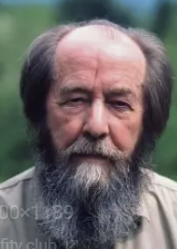
1 week 4 days ago
You only have power over people so long as you don't take everything away from them. But when you've robbed a man of everything he's no longer in your power - he's free again.
▼
Source
source
Bobynin, in Ch. 17
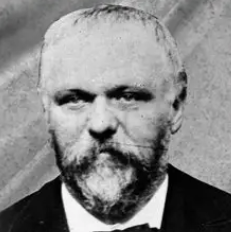
1 week 4 days ago
Mussolini is not an ordinary socialist. You will perhaps see him one day as a leader of a consecrated battalion, saluting the flags of Italy with his sword. He is an Italian of the fifteenth century, a condottiere. He is the only man with the strength to correct the weakness of the government.
▼
Source
source
As quoted in The Genesis of Georges Sorel, James H. Meisel, Ann Arbor, Wahr (1951), p. 220, n.21

2 months 3 weeks ago
The initial revelation of any monastery: everything is nothing. Thus begin all mysticisms. It is less than one step from nothing to God, for God is the positive expression of nothingness.

1 month ago
There is thus a certain plausibility to Nietzsche's doctrine, though it is dynamite. He maintains in effect that the gulf separating Plato from the average man is greater than the cleft between the average man and a chimpanzee.
▼
Source
source
p. 151
4 months ago
The trail of the human serpent is thus over everything.
▼
Source
source
Lecture II, What Pragmatism Means
4 months ago
Act as if what you do makes a difference. It does.
▼
Source
source
Correspondence with Helen Keller, 1908, in The Correspondence of William James: April 1908-August 1910, Vol. 12
2 months 1 week ago
Truths dead and forgotten long ago, conceptions of the world and its people, covered with mould, even during the times of our grandmothers, are being hammered into the heads of our young generation.
4 months 1 week ago
All that is under heaven, says the sage, runs one law and one fortune.
▼
Source
source
Ch. 12, tr. Cotton, rev. W. Carew Hazlitt, 1877

4 months 4 weeks ago
If one thing goes without saying, almost anything can.
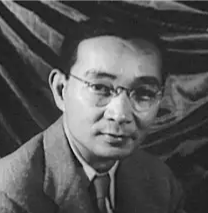
1 week 2 days ago
To the West, it seems hardly imaginable that the relationship between man and man (which is morality) could be maintained without reference to a Supreme Being, while to the Chinese it is equally amazing that men should not, or could not, behave toward one another as decent beings without thinking of their indirect relationship through a third party.
▼
Source
source
p. 106
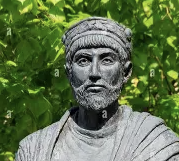
1 week 3 days ago
If the immediate creator of the universe be he who is proclaimed by Moses, then we hold nobler beliefs concerning him, inasmuch as we consider him to be the master of all things in general, but that there are besides national gods who are subordinate to him and are like viceroys of a king, each administering separately his own province; and, moreover, we do not make him the sectional rival of the gods whose station is subordinate to his. But if Moses first pays honour to a sectional god, and then makes the lordship of the whole universe contrast with his power, then it is better to believe as we do, and to recognise the God of the All, though not without apprehending also the God of Moses; this is better, I say, than to honour one who has been assigned the lordship over a very small portion, instead of the creator of all things.

4 months 2 weeks ago
The superior man, even when he is not moving, has a feeling of reverence, and while he speaks not, he has the feeling of truthfulness.
1 month 2 weeks ago
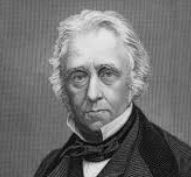
That is the best government which desires to make the people happy, and knows how to make them happy.
▼
Source
source
p. 160
4 months 1 day ago
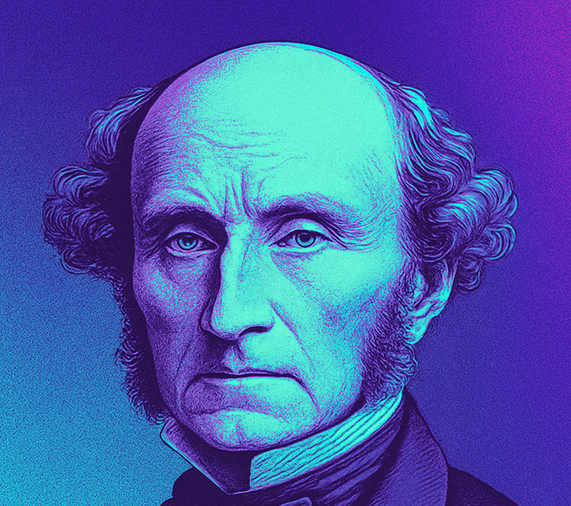
Granted that any practice causes more pain to animals than it gives pleasure to man; is that practice moral or immoral? And if, exactly in proportion as human beings raise their heads out of the slough of selfishness, they do not with one voice answer 'immoral,' let the morality of the principle of utility be for ever condemned.
▼
Source
source
Dr. Whewell on Moral Philosophy (1852), in Dissertations and Discussions: Political, Philosophical, and Historical, vol. 2, London: John W. Parker and son, 1859, p. 485
4 months 1 day ago
Most men do not feel in themselves the competence required for leading their group to victory, and therefore seek out a captain who appears to possess the courage and sagacity necessary for the achievement of supremacy. Even in religion this impulse appears. Nietzsche accused Christianity of inculcating a slave-morality, but ultimate triumph was always the goal. "Blessed are the meek, for they shall inherit the earth."
▼
Source
source
Ch. 2: Leaders and Followers
CivilSimian.com created by AxiomaticPanic, CivilSimian, Kalokagathia