
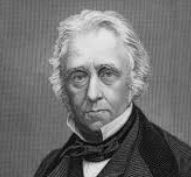
Thomas Babington Macaulay — Historian of Progress, Whig Confidence, and Imperial Reason (1800–1859)
Thomas Babington Macaulay was the great storyteller of liberal modernity — a historian, essayist, and statesman who believed history had a direction and that direction was progress. Armed with unmatched rhetorical force and moral certainty, Macaulay narrated the rise of constitutional government, individual liberty, and intellectual freedom as a triumph of reason over superstition. His work shaped how generations understood both the past and Britain’s role in the world.
A Prodigy of Memory and Eloquence
Born into a reform-minded family in England, Macaulay displayed astonishing intellectual gifts from childhood. He possessed a near-photographic memory, able to recall entire passages of poetry and prose after a single reading. At Cambridge, he quickly distinguished himself not only by his learning, but by his ability to turn knowledge into argument and drama.
For Macaulay, ideas were not inert facts. They were weapons in moral and political struggle. His early essays announced a voice that was confident, vivid, and unapologetically judgmental — a style that would make him one of the most widely read prose writers of the nineteenth century.
“The object of education is to give them a cultivated mind.”
Whig History — Progress as a Moral Narrative
Macaulay is most closely associated with what later critics called Whig history — a way of writing the past as a steady advance toward modern liberty, parliamentary government, and rational institutions. History, in this view, is not a cycle or a tragedy, but a story of improvement through struggle.
He admired revolutions that expanded rights, condemned institutions that resisted reform, and evaluated historical figures by how much they contributed to freedom and reason. Neutrality, he believed, was often a disguise for moral cowardice.
“The history of England is emphatically the history of progress.”
The History of England — Drama, Judgment, and Momentum
Macaulay’s masterpiece, The History of England, transformed historical writing. Rejecting dry chronicle, he wrote history as living drama — crowded with characters, moral conflict, and sweeping movement.
Battles unfold with cinematic clarity. Political debates become clashes of principles. Kings, rebels, clergy, and reformers are rendered with sharp moral contour. The past, for Macaulay, exists to be understood and evaluated, not merely recorded.
The work was an immediate sensation, read by scholars and general audiences alike, and helped define what popular history could be.
“A people which takes no pride in the noble achievements of remote ancestors will never achieve anything worthy to be remembered.”
Statesman and Imperial Thinker
Macaulay was not only a writer, but an active political figure. As a member of Parliament and later as a colonial administrator in India, he sought to apply his liberal convictions to governance.
His most controversial legacy lies here. In his famous “Minute on Indian Education,” Macaulay argued for promoting English education and Western knowledge over traditional Indian learning. He believed this would advance reason and progress — but critics have long seen the policy as emblematic of cultural arrogance and imperial domination.
Macaulay’s confidence in progress rarely paused to consider whose progress, or at what cost.
“We know that civilization is advancing.”
Style as Power
Macaulay’s prose is inseparable from his philosophy. Clear, rhythmic, and emphatic, it moves with the confidence of someone who believes history itself is on his side. He avoided obscurity, distrusted metaphysical subtlety, and prized forceful expression.
His sentences aim not merely to inform, but to persuade. Reading Macaulay, one feels the pull of inevitability — as though the argument carries the reader forward whether they consent or not.
Critics and Reassessment
Later historians challenged Macaulay’s optimism, accusing him of oversimplification, moral smugness, and blindness to contingency and tragedy. The twentieth century, with its wars and genocides, strained belief in automatic progress.
Yet even critics acknowledge his achievement. He made history readable, morally serious, and publicly relevant. His work raises enduring questions about whether history can be written without judgment — and whether it should be.
Legacy — Confidence, Clarity, and the Idea of Progress
Thomas Babington Macaulay stands as a symbol of nineteenth-century liberal confidence — the belief that reason, education, and institutions could steadily improve the human condition.
His vision now appears both inspiring and naïve, powerful and incomplete. Yet his insistence that history matters — that it shapes political imagination and moral horizons — remains undeniable.
Macaulay reminds us that how we tell the past shapes what we expect from the future.
“The measure of a civilization is the measure of its ambition.”
CivilSimian.com created by AxiomaticPanic, CivilSimian, Kalokagathia