

1 month 4 weeks ago
To spare the guilty is to injure the innocent.
▼
Source
source
Maxim 113

2 months 1 week ago
The 'open' mind of the poet and artist can sense realities beyond the reach of our normal senses. The real problem is that our materialistic assumptions have a number of false premises built into them: it is only when we recognize this that we see there is no sharp dividing line between the everyday world and the invisible world of the clairvoyant.
▼
Source
source
p. 294
2 months 1 week ago
Eros conquers depression.
1 day ago
I possess no weapon but love. With that I have come to do battle. Help me!
3 weeks 6 days ago
The present crisis of Western democracy is a crisis in journalism.
▼
Source
source
Journalism and the Higher Law, p. 5

2 months 3 weeks ago
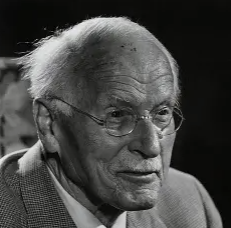
The aphorism is cultivated only by those who have known fear in the midst of words, that fear of collapsing with all the words.
2 months 3 weeks ago
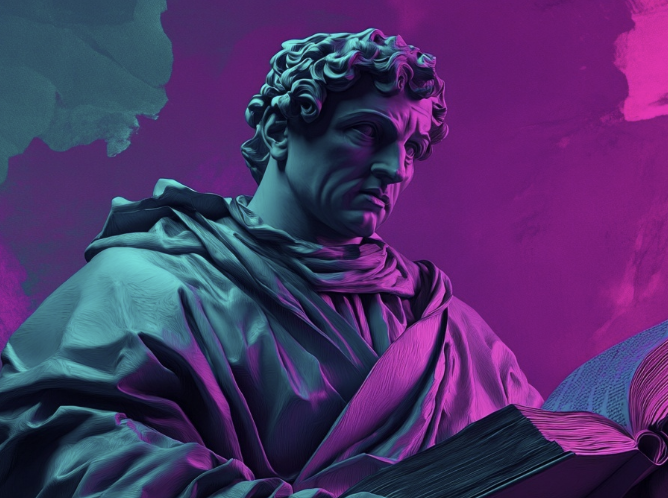
All ordinary expression may be explained causally, but creative expression which is the absolute contrary of ordinary expression, will be forever hidden from human knowledge.
4 months 1 week ago
All the passages in the Holy Scriptures that mention assistance are they that do away with "free-will", and these are countless...For grace is needed, and the help of grace is given, because "free-will" can do nothing.
▼
Source
source
p. 270

4 months 1 day ago
The Hindoos are most serenely and thoughtfully religious than the Hebrews. They have perhaps a purer, more independent and impersonal knowledge of God. Their religious books describe the first inquisitive and contemplative access to God; the Hebrew bible a conscientious return, a grosser and more personal repentance. Repentance is not a free and fair highway to God. A wise man will dispense with repentance. It is shocking and passionate. God prefers that you approach him thoughtful, not penitent, though you are chief of sinners. It is only by forgetting yourself that you draw near to him. The calmness and gentleness with which the Hindoo philosophers approach and discourse on forbidden themes is admirable. In 1853.
▼
Source
source
A Tribute to Hinduism, 2008
4 months 3 days ago
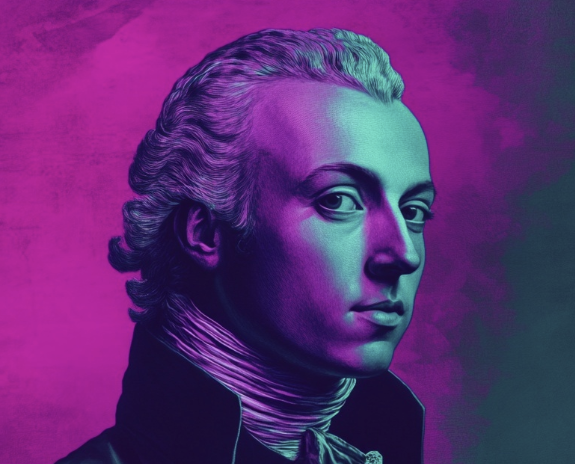
it is absurd ... to hope that maybe another Newton may some day arise, to make intelligible to us even the genesis of but a blade of grass
▼
Source
source
("Dialectic of Teleological Judgment" §75)
2 months 1 week ago
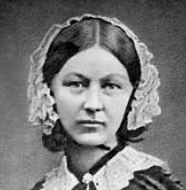
The Church is now more like the Scribes and Pharisees than like Christ... What are now called the "essential doctrines" of the Christian religion he does not even mention.
▼
Source
source
As quoted in The Life of Florence Nightingale (1913) by Edward Tyas Cook, p. 392

3 months 4 weeks ago
The most dangerous thing you can do is to take any one impulse of your own nature and set it up as the thing you ought to follow at all costs. There is not one of them which will not make us into devils if we set it up as an absolute guide. You might think love of humanity in general was safe, but it is not. If you leave out justice you will find yourself breaking agreements and faking evidence in trials "for the sake of humanity", and become in the end a cruel and treacherous man.
▼
Source
source
Book I, Chapter 2, "Some Objections"

3 months 2 weeks ago
An evil and foolish and intemperate and irreligious life should not be called a bad life, but rather, dying long drawn out.

2 weeks 1 day ago
Growth is slow but collapse is rapid.
▼
Source
source
Ugo Bardi (2017) . "The Seneca Effect: Why growth is slow but collapse is rapid". ISSN 1612-3018. DOI:10.1007/978-3-319-57207-9.

2 months 3 days ago
Such would be the successive phases of the image:it is the reflection of a profound reality;it masks and denatures a profound reality;it masks the absence of a profound reality;it has no relation to any reality whatsoever: it is its own pure simulacrum.In the first case, the image is a good appearance-representation is of the sacramental order. In the second, it is an evil appearance-it is of the order of maleficence. In the third, it plays at being an appearance-it is of the order of sorcery. In the fourth, it is no longer of the order of appearances, but of simulation.
4 months 1 day ago
We are not that we are, nor do we treat or esteem each other for such, but for that we are capable of being.
▼
Source
source
Pearls of Thought (1881) p. 37

3 months 4 weeks ago
When the rich make war, it's the poor that die.
4 months 3 weeks ago
The slave begins by demanding justice and ends by wanting to wear a crown. He must dominate in his turn.
4 months 3 days ago
As soon as we have contrived to give our pupil an idea of the word "Useful," we have got an additional means of controlling him, for this word makes a great impression on him, provided that its meaning for him is a meaning relative to his own age, and provided he clearly sees its relation to his own well-being. This word makes no impression on your scholars because you have taken no pains to give it a meaning they can understand, and because other people always undertake to supply their needs so that they never require to think for themselves, and do not know what utility is. "What is the use of that?"
2 months 3 weeks ago
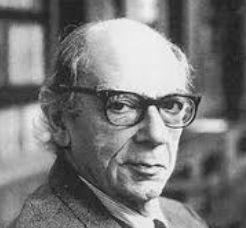
Historians of ideas, however scrupulous and minute they may feel it necessary to be, cannot avoid perceiving their material in terms of some kind of pattern.

4 months 1 week ago
Amongst so many borrowed things, I am glad if I can steal one, disguising and altering it for some new service.
▼
Source
source
Book III, Ch. 12. Of Physiognomy
2 weeks 2 days ago
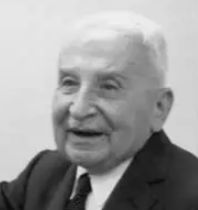
Credit expansion can bring about a temporary boom. But such a fictitious prosperity must end in a general depression of trade, a slump.
2 weeks 1 day ago
The wise man is joyful, happy and calm, unshaken, he lives on a plane with the gods.

4 months ago
A great man quotes bravely, and will not draw on his invention when his memory serves him with a word just as good.
▼
Source
source
Quotation and Originality

2 months 3 weeks ago
The fault with Hegel lies much deeper than in his glorification of the Prussian monarchy. He is guilty not so much of being servile as of betraying his highest philosophical ideas. His political doctrine surrenders society to nature, freedom to necessity, reason to caprice. And in so doing, it mirrors the destiny of the social order that falls, while in pursuit of its freedom, into a state of nature far below reason.
▼
Source
source
P. 218
1 month 3 weeks ago
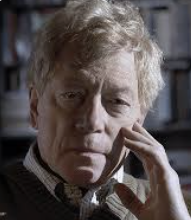
A developed legal system, with elaborate common law rights, and supported by a system of natural justice, was the most precious legacy of our empire. If it were still permissible to defend colonization, I should justify it in terms of this bequest, and at the same time contrast the colonization of Africa with the Soviet "colonization" of eastern Europe, which has advanced not by the generation but by the destruction of law.
▼
Source
source
A colonial inheritance once again cast off', The Times (6 September 1983), p. 10

4 months 1 day ago
It is not because men's desires are strong that they act ill; it is because their consciences are weak.
▼
Source
source
On Liberty, 1859

2 months 2 weeks ago
Nature gets credit which should in truth be reserved for ourselves: the rose for its scent: the nightingale for his song: and the sun for his radiance. The poets are entirely mistaken. They should address their lyrics to themselves, and should turn them into odes of self-congratulation on the excellency of the human mind.
▼
Source
source
Ch. 3: "The Century of Genius", p. 77
4 months 1 day ago
Nature magically suits the man to his fortunes, by making these the fruit of his character.
▼
Source
source
Fate
3 months ago
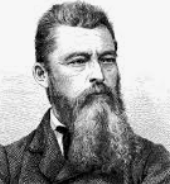
Though I myself am an atheist, I openly profess religion in the sense just mentioned, that is, a nature religion. I hate the idealism that wrenches man out of nature; I am not ashamed of my dependency on nature; I openly confess that the workings of nature affect not only my surface, my skin, my body, but also my core, my innermost being, that the air I breathe in bright weather has a salutary effect not only on my lungs but also on my mind, that the light of the sun illumines not only my eyes but also my spirit and my heart. And I do not, like a Christian, believe that such dependency is contrary to my true being or hope to be delivered from it. I know further that I am a finite moral being, that I shall one day cease to be. But I find this very natural and am therefore perfectly reconciled to the thought.
▼
Source
source
Lecture V, R. Manheim, trans. (1967), pp. 35-36
2 months 3 days ago
We live in a world where there is more and more information, and less and less meaning.
▼
Source
source
"The Implosion of Meaning in the Media," p. 79

4 months 1 day ago
Ramsgate is full of Jews and fleas.
▼
Source
source
MEKOR IV, 490, 25 August 1879
3 months 5 days ago
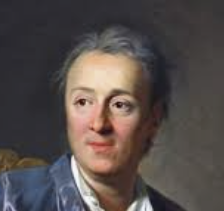
This is a work that cannot be completed except by a society of men of letters and skilled workmen, each working separately on his own part, but all bound together solely by their zeal for the best interests of the human race and a feeling of mutual good will.
▼
Source
source
Article on Encyclopedia, as translated in The Many Faces of Philosophy : Reflections from Plato to Arendt (2001), "Diderot", p. 237
2 months 1 week ago
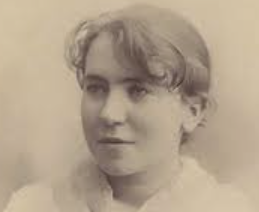
Anarchism is the only philosophy which brings to man the consciousness of himself; which maintains that God, the State, and society are non-existent, that their promises are null and void, since they can be fulfilled only through man's subordination.
3 months 2 weeks ago
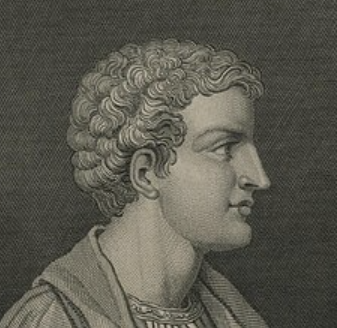
What is to prevent one from telling truth as he laughs, even as teachers sometimes give cookies to children to coax them into learning their A B C?
▼
Source
source
Book I, satire i, line 24 (translation by H. Fairclough)

3 months 4 weeks ago
The open society is one in which men have learned to be to some extent critical of taboos, and to base decisions on the authority of their own intelligence.
▼
Source
source
Vol. 1, Endnotes to the Chapters : Notes to the Introduction.

5 months 3 days ago
Without art we would be nothing but foreground and live entirely in the spell of that perspective which makes what is closest at hand and most vulgar appear as if it were vast, and reality itself.
1 month 3 weeks ago
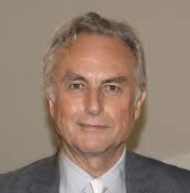
Just because science so far has failed to explain something, such as consciousness, to say it follows that the facile, pathetic explanations which religion has produced somehow by default must win the argument is really quite ridiculous.
▼
Source
source
Steve Paulson, "The flying spaghetti monster" Salon.com
4 months ago
Go where he will, the wise man is at home, His hearth the earth, his hall the azure dome.
▼
Source
source
Wood-notes, st. 3
3 months 2 weeks ago
The covetous man is ever in want.
▼
Source
source
Book I, epistle ii, line 56
1 week 4 days ago
I have always done things in my own way, which is at once the way that comes naturally to me, that is honest, sincere, genuine, and unforced; but also perverse, although you must remember that this word means per (through) verse (poetry), out-of-the-way and wayward, which is surely towards the way, and that to be queer-to "follow your own weird"-is wholeheartedly to accept your karma, or fate, or destiny, and thus to be odd in the service of God, "whose service," as the Anglican Book of Common Prayer declares, "is perfect freedom."
▼
Source
source
p. xiii

4 months ago
Our conviction that the world is meaningless is due in part to the fact (discussed in a later paragraph) that the philosophy of meaningless lends itself very effectively to furthering the ends of political and erotic passion; in part to a genuine intellectual error - the error of identifying the world of science, a world from which all meaning has deliberately been excluded, with ultimate reality.
▼
Source
source
Ch. 14, p. 309 [2012 reprint]

3 months 1 week ago
To use Virtue is perfect blessedness.
4 months 1 day ago
The product of labour is labour which has been congealed in an object, which has become material: it is the objectification of labour. Labour's realization is its objectification.
▼
Source
source
p. 71, The Marx-Engels Reader
1 week 4 days ago
The introduction of numbers as coordinates by reference to the particular division scheme of the open one dimensional continuum is an act of violence whose only practical vindication is the special calculatory manageability of the ordinary number continuum with its four basic operations. The topological skeleton determines the connectivity of the manifold in the large.
▼
Source
source
Philosophy of Mathematics and Natural Science (1949), p. 90

1 month 4 weeks ago
Violence, whether spiritual or physical, is a quest for identity and the meaningful.
▼
Source
source
The less identity, the more violence. "Violence in the media." Canadian Forum. Volume 56, 1976, p. 9
4 months ago
Inferiority is always with us, and merciless scorn of it is the keynote of the military temper.
CivilSimian.com created by AxiomaticPanic, CivilSimian, Kalokagathia