
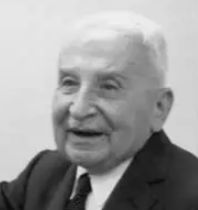
Ludwig von Mises — The Architect of Classical Liberal Economics (1881–1973)
Ludwig von Mises was one of the most influential defenders of free markets and individual liberty in the twentieth century.
He argued that economic systems are not merely technical arrangements, but expressions of human choice, knowledge, and freedom.
For Mises, the attempt to centrally control an economy was not only inefficient — it was fundamentally impossible.
The Austrian Tradition
Mises was a central figure in the Austrian School of economics, building on the work of earlier thinkers such as Carl Menger and Eugen von Böhm-Bawerk.
This tradition emphasized individual decision-making, subjective value, and the importance of market processes.
Rather than treating economics as a purely mathematical science, Mises saw it as a study of human action.
He called this approach praxeology — the logic of human choice.
“Human action is purposeful behavior.”
The Economic Calculation Problem
Mises is best known for his argument against socialist economic planning.
He claimed that without market prices generated by private ownership and exchange, rational economic calculation becomes impossible.
Prices, in his view, are not arbitrary numbers — they are signals that communicate dispersed knowledge about resources, preferences, and scarcity.
Without these signals, planners cannot efficiently allocate resources.
The result is not merely inefficiency, but systemic confusion.
“Without economic calculation, there can be no rational economy.”
Critique of Interventionism
Mises also criticized government intervention in otherwise market-based systems.
He argued that interventions often produce unintended consequences, leading to further interventions in an escalating cycle.
In his view, partial control of the economy tends to push societies toward more extensive control.
This dynamic, he believed, threatened both economic efficiency and individual freedom.
“Every step toward intervention invites further control.”
Exile and Influence
Born in the Austro-Hungarian Empire, Mises was forced to leave Europe during the rise of totalitarian regimes.
He eventually settled in the United States, where he continued his work despite limited academic recognition at the time.
His ideas, however, would later gain significant influence, especially through students such as Friedrich Hayek.
Today, Mises is regarded as a foundational figure in libertarian and free-market thought.
“Freedom is indivisible — economic freedom and personal freedom are inseparable.”
Legacy — Economics as Human Action
Ludwig von Mises insisted that economics must begin with the individual.
He rejected the idea that societies can be engineered from above through centralized control.
Instead, he emphasized the complexity of human knowledge and interaction — a complexity that only decentralized systems can navigate.
His work remains a powerful defense of markets, liberty, and the limits of planning.
“The market is not a place — it is a process of human cooperation.”
CivilSimian.com created by AxiomaticPanic, CivilSimian, Kalokagathia