
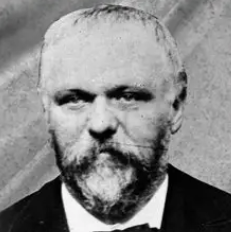
Georges Sorel — The Philosopher of Myth and Violence (1847–1922)
Georges Sorel was a French political philosopher and social theorist whose unorthodox ideas placed him beyond easy classification — drawing from Marx, Bergson, and Nietzsche in equal measure.
A fierce critic of bourgeois democracy and parliamentary socialism alike, he believed that only radical action rooted in myth could regenerate a decadent civilization.
His central concern: that moral energy, not rational argument, is the true engine of historical transformation.
Reflections on Violence
Sorel's most provocative work, "Reflections on Violence," argued that violence was not merely an evil to be minimized but a creative and morally necessary force.
He distinguished sharply between proletarian violence — disciplined, purposeful, arising from struggle — and the mere brutality of the state or the corruption of parliamentary politics.
Proletarian violence, in his view, carried an ethical dignity that negotiation and compromise could never achieve.
It was the refusal to be absorbed into a system one condemned.
"Violence is the expression of the heroic will that refuses to accept the world as it is."
The Power of Myth
Sorel's most enduring philosophical contribution was his theory of the social myth — a compelling image of the future that mobilizes collective action.
The myth, he argued, need not be literally true. Its function is not to describe reality but to animate the will, to give a movement its sense of purpose and identity.
For Sorel, the general strike was precisely such a myth — not a practical plan to be debated, but a vision that could concentrate the moral energies of the working class.
Rational programs exhaust themselves in argument. Myths endure because they speak to something deeper.
"Men who are participating in a great social movement always picture their coming action as a battle in which their cause is certain to triumph."
Critique of Progress and Decadence
Sorel was a relentless critic of the optimism of his age. He saw liberal democracy and reformist socialism as symptoms of the same underlying decadence — a civilization that had traded heroism for comfort.
The bourgeoisie had lost its will to rule with conviction. The socialist parties had become bureaucratic machines more interested in elections than emancipation.
What modernity needed, he believed, was not more progress but a recovery of moral seriousness — a willingness to struggle without guarantee of reward.
Decadence, for Sorel, was the absence of heroic tension in a society.
"It is to violence that socialism owes those high ethical values by means of which it brings salvation to the modern world."
Syndicalism and the Working Class
Sorel found his political home, at least for a time, in revolutionary syndicalism — the movement to organize workers through direct industrial action rather than political parties.
The trade union, in this vision, was not merely a bargaining body but a school of moral formation, producing disciplined, self-reliant workers capable of managing a new social order.
Sorel distrusted the state profoundly. Emancipation could not be handed down from above — it had to be forged through struggle from below.
The syndicalist workshop was his image of a society that had recovered its dignity.
"The general strike is the myth in which socialism is wholly comprised."
Legacy — A Dangerous Thinker
Sorel's legacy is as uncomfortable as his ideas. His work influenced figures across the entire political spectrum — from Antonio Gramsci and Walter Benjamin on the left to Mussolini and the early fascists on the right.
This is not coincidence. Sorel's framework — myth, will, violence, anti-liberalism — was genuinely portable across ideological lines, which is precisely what makes him dangerous and indispensable to read.
He forces a confrontation with the uncomfortable truth that political movements are driven less by argument than by the stories they tell about themselves.
To understand the twentieth century's catastrophes, Sorel is essential.
"We should not attempt to find a middle ground between the heroic spirit and the spirit of comfort — one of them must conquer."
CivilSimian.com created by AxiomaticPanic, CivilSimian, Kalokagathia