
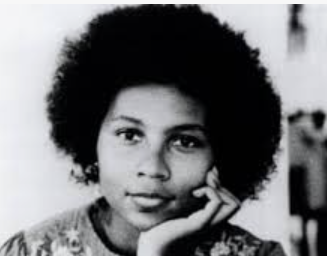
bell hooks — The Thinker of Love, Liberation, and Radical Education (1952–2021)
bell hooks was a philosopher of everyday life — a thinker who believed that theory matters only if it helps people live more freely. Writing across feminism, race, class, education, and culture, she rejected academic distance and spoke directly to lived pain and possibility. Her work insists that love is not sentimental, but a disciplined, political practice essential to liberation.
A Voice from the Margins
Born Gloria Jean Watkins in Hopkinsville, Kentucky, hooks grew up in a segregated South shaped by racial hierarchy, economic inequality, and patriarchal authority. From an early age, she learned that power speaks loudly — but also that silence can be a form of violence.
She chose the pen name bell hooks, taken from her great-grandmother, and deliberately styled it in lowercase to shift attention away from the author and toward the ideas themselves. This gesture captured her lifelong refusal of hierarchy — even within intellectual life.
“I came to theory because I was hurting.”
Feminism as a Politics for Everyone
hooks transformed feminist thought by insisting that it must confront race and class as foundational forces, not side issues. In her groundbreaking book Ain’t I a Woman?, she exposed how Black women had been erased by both white feminism and male-centered Black liberation movements.
Feminism, she argued, is not about reversing domination or elevating one group over another. It is a movement to end sexist oppression — and therefore must include men, children, and all people harmed by rigid gender roles.
Any feminism that ignores material conditions, violence, or racism, she believed, betrays its own promise.
“Feminism is for everybody.”
Intersectionality Before the Name
Long before the term intersectionality entered common use, hooks articulated its core insight: systems of oppression interlock. Race, gender, class, and sexuality do not operate independently, but reinforce one another in lived experience.
She rejected single-axis explanations of injustice as dangerously simplistic. Liberation requires understanding how power reproduces itself across institutions, relationships, and inner life.
Theory, for hooks, was a tool for survival — a way to name harm and imagine alternatives.
“Life-transforming ideas have always come to me through books.”
Education as the Practice of Freedom
As a teacher, hooks viewed the classroom as a potential site of liberation. Drawing on Paulo Freire, she rejected authoritarian education in favor of engaged pedagogy — an approach that values students’ voices, emotional presence, and lived knowledge.
Teaching, she argued, is not merely the transfer of information. It is a relational act. To educate is to care, to listen, and to invite students into critical self-reflection.
Education fails when it trains obedience instead of cultivating freedom.
“The classroom remains the most radical space of possibility.”
Love as a Political Ethic
One of hooks’s most distinctive contributions was her insistence that love belongs at the center of politics. In works like All About Love, she argued that domination thrives where love is absent or distorted.
Love, for hooks, is not romance or self-indulgence. It is a combination of care, responsibility, knowledge, commitment, and trust. Without love, movements for justice collapse into resentment or cruelty.
Liberation, she believed, requires healing — not only of institutions, but of hearts shaped by fear and domination.
“Love is an action, never simply a feeling.”
Culture, Media, and the Politics of Representation
hooks was also a penetrating cultural critic. She analyzed film, music, advertising, and popular media as sites where domination is normalized — and where resistance can also emerge.
Representation matters, not because images alone change the world, but because they shape how people imagine themselves and one another. To challenge domination, culture itself must be contested.
Legacy — Thinking as an Act of Care
bell hooks left behind no closed system, no single doctrine. She left a voice — urgent, compassionate, and demanding. A voice that refused despair without denying suffering.
Her legacy lies in making theory accessible, insisting that intellectual work must answer to human need. She taught that justice without love is hollow, and love without justice is incomplete.
To read hooks is to be called into responsibility — for oneself, for others, and for the world we are helping to shape.
“There can be no love without justice.”
CivilSimian.com created by AxiomaticPanic, CivilSimian, Kalokagathia