


1 week 5 days ago
The Book had in a high degree excited us to self-activity, which is the best effect of any book.
▼
Source
source
Bk. I, ch. 4.
3 months 2 weeks ago
Everywhere we remain unfree and chained to technology, whether we passionately affirm or deny it. But we are delivered over to it in the worst possible way when we regard it as something neutral; for this conception of it, to which today we particularly like to do homage, makes us utterly blind to the essence of technology.
▼
Source
source
The Question Concerning Technology

2 months 1 week ago
The human soul has need of disciplined participation in a common task of public value, and it has need of personal initiative within this participation. The human soul has need of security and also of risk. The fear of violence or of hunger or of any other extreme evil is a sickness of the soul. The boredom produced by a complete absence of risk is also a sickness of the soul.
3 months 3 weeks ago
The same law that shapes the earth-star shapes the snow-star. As surely as the petals of a flower are fixed, each of these countless snow-stars comes whirling to earth...these glorious spangles, the sweeping of heaven's floor.
▼
Source
source
January 5, 1856

1 month 3 weeks ago
We cannot pretend that we do not see the armed policeman who marches up and down beneath our window to guarantee our security while we eat our luxurious dinner, or look at the new piece at the theater, or that we are unaware of the existence of the soldiers who will make their appearance with guns and cartridges directly our property is attacked.
▼
Source
source
Chapter XII, Conclusion-Repent Ye, for the Kingdom of Heaven is at Hand
7 months 3 weeks ago
I think that the task of philosophy is not to provide answers, but to show how the way we perceive a problem can be itself part of a problem.

3 months 2 weeks ago
If life becomes hard to bear we think of improvements. But the most important and effective improvement, in our own attitude, hardly occurs to us, and we can decide on this only with the utmost difficulty.
▼
Source
source
p. 60e

3 months 3 weeks ago
No regulation of commerce can increase the quantity of industry in any society beyond what its capital can maintain. It can only divert a part of it into a direction into which it might not otherwise have gone; and it is by no means certain that this artificial direction is likely to be more advantageous to the society than that into which it would have gone of its own accord. Every individual is continually exerting himself to find out the most advantageous employment for whatever capital he can command. It is his own advantage, indeed, and not that of the society, which he has in his view. But the study of his own advantage naturally, or rather necessarily leads him to prefer that employment which is most advantageous to the society.
▼
Source
source
Chapter II, p. 486.
2 weeks 3 days ago
An empire derives no advantage from the caresses of two turtledoves who spend a year cooing to each other in public meetings.
▼
Source
source
Charles Fourier: The Visionary and His World, J. Beecher (1986), p. 315
2 months 1 week ago
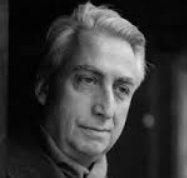
Statistically, myth is on the right. There, it is essential, well-fed, sleek, expensive, garrulous, it invents itself ceaselessly. It takes hold of everything, all aspects of the law, of morality, of aesthetics, of diplomacy, of household equipment, of Literature, of entertainment.
▼
Source
source
p. 148


1 month 2 weeks ago
The printing press was at first mistaken for an engine of immortality by everybody except Shakespeare.
▼
Source
source
(p. 230)

3 months 2 weeks ago
There is wishful thinking in Hell as well as on Earth.
▼
Source
source
Preface
3 months 3 weeks ago
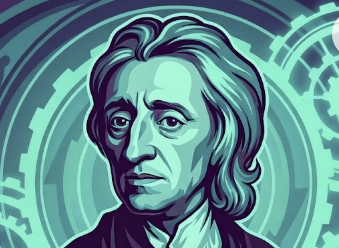
Stop Traveller! Near this place lieth John Locke. If you ask what kind of a man he was, he answers that he lived content with his own small fortune. Bred a scholar he made his learning subservient only to the cause of truth. This thou will learn from his writings, which will show thee everything else concerning him, with greater truth, than the suspect praises of an epitaph. His virtues, indeed, if he had any, were too little for him to propose as matter of praise to himself, or as an example to thee. Let his vices be buried together. As to an example of manners, if you seek that, you have it in the Gospels; of vices, to wish you have one nowhere; if mortality, certainly, (and may it profit thee), thou hast one here and everywhere.
▼
Source
source
Epitaph, as translated from the Latin.

3 months 2 weeks ago
You must be afraid, my son. That is how one becomes an honest citizen.
▼
Source
source
Mother to her young son, Act 1

3 months 3 weeks ago
Our Traders in Men (an unnatural commodity!) must know the wickedness of that Slave-Trade, if they attend to reasoning, or the dictates of their own hearts; and such as shun and stiffle all these, wilfully sacrifice Conscience, and the character of integrity to that golden Idol.
2 months 1 week ago
Liberty, taking the word in its concrete sense, consists in the ability to choose.
▼
Source
source
Ch. 3, Liberty

2 months 3 weeks ago
...my extreme anxiety about the Object of our common sollicitude and my clear and decided conviction, that there is one part of the War, which instead of being postponed and considered in a secondary light, ought to have priority over every other, and requires our most early and our most careful attention; I mean La Vendée. ... This is a War directly against Jacobinism and its principles. It strikes at the Enemy in his weakest and most vulnerable part. At La Vendée with infinitely less Charge, we may make an impression likely to be decisive. This goes to the heart of the Business.
▼
Source
source
Letter to the Home Secretary Henry Dundas (8 October 1793), quoted in P. J. Marshall and John A. Woods (eds.)
2 weeks ago
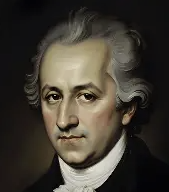
When young, one is confident to be able to build palaces for mankind, but when the time comes one has one's hands full just to be able to remove their trash.
▼
Source
source
Letter to Johann Kaspar Lavatar
1 month 2 weeks ago
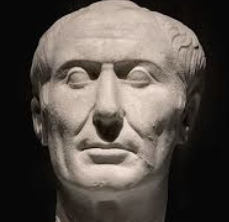
It is a consolation to the wretched to have companions in misery.
▼
Source
source
Maxim 995

2 months 2 weeks ago
We die in proportion to the words we fling around us.
1 week ago
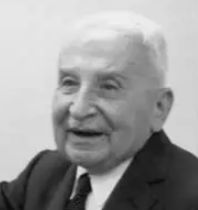
All rational action is economic. All economic activity is rational action. All rational action is in the first place individual action. Only the individual thinks. Only the individual reasons. Only the individual acts.
▼
Source
source
Part II : The Economics of a Socialist Community, § I : The Economics of an Isolated Socialist Community, Ch. 5 : The Nature of Economic Activity, p. 97
3 months 2 weeks ago
The heart of Christianity is a myth which is also a fact.
▼
Source
source
"Myth Became Fact", 1944

3 months 3 weeks ago
There is a freemasonry among the dull by which they recognize and are sociable with the dull, as surely as a correspondent tact in men of genius.
▼
Source
source
1827
2 months 2 weeks ago
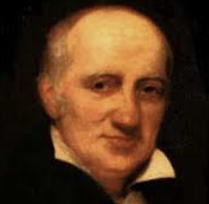
Government in reality, as has abundantly appeared, is a question of force, and not of consent. It is desirable that a government should be made as agreeable as possible to the ideas and inclinations of its subjects and that they should be consulted, as extensively as may be, respecting its construction and regulations. But, at last, the best constituted government that can be formed particularly for a large community, will contain many provisions that, far from having obtained the consent of all its members, encounter even in their outset a strenuous, thought ineffectual opposition.
▼
Source
source
Book III, "Of Obedience"
2 weeks ago
Nothing is great but truth, and the smallest truth is great. The other day I had a thought, which I put like this: Even a harmful truth is useful, for it can be harmful only for the moment and will lead to other truths, which must always become useful, very much so. Conversely, even a useful error is harmful, for it can be useful only for the moment, enticing us into other errors, which become more and more harmful.
▼
Source
source
Letter to Charlotte von Stein (1787) in Goethe's World View: Presented in His Reflections and Maxims (1963), Edited with an Introduction by Frederick Ungar, Translated by Heinz Norden, pp. 72-73, Frederick Ungar Publishing Company, New York.
3 months 2 weeks ago
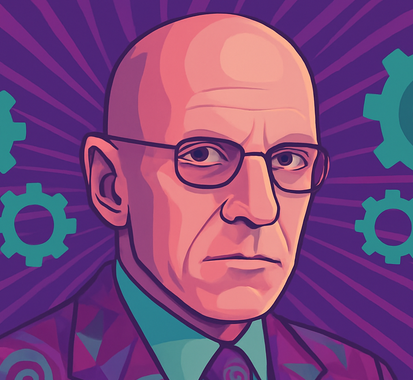
The perfect disciplinary apparatus would make it possible for a single haze to see everything constantly. A central point would be both the source of light illuminating everything, and a locus of convergence for everything that must be known: a perfect eye that nothing would escape and a centre towards which all gazes would be turned.
▼
Source
source
Part Three, The Means of Correct Training
2 months 2 weeks ago
I foresee the day when we shall read nothing but telegrams and prayers.
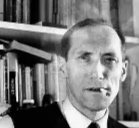
2 weeks ago
We sometimes imagine, under the influence of Spenglerian philosophy or some other kind of "historical morphology," that we live in a similar age [to the Romans], the last witnesses of a condemned civilization. But condemned by whom? Not by God, but by some supposed "historical laws." For although we do not know any historical laws, we are in fact able of inventing them quite freely, and such laws, once invented, can then be realized in the form of self-fulfilling prophecies.
▼
Source
source
Looking for the Barbarians
2 weeks 1 day ago
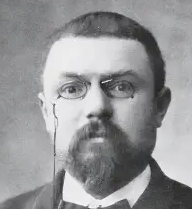
We do not have and cannot have any means of discovering whether or not we are carried along in a uniform motion of translation.
▼
Source
source
L'état actuel et l'avenir de la physique mathematique
2 weeks 4 days ago
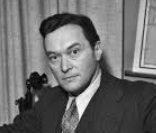
Whether or not birth control is eugenic, hygienic, and economic, it is the most revolutionary practice in the history of sexual morals.
▼
Source
source
Ch. XIV: "Love in the Great Society", §4, p. 291
2 months 2 weeks ago
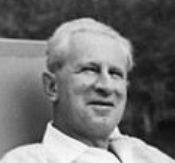
Hegel's theological discussion repeatedly asks what the true relation is between the individual man and a state that no longer satisfies his capacities but exists rather as an 'estranged' institution from which the active political interest of the citizens has disappeared. Hegel defined this state with almost the same categories as those of eighteenth century liberalism: the state rests on the consent of the individuals, it circumscribes their rights and duties and protects its members from those internal and external dangers that might threaten the perpetuation of the whole.
▼
Source
source
P. 32
2 months 2 weeks ago
The historical approach, with its aim of detecting how things began and arriving from these origins at a knowledge of their nature, is certainly perfectly legitimate; but it also has its limitations. If everything were in continual flux, and nothing maintained itself fixed for all time, there would no longer be any possibility of getting to know about the world, and everything would be plunged into confusion.
▼
Source
source
Translation J. L. Austin (Oxford, 1950) as quoted by Stephen Toulmin, Human Understanding: The Collective Use and Evolution of Concepts (1972) Vol. 1, p. 55.
2 months 3 weeks ago
There is not a Musselman alive who would not imagine that he was performing an action pleasing to God and his Holy Prophet by exterminating every Christian on earth, while the Christians are scarcely more tolerant on their side.
3 months 3 weeks ago
The sneaking arts of underling tradesmen are thus erected into political maxims for the conduct of a great empire; for it is the most underling tradesmen only who make it a rule to employ chiefly their own customers. A great trader purchases his good always where they are cheapest and best, without regard to any little interest of this kind.
▼
Source
source
Chapter III, Part II, p. 530.

2 months 3 weeks ago
I know of no country, indeed, where the love of money has taken stronger hold on the affections of men, and where the profounder contempt is expressed for the theory of the permanent equality of property.
▼
Source
source
Chapter III, Part I.

3 months 3 weeks ago
It is not only when it takes the form of physical addiction that sex is evil. It is also evil when it manifests itself as a way of satisfying the lust for power or the climber's craving for position and social distinction.
▼
Source
source
Ch. 14, p. 358 [2012 reprint]

6 days ago
Armies have endured all manner of want, have lived on roots, and have resisted hunger by means of food too revolting to mention. All this they have suffered to gain a kingdom, and-what is more marvellous-to gain a kingdom that will be another's. Will any man hesitate to endure poverty, in order that he may free his mind from madness?

3 months 1 week ago
Now his principal doctrines were these. That atoms and the vacuum were the beginning of the universe; and that everything else existed only in opinion. (trans. Yonge 1853) The first principles of the universe are atoms and empty space; everything else is merely thought to exist.
▼
Source
source
(trans. by Robert Drew Hicks 1925) Often paraphrased as "Nothing exists except atoms and empty space; everything else is opinion."
3 months 4 weeks ago
Anyone who studies present and ancient affairs will easily see how in all cities and all peoples there still exist, and have always existed, the same desires and passions. Thus, it is an easy matter for him who carefully examines past events to foresee future events in a republic and to apply the remedies employed by the ancients, or, if old remedies cannot be found, to devise new ones based upon the similarity of the events. But since these matters are neglected or not understood by those who read, or, if understood, remain unknown to those who govern, the result is that the same problems always exist in every era.
▼
Source
source
Book 1, Chapter 39
3 months 2 weeks ago
The totalitarian movements aim at and succeed in organizing masses-not classes, like the old interest parties of the Continental nation-states; not citizens with opinions about, interests in, the handling of public affairs, like the parties of Anglo-Saxon countries.
▼
Source
source
Part 3, Ch. 10
2 months ago
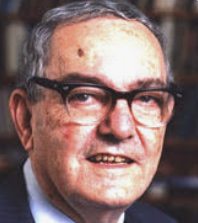
Economic man deals with the "real world" in all its complexity. Administrative man recognizes that the world he perceives is a drastic simplified model... He makes his choices using a simple picture of the situation that takes into account just a few of the factors that he regards as most relevant and crucial.
▼
Source
source
p. xxix; As cited in: Jesper Simonsen (1994) Administrative Behavior: How Organizations can be Understood in Terms of Decision Processes. Roskilde Universitet.
2 months 2 weeks ago
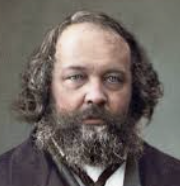
My dignity as a man, my human right which consists of refusing to obey any other man, and to determine my own acts in conformity with my convictions is reflected by the equally free conscience of all and confirmed by the consent of all humanity. My personal freedom, confirmed by the liberty of all, extends to infinity. The materialistic conception of freedom is therefore a very positive, very complex thing, and above all, eminently social, because it can be realized only in society and by the strictest equality and solidarity among all men.

3 months 2 weeks ago
In brief, it is my thesis that human misery is the most urgent problem of a rational public policy and that happiness is not such a problem.
▼
Source
source
p. 485
2 months 1 week ago
It is only by entering the transcendental, the supernatural, the authentically spiritual order that man rises above the social. Until then, whatever he may do, the social is transcendent in relation to him.
▼
Source
source
p. 123

2 months 2 weeks ago
To be a good mother - a woman must have sense, and that independence of mind which few women possess who are taught to depend entirely on their husbands. Meek wives are, in general, foolish mothers; wanting their children to love them best, and take their part, in secret, against the father, who is held up as a scarecrow.
▼
Source
source
Ch. 10
2 months 4 days ago
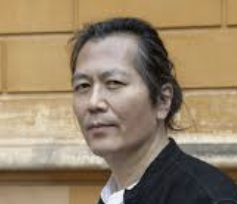
The haste of day rules over the night as empty form.

Just now
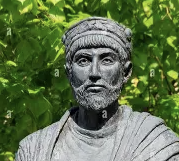
The one absolutely, the Intelligible, the ever Preexisting, comprehending all the universe together within the One - nay, more, is not the whole world One living thing - all and everywhere full of life and soul, perfect and made up out of parts likewise perfect? Now of this double unity the most perfect part (I mean of the Unity in the Intelligible World that comprehends all things in One, and of the Unity encompassing the Sensible World, that brings together all things into a single and perfect nature) is the perfection of the sovereign Sun, which is central and single, and placed in the middle of the intermediate Powers.
2 months 1 week ago
Being good is just a matter of temperament in the end.
▼
Source
source
The Nice and the Good (1968), ch. 14, p. 127. Murdoch attributed this opinion to her character Kate Gray. It was not her own.
CivilSimian.com created by AxiomaticPanic, CivilSimian, Kalokagathia