
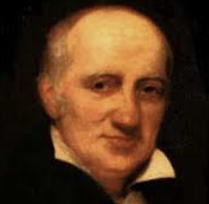
William Godwin — The Philosopher of Reason, Anarchism, and Moral Perfectibility (1756–1836)
William Godwin was one of the most radical thinkers of the Enlightenment’s aftermath — a philosopher who believed that human beings are capable of moral improvement without limit, and that political authority itself is a historical mistake. Long before anarchism had a name, Godwin argued that reason, education, and sincere dialogue could replace coercion, punishment, and the state.
From Calvinist Discipline to Radical Reason
Godwin was born in Cambridgeshire, England, the son of a strict Calvinist minister. His early education trained him in religious rigor, moral absolutism, and constant self-examination. Yet the very discipline meant to anchor his faith sharpened his skepticism.
As he matured, Godwin gradually abandoned orthodox religion, replacing divine command with rational ethics. He came to believe that morality must be grounded not in revelation or tradition, but in impartial reason and universal benevolence. This shift would define his life’s work.
“Government by its very nature counteracts the improvement of original mind.”
Political Justice — The Birth of Philosophical Anarchism
Godwin’s major work, An Enquiry Concerning Political Justice (1793), was explosive. Written in the shadow of the French Revolution, it rejected monarchy, aristocracy, law, punishment, and even democracy. Godwin argued that all political institutions rely on force, and force corrupts moral judgment.
True justice, he claimed, arises when individuals act from rational understanding, not obedience. Laws freeze morality into rigid forms. Governments reward conformity and punish independence. A genuinely ethical society would therefore render government unnecessary.
“Law is an institution of the most pernicious nature.”
Reason, Sympathy, and Moral Calculation
Godwin believed that moral decisions should be guided by impartial reason. In famous and controversial passages, he argued that personal attachments must give way to the greater good. If forced to choose between saving a close friend or a brilliant stranger whose future contributions would benefit humanity, reason demands saving the stranger.
These arguments shocked contemporaries, but they reveal Godwin’s radical consistency. Ethics, for him, was not about sentiment or loyalty, but about maximizing human flourishing through clear judgment. Later utilitarians like Bentham and Mill would wrestle with these ideas, often softening Godwin’s stark conclusions.
“Justice is a principle which proposes to itself the production of the greatest sum of pleasure.”
Education, Progress, and Perfectibility
Central to Godwin’s optimism was his belief in human perfectibility. He rejected the idea of fixed human nature. People are shaped by circumstances, education, and ideas — change the environment, and character will change with it.
Education, therefore, is the engine of progress. Not indoctrination, but open inquiry. Not authority, but conversation. Godwin believed that as knowledge spreads, crime, war, and domination would gradually disappear.
“Sound reasoning and truth, when adequately communicated, must always be victorious over error.”
Love, Marriage, and Mary Wollstonecraft
Godwin’s personal life embodied his radical principles. He rejected traditional marriage as a form of legal domination. Yet he fell deeply in love with Mary Wollstonecraft, the pioneering feminist philosopher.
Their relationship was intellectually electric and emotionally complex. When Wollstonecraft became pregnant, they married reluctantly to secure legal protection for the child. She died shortly after giving birth to their daughter, Mary Shelley — future author of Frankenstein.
Godwin’s candid memoir of Wollstonecraft scandalized polite society, but it preserved her legacy and revealed his commitment to truth over reputation.
Decline, Influence, and Quiet Survival
After the conservative backlash against the French Revolution, Godwin’s reputation collapsed. He lived much of his later life in financial difficulty, writing novels, biographies, and educational works to survive.
Yet his influence persisted. He shaped Romantic thinkers like Coleridge and Shelley, laid groundwork for anarchist theory, and anticipated modern debates about authority, punishment, and moral reasoning.
“Oppression is the usurpation of one man over another.”
Legacy — Reason Without Rulers
William Godwin stands as the first great philosopher of anarchism — not the anarchism of chaos, but of radical moral faith in human reason. He believed that the highest social order would emerge not from control, but from understanding.
In an age still torn between authority and freedom, Godwin’s challenge remains unsettling: what if the greatest obstacle to justice is not human nature, but the institutions we refuse to question?
“He that would govern himself has no need of laws.”
CivilSimian.com created by AxiomaticPanic, CivilSimian, Kalokagathia