
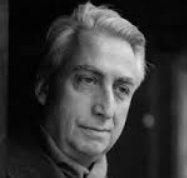
Roland Barthes — The Theorist of Signs, Pleasure, and the Death of the Author (1915–1980)
Roland Barthes was the great dismantler of obvious meanings — a thinker who revealed how culture speaks through images, texts, fashions, and habits that present themselves as natural and innocent. With elegance rather than system, Barthes showed that meaning is never fixed, authors are never sovereign, and pleasure is as philosophically serious as truth. His work turns reading into an act of freedom.
An Outsider in French Intellectual Life
Born in Cherbourg, France, Barthes lost his father in World War I and spent much of his youth battling illness. Tuberculosis kept him outside conventional academic pathways, sparing him the rigid training of the elite French system.
This marginal position shaped his style. Barthes never became a system-builder or doctrinal thinker. He wrote essays, fragments, meditations — moving lightly across linguistics, literature, fashion, photography, and everyday life. Philosophy, for him, was not mastery, but attentiveness.
“The birth of the reader must be at the cost of the death of the Author.”
Mythologies — Exposing the Naturalized Lie
Barthes first gained prominence with Mythologies, a series of short essays analyzing popular culture — wrestling matches, advertising, fashion, toys, food. His insight was devastatingly simple: modern myths disguise historical and political values as natural facts.
A magazine cover, a slogan, a celebrity image — all carry ideological messages while pretending to be mere entertainment. Myth, for Barthes, is language emptied of history.
By analyzing these signs, Barthes armed readers against cultural manipulation.
“Myth is depoliticized speech.”
Structuralism and the Science of Signs
During the height of structuralism, Barthes applied linguistic ideas to literature and culture. Meaning, he argued, does not arise from individual intention but from systems of difference — signs relating to other signs.
Texts are not expressions of a private soul; they are woven from cultural codes, conventions, and prior texts. The writer does not invent meaning from nothing — meaning circulates.
This view dethroned the romantic image of the author as the ultimate authority over interpretation.
“A text is a tissue of quotations.”
The Death of the Author
Barthes’ most famous essay, “The Death of the Author,” declared that interpretation should not seek the author’s intentions, biography, or psychology.
Once written, a text belongs to no one. Its meaning is created in the act of reading — through the play of language and the reader’s experience.
This was not an attack on writers, but a liberation of readers. Authority shifts from origin to encounter.
“To give a text an Author is to impose a limit on that text.”
Pleasure, Desire, and the Erotics of Reading
In his later work, especially The Pleasure of the Text, Barthes turned away from scientific rigor toward enjoyment, affect, and desire.
He distinguished between texts that offer comfort and those that disrupt — texts that wound, seduce, or destabilize the reader. Reading becomes a bodily experience, not just an intellectual one.
Meaning is not only decoded; it is felt.
“The text you write must prove to me that it desires me.”
Photography, Mourning, and the Singular Image
Barthes’ final major work, Camera Lucida, is a meditation on photography and loss. Written after the death of his mother, it departs from structural analysis and turns deeply personal.
He distinguishes between the studium — cultural, general meaning — and the punctum: the detail that pierces the viewer, producing grief, longing, or love.
Photography, for Barthes, is proof that something has been — and is now irretrievably gone.
Legacy — Thinking Without Mastery
Barthes refused to found a school. He left behind no system, only tools — ways of seeing, reading, and resisting obvious meanings.
His influence spans literary theory, cultural studies, media criticism, semiotics, and philosophy. He taught generations to distrust what feels natural, to attend to pleasure, and to read against power.
Barthes remains a philosopher of freedom — not through grand metaphysics, but through subtle acts of interpretation.
“Language is a skin: I rub my language against the other.”
CivilSimian.com created by AxiomaticPanic, CivilSimian, Kalokagathia