


2 months 3 weeks ago
Among these widely differing families of men, the first that attracts attention, the superior in intelligence, in power, and in enjoyment, is the white, or European, the MAN pre-eminently so called, below him appear the Negro and the Indian.
▼
Source
source
Chapter XVIII.
2 months 6 days ago
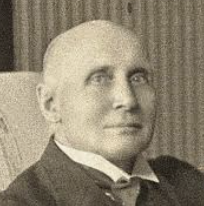
There remains the final reflection, how shallow, puny, and imperfect are efforts to sound the depths in the nature of things. In philosophical discussion, the merest hint of dogmatic certainty as to finality of statement is an exhibition of folly.
▼
Source
source
Preface, p. 16 (Corrected Edition)

4 months 2 weeks ago
Let's not beat around the bush; I love life, that's my real weakness. I love it so much that I am incapable of imagining what is not life.
2 months 3 days ago
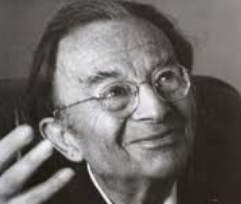
Temperament refers to the mode of reaction and is constitutional and not changeable; character is essentially formed by a person's experiences, especially of those in early life, and changeable, to some extent, by insights and new kinds of experiences. If a person has a choleric temperament, for instance, his mode of reaction is "quick and strong." But what he is quick or strong about depends on his kind of relatedness, his character. If he is a productive, just, loving person he will react quickly and strongly when he loves, when he is enraged by injustice, and when he is impressed by a new idea. If he is a destructive or sadistic character, he will be quick and strong in his destructiveness or in his cruelty. The confusion between temperament and character has had serious consequences for ethical theory. Preferences with regard to differences in temperament are mere matters of subjective taste. But differences in character are ethically of the most fundamental importance.
▼
Source
source
Ch. 3

2 months 2 weeks ago
Long before physics or psychology were born, pain disintegrated matter, and affliction the soul.

1 month 3 weeks ago
He did not, and could not, understand the meaning of words apart from their context. Every word and action of his was the manifestation of an activity unknown to him, which was his life.
▼
Source
source
About Platon Karataev in Bk. XII, ch. 13
2 months 2 weeks ago
Of all calumnies the worst is the one which attacks our indolence, which contests its authenticity.
1 month 3 weeks ago
The error arises from the learned jurists deceiving themselves and others, by asserting that government is not what it really is, one set of men banded together to oppress another set of men, but, as shown by science, is the representation of the citizens in their collective capacity.
▼
Source
source
Chapter VI, Attitude of Men of the Present Day to War Variant translation: Government is an association of men who do violence to the rest of us.
2 months 3 weeks ago
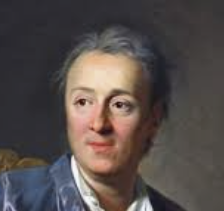
The arbitrary rule of a just and enlightened prince is always bad. His virtues are the most dangerous and the surest form of seduction: they lull a people imperceptibly into the habit of loving, respecting, and serving his successor, whoever that successor may be, no matter how wicked or stupid.
▼
Source
source
Refutation of Helvétius
1 month ago
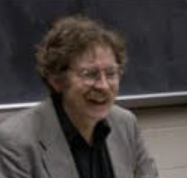
Like literature, philosophy is not distinguished from other subjects by a specific approach to a subject-matter independent of it. Chemistry deals with chemicals, biology with life and astronomy with very large, very distant objects. Philosophy can boast no such definite subject-matter.
▼
Source
source
Chapter 4, Philosophy As Writing: The Case Of Hegel, p. 69
2 months 2 weeks ago
There is philosophy, which is about conceptual analysis - about the meaning of what we say - and there is all of this ... all of life.
▼
Source
source
Emphasizing his views on philosophy as something abstract and separate from normal life to Isaiah Berlin, in the early 1930s, as quoted in A.J. Ayer: A Life (1999) by Ben Rogers, p. 2.

4 months 2 weeks ago
The Autarch maintained his indifferent calm, but a certain lack of certainty was gathering, and he did not like to experience a lack of certainty. He liked nothing which made him aware of limitations. An Autarch should have no limitations, and on Lingane he had none that natural law did not impose.

3 months 3 weeks ago
There is but one indefectibly certain truth, and that is the truth that pyrrhonistic scepticism itself leaves standing, - the truth that the present phenomenon of consciousness exists.
▼
Source
source
The Will to Believe, 1897

3 months 3 weeks ago
To discover the various use of things is the work of history.
▼
Source
source
Vol. I, Ch. 1, Section 1, pg. 42.

3 months 3 weeks ago
Death is the only thing we haven't succeeded in completely vulgarizing.
▼
Source
source
Eyeless in Gaza, 1936

3 months 1 week ago
The pleasure is only for a little moment, and it [passes] like a dream, and a man at the end thereof finds death through knowing it.
▼
Source
source
Maxim no. 18. Translated by Sir E. A. Wallis Budge, Teaching Of Amenem Apt Son Of Kanekht (London: Martin Hopkinson and Company Ltd, 1924) p. 58

2 months 2 weeks ago
Ideas are refined and multiplied in the commerce of minds. In their splendor, images effect a very simple communion of souls.
▼
Source
source
Introduction, sect. 4

6 days ago
The mind must be indulged, and leisure must be given from time to time, which is the place of food and strength.
1 month 3 weeks ago
In default of any other proof, the thumb would convince me of the existence of a God.
▼
Source
source
Stanislas (1856)
2 months 2 weeks ago
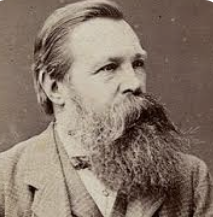
How do you think the transition from the present situation to community of Property is to be effected? The first, fundamental condition for the introduction of community of property is the political liberation of the proletariat through a democratic constitution.
▼
Source
source
Draft of a Communist Confession of Faith
3 months 3 weeks ago
That books do not take the place of experience, and that learning is no substitute for genius, are two kindred phenomena; their common ground is that the abstract can never take the place of the perceptive.
▼
Source
source
E. Payne, trans., Vol. II, Ch. 7, p. 74

3 months 3 weeks ago
In obedience to the feeling of reality, we shall insist that, in the analysis of propositions, nothing "unreal" is to be admitted. But, after all, if there is nothing unreal, how, it may be asked, could we admit anything unreal? The reply is that, in dealing with propositions, we are dealing in the first instance with symbols, and if we attribute significance to groups of symbols which have no significance, we shall fall into the error of admitting unrealities, in the only sense in which this is possible, namely, as objects described.
▼
Source
source
Ch. 16: Descriptions
1 month 4 days ago
America is like a large, friendly dog in a very small room. Every time it wags its tail, it knocks over a chair!
▼
Source
source
In Quote: The Weekly Digest, vol. 23, no. 19 (4 May 1952) p. 16

3 months 3 weeks ago
With the greater part of rich people, the chief enjoyment of riches consists in the parade of riches, which in their eye is never so complete as when they appear to possess those decisive marks of opulence which nobody can possess but themselves.
▼
Source
source
Chapter XI, Part II, p. 202 (See also Thorstein Veblen).
2 weeks ago
But the philosophy that killed off truth proclaims unlimited tolerance for the "language games" (i.e., opinions, beliefs and doctrines) that people find useful. The outcome is expressed in the words of Karl Kraus: "Alles ist wahr und auch das Gegenteil." "Everything is true, and also its opposite."
▼
Source
source
"Our Merry Apocalypse" (1997), as quoted in Is God Happy? Selected Essays (Basic Books, 2013), p. 318
4 months 3 weeks ago
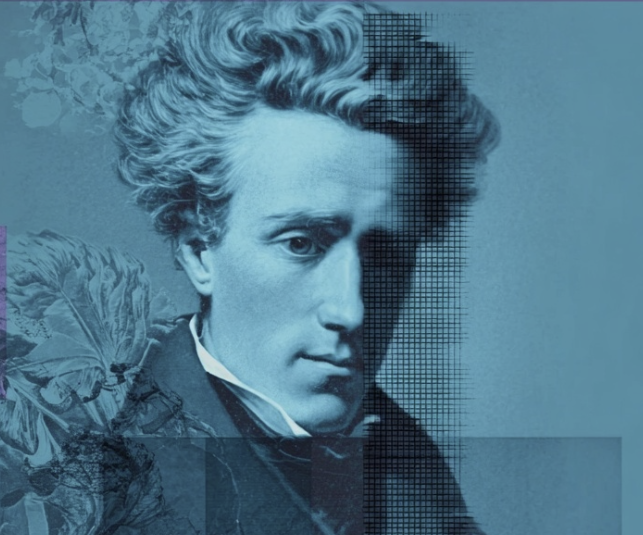
A Roman emperor sitting at the table surrounded by his bodyguard is a magnificent sight, but when the reason is fear, the magnificence pales. So also when the individual does not dare stand taciturnly by his word, does not stand freely and confidently on the pedestal of a conscious act, but is surrounded by a host of deliberations before and after that render him incapable of getting his eye on the action.

3 months 3 weeks ago
When we run over libraries, persuaded of these principles, what havoc must we make? If we take in our hand any volume; of divinity or school metaphysics, for instance; let us ask, Does it contain any abstract reasoning concerning quantity or number? No. Does it contain any experimental reasoning concerning matter of fact and existence? No. Commit it then to the flames: For it can contain nothing but sophistry and illusion.
▼
Source
source
Section 12 : Of the Academical or Sceptical Philosophy Pt. 3

3 months 2 weeks ago
Philosophers should consider the fact that the greatest happiness principle can easily be made an excuse for a benevolent dictatorship. We should replace it by a more modest and more realistic principle - the principle that the fight against avoidable misery should be a recognized aim of public policy, while the increase of happiness should be left, in the main, to private initiative.
▼
Source
source
As quoted in 1,001 Pearls of Wisdom (2006) by David Ross

2 months 4 days ago
The vitality of the ordinary members of society is dependent on its Outsiders.
▼
Source
source
Chapter Three, The Romantic Outsider

2 months 3 weeks ago
The blindness of those who think it absurd to suppose that complex organic forms may have arisen by successive modifications out of simple ones becomes astonishing when we remember that complex organic forms are daily being thus produced. A tree differs from a seed immeasurably in every respect... Yet is the one changed in the course of a few years into the other: changed so gradually, that at no moment can it be said - Now the seed ceases to be, and the tree exists.

3 months 3 weeks ago
Man ought to be content, it is said; but with what?
▼
Source
source
Pensées, Remarques, et Observations de Voltaire; ouvrage posthume (1802)
2 months 6 days ago
Philosophy, in one of its functions, is the critic of cosmologies. It is its function to harmonise, refashion, and justify divergent intuitions as to the nature of things. It has to insist on the scrutiny of the ultimate ideas, and on the retention of the whole of the evidence in shaping our cosmological scheme. Its business is to render explicit, and - so far as may be - efficient, a process which otherwise is unconsciously performed without rational tests.
▼
Source
source
Preface, pp. ix-x
3 months 1 week ago
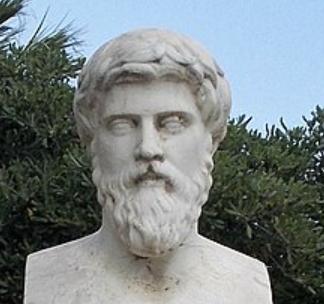
He made one of Antipater's recommendation a judge; and perceiving afterwards that his hair and beard were coloured, he removed him, saying, "I could not think one that was faithless in his hair could be trusty in his deeds."
▼
Source
source
40 Philip
4 months 6 days ago
For what is a child? Ignorance. What is a child? Want of instruction. For where a child has knowledge, he is no worse than we are.
▼
Source
source
Book II, ch. 1, 16

3 months 3 weeks ago
Beauty without grace is the hook without the bait.
▼
Source
source
Beauty

1 week 5 days ago
Enjoying things which are pleasant; that is not the evil: it is the reducing of our moral self to slavery by them that is.
3 months 3 weeks ago
Modern physics... reduces matter to a set of events which proceed outward from a centre. If there is something further in the centre itself, we cannot know about it, and it is irrelevant to physics.
▼
Source
source
An Outline of Philosophy Ch.15 The Nature of our Knowledge of Physics, 1927
1 week 4 days ago
Happiness is the free play of the instincts, and so is youth.
▼
Source
source
Ch. 2 : On Youth
1 month ago
Philosophy is an everlasting fire, sometimes damped down by setting itself limits, then flaring into new life as it consumes them. Every field of inquiry is limited, but philosophy has an essential relation to the question of limits, to its own limits.
▼
Source
source
Introduction, p. xiii

3 months 2 weeks ago
But what then is this confrontation below the language of reason? Where might this interrogation lead, following not reason in its horizontal becoming, but seeking to retrace in time this constant verticality, which, the length of Western culture, confronts it with what it is not, measuring it with its own extravagance?
▼
Source
source
Preface to 1961 edition
3 months 1 week ago
Being summoned by the Athenians out of Sicily to plead for his life, Alcibiades absconded, saying that that criminal was a fool who studied a defence when he might fly for it.
▼
Source
source
51 Alcibiades
3 months 3 weeks ago
A minister of state is excusable for the harm he does when the helm of government has forced his hand in a storm; but in the calm he is guilty of all the good he does not do.
▼
Source
source
Le Siècle de Louis XIV, ch. VI: "État de la France jusqu'à la mort du cardinal Mazarin en 1661" (1752)
3 months 4 weeks ago
It is not without good reason said, that he who has not a good memory should never take upon him the trade of lying.
▼
Source
source
Ch. 9. Of Liars, tr. Cotton, rev. W. Hazlitt, 1842
1 month 3 weeks ago
The unhappiness of our life; patch up our false way of life as we will, propping it up by the aid of the sciences and arts - that life becomes feebler, sicklier, and more tormenting every year; every year the number of suicides and the avoidance of motherhood increases; every year the people of that class become feebler; every year we feel the increasing gloom of our lives. Evidently salvation is not to be found by increasing the comforts and pleasures of life, medical treatments, artificial teeth and hair, breathing exercises, massage, and so forth;...It is impossible to remedy this by any amusements, comforts, or powders - it can only be remedied by a change of life.
2 months 1 week ago
If philosophy is still necessary, it is so only in the way it has been from time immemorial: as critique, as resistance to the expanding heteronomy, even if only as thought's powerless attempt to remain its own master and to convict of untruth, by their own criteria, both a fabricated mythology and a conniving, resigned acquiescence. ... It is incumbent upon philosophy ... to provide a refuge for freedom. Not that there is any hope that it could break the political tendencies that are throttling freedom throughout the world both from within and without and whose violence permeates the very fabric of philosophical argumentation.
▼
Source
source
p. 10
3 months 3 weeks ago
Because people have no thoughts to deal in, they deal cards, and try and win one another's money. Idiots!
2 months 4 days ago
Needless to say, I am not opposed to woman suffrage on the conventional ground that she is not equal to it. I see neither physical, psychological, nor mental reasons why woman should not have the equal right to vote with man. But that can not possibly blind me to the absurd notion that woman will accomplish that wherein man has failed. If she would not make things worse, she certainly could not make them better. To assume, therefore, that she would succeed in purifying something which is not susceptible of purification, is to credit her with supernatural powers. Since woman's greatest misfortune has been that she was looked upon as either angel or devil, her true salvation lies in being placed on earth; namely, in being considered human, and therefore subject to all human follies and mistakes. Are we, then, to believe that two errors will make a right? Are we to assume that the poison already inherent in politics will be decreased, if women were to enter the political arena?
3 months 2 weeks ago
[W]hen a philosopher addresses himself to... a tyrant, and tells him... tyranny is incompatible with justice, then the philosopher speaks... [and] believes he is speaking the truth, and... takes a risk...
▼
Source
source
[T]hat was Plato's situation with Dionysius in Syracuse... reference... Plato's Seventh Letter, and... The Life of Dion by Plutarch. Ref: 1) Ludwig Edelstein, Plato's seventh letter (1966) 2) Plutarch, Life of Dion

3 months 3 weeks ago
In our science and philosophy, even, there is commonly no true and absolute account of things. The spirit of sect and bigotry has planted its hoof amid the stars. You have only to discuss the problem, whether the stars are inhabited or not, in order to discover it.
▼
Source
source
p. 490
CivilSimian.com created by AxiomaticPanic, CivilSimian, Kalokagathia