


2 months 1 week ago
Therefore every scribe which is instructed unto the kingdom of heaven is like unto a man that is an householder, which bringeth forth out of his treasure things new and old.
▼
Source
source
13:52 (KJV)
2 months 3 weeks ago
Man was born to live with his fellow human beings. Separate him, isolate him, his character will go bad, a thousand ridiculous affects will invade his heart, extravagant thoughts will germinate in his brain, like thorns in an uncultivated land.
▼
Source
source
The character Suzanne Simon, in La Religieuse [The Nun]

2 months 1 week ago
In [Aristotle's] formal logic, thought is organized in a manner very different from that of the Platonic dialogue. In this formal logic, thought is indifferent toward its objects. Whether they are mental or physical, whether they pertain to society or to nature, they become subject to the same general laws of organization, calculation, and conclusion - but they do so as fungible signs or symbols, in abstraction from their particular "substance." This general quality (quantitative quality) is the precondition of law and order - in logic as well as in society - the price of universal control.
▼
Source
source
p. 136

1 week 3 days ago
Battles, in these ages, are transacted by mechanism; with the slightest possible development of human individuality or spontaneity: men now even die, and kill one another, in an artificial manner.
▼
Source
source
Pt. I, Bk. VII, ch. 4.
5 days ago
All right, men are as they should be, can be. What should they be? Surely not more than they can be! And what can they be? Not more, again, than they - can, than they have the competence, the force, to be. But this they really are, because what they are not, they are incapable of being; for to be capable means - really to be. One is not capable for anything that one really is not; one is not capable of anything that one does not really do. Could a man blinded by cataract see? Oh, yes, if he had his cataract successfully removed. But now he cannot see because he does not see. Possibility and reality always coincide. One can do nothing that one does not, as one does nothing that one cannot.
▼
Source
source
Cambridge 1995, p. 291

4 months 4 days ago
O pitiable minds of men, O blind intelligences! In what gloom of life, in how great perils is passed all your poor span of time! not to see that all nature barks for is this, that pain be removed away out of the body, and that the mind, kept away from care and fear, enjoy a feeling of delight!
▼
Source
source
Book II, lines 14-19 (tr. Rouse)

2 months 2 weeks ago
We always love . . . despite; and that "despite" covers an infinity.

3 months 3 weeks ago
It was the excess to which imaginary systems of religion had been carried, and the intolerance, persecutions, burnings, and massacres, they occasioned, that first induced certain persons to propagate infidelity; thinking, that upon the whole, that it was better not to believe at all, than to believe a multitude of things and complicated creeds, that occasioned so much mischief in the world. But those days are past, persecution has ceased, and the antidote then set up against it has no longer even the shadow of apology. We profess, and we proclaim in peace, the pure, unmixed, comfortable, and rational belief of a God, as manifested to us in the universe. We do this without any apprehension of that belief being made a cause of persecution as other beliefs have been, or of suffering persecution ourselves. To God, and not to man, are all men to account for their belief.
▼
Source
source
A Discourse, &c. &c.

3 months 2 weeks ago
A new moral outlook is called for in which submission to the powers of nature is replaced by respect for what is best in man. It is where this respect is lacking that scientific technique is dangerous.
▼
Source
source
Attributed to Russell at the end of Isaac Asimov's short story Franchise with no specific source given.
3 months 4 weeks ago
Human knowledge and human power meet in one; for where the cause is not known the effect cannot be produced. Nature to be commanded must be obeyed; and that which in contemplation is as the cause is in operation as the rule.
▼
Source
source
Aphorism 3

3 months 2 weeks ago
He who knows only his own side of the case, knows little of that. His reasons may be good, and no one may have been able to refute them. But if he is equally unable to refute the reasons on the opposite side; if he does not so much as know what they are, he has no ground for preferring either opinion.
▼
Source
source
Ch. II: Of the Liberty of Thought and Discussion


2 months 1 day ago
In one sense, I do believe I am "like a man," as Parthe [the writer's sister] says. But how? In having sympathy. ... Women crave for being loved, not for loving. They scream out at you for sympathy all day long, they are incapable of giving any in return, for they cannot remember your affairs long enough to do so. ... They cannot state a fact accurately to another, nor can that other attend to it accurately enough for it to become information. Now is not all this the result of want of sympathy?
▼
Source
source
Letter to Madame Mohl

1 month 2 weeks ago
Giving alms is only a virtuous deed when you give money that you yourself worked to get.
▼
Source
source
p. 83

4 months 2 weeks ago
.... In a word, acts of any kind produce habits or characters of the same kind. Hence we ought to make sure that our acts are of a certain kind; for the resulting character varies as they vary. It makes no small difference, therefore, whether a man be trained in his youth up in this way or that, but a great difference, or rather all the difference.
4 days ago
We know nothing of tomorrow; our business is to be good and happy today.
▼
Source
source
Vol. I, ch. 12, p. 472
4 months 1 week ago
If we admit the existence of the prophetic mission, by putting the idea of possibility, which is in fact ignorance, in place of certainty, and make miracles a proof of the truth of man who claims to be a prophet it becomes necessary that they should not be used by a person, who says that they can be performed by others than prophets, as the Mutakallimun do.
3 months 1 week ago
Beginning to reason is like stepping onto an escalator that leads upward and out of sight. Once we take the first step, the distance to be traveled is independent of our will and we cannot know in advance where we shall end.
▼
Source
source
Chapter 4, Reason, p. 88
2 months 2 weeks ago
Fortunate those who, born before science, were privileged to die of their first disease!

1 month 2 weeks ago
At the very high speed of living, everybody needs a new career and a new job and a totally new personality every ten years.

1 month 1 week ago
Far less import than your belief of whether god exists is what you think your belief entails. Does it direct your behaviour by rules and commandments that are set out before you or does it require you to think them through yourself? Does it require you to try to make sense of the world, or does it give up on sense itself? And I think these are the crucial distinctions. Not whether you add belief in a god to them.

3 months 2 weeks ago
What strength belongs to every plant and animal in nature. The tree or the brook has no duplicity, no pretentiousness, no show. It is, with all its might and main, what it is, and makes one and the same impression and effect at all times. All the thoughts of a turtle are turtles, and of a rabbit, rabbits. But a man is broken and dissipated by the giddiness of his will; he does not throw himself into his judgments; his genius leads him one way but 't is likely his trade or politics in quite another.
▼
Source
source
"The Natural History of Intellect", p. 46
2 months 2 weeks ago
The irony of world history turns everything upside down. We, the "revolutionaries," the "rebels"-we are thriving far better on legal methods than on illegal methods and revolt. The parties of order, as they call themselves, are perishing under the legal conditions created by themselves. They cry despairingly with Odilon Barrot: la légalité notes tue, legality is the death of us; whereas we, under this legality, get firm muscles and rosy cheeks and look like eternal life.
▼
Source
source
Introduction (1895) to Marx's The Class Struggles in France (1848-50), p. 27
2 months 2 weeks ago
Fear for the Other, fear for the other man's death is my fear, but is in no way an individual's taking fright.
▼
Source
source
The Levinas reader by Levinas, Emmanuel p. 84
2 months 1 week ago
Position expresses the poised readiness of the live creature to meet the impact of surrounding forces, to meet so as to endure and persist, to extend or expand through undergoing the very forces that, apart from its response, are indifferent and hostile. Through going out into the environment, position unfolds into volume; through the pressure of environment, mass is retracted into energy of position, and space remains, when matter is contracted, as an opportunity for further action.
▼
Source
source
p. 221
Just now
To recognize that some of the things our culture believes are not true imposes on us the duty of finding out which are true and which are not.
▼
Source
source
"Western Civ," p. 22.
3 months 3 weeks ago
A father would do well, as his son grows up, and is capable of it, to talk familiarly with him; nay, ask his advice, and consult with him about those things wherein he has any knowledge or understanding. By this, the father will gain two things, both of great moment. The sooner you treat him as a man, the sooner he will begin to be one; and if you admit him into serious discourses sometimes with you, you will insensibly raise his mind above the usual amusements of youth, and those trifling occupations which it is commonly wasted in. For it is easy to observe, that many young men continue longer in thought and conversation of school-boys than otherwise they would, because their parents keep them at that distance, and in that low rank, by all their carriage to them.
▼
Source
source
Sec. 95
2 months 2 weeks ago
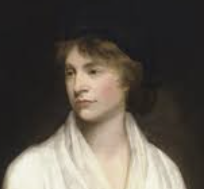
A standing army, for instance, is incompatible with freedom; because subordination and rigour are the very sinews of military discipline; and despotism is necessary to give vigour to enterprise that one will directs. A spirit inspired by romantic notions of honour, a kind of morality founded on the fashion of the age, can only be felt by a few officers, whilst the main body must be moved by command, like the waves of the sea; for the strong wind of authority pushes the crowd of subalterns forward, they scarcely know or care why, with headlong fury.
▼
Source
source
Ch. 1

2 months 2 weeks ago
There can be little question that good composition is far less dependent upon acquaintance with its laws, than upon practice and natural aptitude. A clear head, a quick imagination, and a sensitive ear, will go far towards making all rhetorical precepts needless.
▼
Source
source
Pt. I, sec. 1, "The Principle of Economy"
3 months 1 week ago
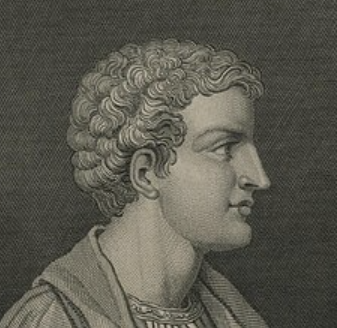
The mountains will be in labor, and a ridiculous mouse will be brought forth.
▼
Source
source
Line 139. Horace is hereby poking fun at heroic labours producing meager results; his line is also an allusion to one of Æsop's fables, The Mountain in Labour. Cf. Matthew Paris (AD 1237): Fuderunt partum montes: en ridiculus mus.
2 months 2 weeks ago
To dream of an enterprise of demolition that would spare none of the traces of the original Big Bang.
1 month 2 weeks ago
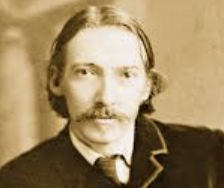
He and his tyrannicide! I am in a mad fury about these explosions. If that is the new world! Damn O'Donovan Rossa; damn him behind and before, above, below, and roundabout; damn, deracinate, and destroy him, root and branch, self and company, world without end. Amen. I write that for sport if you like, but I will pray in earnest, O Lord, if you cannot convert, kindly delete him!
▼
Source
source
Letter to Sidney Colvin, 2 August 1881. Quoted in Terrorism and Literature Chapter 12 - "Parliament Is Burning" by Deaglán Ó Donghaile ISBN 9781316987292
2 months 2 weeks ago
Out of the shadow of the abstract man, who thinks for the pleasure of thinking, emerges the organic man, who thinks because of a vital imbalance, and who is beyond science and art.
4 months 2 days ago
As soon as the soul has been made to perceive that a thing can conduct it to that which it loves supremely, it must inevitably embrace it with joy.
1 week 3 days ago
The Soldier is perhaps one of the most difficult things to realise; but Governments, had they not realised him, could not have existed: accordingly he is here.

2 months 6 days ago
The philosophical thought of Kant, the supreme flower of the Germanic people, has its roots in the religious feeling of Luther, and it is not possible for Kantism, especially the practical part of it, to take root and bring forth flower and fruit in peoples who have not undergone the experience of the Reformation and who perhaps were incapable of experiencing it. Kantism is Protestant, and we Spaniards are fundamentally Catholic. And if Krause struck some roots here - more numerous and more permanent than is commonly supposed - it is because Krause has roots in pietism, and pietism, as Ritschl has demonstrated in his Geschichte des Pietismus, has specifically Catholic roots and may be described as the irruption, or rather the persistence of Catholic mysticism in the heart of Protestant rationalism. And this explains why not a few Catholic thinkers in Spain became followers of Krause.
3 months 2 weeks ago
In an ever-changing, incomprehensible world the masses had reached the point where they would, at the same time, believe everything and nothing, think that everything was possible and that nothing was true. [...] under such conditions, one could make people believe the most fantastic statements one day, and trust that if the next day they were given irrefutable proof of their falsehood, they would take refuge in cynicism; instead of deserting the leaders who had lied to them, they would protest that they had known all along that the statement was a lie and would admire the leaders for their superior tactical cleverness.
2 months 2 weeks ago
A person who wakes up after a night of unbroken sleep has the illusion of beginning something new. When one instead remains awake the whole night long, nothing new begins.
3 months 3 weeks ago
Human freedom is realised in the adoption of humanity as an end in itself, for the one thing that no-one can be compelled to do by another is to adopt a particular end.
▼
Source
source
Part Two : Metaphysical Principles of Virtue
3 months 1 week ago
A righteous government is of all the most to be wished for,Bearing of blessing and good fortune in the highest.Guided by the law of Truth, supported by dedication and zeal,It blossoms into the Best of Order, a Kingdom of Heaven!To effect this I shall work now and ever more.
▼
Source
source
Vohu-Khshathra Gatha; Yasna 51, 1.
3 months 3 weeks ago
I doubt not, but from self-evident Propositions, by necessary Consequences, as incontestable as those in Mathematics, the measures of right and wrong might be made out.
▼
Source
source
Book IV, Ch. 3, sec. 18
3 months 2 weeks ago
My first advice (on how not to grow old) would be to choose you ancestors carefully. Although both my parents died young, I have done well in this respect as regards my other ancestors. My maternal grandfather, it is true, was cut off in the flower of his youth, at the age of sixty-seven, but my other three grandparents all lived to be over eighty. Of remoter ancestors I can only discover one who did not live to a great age, and he died of a disease which is now rare, namely, having his head cut off.
▼
Source
source
p. 50
2 months 1 day ago
If the individual realizes his self by spontaneous activity and thus relates himself to the world, he ceases to be an isolated atom; he and the world become part of one structuralized whole; he has his rightful place, and thereby his doubt concerning himself and the meaning of life disappears. This doubt sprang from his separateness and from the thwarting of life; when he can live, neither compulsively nor automatically but spontaneously, the doubt disappears. He is aware of himself as an active and creative individual and recognizes that there is only one meaning of life: the act of living itself.
▼
Source
source
Ch. 7, p. 262-3
3 months 2 weeks ago
At the end of Being and Nothingness, ... Being in-itself and Being for-itself were of Being; and this totality of beings, in which they were effected, itself was linked up to itself, relating and appearing to itself, by means of the essential project of human-reality. What was named in this way, in an allegedly neutral and undetermined way, was nothing other than the metaphysical unity of man and God, the relation of man to God, the project of becoming God as the project constituting human-reality. Atheism changes nothing in this fundamental structure.
▼
Source
source
Chicago, 1982. (original French published in Paris, 1972, as Marges de la philosophie). p. 116

3 months 2 weeks ago
Subject matters in general do not exist. There are no subject matters; no branches of learning-or, rather, of inquiry: there are only problems, and the urge to solve them.
3 months 1 week ago
Rather, we heirs of Enlightenment think of enemies of liberal democracy like Nietzsche or Loyola as, to use Rawls's word, "mad." We do so because there is no way to see them as fellow citizens of our constitutional democracy, people whose life plans might, given ingenuity and good will, be fitted in with those of other citizens. They are crazy because the limits of sanity are set by what we can take seriously. This, in turn, is determined by our upbringing, our historical situation.
3 months 2 weeks ago
No rules, however wise, are a substitute for affection and tact.
▼
Source
source
Ch. 12: Education and Discipline

2 weeks ago
The final thing... the question of the nation, and the role of the nation in liberalism...There would seem to be a tension between liberalism's belief that all human beings enjoy... the same basic set of human rights, and the fact that we are divided up into nation states, in which the authority to enforce those rights is territorially limited. ...This contradiction can be bridged because... there is a liberal form of national identity which is not only possible, but... necessary if a liberal society is going to succeed.
▼
Source
source
23:22

2 months 4 days ago
The safest general characterization of the European philosophical tradition is that it consists of a series of footnotes to Plato.
▼
Source
source
Pt. II, ch. 1, sec. 1.
2 weeks ago
But there has also been the rise of populist movements within existing liberal democracies, and particularly within the United States and Britain, which were... the leaders of the neoliberal revolution... in the 1980s...
▼
Source
source
20:01
CivilSimian.com created by AxiomaticPanic, CivilSimian, Kalokagathia