

5 days ago
"Freedom" awakens your rage against everything that is not you; "egoism" calls you to joy over yourselves, to self-enjoyment.
▼
Source
source
Dover 2005, p. 163
3 months 1 week ago
Philosophers get attention only when they appear to be doing something sinister-corrupting the youth, undermining the foundations of civilization, sneering at all we hold dear. The rest of the time everybody assumes that they are hard at work somewhere down in the sub-basement, keeping those foundations in good repair. Nobody much cares what brand of intellectual duct tape is being used.
▼
Source
source
"Philosophical Convictions." The Nation, June 14, 2004.
3 months 2 weeks ago
The even larger difference between rich and poor makes the latter even worse off, and this violates the principle of mutual advantage.
▼
Source
source
Chapter II, Section 13, pg. 79

3 months 1 week ago
He who upholds Truth with all the might of his power, He who upholds Truth the utmost in his word and deed,He, indeed, is Thy most valued helper, O Mazda Ahura!
▼
Source
source
Ahunuvaiti Gatha; Yasna 31, 22.

1 month 2 weeks ago
At the very high speed of living, everybody needs a new career and a new job and a totally new personality every ten years.

1 month 2 weeks ago
Audacity augments courage; hesitation, fear.
▼
Source
source
Maxim 63 Variant translation: "Valour grows by daring, fear by holding back."

3 months 2 weeks ago
Conversation is an art in which a man has all mankind for his competitors, for it is that which all are practising every day while they live.
▼
Source
source
Considerations by the Way

3 months 2 weeks ago
Man cannot will unless he has first understood that he must count on no one but himself; that he is alone, abandoned on earth in the midst of his infinite responsibilities, without help, with no other aim than the one he sets himself, with no other destiny than the one he forges for himself on this earth.

2 months 3 weeks ago
After it hath been seen how the obstinate and the ignorant of evil disposition are accustomed to dispute, it will further be shewn how disputes are wont to conclude; although others are so wary that without losing their composure, but with a sneer, a smile, a certain discreet malice, that which they have not succeeded in proving by argument - nor indeed can it be understood by themselves - nevertheless by these tricks of courteous disdain they pretend to have proven, endeavouring not only to conceal their own patently obvious ignorance but to cast it on to the back of their adversary. For they dispute not in order to find or even to seek Truth, but for victory, and to appear the more learned and strenuous upholders of a contrary opinion. Such persons should be avoided by all who have not a good breastplate of patience.
▼
Source
source
"Introductory Epistle : Argument of the Third Dialogue"

3 weeks 5 days ago
The heterodox current in Judaism led by Jesus seems to have had no notion of an immortal soul, created by God and then infused into the body: immortality meant being raised from the dead in the body one had in life, then living for ever in a world without decay or corruption. In the Christian religion invented by Paul and Augustine, which was strongly influenced by Plato, immortality meant something quite different - a life out of time, enjoyed by the 'soul' or 'spirit' of the departed. How this Platonic immortality could preserve anything like the persons that once lived was not made clear.
▼
Source
source
Cross-correspondences (pp. 32-3)

3 months 3 weeks ago
It is very important to note that some 2,500 years ago at the least Pythagoras went from Samos to the Ganges to learn geometry...But he would certainly not have undertaken such a strange journey had the reputation of the Brahmins' science not been long established in Europe...
▼
Source
source
Voltaire, Fragments historiques sur l'Inde. Quoted in Gewali, Salil (2013). Great Minds on India. New Delhi: Penguin Random House.
3 months 2 weeks ago
Subjects who reciprocally recognize each other as such, must consider each other as identical, insofar as they both take up the position of subject; they must at all times subsume themselves and the other under the same category. At the same time, the relation of reciprocity of recognition demands the non-identity of one and the other, both must also maintain their absolute difference, for to be a subject implies the claim of individuation.
▼
Source
source
Habermas (1972) "Sprachspiel, intention und Bedeutung. Zu Motiven bei Sellars und Wittgenstein". In R.W. Wiggerhaus (Ed.) Sprachanalyse and Soziologie. Frankfurt: Suhrkamp). p. 334 This is called the paradoxical achievement of intersubjectivity
Just now
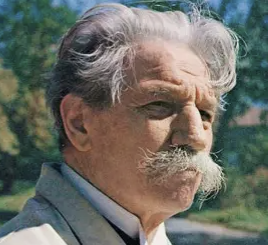
This dogma had first to be shattered before men could once more go out in quest of the historical Jesus, before they could even grasp the thought of His existence. That the historic Jesus is something different from the Jesus Christ of the doctrine of the Two Natures seems to us now self-evident. We can, at the present day, scarcely imagine the long agony in which the historical view of the life of Jesus came to birth. And even when He was once more recalled to life. He was still, like Lazarus of old, bound hand and foot with grave-clothes - the grave-clothes of the dogma of the Dual Nature.
▼
Source
source
p. 3

2 months 1 week ago
...whoever is not against us is for us.
▼
Source
source
9:40

3 months 2 weeks ago
What cannot be imagined cannot even be talked about.
▼
Source
source
Journal entry (12 October 1916), p. 84e
3 months 2 weeks ago
I have nothing but contempt for you idiotic chosen ones who have the heart to rejoice when there are the damned in Hell and the poor on earth; as for me, I am on the side of men and I will not leave it.
▼
Source
source
Act 6, sc. 6

3 months 2 weeks ago
The commodity is first of all, an external object, a thing which through its qualities satisfies human needs of whatever kind. The nature of these needs, whether they arise, for example, from the stomach, or the imagination, makes no difference. Nor does it matter here how the thing satisfies man's need, whether directly as a means of subsistence, i.e. an object of consumption, or indirectly as a means of production.
▼
Source
source
Vol. I, Ch. 1, Section 1, pg. 41.

3 months 3 weeks ago
The government of an exclusive company of merchants is, perhaps, the worst of all governments for any country whatever.
▼
Source
source
Chapter VII, Part Second, p. 619.

2 months 2 weeks ago
The ideal being? An angel ravaged by humor.

2 months 3 weeks ago
For the first time in sixty years, the priests, the old aristocracy and the people met in a common sentiment-a feeling of revenge, it is true, and not of affection; but even that is a great thing in politics, where a community of hatred is almost always the foundation of friendships.

3 months 2 weeks ago
The politician may change sides so frequently as to find himself always in the majority, but most politicians have a preference for one party to the other, and subordinate their love of power to this preference.
3 months 2 weeks ago
A religious symbol does not rest on any opinion. And error belongs only with opinion. One would like to say: This is what took place here; laugh, if you can.
▼
Source
source
Ch. 7 : Remarks on Frazer's Golden Bough, p. 123

3 months 2 weeks ago
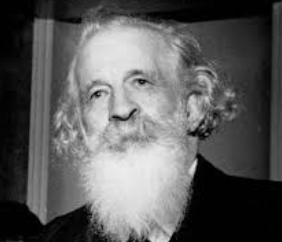
It is remarkable, that almost all speakers and writers feel it to be incumbent on them, sooner or later, to prove or to acknowledge the personality of God. ... In reading a work on agriculture, we have to skip the author's moral reflections, and the words "Providence" and "He" scattered along the page, to come at the profitable level of what he has to say. What he calls his religion is for the most part offensive to the nostrils. ... There is more religion in men's science than there is science in their religion.
2 months 1 week ago
Literary imagination is an aesthetic object offered by a writer to a lover of books.
▼
Source
source
A Retrospective Glance at the Lifework of a Master of Books
2 months 2 weeks ago
Music is everything. God himself is nothing more than an acoustic hallucination.

2 months 1 week ago
The higher culture of the West-whose moral, aesthetic, and intellectual values industrial society still professes-was a pre-technological culture in a functional as well as chronological sense. Its validity was derived from the experience of a world which no longer exists and which cannot be recaptured because it is in a strict sense invalidated by technological society. Moreover, it remained to a large degree a feudal culture, even when the bourgeois period gave it some of its most lasting formulations. It was feudal not only because of its confinement to privileged minorities, not only because of its inherent romantic element (which will be discussed presently), but also because its authentic works expressed a conscious, methodical alienation from the entire sphere of business and industry, and from its calculable and profitable order.
▼
Source
source
p. 58
3 months 1 week ago
Thou shouldst not become presumptuous through life; for death comes upon thee at last, and the perishable part falls to the ground.

3 months 2 weeks ago
The practical consequence of such a[n individualistic] philosophy is the well-known democratic respect for the sacredness of individuality,-is, at any rate, the outward tolerance of whatever is not itself intolerant. These phrases are so familiar that they sound now rather dead in our ears. Once they had a passionate inner meaning. Such a passionate inner meaning they may easily acquire again if the pretension of our nation to inflict its own inner ideals and institutions vi et armis upon Orientals should meet with a resistance as obdurate as so far it has been gallant and spirited. Religiously and philosophically, our ancient national doctrine of live and let live may prove to have a far deeper meaning than our people now seem to imagine it to possess.
▼
Source
source
"Preface"

4 months 2 weeks ago
Where is the boundary for the single individual in his concrete existence between what is lack of will and what is lack of ability; what is indolence and earthly selfishness and what is the limitation of finitude? For an existing person, when is the period of preparation over, when this question will not arise again in all its initial, troubled severity; when is the time in existence that is indeed a preparation? Let all the dialecticians convene-they will not be able to decide this for a particular individual in concreto.

4 months 2 weeks ago
[I]t's gravity is the cause; and that which is heavy abides in the middle, and the earth is in the middle: in like manner also, the infinite will abide in itself, through some other cause... and will itself support itself. ...[T]he places of the whole and the part are of the same species; as of the whole earth and a clod, the place is downward; and of the whole of fire, and a spark, the place is upward. So that if the place of the infinite is in itself, there will be the same place also of a part of the infinite.
2 months 1 week ago
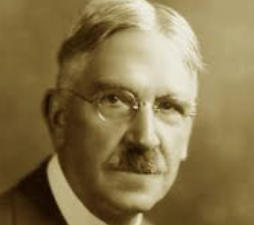
All the cases in which means and ends are external to one another are non-esthetic.
▼
Source
source
p. 205

1 month 3 days ago
I have had to suffer the violence and brutality that comes with rising fundamentalism, and I've asked myself how a society that is the cradle of peace, the land of Gandhi and Buddha, could be reduced to one of the most volatile societies in the world.
5 days ago
Every love to which there clings but the smallest speck of obligation is an unselfish love, and, so far as this speck reaches, a possessedness. He who believes that he owes the object of his love anything loves romantically or religiously.
▼
Source
source
Cambridge 1995, p. 260
2 months 1 week ago
Reason ... contradicts the established order of men and things on behalf of existing societal forces that reveal the irrational character of this order - for "rational" is a mode of thought and action which is geared to reduce ignorance, destruction, brutality, and oppression.
▼
Source
source
pp. 141-142
3 months 2 weeks ago
Jupiter: I committed the first crime by creating men as mortals. After that, what more could you do, you the murderers?
Aegisteus: Come on; they already had death in them: at most you simply hastened things a little.
▼
Source
source
Act 2

3 months 3 weeks ago
The public use of a man's reason must be free at all times, and this alone can bring enlightenment among men...
3 months 2 weeks ago
I hate the world and almost all the people in it. I hate the Labour Congress and the journalists who send men to be slaughtered, and the fathers who feel a smug pride when their sons are killed, and even the pacifists who keep saying human nature is essentially good, in spite of all the daily proofs to the contrary. I hate the planet and the human race - I am ashamed to belong to such a species.
▼
Source
source
Letter to Colette, December 28, 1916
1 month 2 weeks ago
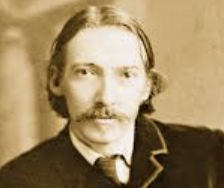
Fiction is to the grown man what play is to the child; it is there that he changes the atmosphere and tenor of his life.
▼
Source
source
A Gossip on Romance, printed in Longman's Magazine (November 1882).

3 months 3 weeks ago
Every man takes the limits of his own field of vision for the limits of the world.
▼
Source
source
"Psychological Observations"



1 month 1 week ago
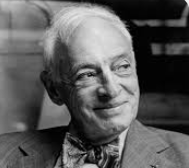
The late philosopher Morris R. Cohen of CCNY was asked by a student in the metaphysics course, "Professor Cohen, how do I know that I exist?" The keen old prof replied, "And who is asking?"
▼
Source
source
Humboldt's Gift (1996), p. 163
3 months 3 weeks ago
A great stock, though with small profits, generally increases faster than a small stock with great profits. Money, says the proverb, makes money. When you have a little, it is often easier to get more. The great difficulty is to get that little.
▼
Source
source
Chapter IX, p. 111.

2 months 2 days ago
The dominant, almost general, idea of revolution - particularly the Socialist idea - is that revolution is a violent change of social conditions through which one social class, the working class, becomes dominant over another class, the capitalist class. It is the conception of a purely physical change, and as such it involves only political scene shifting and institutional rearrangements. Bourgeois dictatorship is replaced by the "dictatorship of the proletariat" - or by that of its "advance guard," the Communist Party. Lenin takes the seat of the Romanovs, the Imperial Cabinet is rechristened Soviet of People's Commissars, Trotsky is appointed Minister of War, and a labourer becomes the Military Governor General of Moscow. That is, in essence, the Bolshevik conception of revolution, as translated into actual practice.
3 months 3 weeks ago
The auspices for philosophy are bad if, when proceeding ostensibly on the investigation of truth, we start saying farewell to all uprightness, honesty and sincerity, and are intent only on passing ourselves off for what we are not. We then assume, like those three sophists [Fichte, Schelling and Hegel], first a false pathos, then an affected and lofty earnestness, then an air of infinite superiority, in order to impose where we despair of ever being able to convince.
▼
Source
source
E. Payne, trans. (1974) Vol. 1, p. 22

4 months 4 days ago
Everything has two handles, the one by which it may be carried, the other by which it cannot. If your brother acts unjustly, don't lay hold on the action by the handle of his injustice, for by that it cannot be carried; but by the opposite, that he is your brother, that he was brought up with you; and thus you will lay hold on it, as it is to be carried.
▼
Source
source
(43).
3 months 3 weeks ago
When profit diminishes, merchants are very apt to complain that trade decays; though the diminution of profit is the natural effect of its prosperity, or of a greater stock being employed in it than before.
▼
Source
source
Chapter IX

3 months 2 weeks ago
The harmony between word and deed in Socrates' life is Dorian... manifested in the courage he showed at Delium. This harmonic accord... distinguishes Socrates from a sophist... [who] can give... fine and beautiful discourses on courage, but is not courageous... [U]nlike the sophist, he can use parrhesia and speak freely because what he says accords... with what he thinks... [which] accords... with what he does.
1 month 1 week ago
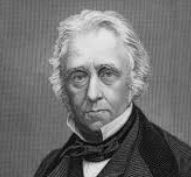
I believe that the progress of experimental science, the free intercourse of nation with nation, the unrestricted influx of commodities from countries where they are cheap, and the unrestricted efflux of labour towards countries where it is dear, will soon produce, nay, I believe that they are beginning to produce, a great and most blessed social revolution.
▼
Source
source
Speech in Edinburgh (2 November 1852), quoted in Speeches of the Right Honourable T. B. Macaulay, M.P. (1854), p. 517
2 months 3 weeks ago
The public, therefore, among a democratic people, has a singular power, which aristocratic nations cannot conceive; for it does not persuade others to its beliefs, but it imposes them and makes them permeate the thinking of everyone by a sort of enormous pressure of the mind of all upon the individual intelligence.
▼
Source
source
Book One, Chapter II.
CivilSimian.com created by AxiomaticPanic, CivilSimian, Kalokagathia