


4 months 2 weeks ago
Anything could be found in figures if the search were long enough and hard enough and if the proper pieces of information were ignored or overlooked.
4 months 1 week ago
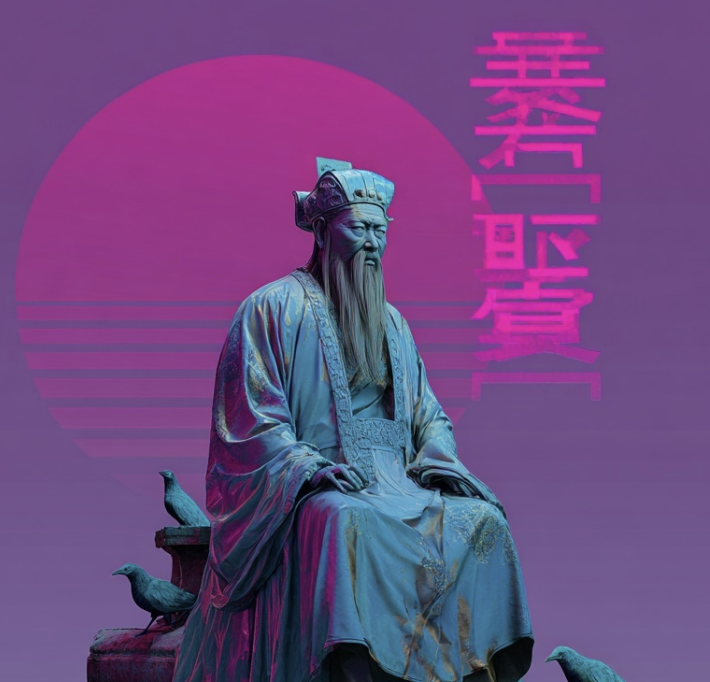
Follow the seasons of Ha,Ride in the state carriage of Yau,Wear the ceremonial cap of Chan,Let the music be the Shiu with its pantomimes.

3 months 3 weeks ago
China has been long one of the richest, that is, one of the most fertile, best cultivated, most industrious, and most populous countries in the world. It seems, however, to have been long stationary. Marco Polo, who visited it more than five hundred years ago, describes its cultivation, industry, and populousness, almost in the same terms in which they are described by travellers in the present times.
▼
Source
source
Chapter VIII, p. 86.
5 days ago
There is no means of avoiding the final collapse of a boom brought about by credit expansion. The alternative is only whether the crisis should come sooner as the result of voluntary abandonment of further credit expansion, or later as a final and total catastrophe of the currency system involved.
▼
Source
source
Chapter XX: Interest, Credit Expansion, The Trade Cycle, § 8 : The Monetary or Circulation Theory of the Trade Cycle

3 months 2 weeks ago
Farewell to the monsters, farewell to the saints. Farewell to pride. All that is left is men.
▼
Source
source
Act 10, sc. 4

2 months 2 weeks ago
If the people are happy, united, wealthy, and powerful, we presume the rest. We conclude that to be good from whence good is derived.
2 months 1 week ago
I do not accept any absolute formulas for living. No preconceived code can see ahead to everything that can happen in a man's life. As we live, we grow and our beliefs change. They must change. So I think we should live with this constant discovery. We should be open to this adventure in heightened awareness of living. We should stake our whole existence on our willingness to explore and experience.
▼
Source
source
As quoted in Martin Buber : An Intimate Portrait (1971), p. 56
2 months 2 weeks ago
The woman who fights against her father still has the possibility of leading an instinctive, feminine existence, because she rejects only what is alien to her. But when she fights against the mother she may, at the risk of injury to her instincts, attain to greater consciousness, because in repudiating the mother she repudiates all that is obscure, instinctive, ambiguous, and unconscious in her own nature.
▼
Source
source
"Psychological Aspects of the Mother Archetype" (1939). In CW 9, Part I: The Archetypes and the Collective Unconscious. P. 186
2 months 2 weeks ago
Great and enduring civilizations like those of the Hindus and the Chinese were built upon this foundation and developed from it a discipline of self-knowledge which they brought to a high pitch of refinement both in philosophy and practice.
▼
Source
source
Carl Jung, Modern Man in Search of a Soul. quoted in Hindu Culture, K. Guru Dutt, and quoted in Gewali, Salil (2013). Great Minds on India. New Delhi: Penguin Random House.

3 months 2 weeks ago
All human activity is prompted by desire. There is a wholly fallacious theory advanced by some earnest moralists to the effect that it is possible to resist desire in the interests of duty and moral principle. I say this is fallacious, not because no man ever acts from a sense of duty, but because duty has no hold on him unless he desires to be dutiful. If you wish to know what men will do, you must know not only, or principally, their material circumstances, but rather the whole system of their desires with their relative strengths.
▼
Source
source
(wav audio file of Russell's voice)
2 weeks 1 day ago
We admire people to the extent that we cannot explain what they do, and the word "admire" then means "marvel at."
▼
Source
source
Beyond Freedom and Dignity
2 months 5 days ago
We used to pay too little attention to utopias, or even disregard them altogether, saying with regret they were impossible of realisation. Now indeed they seem to be able to be brought about far more easily than we supposed, and we are actually faced by an agonising problem of quite another kind: how can we prevent their final realisation? ... Utopias are more realisable than those 'realist politics' that are only the carefully calculated policies of office-holders, and towards utopias we are moving. But it is possible that a new age is already beginning, in which cultured and intelligent people will dream of ways to avoid ideal states and to get back to a society that is less 'perfect' and more free.
▼
Source
source
pp. 187-188. Aldous Huxley used this passage (in French translation) as the epigraph to Brave New World.

3 months 2 weeks ago
Born for success he seemed, With grace to win, with heart to hold, With shining gifts that took all eyes.
▼
Source
source
In Memoriam E. B. E.

2 months 1 week ago
When the whole is at stake, there is no crime except that of rejecting the whole, or not defending it. ... Those who identify themselves with the whole, who are installed as the leaders and defenders of the whole can make mistakes, but they cannot do wrong-they are not guilty. They may become guilty again when this identification no longer holds, when they are gone.
▼
Source
source
pp. 82-83
3 months 2 weeks ago
To understand the actual world as it is, not as we should wish it to be, is the beginning of wisdom.
2 months 2 weeks ago
What will be the influence of communist society on the family? It will transform the relations between the sexes into a purely private matter which concerns only the persons involved and into which society has no occasion to intervene. It can do this since it does away with private property and educates children on a communal basis, and in this way removes the two bases of traditional marriage - the dependence rooted in private property, of the women on the man, and of the children on the parents.
2 months 3 weeks ago
Distance is a great promoter of admiration!
▼
Source
source
As quoted in Thesaurus of Epigrams: A New Classified Collection of Witty Remarks, Bon Mots and Toasts (1942) by Edmund Fuller

2 months 2 weeks ago
This very second has vanished forever, lost in the anonymous mass of the irrevocable. It will never return. I suffer from this and I do not. Everything is unique - and insignificant.

2 months 2 days ago
He alone is aware of the truth, and if all men were aware of it, there would be an end of life. In the country of the blind, the one-eyed man is king. But his kingship is kingship over nothing. It brings no powers and privileges, only loss of faith and exhaustion of the power to act. Its world is a world without values.
▼
Source
source
Chapter one, The Country of the Blind, referencing a quote by Desiderius Erasmus.
4 months 1 week ago
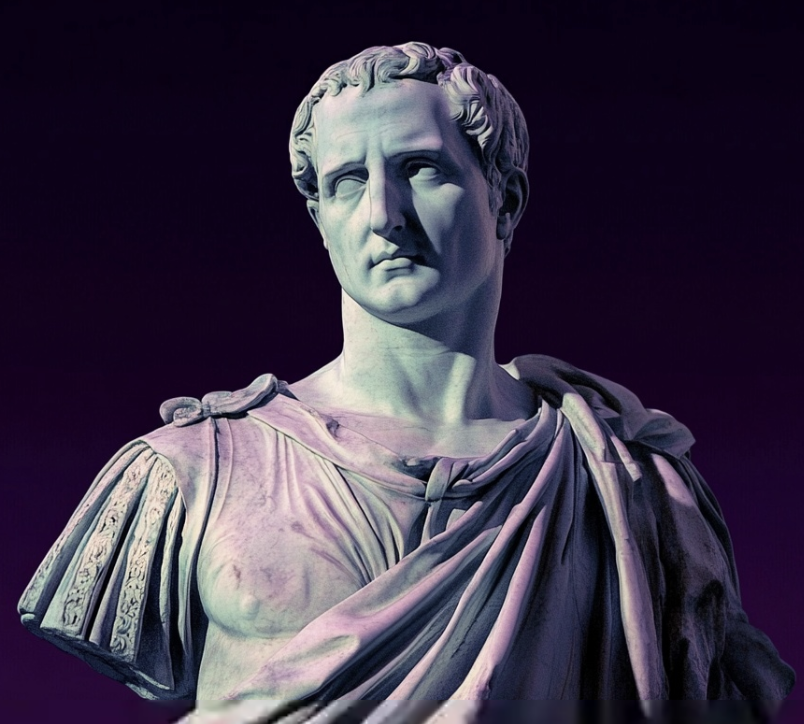
We know, that of all living beings man is the best formed, and, as the gods belong to this number, they must have a human form. ... I do not mean to say that the gods have body and blood in them; but I say that they seem as if they had bodies with blood in them. . . , Epicurus, for whom hidden things were as tangible as if he had touched them with his finger, teaches us that gods are not generally visible, but that they are intelligible; that they are not bodies having a certain solidity . . . but that we can recognize them by their passing images; that as there are atoms enough in the infinite space to produce such images, these are produced before us . . . and make us realize what are these happy, immortal beings.
▼
Source
source
Book I, Section 18

1 month 4 weeks ago
He who is enamored of himself will at least have the advantage of being inconvenienced by few rivals.
▼
Source
source
H 10 Variant translation: He who is in love with himself has at least this advantage - he won't encounter many rivals.
4 months 2 weeks ago
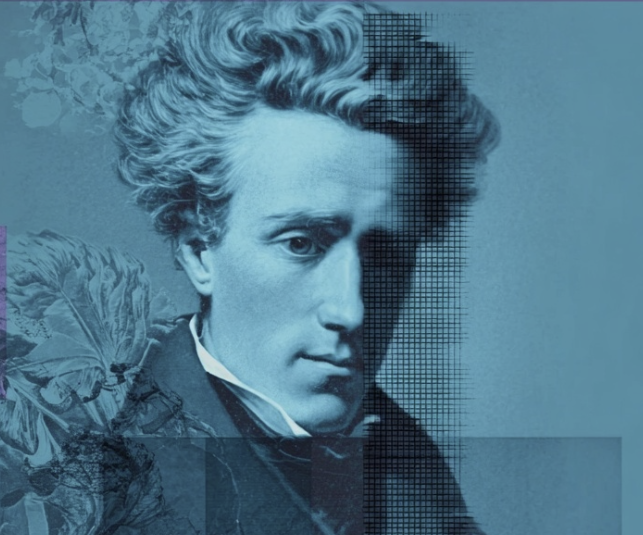
To the contemporary, Christ can only say: I will offer myself as a sacrifice for the sins of the world and for yours also. Is this easier to believe now than when he has done it, has offered himself? Or is the comfort greater because of his saying that he will do it than it is because of his having done it? There is no greater love than this, that someone lays down his life for another, but when is it easier to believe, and when is the comfort greater: when the loving one says he will do it, or when he has done it?

2 months 5 days ago
How are we to adjudicate among rival ontologies? Certainly the answer is not provided by the semantical formula "To be is to be the value of a variable"; this formula serves rather, conversely, in testing the conformity of a given remark or doctrine to a prior ontological standard.
▼
Source
source
"On What There Is"
3 months 3 weeks ago
Do not shorten the morning by getting up late, or waste it in unworthy occupations or in talk; look upon it as the quintessence of life, as to a certain extent sacred. Evening is like old age: we are languid, talkative, silly. Each day is a little life: every waking and rising a little birth, every fresh morning a little youth, every going to rest and sleep a little death.
▼
Source
source
Vol. 2, Ch. 2: Our Relation To Ourselves
4 months 1 week ago
They are such fools that they seem to expect that, though the Republic is lost, their fish-ponds will be safe.
▼
Source
source
Letters to Atticus, Book I, 18.
1 month 4 weeks ago
Nothing can contribute more to peace of soul than the lack of any opinion whatever.
▼
Source
source
E 11

2 months 2 days ago
Motherhood in the true sense should embrace all children. Because so few realize this truth, child life is so empty of warmth, of love, of color, and beauty. A home-what is it to-day but a cage from which most of its inhabitants wish to escape? No, I should never have found happiness in such a place. My ideals, the struggle for them, and whatever hardships and suffering they have brought, far from wasting my life, have enriched it a thousandfold. To me it has been a grand adventure which I should not have missed for all the wealth in the world.
2 months 2 days ago
Parents will strip themselves of everything, will sacrifice everything for the physical well-being of their child, will wake nights and stand in fear and agony before some physical ailment of their beloved one; but will remain cold and indifferent, without the slightest understanding before the soul cravings and the yearnings of their child, neither hearing nor wishing to hear the loud knocking of the young spirit that demands recognition. On the contrary, they will stifle the beautiful voice of spring, of a new life of beauty and splendor of love; they will put the long lean finger of authority upon the tender throat and not allow vent to the silvery song of the individual growth, of the beauty of character, of the strength of love and human relation, which alone make life worth living.
2 months 3 days ago
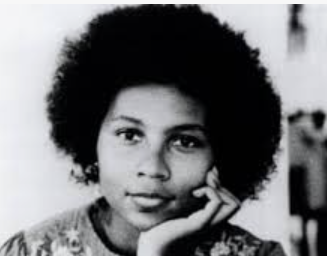
Radical black feminists have never confined their vision to just the emancipation of black women or women in general, or all black people for that matter. Rather, they are the theorists and proponents of a radical humanism committed to liberating humanity and reconstructing social relations across the board. When bell hooks says "Feminism is for everybody," she is echoing what has always been a basic assumption of black feminists. We are not talking about identity politics but a constantly developing often contested, revolutionary conversation about how all of us might envision and remake the world.
▼
Source
source
Robin Kelley Freedom Dreams
2 months 2 weeks ago
Big industry has brought all the people of the Earth into contact with each other, has merged all local markets into one world market, has spread civilization and progress everywhere and has thus ensured that whatever happens in civilized countries will have repercussions in all other countries. It follows that if the workers in England or France now liberate themselves, this must set off revolution in all other countries - revolutions which, sooner or later, must accomplish the liberation of their respective working class.
4 months 5 days ago
What is the Church? She is the body of Christ. Join to it the Head, and you have one man: The Head and the body make up one man. Who is the head? He who was born of the Virgin Mary. And what is His body? It is His Spouse, that is, the Church.... The Father willed that these two, the God Christ and the Church, should be one man. All men are one man in Christ, and the unity of the Christians constitutes but one man. And this man is all men, all men are this man; for all are one, since Christ is one.
▼
Source
source
p. 414
3 months 3 weeks ago
Let them have what instructions you will, and ever so learned lectures of breeding daily inculcated into them, that which will most influence their carriage will be the company they converse with, and the fashion of those about them.
▼
Source
source
Sec. 67

3 months 2 weeks ago
In short, competition has to shoulder the responsibility of explaining all the meaningless ideas of the economists, whereas it should rather be the economists who explain competition.
▼
Source
source
Vol. III, Ch. L, Illusions Created by Competition, p. 866.

3 months 3 weeks ago
Physicians have this advantage: the sun lights their success and the earth covers their failures.
▼
Source
source
Ch. 37

4 months 2 weeks ago
When the throne of God is overturned, the rebel realizes that it is now his own responsibility to create the justice, order, and unity that he sought in vain within his own condition, and in this way to justify the fall of God. Then begins the desperate effort to create, at the price of crime and murder if necessary, the dominion of man.
3 months 2 weeks ago
Competition for power is of two sorts: between organizations, and between individuals for leadership within an organization.
▼
Source
source
p. 165
1 week 6 days ago
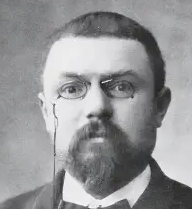
It is because simplicity and vastness are both beautiful that we seek by preference simple facts and vast facts; that we take delight, now in following the giant courses of the stars, now in scrutinizing the microscope that prodigious smallness which is also a vastness, and now in seeking in geological ages the traces of a past that attracts us because of its remoteness.
▼
Source
source
Part I. Ch. 1 : The Selection of Facts, p. 23

3 months 2 weeks ago
Nothing contributes more to nourish elevation of sentiments in a people, than the large and free character of their habitations.
▼
Source
source
(p. 55)
2 months 3 weeks ago
Gaiety - a quality of ordinary men. Genius always presupposes some disorder in the machine.
▼
Source
source
"Diseases"
4 months 2 weeks ago
He could almost wish he were superstitious. He could then console himself with the thought that the casual meaningless meeting had really been directed by a knowing and purposeful Fate.

2 months 1 week ago
Get thee hence, Satan: for it is written, Thou shalt worship the Lord thy God, and him only shalt thou serve.
▼
Source
source
4:10 (KJV) Said to Satan.
1 month 4 weeks ago
It is a question whether, when we break a murderer on the wheel, we do not fall into the error a child makes when it hits the chair it has bumped into.
▼
Source
source
J 146
3 months 2 weeks ago
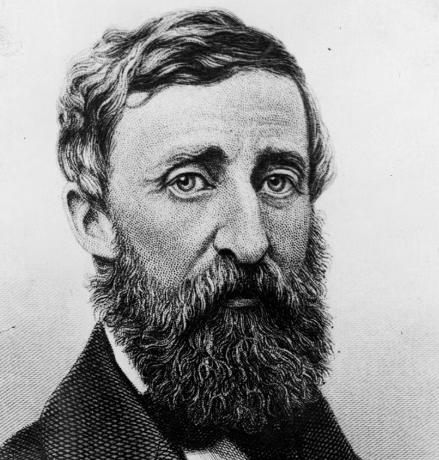
I take it for granted, when I am invited to lecture anywhere, - for I have had a little experience in that business, - that there is a desire to hear what I think on some subject, though I may be the greatest fool in the country, - and not that I should say pleasant things merely, or such as the audience will assent to; and I resolve, accordingly, that I will give them a strong dose of myself. They have sent for me, and engaged to pay for me, and I am determined that they shall have me, though I bore them beyond all precedent.
▼
Source
source
p. 484

1 month 2 weeks ago
The assertion that art may be good art and at the same time incomprehensible to a great number of people is extremely unjust, and its consequences are ruinous to art itself...it is the same as saying some kind of food is good but most people can't eat it.
2 months 2 weeks ago
We understand God by everything in ourselves that is fragmentary, incomplete, and inopportune.
2 months 1 day ago
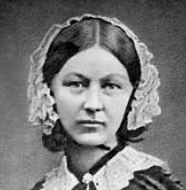
To have no food for our heads no food for our hearts, no food for our activity, is that nothing? If we have no food for the body, how do we cry out, how all the world hears of it, how all the newspapers talk of it, with a paragraph headed in great capital letters, DEATH FROM STARVATION! But suppose one were to put a paragraph in the Times, Death of Thought from Starvation, or Death of Moral Activity from Starvation, how people would stare, how they would laugh and wonder! One would think we had no heads nor hearts, by the total indifference of the public towards them. Our bodies are the only things of any consequence.
4 months 2 weeks ago
Generals are usually a conservative force who can be relied on to oppose social change.
CivilSimian.com created by AxiomaticPanic, CivilSimian, Kalokagathia