


3 months 2 weeks ago
It is unjust that the whole of society should contribute towards an expence of which the benefit is confined to a part of the society.
▼
Source
source
Chapter I, Part IV, Conclusion, p. 881.

4 months 1 week ago
...there are more things to admire in men than to despise.
1 month 1 week ago
If your parent is just, revere him; if not, bear with him.
▼
Source
source
Maxim 27
3 months 4 weeks ago
If it is my interest to have a farm, it is my interest to take it away from my neighbour; if it is my interest to have a cloak, it is my interest also to steal it from a bath. This is the source of wars, seditions, tyrannies, plots.
▼
Source
source
Book I, ch. 22, 14.
3 months 5 days ago
Thought is something limitless and independent, and has been mixed with no thing but is alone by itself. ... What was mingled with it would have prevented it from having power over anything in the way in which it does. ... For it is the finest of all things and the purest.
▼
Source
source
Frag. B12, in Jonathan Barnes, Early Greek Philosophy (1984), p. 190.

3 months 2 weeks ago
Inferiority is always with us, and merciless scorn of it is the keynote of the military temper.

2 months 1 week ago
I believe in the salvation of humanity, in the future of cyanide . . .

1 month 3 weeks ago
Christianity is most admirably adapted to the training of slaves, to the perpetuation of a slave society; in short, to the very conditions confronting us to-day.... The rulers of the earth have realized long ago what potent poison inheres in the Christian religion. That is the reason they foster it; that is why they leave nothing undone to instill it into the blood of the people. They know only too well that the subtleness of the Christian teachings is a more powerful protection against rebellion and discontent than the club or the gun.

1 week 4 days ago
Fleeing from a life of constant insecurity and forced mobility is good preparation for dealing with and resisting the typical forms of exploitation of immaterial labor.
▼
Source
source
133
Just now
There is no means of avoiding the final collapse of a boom brought about by credit expansion. The alternative is only whether the crisis should come sooner as the result of voluntary abandonment of further credit expansion, or later as a final and total catastrophe of the currency system involved.
▼
Source
source
Chapter XX: Interest, Credit Expansion, The Trade Cycle, § 8 : The Monetary or Circulation Theory of the Trade Cycle

2 months 2 weeks ago
A good man with a good conscience doesn't walk so fast.
▼
Source
source
Scene X.

3 months 2 weeks ago
This freedom from absolute, arbitrary power, is so necessary to, and closely joined with a man's preservation, that he cannot part with it, but by what forfeits his preservation and life together: for a man, not having the power of his own life, cannot, by compact, or his own consent, enslave himself to any one, nor put himself under the absolute, arbitrary power of another, to take away his life, when he pleases.
▼
Source
source
Second Treatise of Civil Government, Ch. IV, sec. 23

6 days ago
Yet with every allowance, one feels it difficult to see how any mortal ever could consider this Koran as a Book written in Heaven, too good for the Earth; as a well-written book, or indeed as a book at all; and not a bewildered rhapsody; written, so far as writing goes, as badly as almost any book ever was!
1 month 1 week ago
There is simply too much to think about. It is hopeless - too many kinds of special preparation are required. In electronics, in economics, in social analysis, in history, in psychology, in international politics, most of us are, given the oceanic proliferating complexity of things, paralyzed by the very suggestion that we assume responsibility for so much. This is what makes packaged opinion so attractive.
▼
Source
source
There Is Simply Too Much to Think About (1992), pp. 173-174

1 month 4 weeks ago
When power is separated from any communicative context, it becomes naked violence.

3 months 2 weeks ago
The sentiments of men often differ with regard to beauty and deformity of all kinds, even while their general discourse is the same ... In all matters of opinion and science, the case is opposite: The difference among men is there oftener found to lie in generals than in particulars; and to be less in reality than in appearance.

4 months 1 week ago
There is more to a science fiction story than the science it contains.
2 months 5 days ago
At present, when the prevailing forms of society have become hindrances to the free expression of human powers, it is precisely the abstract branches of science, mathematics and theoretical physics, which ... offer a less distorted form of knowledge than other branches of science which are interwoven with the pattern of daily life, and the practicality of which seemingly testifies to their realistic character.
▼
Source
source
p. 133.
2 months 1 week ago
Marx explains the alienation of labor as exemplified in, first, the relation of the worker to the product of his labor and, second, the relation of the worker to his own activity. P. 276

1 week 3 days ago
Nature has made a race of workers; that is the Chinese race, with a marvelous dexterity of hand and hardly any feeling of honor; govern this race with justice by exacting from them through the competence of such government an ample dowry to the conquering race; the subordinate race will be satisfied; a race of workers of the earth, such is the Negro; let us be for him good and human, and everything will be in order -- a race of masters and soldiers, that is the European race.
▼
Source
source
94

2 months 2 weeks ago
Pursue Virtue virtuously.
▼
Source
source
These words also appear in Christian Morals, Part I, Section I

3 months 1 week ago
Well, as you know, I was blessed to do over a hundred events for my dear brother [Bernie Sanders]. And this is the first time I've had a chance to publicly endorse him again, but yes, indeed. I'll be in his corner that we're going to win this time. And it has to do with the Martin Luther King like criteria of assessing a candidate namely the issues of militarism, poverty, materialism, and racism, xenophobia in all of its forms that includes any kind of racism as you know against black people, brown people, yellow people, anybody, Arabs, Muslims, Jews, Palestinians, Kashmirians, Tibetans and so forth. So that there's no doubt that the my dear brother Bernie stands shoulders above any of the other candidates running in the Democratic primary when it comes to that Martin Luther King-like standards or criteria.
▼
Source
source
Quoted in: Cornel West on Bernie, Trump, and Racism, The Intercept, Mehdi Hasan,
2 months 1 week ago
When capitalism is negated, social processes no longer stand under the rule of blind natural laws.
▼
Source
source
P. 318

4 months 1 week ago
The most elementary form of rebellion, paradoxically, expresses an aspiration for order.
2 months 1 week ago
To tell the truth, I couldn't care less about the relativity of knowledge, simply because the world does not deserve to be known.
1 week 2 days ago
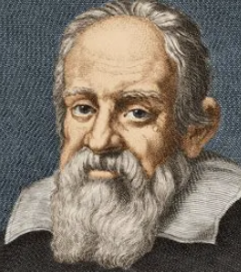
If what we are discussing were a point of law or of the humanities, in which neither true nor false exists, one might trust in subtlety of mind and readiness of tongue and in the greater experience of the writers, and expect him who excelled in those things to make his reasoning most plausible, and one might judge it to be the best. But in the natural sciences, whose conclusions are true and necessary and have nothing to do with human will, one must take care not to place oneself in the defense of error; for here a thousand Demostheneses and a thousand Aristotles would be left in the lurch by every mediocre wit who happened to hit upon the truth for himself. Therefore, Simplicio, give up this idea and this hope of yours that there may be men so much more learned, erudite, and well-read than the rest of us as to be able to make that which is false become true in defiance of nature.
▼
Source
source
Salviati, p. 61

3 months 2 weeks ago
Unlike the masses, intellectuals have a taste for rationality and an interest in facts.
▼
Source
source
Chapter 5 (p. 43)

3 months 2 weeks ago
The Managers of that Trade themselves, and others, testify, that many of these African nations inhabit fertile countries, are industrious farmers, enjoy plenty, and lived quietly, averse to war, before the Europeans debauched them with liquors, and bribing them against one another; and that these inoffensive people are brought into slavery, by stealing them, tempting Kings to sell subjects, which they can have no right to do, and hiring one tribe to war against another, in order to catch prisoners. By such wicked and inhuman ways the English are said to enslave towards one hundred thousand yearly; of which thirty thousand are supposed to die by barbarous treatment in the first year; besides all that are slain in the unnatural wars excited to take them. So much innocent blood have the Managers and Supporters of this inhuman Trade to answer for to the common Lord of all!

3 months 2 weeks ago
The object of art - like every other product - creates a public which is sensitive to art and enjoys beauty.
▼
Source
source
Introduction, p. 12.

1 month 1 week ago
The discarnate TV user lives in a world between fantasy and dream, and is in a typically hypnotic state, which is the ultimate form and level of participation.
▼
Source
source
"A Last Look at the Tube." New York Magazine, 17 March 1978, p. 45-48
2 months 2 weeks ago
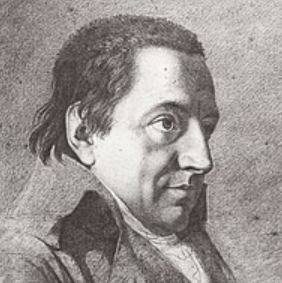
Who am I? Subject and object in one - contemplating and contemplated, thinking and thought of. As both must I have become what I am.
▼
Source
source
Jane Sinnett, trans 1846 p. 71
3 months 2 weeks ago
The qualities most useful to ourselves are, first of all, superior reason and understanding, by which we are capable of discerning the remote consequences of all our actions, and of foreseeing the advantage or detriment which is likely to result from them: and secondly, self-command, by which we are enabled to abstain from present pleasure or to endure present pain, in order to obtain a greater pleasure or to avoid a greater pain in some future time. In the union of those two qualities consists the virtue of prudence, of all the virtues that which is most useful to the individual.
▼
Source
source
Chap. II.

3 months 2 weeks ago
Fascism is not defined by the number of its victims, but by the way it kills them.
▼
Source
source
On the Execution of Julius and Ethel Rosenberg, Libération

3 months 1 week ago
We are asleep. Our Life is a dream. But we wake up sometimes, just enough to know that we are dreaming.
2 months 1 week ago
We do not rush toward death, we flee the catastrophe of birth, survivors struggling to forget it. Fear of death is merely the projection into the future of a fear which dates back to our first moment of life. We are reluctant, of course, to treat birth as a scourge: has it not been inculcated as the sovereign good - have we not been told that the worst came at the end, not at the outset of our lives? Yet evil, the real evil, is behind, not ahead of us. What escaped Jesus did not escape Buddha: "If three things did not exist in the world, O disciples, the Perfect One would not appear in the world. ..." And ahead of old age and death he places the fact of birth, source of every infirmity, every disaster.
3 months 2 weeks ago
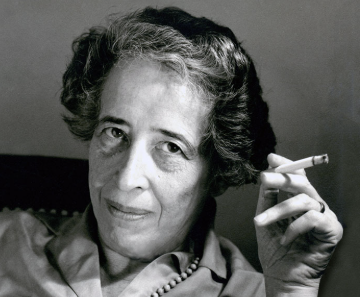
What makes it so plausible to assume that hypocrisy is the vice of vices is that integrity can indeed exist under the cover of all other vices except this one. Only crime and the criminal, it is true, confront us with the perplexity of radical evil; but only the hypocrite is really rotten to the core.
▼
Source
source
On Revolution (1963), ch. 2
1 month 3 weeks ago
We will likely also find that the nature of the problem to be solved will be a principal determinant of the mix. With our growing understanding of the organization of judgmental and intuitive processes, of the specific knowledge that of the specific knowledge that is required to perform particular judgmental tasks, and of the cues that evoke such knowledge in situations in which it is relevant, we have a powerful new tool for improving expert judgment. We can specify the knowledge and the recognition capabilities that experts in a domain need to acquire, and use these specifications for designing appropriate learning procedures.
▼
Source
source
p. 137.
3 months 2 weeks ago
In this consists the difference between the character of a miser and that of a person of exact economy and assiduity. The one is anxious about small matters for their own sake; the other attends to them only in consequence of the scheme of life which he has laid down to himself.
▼
Source
source
Chap. VI.
1 month 1 week ago
Have courage, or cunning, when you deal with an enemy.
▼
Source
source
Maxim 156

1 month 2 weeks ago
As soon as men live entirely in accord with the law of love natural to their hearts and now revealed to them, which excludes all resistance by violence, and therefore hold aloof from all participation in violence - as soon as this happens, not only will hundreds be unable to enslave millions, but not even millions will be able to enslave a single individual.
▼
Source
source
V

1 month 3 weeks ago
The "second sight" possessed by the Highlanders in Scotland is actually a foreknowledge of future events. I believe they possess this gift because they don't wear trousers... That is also why in all countries women are more prone to utter prophecies.
▼
Source
source
L 26

2 months 3 weeks ago
A bad feeling is a commotion of the mind repugnant to reason, and against nature.
▼
Source
source
As quoted in Tusculanae Quaestiones by Cicero, iv. 6.
2 months 1 week ago
Being is continuous becoming.
▼
Source
source
P. 136

2 months 2 weeks ago
I am well aware, that men love to hear of their power, but have an extreme disrelish to be told of their duty.
▼
Source
source
p. 441

3 months 3 weeks ago
Many have been deceived by outward appearances and have proceeded to write and teach about good works and how they justify without even mentioning faith. ... Wearying themselves with many works, they never come to righteousness.
▼
Source
source
p. 75
3 months 2 weeks ago
Karsky: I met your father last week. Are you still interested in hearing how he is doing?
Hugo: No.
Karsky: It is very probable that you will be responsible for his death.
Hugo: It is virtually certain that he is responsible for my life. We are even.
▼
Source
source
Act 4, sc. 4
4 months 1 week ago
It pays to be obvious, especially if you have a reputation for subtlety.
2 months 1 week ago
Because the peculiarity of man is that his machinery for reaction on external things has involved an imaginative transcript of these things, which is preserved and suspended in his fancy; and the interest and beauty of this inward landscape, rather than any fortunes that may await his body in the outer world, constitute his proper happiness. By their mind, its scope, quality, and temper, we estimate men, for by the mind only do we exist as men, and are more than so many storage-batteries for material energy. Let us therefore be frankly human. Let us be content to live in the mind.
▼
Source
source
p. 64
2 months 1 week ago
We understand God by everything in ourselves that is fragmentary, incomplete, and inopportune.
CivilSimian.com created by AxiomaticPanic, CivilSimian, Kalokagathia