

4 months 2 weeks ago
What does man actually know about himself? Is he, indeed, ever able to perceive himself completely, as if laid out in a lighted display case? Does nature not conceal most things from him even concerning his own body in order to confine and lock him within a proud, deceptive consciousness, aloof from the coils of the bowels, the rapid flow of the blood stream, and the intricate quivering of the fibers! She threw away the key.

2 months 1 week ago
Compared to the refined culture of sclerotic forms and frames, which mask everything, the lyrical mode is utterly barbarian in its expression. Its value resides precisely in its savage quality: it is only blood, sincerity, and fire.
4 months 1 week ago
It's funny the respectable names you can give to superstition.
2 months 5 days ago
Language transcends us and yet, we speak.
▼
Source
source
p. 349
3 months 1 week ago
We do not "have" a body; rather, we "are" bodily.
▼
Source
source
p. 99

3 months 3 weeks ago
Rejoice in the things that are present; all else is beyond thee.
1 month 1 week ago
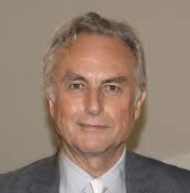
Think about the two qualities that a virus, or any sort of parasitic replicator, demands of a friendly medium, the two qualities that make cellular machinery so friendly towards parasitic DNA, and that make computers so friendly towards computer viruses. These qualities are, firstly, a readiness to replicate information accurately, perhaps with some mistakes that are subsequently reproduced accurately; and, secondly, a readiness to obey instructions encoded in the information so replicated.

3 months 2 weeks ago
Last words are for fools who haven't said enough.
▼
Source
source
Various attributions,
Just now
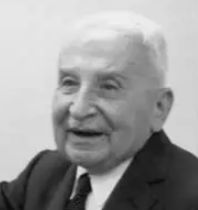
People do not cooperate under the division of labor because they love or should love one another. They cooperate because this best serves their own interests. Neither love nor charity nor any other sympathetic sentiments but rightly understood selfishness is what originally impelled man to adjust himself to the requirements of society, to respect the rights and freedoms of his fellow men and to substitute peaceful collaboration for enmity and conflict.
4 days ago
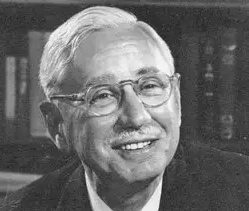
[on Epicurus] His starting point is a conviction that apathy is impossible, and that pleasure - though not necessarily sensual pleasure - is the only conceivable, and quite legitimate, end of life and action. "Nature leads every organism to prefer its own good to every other good" - even the stoic finds a subtle pleasure in renunciation. "We must not avoid pleasures, but we must select them". Epicurus, then, is no epicurean, he exalts the joys of intellect rather than those of sense; he warns against pleasures that excite and disturb the soul which they should rather quite and appease. In the end he proposes to seek not pleasure in its usual sense, but ataraxia - tranquility, equaninimity, repose of mind; all of which trembles on the verge of Zeno's "Apathy"

4 months 3 days ago
Truth is the ultimate end of the whole universe.
▼
Source
source
I, 1, 2
4 weeks ago
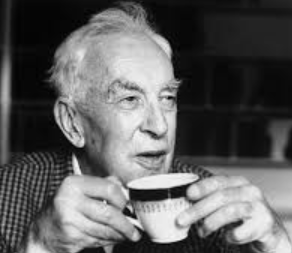
I do not believe that civilizations have to die...Civilization is not an organism. It is a product of wills.
▼
Source
source
In "Prophet of Hope & Fear" [Review of A Study of History, Vols. 7-10] TIME (18 October 1954) p. 108

3 months 3 weeks ago
I have no patience with those who say that sexual excitement is shameful and that venereal stimuli have their origin not in nature, but in sin. Nothing is so far from the truth. As if marriage, whose function cannot be fulfilled without these incitements, did not rise above blame. In other living creatures, where do these incitements come from? From nature or from sin? From nature, of course. It must borne in mind that in the apetites of the body there is very little difference between man and other living creatures. Finally, we defile by our imagination what of its own nature is fair and holy. If we were willing to evaluate things not according to the opinion of the crowd, but according to nature itself, how is it less repulsive to eat, chew, digest, evacuate, and sleep after the fashion of dumb animals, than to enjoy lawful and permitted carnal relations?
▼
Source
source
In Praise of Marriage (1519), in Erasmus on Women (1996) Erika Rummel
3 months 3 weeks ago
This misplacing hath caused a deficience, or at least a great improficience in the sciences themselves. For the handling of final causes, mixed with the rest in physical inquiries, hath intercepted the severe and diligent inquiry of all real and physical causes, and given men the occasion to stay upon these satisfactory and specious causes, to the great arrest and prejudice of further discovery. For this I find done not only by Plato, who ever anchoreth upon that shore, but by Aristotle, Galen, and others which do usually likewise fall upon these flats of discoursing causes.
▼
Source
source
Book VII, 7
1 month 1 week ago
The world becomes full of organisms that have what it takes to become ancestors. That, in a sentence, is Darwinism.
2 months 6 days ago
But the individual butterfly or earthquake remains just the unique existence which it is. We forget in explaining its occurrence that it is only the occurrence that is explained, not the thing itself.
3 months 2 weeks ago
The emotions I feel are no more meant to be shown in their unadulterated state than the inner organs by which we live.
▼
Source
source
pp. 31-32

3 months 2 weeks ago
A plant, an animal, the regular order of nature - probably also the disposition of the whole universe - give manifest evidence that they are possible only by means of and according to ideas; that, indeed, no one creature, under the individual conditions of its existence, perfectly harmonizes with the idea of the most perfect of its kind - just as little as man with the idea of humanity, which nevertheless he bears in his soul as the archetypal standard of his actions; that, notwithstanding, these ideas are in the highest sense individually, unchangeably, and completely determined, and are the original causes of things; and that the totality of connected objects in the universe is alone fully adequate to that idea.
▼
Source
source
B 374
2 months 1 week ago
Anarchy, in its own nature, is an evil of short duration. The more horrible are the mischiefs it inflicts, the more does it hasten to a close.
▼
Source
source
Book 7, Ch. 5

Just now
I propose to value them according to their character, and not according to their duties. Each man acquires his character for himself, but accident assigns his duties.
1 month 3 weeks ago
From any vocabulary of ideas we can build other ideas by formal combinations of signs. But not any set of ideas will be instructive. One must have the right ideas.
▼
Source
source
Chapter 15, Inductive Logic, p. 139.

3 months 2 weeks ago
...no matter how many instances of white swans we may have observed, this does not justify the conclusion that all swans are white.
▼
Source
source
Ch. 1 "A Survey of Some Fundamental Problems", Section 1: The Problem of Induction, p. 4.
4 months 2 weeks ago
Life is, after all, not a product of morality.

2 months 2 days ago
This mortal Don Quixote died and descended into hell, which he entered lance on rest, and freed all the condemned, as he freed the galley slaves, and he shut the gates of hell, and tore down the scroll that Dante saw there and replaced it by one on which was written "Long live hope!" and escorted by those whom he had freed, and they laughing at him, he went to heaven. And God laughed paternally at him, and this divine laughter filled his soul with eternal happiness.
Just now
Mucius might have accomplished something more successful in that camp, but never anything more brave.

1 month 1 week ago
For me any of the little gestures I make are all tentative probes. That's why I feel free to make them sound as outrageous or extreme as possible. Until you make it extreme, the probe is not very efficient.
▼
Source
source
Marshall McLuhan: the man and his message, edited by George Sanderson and Frank MacDonald, Fulcrum, 1989, p. 32
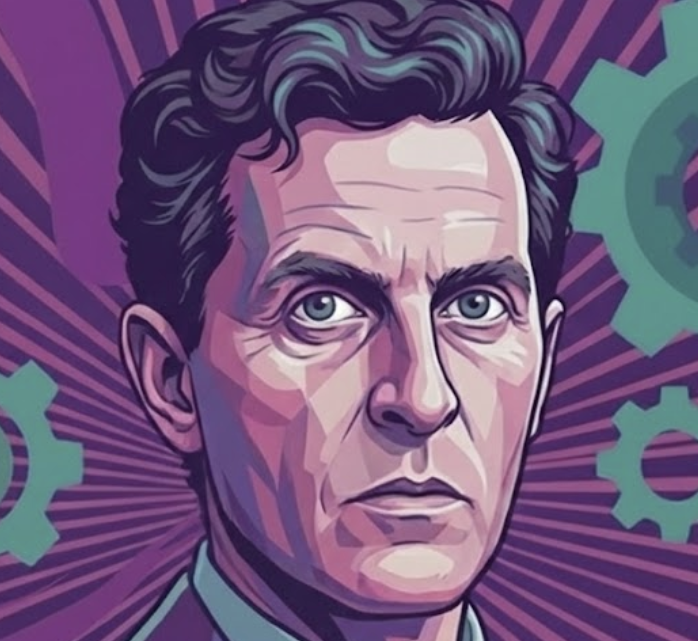
3 months 1 week ago
If a false thought is so much as expressed boldly and clearly, a great deal has already been gained.
▼
Source
source
p. 86e
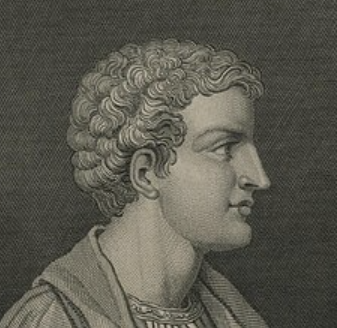
3 months 5 days ago
What is to prevent one from telling truth as he laughs, even as teachers sometimes give cookies to children to coax them into learning their A B C?
▼
Source
source
Book I, satire i, line 24 (translation by H. Fairclough)

6 days ago
It is all work and forgotten work, this peopled, clothed, articulate-speaking, high-towered, wide-acred World. The hands of forgotten brave men have made it a World for us; they,- honour to them; they, in spite of the idle and the dastard. This English Land, here and now, is the summary of what was found of wise, and noble, and accordant with God's Truth, in all the generations of English Men. Our English Speech is speakable because there were Hero-Poets of our blood and lineage; speakable in proportion to the number of these. This Land of England has its conquerors, possessors, which change from epoch to epoch, from day to day; but its real conquerors, creators, and eternal proprietors are these following, and their representatives if you can find them: All the Heroic Souls that ever were in England, each in their degree; all the men that ever cut a thistle, drained a puddle out of England, contrived a wise scheme in England, did or said a true and valiant thing in England.
2 months 1 week ago
If there was a God of sorrow, he would grow black heavy wings, to soar not for the skies, but for inferno.
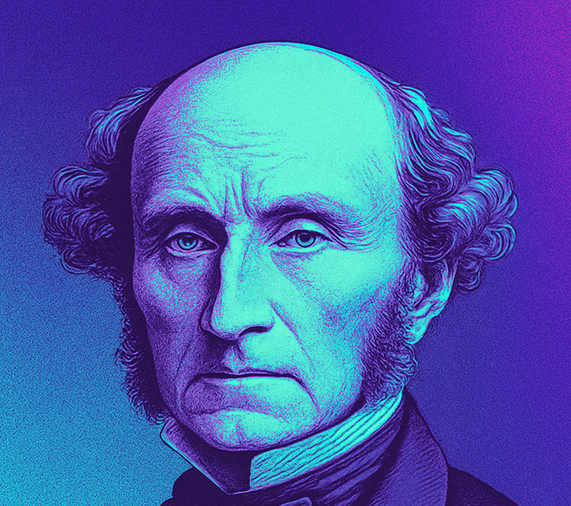
3 months 2 weeks ago
If it be said, that an Omnipotent Creator, though under no necessity of employing contrivances such as man must use, thought fit to use them in order to leave traces that would enable man to recognize his creative hand, the answer is that this equally implies a limit to his omnipotence. For if he wanted men to know that they themselves and the world are his work, he, being omnipotent, had only to will that they should be aware of it.
▼
Source
source
pages 177-178;Early Modern Texts page 16
2 months 6 days ago
In the late eighteenth and the greater part of the nineteenth centuries appeared the first marked cultural shift in the attitude taken toward change. Under the names of indefinite perfectibility, progress, and evolution, the movement of things in the universe itself and of the universe as a whole began to take on a beneficent instead of hateful aspect.

3 months 2 weeks ago
What would we really know the meaning of? The meal in the firkin; the milk in the pan; the ballad in the street; the news of the boat; the glance of the eye; the form and the gait of the body; - show me the ultimate reason of these matters; show me the sublime presence of the highest spiritual cause lurking, as always it does lurk, in these suburbs and extremities of nature; let me see every trifle bristling with the polarity that ranges it instantly on an eternal law; and the shop, the plough, and the ledger, referred to the like cause by which light undulates and poets sing; - and the world lies no longer a dull miscellany and lumber-room, but has form and order; there is no trifle; there is no puzzle; but one design unites and animates the farthest pinnacle and the lowest trench.
▼
Source
source
par. 40
1 month 1 week ago
By electricity we have not been driven out of our senses so much as our senses have been driven out of us.
▼
Source
source
(p. 375)
2 months 6 days ago
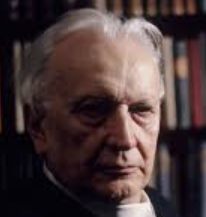
Nietzsche, driven by the absolute demand of his existential truthfulness, could not abide the bourgeois world, even when its representative had human nobility.
4 months 1 week ago
The opposite of an idealist is too often a man without love.

1 month 4 weeks ago
For this is our central human problem: that we are almost constantly the victims of our emotions, always being swept up and down on a kind of inner-switchback. We possess a certain control over them; we can 'direct our thoughts' -- or feelings -- in such a way as to intensify them. This is certainly our most remarkable human characteristic: imagination. Animals require actual physical stimuli to trigger their experience. A man can retreat into a book -- or a daydream -- and live through certain experiences quite independent of the physical world. He can even, for example, imagine a sexual encounter, and not only experience all the appropriate physical responses, but even the sexual climax. Such a curious ability is far beyond the power of any animal.
▼
Source
source
p. 23
1 month 3 weeks ago
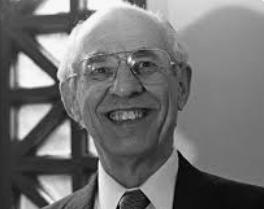
The problem with all this--the problem I discussed in the first lecture--is that if the causes/background conditions distinction is fundamentally subjective, not descriptive of the world in itself, then current philosophical explanations of the metaphysical nature of reference are bankrupt.
▼
Source
source
Lecture II: Realism and Reasonableness

3 months 2 weeks ago
You can't get a cup of tea large enough or a book long enough to suit me.
▼
Source
source
As quoted in Of This and Other Worlds (1982) by Walter Hooper, Preface, p. 9
2 months 1 week ago
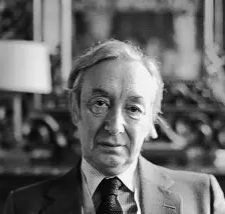
The ground for taking ignorance to be restrictive of freedom is that it causes people to make choices which they would not have made if they had seen what the realization of their choices involved.
▼
Source
source
"The Concept of Freedom".
1 month 3 weeks ago
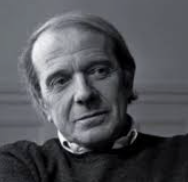
When Nietzsche praises egoism it is always in an aggressive or polemical way, against the virtues, against the virtue of disinterestedness. But in fact egoism is a bad interpretation of the will, just as atomism is a bad interpretation of force. In order for there to be egoism it is necessary for there to be an ego.
▼
Source
source
p. 7
4 months 2 weeks ago
We still do not yet know where the drive for truth comes from. For so far we have heard only of the duty which society imposes in order to exist: to be truthful means to employ the usual metaphors. Thus, to express it morally, this is the duty to lie according to a fixed convention, to lie with the herd and in a manner binding upon everyone. Now man of course forgets that this is the way things stand for him. Thus he lies in the manner indicated, unconsciously and in accordance with habits which are centuries' old; and precisely by means of this unconsciousness and forgetfulness he arrives at his sense of truth.

3 months 2 weeks ago
The wise and virtuous man is at all times willing that his own private interests should be sacrificed to the public interest of his own particular society--that the interests of this order of society be sacrificed to the greater interest of the state. He should therefore he equally willing that all those inferior interests should be sacrificed to the greater society of all sensible and intelligent beings.
▼
Source
source
Section II, Chap. III; cited by Reinhold Niebuhr, The Children of Light and the Children of Darkness, New York: Charles Scribner's Sons, 1941, 24-25.
3 months 3 weeks ago
What if he has borrowed the matter and spoiled the form, as it oft falls out?
▼
Source
source
Book III, Ch. 8. Of the Art of Conversation
Just now
But he has no fear; unconquered he looks down from a lofty height upon his sufferings.
4 months 2 weeks ago
For the things we have to learn before we can do, we learn by doing.

2 months 2 weeks ago
Freedom and not servitude is the cure of anarchy; as religion, and not atheism, is the true remedy for superstition.
CivilSimian.com created by AxiomaticPanic, CivilSimian, Kalokagathia