



2 months 2 days ago
The American who first discovered Columbus made a bad discovery.
▼
Source
source
G 42

4 months 2 weeks ago
Nothing can discourage the appetite for divinity in the heart of man.

4 months 2 weeks ago
The military mind remains unparalleled as a vehicle of creative stupidity.

2 months 3 weeks ago
Superstition is the religion of feeble minds.
3 months 1 week ago
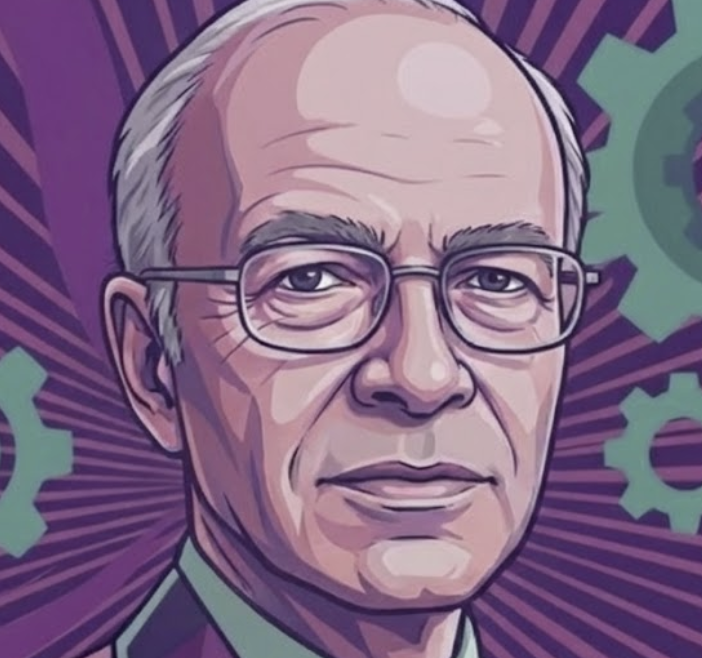
I am a utilitarian. I am also a vegetarian. I am a vegetarian because I am a utilitarian.
▼
Source
source
Utilitarianism and Vegetarianism, Philosophy & Public Affairs, 9(4): 325 (1980).
2 months 1 week ago
Our habitual experience is a complex of failure and success in the enterprise of interpretation. If we desire a record of uninterpreted experience, we must ask a stone to record its autobiography.
▼
Source
source
Pt. I, ch. 1, sec. 6.

3 months 3 weeks ago
The guidelines for achieving wisdom consist of three leading maxims: 1) Think for yourself; 2) (in communication with other people) Put yourself in the place of the other person; 3) Always think by remaining faithful to your own self.
▼
Source
source
Kant, Immanuel (1996), page 95
2 months 3 weeks ago
The doctrine of the transmigration of souls was indigenous to India and was brought into Greece by Pythagoras.
▼
Source
source
quoted in Londhe, S. (2008). A tribute to Hinduism: Thoughts and wisdom spanning continents and time about India and her culture. New Delhi: Pragun Publication.
Just now
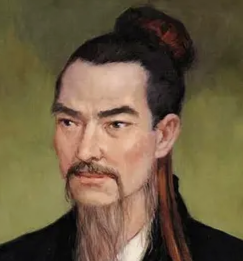
The virtuous who are prosperous must be exalted, and the virtuous who are not prosperous must be exalted too.
▼
Source
source
Book 2; Exaltation of the Virtuous I

2 months 5 days ago
The evolutionary urge drives man to seek for intenser forms of fulfillment, since his basic urge is for more life, more consciousness, and this contentment has an air of stagnation that the healthy mind rejects. (This recognition lies at the centre of my own 'outsider theory': that there are human beings to whom comfort means nothing, but whose happiness consists in following an obscure inner-drive, an 'appetite for reality'.)
▼
Source
source
p. 32
2 months 2 weeks ago
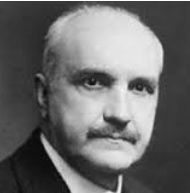
Professional philosophers are usually only apologists: that is, they are absorbed in defending some vested illusion or some eloquent idea. Like lawyers or detectives, they study the case for which they are retained.
▼
Source
source
pp. 48-49

4 months 3 weeks ago
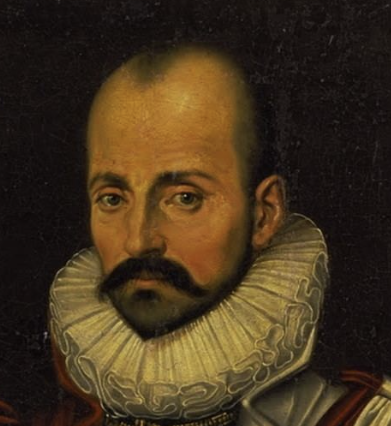
Perhaps then we must begin with such facts as are known to us from individual experience. It is necessary therefore that the person who is to study, with any tolerable chance of profit, the principles of nobleness and justice and politics generally, should have received a good moral training.
2 weeks 3 days ago
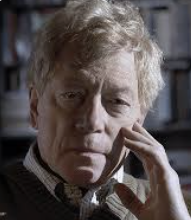
From all these indignities, such as the very beasts of the field would not endure, you can deliver yourselves if you try, not by taking action, but merely by willing to be free.
1 month 2 weeks ago
Schopenhauer argues that the empirical world exists only as a representation: 'every object, whatever its origin, is, as object, already conditioned by the subject, and thus is essentially only the subject's representation.' A representation is a subjective state that has been ordered according to space, time and causality - the primary forms of sensibility and understanding. So long as we turn our thoughts towards the natural world, and search for the thing-in-itself behind the representation is futile. Every argument and every experience leads only to the same end: the system of representations, standing like a veil between the subject and the thing-in-itself. No scientific investigation can penetrate the veil; and yet it is only a veil, Schopenhauer affirms, a tissue of illusions which we can, if we choose, penetrate by other means. The way to penetrate the veil was stumbled upon by Kant.
▼
Source
source
A Short History of Modern Philosophy (1981; 2nd ed. 1995), p. 177
3 months 2 weeks ago
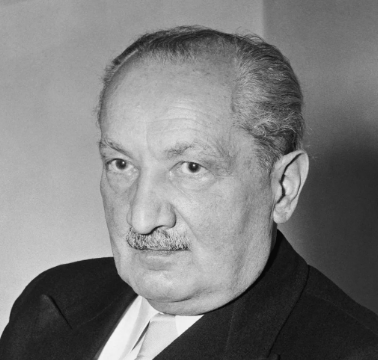
If in Nietzsche's thinking the prior tradition of Western thought is gathered and completed in a decisive respect, then the confrontation with Nietzsche becomes one with all Western thought hitherto.
2 days ago
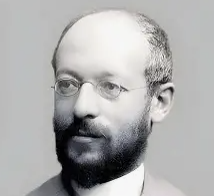
Every social occurrence as such, consists of an interaction between individuals. In other words, each individual is at the same time an active and a passive agent in a transaction. In case of superiority and inferiority, however, the relation assumes the appearance of a one-sided operation ; the one party appears to exert, while the other seems merely to receive an influence.
▼
Source
source
p. 169
2 days ago
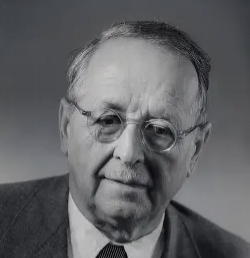
The scene of action of reality is not a three-dimensional Euclidean space but rather a four-dimensional world, in which space and time are linked together indissolubly. However deep the chasm may be that separates the intuitive nature of space from that of time in our experience, nothing of this qualitative difference enters into the objective world which physics endeavors to crystallize out of direct experience. It is a four-dimensional continuum, which is neither "time" nor "space". Only the consciousness that passes on in one portion of this world experiences the detached piece which comes to meet it and passes behind it as history, that is, as a process that is going forward in time and takes place in space.
▼
Source
source
Ch. 3 "Relativity of Space and Time"
2 months 2 weeks ago
Men looke not at the greatnesse of the evill past, but the greatnesse of the good to follow.
▼
Source
source
The First Part, Chapter 15, p. 76 (Italics as per text)

3 months 4 days ago
Friends are as companions on a journey, who ought to aid each other to persevere in the road to a happier life.
▼
Source
source
As quoted in Gems of Thought: Being a Collection of More Than a Thousand Choice Selections
2 months 3 weeks ago
It is so by nature that the plant will develop with regularity, that the animal will move purposefully, and that human beings will think. Why should I take exception to recognizing also the last as the expression of an original force of nature, as I do the first and the second?
▼
Source
source
P. Preuss, trans. (1987), p. 11
2 months 3 weeks ago
Only through blind Instinct, in which the only possible guidance of the Imperative is awanting, does the Power in Intuition remain undetermined; where it is schematised as absolute it becomes infinite; and where it is presented in a determinate form, as a principle, it becomes at least manifold. By the above-mentioned act of Intelligising, the Power liberates itself from Instinct, to direct itself towards Unity.
2 months 2 weeks ago
The subversive character of truth inflicts upon thought an imperative quality. Logic centers on judgments which are, as demonstrative propositions, imperatives, - the predicative "is" implies an "ought." ... Verification of the proposition involves a process in fact as well as in thought: (S) must become that which it is. The categorical statement thus turns into a categorical imperative; it does not state a fact but the necessity to bring about a fact. For example, it could be read as follows: man is not (in fact) free, endowed with inalienable rights, etc., but he ought to be.
▼
Source
source
pp. 132-133
1 month 2 weeks ago
The patient typically finds himself impelled by some deep, inner conviction that something is true, or right, or virtuous: a conviction that doesn't seem to owe anything to evidence or reason, but which, nevertheless, he feels as totally compelling and convincing. We doctors refer to such a belief as "faith".
3 days ago
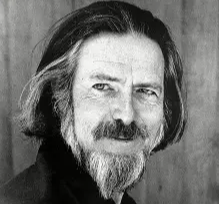
The basic problem is to understand that there are no such things as things; that is to say separate things, separate events. That is only a way of talking. What do you mean by a thing? A thing is a noun. A noun isn't a part of nature it's a part of speech. There are no nouns in the physical world. There are no separate things in the physical world either.
▼
Source
source
Watts on Wiggles Waves, used in the Cosmosis track No Such Thing (2007).

1 week ago
You do not know where death awaits you; so be ready for it everywhere.
3 months 3 weeks ago
The universal and lasting establishment of peace constitutes not merely a part, but the whole final purpose and end of the science of right as viewed within the limits of reason.

3 months 3 weeks ago
We do not, however, reckon that trade disadvantageous which consists in the exchange of the hard-ware of England for the wines of France;and yet hard-ware is a very durable commodity, and were it not for this continual exportation, might too be accumulated for ages together, to the incredible augmentation of the pots and pans of the country. But it readily occurs that the number of such utensils is in every country necessarily limited by the use which there is for them;that it would be absurd to have more pots and pans than were necessary for cooking the victuals usually consumed there;and that if the quantity of victuals were to increase, the number of pots and pans would readily increase along with it, apart of the increased quantity of victuals being employed in purchasing them, or in maintaining an additional number of workman whose business it was to make them.
▼
Source
source
Chapter I, p. 471.
4 months 3 weeks ago
All men by nature desire to know. An indication of this is the delight we take in our senses; for even apart from their usefulness they are loved for themselves; and above all others the sense of sight. For not only with a view to action, but even when we are not going to do anything, we prefer sight to almost everything else. The reason is that this, most of all the senses, makes us know and brings to light many differences between things.
2 months 2 weeks ago
Thought is led, by the situation of its objects, to measure their truth in terms of another logic, another universe of discourse. And this logic projects another mode of existence: the realization of the truth in the words and deeds of man. And inasmuch as this project involves man as societal animal," the polis, the movement of thought has a political content. Thus, the Socratic discourse is political discourse inasmuch as it contradicts the established political institutions. The search for the correct definition, for the "concept" of virtue, justice, piety, and knowledge becomes a subversive undertaking, for the concept intends a new polis.
▼
Source
source
pp. 133-134
1 month 2 weeks ago
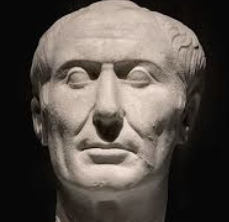
To do two things at once is to do neither.

4 months ago
Through faith we are restored to paradise and created anew.
▼
Source
source
p. 74

3 months 3 weeks ago
If a given science accidentally reached its goal, this would by no means stop the workers in the field, who would be driven past their goal by the sheer momentum of the illusion of unlimited progress.
▼
Source
source
p. 55

2 months 2 weeks ago
When we know what words are worth, the amazing thing is that we try to say anything at all, and that we manage to do so. This requires, it is true, a supernatural nerve.

2 weeks 4 days ago
In the same way that the figure of the peasant tends to disappear, so too does the figure of the industrial worker, the service industry worker and all other separate categories.
▼
Source
source
125
1 week ago
There is no reason why poverty should call us away from philosophy-no, nor even actual want. For when hastening after wisdom, we must endure even hunger. Men have endured hunger when their towns were besieged, and what other reward for their endurance did they obtain than that they did not fall under the conqueror's power? How much greater is the promise of the prize of everlasting liberty, and the assurance that we need fear neither God nor man! Even though we starve, we must reach that goal.

2 months 5 days ago
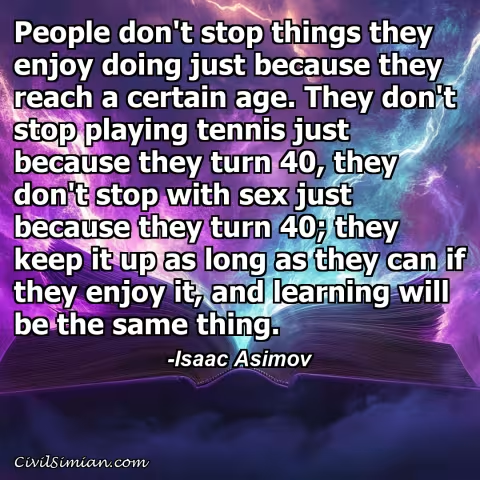
When one learns something one first performs an act of will, because only by willing to learn can one learn.
▼
Source
source
"Vico: Autodidact and Humanist," The Centennial Review, Vol. 11, No. 3 (Summer 1967), p. 340

3 months 3 weeks ago
Every commodity is compelled to chose some other commodity for its equivalent.
▼
Source
source
Vol. I, Ch. 1, Section 3, pg. 65.

2 weeks 3 days ago
The second failing of liberalism comes directly out of the fact that it attempts to lower the horizons of politics. Liberal societies do not want to tell you how to live. They do not want to define "the good life" because that is the source of conflict, but as a result liberal societies tend not to satisfy these very deep human cravings for community, because... there's something wrong with the basic liberal premise that we all start... as self-interested individuals. We're not self-interested individuals.
▼
Source
source
15:22

4 months 3 weeks ago
We believe that we know something about the things themselves when we speak of trees, colors, snow, and flowers; and yet we possess nothing but metaphors for things, metaphors which correspond in no way to the original entities.
2 months 2 weeks ago
The spectacle of what religions have been in the past, of what certain religions still are to-day, is indeed humiliating for human intelligence. What a farrago of error and folly!'
▼
Source
source
Chapter II : Static Religion
2 months 2 weeks ago
No work of art can be instantaneously perceived because there is the no opportunity for conservation and increase in tension, and hence none for that release and unfolding which gives volume to a work of art.
▼
Source
source
p. 189

3 months 3 weeks ago
"A pleasure is full grown only when it is remembered. You are speaking, Hmān, as if the pleasure were one thing and the memory another. It is all one thing. The séroni could say it better than I say it now. Not better than I could say it in a poem. What you call remembering is the last part of the pleasure, as the crah is the last part of a poem. When you and I met, the meeting was over very shortly, it was nothing. Now it is growing something as we remember it. But still we know very little about it. What it will be when I remember it as I lie down to die, what it makes in me all my days till then-that is the real meeting. The other is only the beginning of it."
▼
Source
source
Hyoi, p. 73
3 months 3 weeks ago
The worker's existence is thus brought under the same condition as the existence of every other commodity. The worker has become a commodity, and it is a bit of luck for him if he can find a buyer, And the demand on which the life of the worker depends, depends on the whim of the rich and the capitalists.
▼
Source
source
Wages of Labor, p. 20.

3 months 3 weeks ago
It is error only, and not truth, that shrinks from inquiry.

1 month 5 days ago
When one is a stranger to oneself then one is estranged from others too. If one is out of touch with oneself, then one cannot touch others.
CivilSimian.com created by AxiomaticPanic, CivilSimian, Kalokagathia