
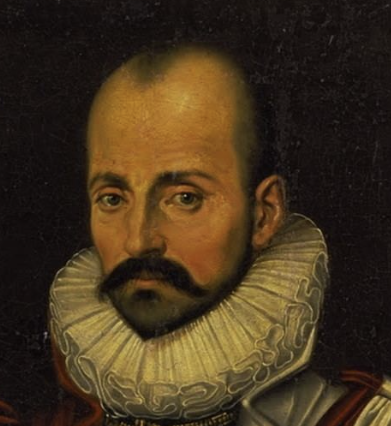
Étienne de La Boétie — The Philosopher of Voluntary Servitude and the Mystery of Power (1530–1563)
Étienne de La Boétie was a Renaissance political thinker whose most famous work asks one of the strangest and most unsettling questions in political philosophy: why do people obey tyrants?
His answer was radical. Tyrants are powerful not because they dominate the people, but because the people consent — often unconsciously — to their own domination.
A Brilliant Young Humanist
La Boétie was born in France during the Renaissance, a time when classical Greek and Roman ideas were being rediscovered.
He was a prodigy. By his early twenties he had written his most famous essay, Discourse on Voluntary Servitude, one of the earliest critiques of political tyranny in modern Europe.
He later became a respected magistrate and close friend of the philosopher Michel de Montaigne, who preserved and promoted his work after his early death.
“Resolve to serve no more, and you are at once free.”
The Puzzle of Tyranny
La Boétie began with a simple observation.
A tyrant is only one person, yet he often controls millions.
Physically, the people vastly outnumber him. If they collectively refused obedience, his power would collapse immediately.
Why, then, do populations continue to submit?
“The tyrant has no power except that which you give him.”
Voluntary Servitude
La Boétie’s answer was the concept of voluntary servitude.
People become accustomed to obedience. Over time, submission begins to feel normal.
Generations grow up under authority and come to accept it as natural.
Habit, tradition, and fear reinforce the system.
Tyranny persists not primarily through force, but through psychological and social conditioning.
“Men are born free, yet they quickly grow accustomed to servitude.”
The Pyramid of Power
La Boétie also observed that tyranny operates through networks of loyalty.
A ruler does not govern alone. Around him stand ministers, officials, soldiers, and administrators.
Each layer of authority depends on the one above it while exercising power over those below.
This creates a pyramid of interests in which many people benefit from maintaining the system.
“Five or six have the tyrant’s ear; six hundred depend upon them; six thousand upon the six hundred.”
Freedom Through Non-Cooperation
La Boétie’s political solution was surprisingly simple.
Tyranny collapses when people withdraw their cooperation.
Instead of violent rebellion, he suggested that refusing to serve — refusing to participate in unjust systems — undermines authoritarian power.
Centuries later, similar ideas would influence theories of civil resistance and nonviolent protest.
Legacy — The Psychology of Power
Although he died at only thirty-two, La Boétie left a lasting mark on political thought.
His reflections anticipate later discussions about propaganda, ideology, and the social foundations of authority.
He revealed that power is not only imposed from above — it is sustained by habits of obedience from below.
The mystery of tyranny, he argued, is not how rulers dominate people, but why people allow themselves to be ruled.
“It is therefore the people themselves who allow, or rather bring about, their own subjection.”
CivilSimian.com created by AxiomaticPanic, CivilSimian, Kalokagathia