
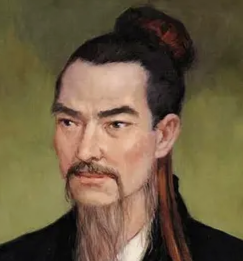
Mozi — Universal Love, Utility, and the Challenge to Confucian China (c. 470–391 BC)
Mozi was a Chinese philosopher and social reformer whose rigorous, egalitarian, and deeply practical philosophy made him one of the most original thinkers of the ancient world.
Founder of the Mohist school, he challenged the dominant Confucian order with a system built on universal love, consequentialist ethics, and a sober commitment to the welfare of all people equally.
His central concern: that partiality — the tendency to favor family, clan, and state over humanity as a whole — was the root cause of war, poverty, and social disorder.
Universal Love — Jian Ai
At the heart of Mohist philosophy stands the doctrine of jian ai — usually translated as universal love or impartial caring.
Mozi argued that people naturally care more for themselves, their families, and their states than for strangers and rival kingdoms. This partiality, he insisted, was not a virtue but the source of all social evil — theft, war, exploitation, and oppression all arise when people treat the welfare of others as less important than their own.
The remedy was radical: to care for other people's families as one cares for one's own, for other states as one cares for one's own state. Not sentiment but principle — a disciplined extension of moral concern to all persons equally.
Two and a half millennia before utilitarian philosophy, Mozi had arrived at a strikingly similar position through independent reasoning.
"If everyone in the world loved others as they love themselves, would there be any unfilial people? No. Would there be any wars between states? No."
Against War and the Aesthetics of Power
Mozi was one of antiquity's most passionate opponents of aggressive war. He argued with blunt consequentialist force that military conquest destroyed more value than it created — killing soldiers, impoverishing states, disrupting agriculture, and leaving both victor and vanquished worse off.
He and his followers backed their convictions with action. The Mohist school maintained a disciplined quasi-military organization that hired itself out to defend smaller states against aggression — one of history's most unusual philosophical fraternities, combining ethical theory with practical defensive engineering.
Mozi was himself an expert in fortification and siege defense, reportedly traveling on foot for days to reach a state under threat and dissuade its attacker.
Philosophy, for the Mohists, was not an armchair activity.
"Whoever kills one person is condemned as unrighteous. But those who kill hundreds and thousands in war are praised as righteous. This is a great confusion."
Utility, Frugality, and the Critique of Confucian Ritual
Where Confucianism placed enormous weight on ritual, music, elaborate mourning ceremonies, and the cultivation of aesthetic refinement, Mozi subjected all of these to a single ruthless test: do they benefit the people?
Costly funerals depleted family resources. Elaborate music required artisans and performers who could be feeding the hungry instead. Ritual for its own sake was waste dressed in the clothing of tradition.
He advocated radical frugality in government and personal life — rulers should eat plain food, wear simple clothing, and spend state resources on the welfare of the population rather than on the displays of power and culture that aristocratic tradition demanded.
This made him deeply unpopular with elites and deeply resonant with common people.
"The sages did not pursue music. Why? Because it brings no benefit to the people."
Logic, Epistemology, and Scientific Thought
The Mohist school developed something rare in ancient Chinese philosophy — a systematic interest in logic, epistemology, and the natural world.
The later Mohist texts contain sophisticated discussions of the conditions for valid inference, definitions of geometric concepts, observations about optics and mechanics, and a rudimentary theory of the camera obscura — anticipating questions that would not be systematically addressed in China for centuries.
Mozi insisted that claims must be grounded in the evidence of the senses, historical precedent, and practical benefit to the people — a proto-empiricist standard that cut against both mystical and purely traditional modes of authority.
Had Mohism survived as a living tradition, Chinese intellectual history might have taken a strikingly different direction.
"The standard of judgment must be: does it benefit the people, increase the population, and enrich the state?"
Legacy — The Road Not Taken
During the Warring States period, Mohism rivaled Confucianism as the dominant philosophical school. Mencius treated it as the primary threat to Confucian values — a measure of how seriously it was taken.
With the unification of China under the Han dynasty and the establishment of Confucianism as state orthodoxy, Mohism faded rapidly — its organizational structure dissolved, its texts neglected for nearly two millennia.
Modern scholars rediscovering Mozi have been struck by how many of his positions anticipate later Western developments — utilitarianism, pacifism, scientific empiricism, and universal human dignity — arrived at independently and earlier.
He stands as one of history's great what-ifs: a thinker whose ideas were powerful enough to reshape civilization, and whose suppression reshaped it instead.
"It is the business of the benevolent person to seek to promote what is beneficial to the world and to eliminate what is harmful."
CivilSimian.com created by AxiomaticPanic, CivilSimian, Kalokagathia