

4 months 2 weeks ago
Only charity admitteth no excess. For so we see, aspiring to be like God in power, the angels transgressed and fell.
▼
Source
source
Book II, xxii

3 months 2 days ago
Chaos is rejecting all you have learned. Chaos is being yourself.
6 days ago
To take from one, because it is thought his own industry and that of his fathers has acquired too much, in order to spare to others, who, or whose fathers, have not exercised equal industry and skill, is to violate arbitrarily the first principle of association, the guarantee to everyone the free exercise of his industry and the fruits acquired by it.
5 months 2 days ago
There is no mystery in humans creation. Will performs this miracle. But at least there is no true creation without a secret.

4 months 3 weeks ago
A man's character is formed by the Odes, developed by the Rites and perfected by music.
2 days ago
That which I am now entering upon being the Consideration of the things themselves whereinto Spagyrists resolve mixt Bodies by the Fire, If I can shew that these are not of an Elementary Nature, it will be no great matter what names these or those Chymists have been pleased to give them. And I question not that to a Wise man, and consequently to Eleutherius, it will be lesse considerable to know, what Men Have thought of Things, then what they Should have thought.
3 months 3 weeks ago
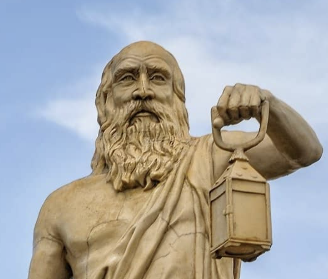
When scolded for masturbating in public, he said "I wish it were as easy to banish hunger by rubbing my belly."
▼
Source
source
Diogenes Laërtius, vi. 46, 69
2 months 3 weeks ago
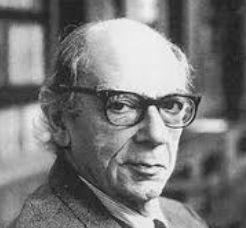
Injustice, poverty, slavery, ignorance - these may be cured by reform or revolution. But men do not live only by fighting evils. They live by positive goals, individual and collective, a vast variety of them, seldom predictable, at times incompatible.
2 months 2 weeks ago
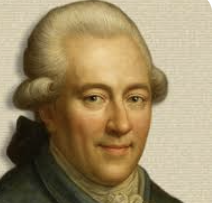
As the few adepts in such things well know, universal morality is to be found in little everyday penny-events just as much as in great ones. There is so much goodness and ingenuity in a raindrop that an apothecary wouldn't let it go for less than half-a-crown.
▼
Source
source
B 33

4 months 6 days ago
The universe is what it is, not what I choose that it should be.
▼
Source
source
The Value of Free Thought: How to Become a Truth-seeker and Break the Chains of Mental Slavery (1944), p. 24
5 months 3 days ago
Knowledge is the food of the soul; and we must take care, my friend, that the Sophist does not deceive us when he praises what he sells, like the dealers wholesale or retail who sell the food of the body; for they praise indiscriminately all their goods, without knowing what are really beneficial or hurtful.
4 months ago
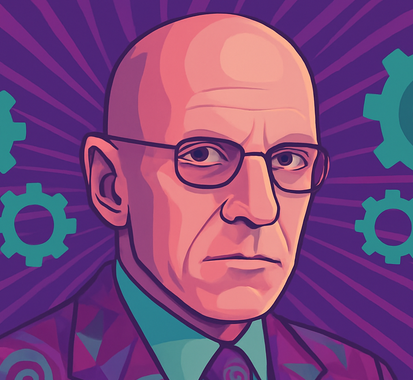
In the history of madness, two events signal this change with singular clarity: in 1657, the founding of the Hôpital Général, and the Great Confinement of the poor; and in 1794, the liberation of the mad in chains at Bicêtre. Between these two singular and symmetrical events, something happened, whose ambiguity has perplexed historians of medicine: blind repression in an absolutist regime, according to some, and, according to others, the progressive discovery, by science and philanthropy, of madness in its positive truth. In fact, beneath these reversible meanings, a structure was taking shape, which did not undo that ambiguity but was decisive for it. This structure explains the passage from the medieval and humanist experience of madness to the experience that is our own, which confines madness in mental illness.
▼
Source
source
Preface to 1961 edition

4 months 6 days ago
The book written against fame and learning has the author's name on the title-page.
▼
Source
source
1857
2 days ago
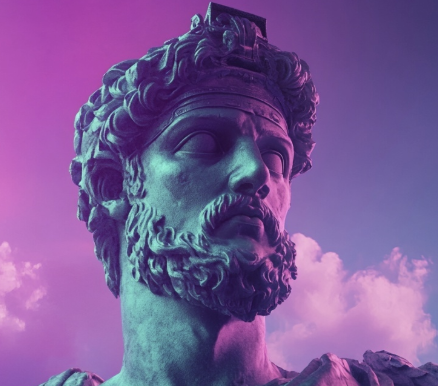
The things you think about determine the quality of your mind. Your soul takes on the color of your thoughts.
▼
Source
source
(Hays translation) The soul becomes dyed with the colour of its thoughts. V, 16

4 months 1 day ago
The difficulty in philosophy is to say no more than we know.
▼
Source
source
p. 45

2 months 4 weeks ago
When you make the two into one, you will become children of Adam, and when you say, 'Mountain, move from here!' it will move.
4 months 5 days ago
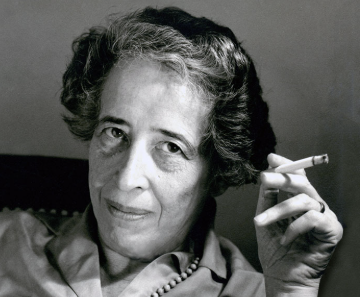
If the inner psychic ground of our individual appearance were not always the same, there could be no science of psychology, which qua science relies on a psychic "inside we are all alike," just as the science of physiology and medicine relies on the sameness of our inner organs. The monstrous sameness and pervasive ugliness so highly characteristic of the findings of modern psychology, and contrasting so obviously with the enormous variety and richness of overt human conduct, witness to the radical difference between the inside and the outside of the human body.
▼
Source
source
pp. 34-35

4 months 5 days ago
We can act as if there were a God; feel as if we were free; consider Nature as if she were full of special designs; lay plans as if we were to be immortal; and we find then that these words do make a genuine difference in our moral life.
▼
Source
source
Lecture III, "The Reality of the Unseen"
3 months 3 days ago
To get to know a truth properly, one must polemicize it.
▼
Source
source
Quoted in The Viking Book of Aphorisms by Wystan Hugh Auden (1962) p. 323

2 months 4 weeks ago
We have reached the point where the Objective Logic turns into the Subjective Logic, or, where subjectivity emerges as the true form of objectivity. We may sum up Hegel's analysis in the following schema: The true form of reality requires freedom. Freedom requires self-consciousness and knowledge of the truth. Self-consciousness and knowledge of the truth are the essentials of the subject. The form of reality must be conceived as subject.
▼
Source
source
P. 154-155

4 months 6 days ago
Force is the midwife of every old society pregnant with a new one. It is itself an economic power.
▼
Source
source
Vol. I, Ch. 31, pg. 824
2 days ago
Art thy not content that thou hast done something conformable to thy nature, and dost thou seek to be paid for it? Just as if the eye demanded recompense for seeing, or the feet for walking. For as these members are formed for a particular purpose... so also is man formed by nature to acts of benevolence.
▼
Source
source
IX, 42
5 months 6 days ago
The least initial deviation from the truth is multiplied later a thousandfold.
4 months 3 weeks ago
It pertains to all men to know themselves and to learn self-control.

4 months 2 weeks ago
The very elements themselves, though repugnant in their nature, yet, by a happy equilibrium, preserve eternal peace; and amid the discordancy of their constituent principles, cherish, by a friendly intercourse and coalition, an uninterrupted concord.

4 months 6 days ago
The wisest man preaches no doctrines; he has no scheme; he sees no rafter, not even a cobweb, against the heavens. It is clear sky. If I ever see more clearly at one time than at another, the medium through which I see is clearer.

2 months 3 days ago
Familiarity breeds contempt.
3 months 1 day ago
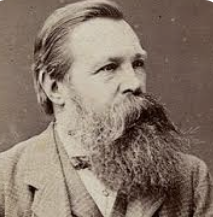
Big industry has brought all the people of the Earth into contact with each other, has merged all local markets into one world market, has spread civilization and progress everywhere and has thus ensured that whatever happens in civilized countries will have repercussions in all other countries. It follows that if the workers in England or France now liberate themselves, this must set off revolution in all other countries - revolutions which, sooner or later, must accomplish the liberation of their respective working class.
2 months 4 weeks ago
Why do ye also transgress the commandment of God by your tradition? For God commanded, saying, Honour thy father and mother: and, He that curseth father or mother, let him die the death. But ye say, Whosoever shall say to his father or his mother, It is a gift, by whatsoever thou mightest be profited by me; And honour not his father or his mother, he shall be free. Thus have ye made the commandment of God of none effect by your tradition. Ye hypocrites, well did Esaias prophesy of you, saying, This people draweth nigh unto me with their mouth, and honoureth me with their lips; but their heart is far from me. But in vain they do worship me, teaching for doctrines the commandments of men.
▼
Source
source
15:3-9 (KJV)
3 months 2 days ago
A regret understood by no one: the regret to be a pessimist. It's not easy to be on the wrong foot with life
6 days ago
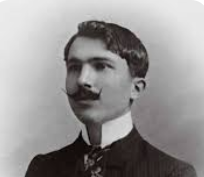
Monarch of earth, I shall confess my secret craft:I've always fought to purify wild flame to light,and kindle whatever light I found to burst in flame.
▼
Source
source
Odysseus to Hades, Book XI, line 145
1 month 2 weeks ago
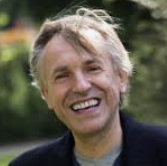
Our present-day neurochemical cocktail, we are asked to believe, is the medium through which alien realms of consciousness can be grasped and neutrally appraised from a third-person perspective. Empirical research suggests this optimism is at best naïve.
▼
Source
source
Storming Heaven: LSD and the American Dream, BLTC Research

3 months 2 weeks ago
The mathematician speculates the causes of a certain sensible effect, without considering its actual existence; for the contemplation of universals excludes the knowledge of particulars; and he whose intellectual eye is fixed on that which is general and comprehensive, will think but little of that which is sensible and singular.
▼
Source
source
A Dissertation on the Doctrine of Ideas, &c.
3 days ago
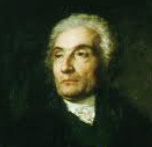
Man, in wearing himself out his whole life long by saying: What is that! and what is that called! and what does that mean! is a big spectacle to himself if he wants to open his eyes. All his natural powers tending towards the truth, he never ceases looking for true names; he senses a language prior to that of Babel, and even of Eden.
▼
Source
source
p. 68
3 months 2 days ago
The ground for taking ignorance to be restrictive of freedom is that it causes people to make choices which they would not have made if they had seen what the realization of their choices involved.
▼
Source
source
"The Concept of Freedom".
4 months 6 days ago
Among a people without fellow-feeling, especially if they read and speak different languages, the united public opinion, necessary to the working of the representative government, cannot exist.
▼
Source
source
Ch. XVI: Of Nationality, As Connected with Representative Government (p. 382)
3 months 2 days ago
Our whole past experience is continually in our consciousness, though most of it sunk to a great depth of dimness. I think of consciousness as a bottomless lake, whose waters seem transparent, yet into which we can clearly see but a little way.
▼
Source
source
Vol. VII, par. 547

4 months 1 week ago
This actual world of what is knowable, in which we are and which is in us, remains both the material and the limit of our consideration.
▼
Source
source
Vol I, Ch. 4, The World As Will: Second Aspect, § 53, as translated by Eric F. J. Payne, 1958
2 weeks ago
A man may own a thousand acres of land, and yet he still sleeps upon a bed of five feet.
▼
Source
source
p. 38 (Chinese saying)
3 weeks ago
Inflation is an increase in the quantity of money without a corresponding increase in the demand for money, i.e., for cash holdings.
▼
Source
source
The Free Market and Its Enemies, speech to the Foundation for Economic Education

3 months 6 days ago
I am a sick man... I am a wicked man. An unattractive man.
▼
Source
source
Part 1, Chapter 1
4 months 1 week ago
I am at heart more of a United-States-man than an Englishman.
▼
Source
source
Letter to Andrew Jackson (14 June 1830), quoted in Correspondence of Andrew Jackson, Volume 4, ed. David Maydole Matteson (1929), p. 146

4 months 1 week ago
It would be too ridiculous to go about seriously to prove that wealth does not consist in money, or in gold and silver; but in what money purchases, and is valuable only for purchasing. Money no doubt, makes always a part of the national capital; but it has already been shown that it generally makes but a small part, and always the most unprofitable part of it.
▼
Source
source
Chapter I, p. 470.
2 months 2 weeks ago
What is morality in any given time or place? It is what the majority then and there happen to like, and immorality is what they dislike.
▼
Source
source
Ch. 22, August 30, 1941.
1 month 2 weeks ago
The irrationality of the "appeal to Nature" is illustrated by a simple thought-experiment. Imagine, fancifully, if starvation, disease, parasitism, disembowelling, asphyxiation and being eaten alive were not endemic to the living world - or such miseries have already been abolished and replaced by an earthly paradise. Would anyone propose there is ethical case for (re)introducing them? Even proposing such a thought-experiment can sound faintly ridiculous.
▼
Source
source
"A Welfare State For Elephants?: A Case Study of Compassionate Stewardship", Relations: Beyond Anthropocentrism, Vol. 3, Iss. 2 (Nov. 2015), p. 162
2 months 2 weeks ago
We accumulate our opinions at an age when our understanding is at its weakest.
▼
Source
source
H 4
4 months 1 week ago
Reason is the greatest enemy that faith has: it never comes to the aid of spiritual things, but--more frequently than not--struggles against the divine Word, treating with contempt all that emanates from God.
▼
Source
source
353
4 months 3 weeks ago
Therefore let every Christian, yea, let the whole body of Christ everywhere cry out, despite the tribulations it endures, despite temptations and countless scandals, saying: "Preserve my soul, for I am holy; save Thy servant, O my God, that trusteth in thee" (Ps. 85:2) No, this holy one is not proud, for he trusts in God.
▼
Source
source
p.429
CivilSimian.com created by AxiomaticPanic, CivilSimian, Kalokagathia