




2 months 5 days ago
Cultivate that kind of knowledge which enables us to discover for ourselves in case of need that which others have to read or be told of.
▼
Source
source
D 89

2 months 3 weeks ago
A gifted humanity can only produce skeptics, never saints.
2 months 3 weeks ago
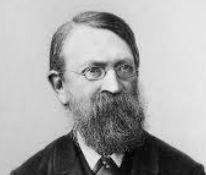
The aim of research is the discovery of the equations which subsist between the elements of phenomena.
▼
Source
source
p. 205; On aim of research.

3 months 4 weeks ago
The guidelines for achieving wisdom consist of three leading maxims: 1) Think for yourself; 2) (in communication with other people) Put yourself in the place of the other person; 3) Always think by remaining faithful to your own self.
▼
Source
source
Kant, Immanuel (1996), page 95

4 months 3 weeks ago
Martyrs must choose between being forgotten, mocked, or made use of. As for being understood, never!
2 months 1 week ago
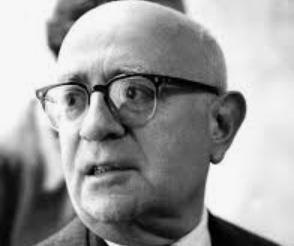
The blessing that the market does not ask about birth is paid for in the exchange society by the fact that the possibilities conferred by birth are molded to fit the production of goods that can be bought on the market.
▼
Source
source
E. Jephcott, trans., p. 9
2 months 2 weeks ago
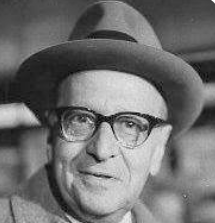
It is as if thinking itself had been reduced to the level of industrial processes, subjected to a close schedule-in short, made part and parcel of production.
▼
Source
source
p. 21.
2 months 3 weeks ago
Life creates itself in delirium and is undone in ennui.

3 months 3 weeks ago
Nicias, do you think you can erase with good deeds the wrongs you committed against your mother? What good deed will ever reach her? Her soul is a scorching noon time, without a single breath of a breeze, nothing moves, nothing changes, nothing lives there; a great emaciated sun, an immobile sun eternally consumes her.
▼
Source
source
King Aegistheus, Act 2

4 months 3 weeks ago
Knowledge is the food of the soul; and we must take care, my friend, that the Sophist does not deceive us when he praises what he sells, like the dealers wholesale or retail who sell the food of the body; for they praise indiscriminately all their goods, without knowing what are really beneficial or hurtful.

3 months 3 weeks ago
In action, in desire, we must submit perpetually to the tyranny of outside forces; but in thought, in aspiration, we are free, free from our fellowmen, free from the petty planet on which our bodies impotently crawl, free even, while we live, from the tyranny of death.

2 months 1 week ago
Another response to racism has been the establishment of unlearning racism workshops, which are often led by white women. These workshops are important, yet they tend to focus primarily on cathartic individual psychological personal prejudice without stressing the need for corresponding change in political commitment and action. A woman who attends an unlearning racism workshop and learns to acknowledge that she is racist is no less a threat than one who does not. Acknowledgment of racism is significant when it leads to transformation.
3 months 3 weeks ago
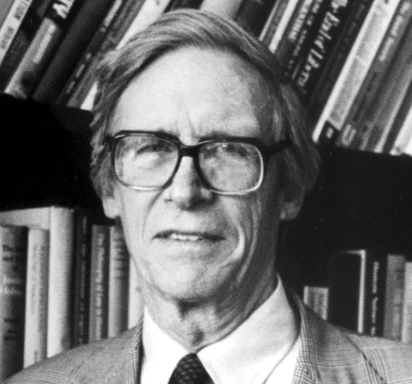
I have tried to set forth a theory that enables us to understand and to assess these feelings about the primacy of justice. Justice as fairness is the outcome: it articulates these opinions and supports their general tendency.
▼
Source
source
Chapter IX, Section 87, p. 586
2 months 3 weeks ago
The ideal being? An angel ravaged by humor.
2 months 1 week ago
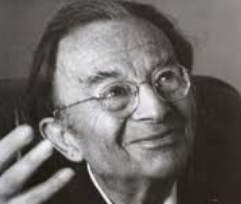
Among most Christians the Old Testament is little read in comparison to the New Testament. Furthermore, much of what is read is often distorted by prejudice. Frequently the Old Testament is believed to express exclusively the principles of justice and revenge, in contrast to the New Testament, which represents those of love and mercy; even the sentence, "Love your neighbor as yourself," is thought by many to derive from the New, not the Old Testament. Or the Old Testament is believed to have been written exclusively in the spirit of narrow nationalism and to contain nothing of supranational universalism so characteristic of the New Testament.
▼
Source
source
You Shall Be as Gods: A Radical Interpretation of the Old Testament and Its Tradition (1966) "Introduction"
1 month 4 weeks ago
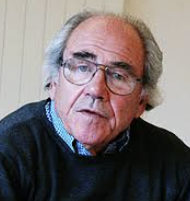
Not only does reality resist those who still criticize it, but it also abandons those who defend it. Maybe it is a way for reality to get its revenge from those who claim to believe in it for the sole purpose of eventually transforming it: sending back its supporters to their own desires.

3 months 3 weeks ago
He will better comprehend the foundations and measures of decency and justice, and have livelier, and more lasting impressions of what he ought to do, by giving his opinion on cases propos'd, and reasoning with his tutor on fit instances, than by giving a silent, negligent, sleepy audience to his tutor's lectures; and much more than by captious logical disputes, or set declamations of his own, upon any question. The one sets the thoughts upon wit and false colours, and not upon truth; the other teaches fallacy, wrangling, and opiniatry; and they are both of them things that spoil the judgment, and put a man out of the way of right and fair reasoning; and therefore carefully to be avoided by one who would improve himself, and be acceptable to others.
▼
Source
source
Sec. 98

3 months 3 weeks ago
The Religion that is afraid of science dishonours God and commits suicide. It acknowledges that it is not equal to the whole of truth, that it legislates, tyrannizes over a village of God's empires but is not the immutable universal law. Every influx of atheism, of skepticism is thus made useful as a mercury pill assaulting and removing a diseased religion and making way for truth.
▼
Source
source
March 4, 1831

3 months 4 weeks ago
China has been long one of the richest, that is, one of the most fertile, best cultivated, most industrious, and most populous countries in the world. It seems, however, to have been long stationary. Marco Polo, who visited it more than five hundred years ago, describes its cultivation, industry, and populousness, almost in the same terms in which they are described by travellers in the present times.
▼
Source
source
Chapter VIII, p. 86.
6 days ago
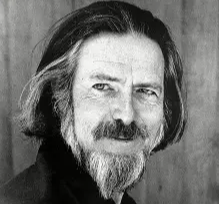
When you tell a girl how beautiful she is, she will say, "Now isn't that just like a man! All you men think about is bodies. OK, so I'm beautiful, but I got my body from my parents and it was just luck. I prefer to be admired for myself, not my chassis." Poor little chauffeur! All she is saying is that she has lost touch with her own astonishing wisdom and ingenuity, and wants to be admired for some trivial tricks that she can perform with her conscious attention. And we are all in the same situation, having dissociated ourselves from our bodies and from the whole network of forces in which bodies can come to birth and live.
▼
Source
source
p. 112
2 months 3 weeks ago
The only subversive mind is the one that questions the obligation to exist; all the others, the anarchist at the top of the list, compromise with the established order.
2 months 2 weeks ago
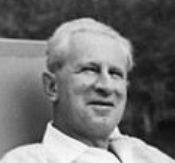
The way in which a society organizes the life of its members ... is one "project" of realization among others. But once the project has become operative in the basic institutions and relations, it tends to become exclusive and to determine the development of the society as a whole.
▼
Source
source
p. xlviii

2 weeks 5 days ago
To apply oneself to great inventions, starting from the smallest beginnings, is no task for ordinary minds; to divine that wonderful arts lie hid behind trivial and childish things is a conception for superhuman talents.
2 weeks 1 day ago
The death of Alexander (323 BC) quickened this process of decay. The boy-emperor, barbarian though he remained after all of Aristotle's tutoring, had yet learned to revere the rich culture of Greece, and had dreamed of spreading that culture through the Orient in the wake of his victorious armies.... But he had underrated the inertia and resistance of the Oriental mind, and the mass and depth of Oriental culture. It was only a youthful fancy, after all, to suppose that so immature and unstable a civilization as that of Greece could be imposed upon a civilization immeasurably more widespread, and rooted in the most venerable traditions. The quantity of Asia proved too much for the quality of Greece.
3 months 4 weeks ago
The means employed by Nature to bring about the development of all the capacities of men is their antagonism in society, so far as this is, in the end, the cause of a lawful order among men.
▼
Source
source
Fourth Thesis
3 months 3 weeks ago
This life affords no solid satisfaction, but in the consciousness of having done well, and the hopes of another life.
▼
Source
source
Letter to Anthony Collins (23 August 1704), in The Works of John Locke, Vol. X (London, 1823), p. 298; quoted by William Julius Mickle in Voltain in the Shades (London, 1770), p. 7
3 months 3 weeks ago
Reading is merely a surrogate for thinking for yourself; it means letting someone else direct your thoughts. Many books, moreover, serve merely to show how many ways there are of being wrong, and how far astray you yourself would go if you followed their guidance. You should read only when your own thoughts dry up, which will of course happen frequently enough even to the best heads; but to banish your own thoughts so as to take up a book is a sin against the holy ghost; it is like deserting untrammeled nature to look at a herbarium or engravings of landscapes.
▼
Source
source
Vol. 2, Ch. 22, § 261

2 months 1 week ago
The immeasurable beauty of life is a very fine thing to write about, and there are, indeed, some who resign themselves to accept it and accept it as it is, and even some who would persuade us that there is no problem in the "trap." But it has been said by Calderón that "to seek to persuade a man that the misfortunes which he suffers are not misfortunes, does not console him for them, but it is another misfortune in addition." And furthermore, "only the heart can speak to the heart," as Fray Diego de Estella said.
▼
Source
source
(Vanidad del Mundo, cap. xxi.)
3 days ago
All women's dresses, in every age and country, are merely variations on the eternal struggle between the admitted desire to dress and the unadmitted desire to undress.
▼
Source
source
In Vogue, as quoted by The Reader's Digest, Vols. 30-31 (1937), p. 69
2 months 3 weeks ago
Only one thing matters: learning to be the loser.
2 months 3 weeks ago
We make choices, decisions, as long as we keep to the surface of things; once we reach the depths, we can neither choose nor decide, we can do nothing but regret the surface...

2 months 1 week ago
It is only by entering the transcendental, the supernatural, the authentically spiritual order that man rises above the social. Until then, whatever he may do, the social is transcendent in relation to him.
▼
Source
source
p. 123
2 months 3 weeks ago
The romantic poetry is a progressive universal poetry.
▼
Source
source
Progressive Universalpoesie (1798)

2 weeks 2 days ago
These are the two vices that beset Government Offices; both of them originating in insufficient Intellect,-that sad insufficiency from which, directly or indirectly, all evil whatsoever springs!
3 months 3 weeks ago
We will freedom for freedom's sake, in and through particular circumstances. And in thus willing freedom, we discover that it depends entirely upon the freedom of others and that the freedom of others depends upon our own. Obviously, freedom as the definition of a man does not depend upon others, but as soon as there is a commitment, I am obliged to will the liberty of others at the same time as my own. I cannot make liberty my aim unless I make that of others equally my aim.
▼
Source
source
p. 52
2 months 3 weeks ago
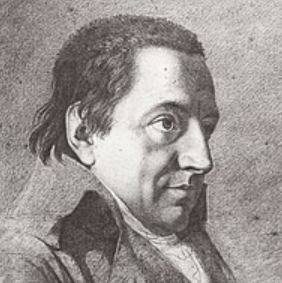
When one rational being affects another rational being as mere matter, then the lower sense of that being is also affected, it is true, and is so affected necessarily and altogether independently of the freedom of that being, (as the lower sense is indeed always affected;) but it is not to be assumed that this affection was in the intention of the person who produced it. His intention was merely to attain his purpose, to express his conception in matter, and he never took into consideration whether that matter would feel it or not. Hence, the reciprocal influence of rational beings upon each other, as such, always occurs by means of the higher sense; for only the higher sense is one which cannot be affected without having been presupposed. Our criterion of this reciprocal influence remains, therefore, correct.
▼
Source
source
P. 108

3 months 3 weeks ago
He was often, and much beyond reason, provoked by my failures in cases where success could not have been expected; but in the main his method was right, and it succeeded. I do not believe that any scientific teaching ever was more thorough, or better fitted for training the faculties, than the mode in which logic and political economy were taught to me by my father. Striving, even in an exaggerated degree, to call forth the activity of my faculties, by making me find out everything for myself, he gave his explanations not before, but after, I had felt the full force of the difficulties; and not only gave me an accurate knowledge of these two great subjects, as far as they were then understood, but made me a thinker on both.
▼
Source
source
(pp. 28-29)
4 months 3 weeks ago
What, then, is that incalculable feeling that deprives the mind of the sleep necessary to life? A world that can be explained even with bad reasons is a familiar world. But, on the other hand, in a universe suddenly divested of illusions and lights, man feels an alien, a stranger. His exile is without remedy since he is deprived of the memory of a lost home or the hope of a promised land. This divorce between man and his life, the actor and his setting, is properly the feeling of absurdity.
3 months 3 weeks ago
Politics is concerned with herds rather than with individuals, and the passions which are important in politics are, therefore, those in which the various members of a given herd can feel alike.

3 months 2 days ago
A grievous crime indeed against religion has been committed by the man who imagines that Islam is defended by the denial of the mathematical sciences.
▼
Source
source
III. The Classes of Seekers, p. 23.

4 months 3 days ago
...so it is with human reason, which strives not against faith, when enlightened, but rather furthers and advances it.
▼
Source
source
On Justification CCXCIV

3 months 1 week ago
For this, to draw a right line from every point, to every point, follows the definition, which says, that a line is the flux of a point, and a right line an indeclinable and inflexible flow.
▼
Source
source
Book III. Concerning Petitions and Axioms.
1 month 1 week ago
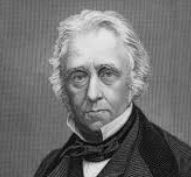
I hold agitation to be essential, not only to the obtaining of good and just measures, but to the existence of a free Government itself. If you choose to adopt the principle of Bishop Horsley, that the people have nothing to do with the laws but to obey them, then, indeed, you may deprecate agitation; but, while we live in a free country, and under a free Government, your deprecation is vain and untenable... I say that the slave-trade would never have been abolished without agitation. I say that slavery would never have been abolished without agitation... What is agitation when it is examined, but the mode in which the people in the great outer assembly debate?
▼
Source
source
Speech in the House of Commons, 29 January 1840

3 months 3 weeks ago
"'Are the gods not just?' 'Oh no, child. What would become of us if they were?'"
▼
Source
source
Orual & The Fox
3 months 3 weeks ago
Plato was synthesis of Europe and Asia, and a decidedly Oriental element pervades his philosophy, giving it a sunrise color.
▼
Source
source
Quoted in Swami Abhedananda, India and Her People, 6th ed., Calcutta: Ramakrishna Vedanta Math, 1945
2 months 2 weeks ago
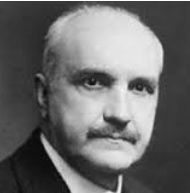
The mind celebrates a little triumph whenever it can formulate a truth, however unwelcome to the flesh, or discover an actual force, however unfavourable to given interests.
▼
Source
source
Ch. IV.: Music

2 months 3 weeks ago
The new education must consist essentially in this, that it completely destroys freedom of will in the soil which it undertakes to cultivate, and produces on the contrary strict necessity in the decisions of the will, the opposite being impossible. Such a will can henceforth be relied on with confidence and certainty.
▼
Source
source
Addresses to the German Nation (1807), Second Address : "The General Nature of the New Education". Chicago and London, The Open Court Publishing Company, 1922, p. 20.
3 months 3 weeks ago
This is a long book, not only in pages.
▼
Source
source
Preface, pg. viii
CivilSimian.com created by AxiomaticPanic, CivilSimian, Kalokagathia