

4 months 1 week ago
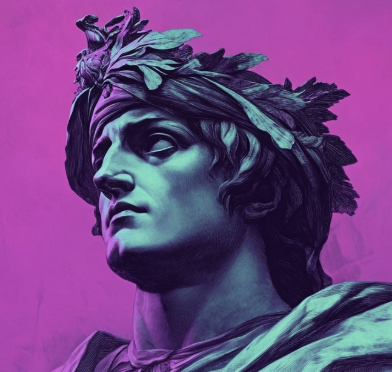
Love and the gracious heart are a single thing...one can no more be without the otherthan the reasoning mind without its reason.
▼
Source
source
Chapter XVI (tr. Mark Musa)
2 weeks 3 days ago
A real man is he whose goodness is a part of himself.
▼
Source
source
"Discipline and Character", no. 45
3 days ago
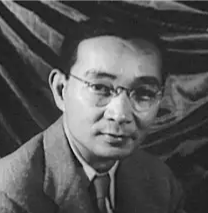
This is a personal testimony, a testimony of my own experience of thought and life. It is not intended to be objective and makes no claim to establish eternal truths. In fact I rather despise claims to objectivity in philosophy; the point of view is the thing. I should have liked to call it "A Lyrical Philosophy," using the word "lyrical" in the sense of being a highly personal and individual outlook...
▼
Source
source
Preface
2 months 2 weeks ago
Man is always something more than what he knows of himself. He is not what he is simply once and for all, but is a process...

2 months 2 weeks ago
Peace be with you. Receive my peace unto yourselves. Beware that no one lead you astray saying Lo here or lo there! For the Son of Man is within you. Follow after Him! Those who seek Him will find Him. Go then and preach the gospel of the Kingdom. Do not lay down any rules beyond what I appointed you, and do not give a law like the lawgiver lest you be constrained by it.
▼
Source
source
Chapter 4. tion.
3 months 3 weeks ago
History, is a conscious, self-mediating process - Spirit emptied out into Time; but this externalization, this kenosis, is equally an externalization of itself; the negative is the negative of itself. ... Thus absorbed in itself, it is sunk in the night of its self-consciousness; but in that night its vanished outer existence is perserved, and this transformed existence - the former one, but now reborn of the Spirit's knowledge - is the new existence, a new world and a new shape of Spirit.
6 days ago
The most strongly enforced of all known taboos is the taboo against knowing who or what you really are behind the mask of your apparently separate, independent, and isolated ego.
▼
Source
source
Inside Information
6 days ago
Can a man who's warm understand one who's freezing?
3 months 4 weeks ago
There is needed, no doubt, a body of servants (ministerium) of the invisible church, but not officials (officiales), in other words, teachers but not dignitaries, because in the rational religion of every individual there does not yet exist a church as a universal union (omnitudo collectiva).
▼
Source
source
Book IV, Part 1, Section 1, "The Christian religion as a natural religion"
3 months 3 weeks ago
What makes it so plausible to assume that hypocrisy is the vice of vices is that integrity can indeed exist under the cover of all other vices except this one. Only crime and the criminal, it is true, confront us with the perplexity of radical evil; but only the hypocrite is really rotten to the core.
▼
Source
source
On Revolution (1963), ch. 2
4 months 1 week ago
If a man has reported to you, that a certain person speaks ill of you, do not make any defense (answer) to what has been told you: but reply, The man did not know the rest of my faults, for he would not have mentioned these only.
▼
Source
source
(33) [tr. George Long (1888)].

3 months 3 weeks ago
Money is a crystal formed of necessity in the course of the exchanges, whereby different products of labour are practically equated to one another and thus by practice converted into commodities.
▼
Source
source
Vol. I, Ch. 2, pg. 99.

1 month 3 weeks ago
Our senses are not receptors so much as reactors and makers of different modalities of space. Perhaps touch is not just skin contact with things, but the very life of things in the mind.
▼
Source
source
(p. 256)

1 week 3 days ago
Tell me what to avoid, what to seek, by what studies to strengthen my tottering mind, how I may rebuff the waves that strike me abeam and drive me from my course, by what means I may be able to cope with all my evils, and by what means I can be rid of the calamities that have plunged in upon me and those into which I myself have plunged. Teach me how to bear the burden of sorrow without a groan on my part, and how to bear prosperity without making others groan; also, how to avoid waiting for the ultimate and inevitable end, and to beat a retreat of my own free will, when it seems proper to me to do so.
1 month 3 weeks ago
While Poe and the Symbolists were exploring the irrational in literature, Freud had begun to explore the resonant figure/ground double-plot of the conscious and unconscious.
▼
Source
source
p. 52

2 months 3 weeks ago
The Creation was the first act of sabotage.
2 months 1 week ago
No epoch is homogeneous; whatever you may have assigned as the dominant note of a considerable period, it will always be possible to produce men, and great men, belonging to the same time, who exhibit themselves as antagonistic to the tone of their age.
▼
Source
source
Ch. 4: "The Eighteenth Century", p. 93

3 months 3 weeks ago
Our sadness is not sad, but our cheap joys.
▼
Source
source
Pearls of Thought (1881) p. 231
3 days ago
Isolated material particles are abstractions, their properties being definable and observable only through their interaction with other systems.
▼
Source
source
"Atomic Physics and the Description of Nature"
2 months 3 weeks ago
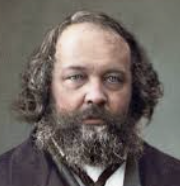
The modern state, in its essence and objectives, is necessarily a military state, and a military state necessarily becomes an aggressive state. If it does not conquer others it will itself be conquered, for the simple reason that wherever force exists, it absolutely must be displayed or put into action. From this again it follows that the modern state must without fail be huge and powerful; that is the indispensable condition for its preservation.

3 months 4 weeks ago
Tis from the resemblance of the external actions of animals to those we ourselves perform, that we judge their internal likewise to resemble ours; and the same principle of reasoning, carry'd one step farther, will make us conclude that since our internal actions resemble each other, the causes, from which they are deriv'd, must also be resembling.
▼
Source
source
Part 3, Section 16

3 months 3 weeks ago
Human beings have faculties more elevated than the animal appetites, and when once made conscious of them, do not regard anything as happiness which does not include their gratification. I do not, indeed, consider the Epicureans to have been by any means faultless in drawing out their scheme of consequences from the utilitarian principle. To do this in any sufficient manner, many Stoic, as well as Christian elements require to be included. But there is no known Epicurean theory of life which does not assign to the pleasures of the intellect, of the feelings and imagination, and of the moral sentiments, a much higher value as pleasures than to those of mere sensation.
▼
Source
source
Ch. 2
3 months 3 weeks ago
The trouble with Eichmann was precisely that so many were like him, and that the many were neither perverted nor sadistic, that they were, and still are, terribly and terrifyingly normal. From the viewpoint of our legal institutions and of our moral standards of judgment, this normality was much more terrifying than all the atrocities put together, for it implied - as had been said at Nuremberg over and over again by the defendants and their counsels - that this new type of criminal, who is in actual fact hostis generis humani, commits his crimes under circumstances that make it well-nigh impossible for him to know or to feel that he is doing wrong.
▼
Source
source
Epilogue

3 months 3 weeks ago
Perfect humility dispenses with modesty.
4 months 1 week ago
She is the sum of nature's universe.To her perfection all of beauty tends.
▼
Source
source
Chapter XIV, lines 49-50 (tr. Barbara Reynolds)
4 months 1 week ago
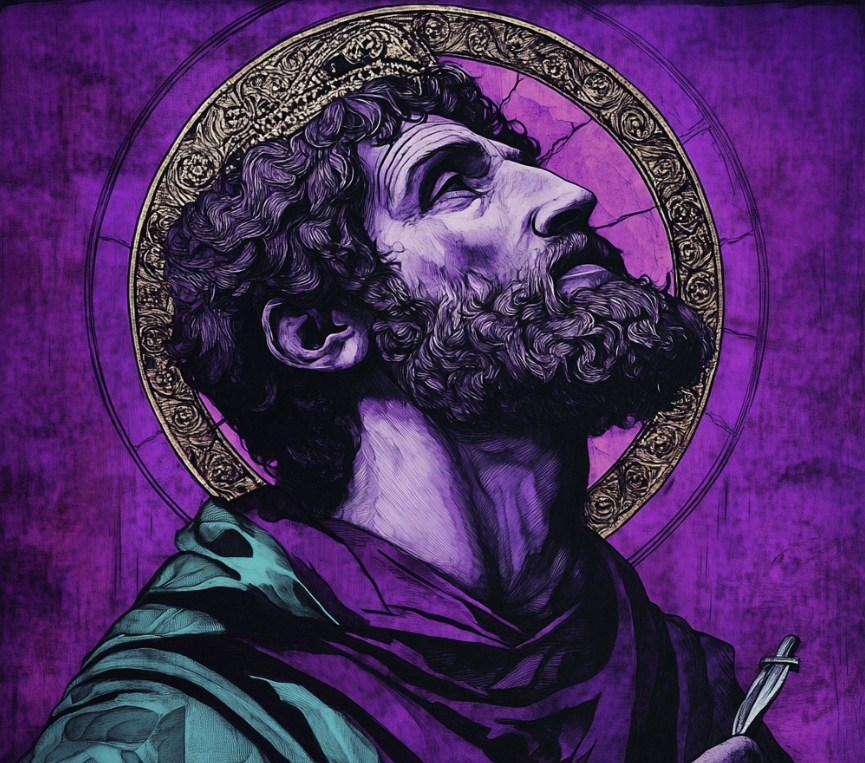
To the divine providence it has seemed good to prepare in the world to come for the righteous good things, which the unrighteous shall not enjoy; and for the wicked evil things, by which the good shall not be tormented. But as for the good things of this life, and its ills, God has willed that these should be common to both; that we might not too eagerly covet the things which wicked men are seen equally to enjoy, nor shrink with an unseemly fear from the ills which even good men often suffer. There is, too, a very great difference in the purpose served both by those events which we call adverse and those called prosperous. For the good man is neither uplifted with the good things of time, nor broken by its ills; but the wicked man, because he is corrupted by this world's happiness, feels himself punished by its unhappiness.
▼
Source
source
I, 8

2 months 3 weeks ago
Man needed one moral constitution to fit him for his original state; he needs another to fit him for his present state; and he has been, is, and will long continue to be, in process of adaptation. And the belief in human perfectibility merely amounts to the belief that, in virtue of this process, man will eventually become completely suited to his mode of life. Progress, therefore, is not an accident, but a necessity. Instead of civilization being artificial, it is part of nature; all of a piece with the development of the embryo or the unfolding of a flower. The modifications mankind have undergone, and are still undergoing, result from a law underlying the whole organic creation; and provided the human race continues, and the constitution of things remains the same, those modifications must end in completeness.
▼
Source
source
Pt. I, Ch. 2 : The Evanescence of Evil, concluding paragraph

2 weeks 6 days ago
After World War II, liberal rights were not something that were only deserved by white Europeans. ...There was a recognition that the black and brown peoples being held in colonial bondage could not consistently be held in that bondage, because liberalism was a universal doctrine. ...That's the other respect in which we can defend liberalism, a moral one.
▼
Source
source
10:30
3 months 3 weeks ago
Since labour is motion, time is its natural measure.
▼
Source
source
Notebook I, The Chapter on Money, p. 125.
3 months 3 weeks ago
Every emancipation is a restoration of the human world and of human relationships to a man himself.
3 months 3 weeks ago
My desire for knowledge is intermittent; but my desire to bathe my head in atmospheres unknown to my feet is perennial and constant. The highest that we can attain to is not Knowledge, but Sympathy with Intelligence. I do not know that this higher knowledge amounts to anything more definite than a novel and grand surprise on a sudden revelation of the insufficiency of all that we called Knowledge before - a discovery that there are more things in heaven and earth than are dreamed of in our philosophy.
3 days ago
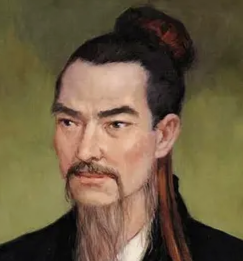
When we come to think about the several benefits in regard to their cause, how have they arisen? Have they arisen out of hate of others and injuring others? Of course we should say no. We should say they have arisen out of love of others and benefiting others. If we should classify one by one all those who love others and benefit others, should we find them to be partial or universal? Of course we should say they are universal. Now, since universal love is the cause of the major benefits in the world, therefore Mozi proclaims universal love is right. And, as has already been said, the interest of the magnanimous lies in procuring benefits for the world and eliminating its calamities. Now that we have found out the consequences of universal love to be the major benefits of the world and the consequences of partiality to be the major calamities in the world; this is the reason why Mozi said partiality is wrong and universality is right.
▼
Source
source
Book 4; Universal Love III
2 months 2 weeks ago
Another parable put he forth unto them, saying, The kingdom of heaven is likened unto a man which sowed good seed in his field: But while men slept, his enemy came and sowed tares among the wheat, and went his way. But when the blade was sprung up, and brought forth fruit, then appeared the tares also. So the servants of the householder came and said unto him, Sir, didst not thou sow good seed in thy field? from whence then hath it tares? He said unto them, An enemy hath done this. The servants said unto him, Wilt thou then that we go and gather them up? But he said, Nay; lest while ye gather up the tares, ye root up also the wheat with them. Let both grow together until the harvest: and in the time of harvest I will say to the reapers, Gather ye together first the tares, and bind them in bundles to burn them: but gather the wheat into my barn.
▼
Source
source
13:24-30 (KJV)
2 months 3 weeks ago
Freedom can be manifested only in the void of beliefs, in the absence of axioms, and only where the laws have no more authority than a hypothesis.
1 month 3 weeks ago
Until writing was invented, man lived in acoustic space: boundless, directionless, horizonless, in the dark of the mind, in the world of emotion, by primordial intuition, terror. Speech is a social chart of this bog.
▼
Source
source
(p. 48)

3 months 3 weeks ago
The aim of philosophy is to erect a wall at the point where language stops anyway.
▼
Source
source
Ch. 9 : Philosophy, p. 187
4 months 3 weeks ago
Just as it sometimes happens that deformed offspring are produced by deformed parents, and sometimes not, so the offspring produced by a female are sometimes female, sometimes not, but male, because the female is as it were a deformed male.
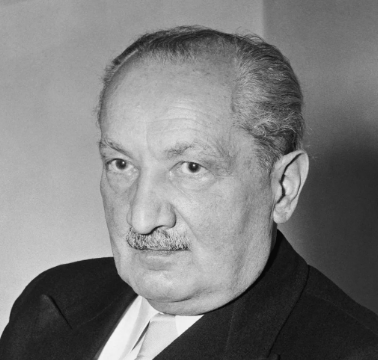
3 months 3 weeks ago
"Here is the chalk." This is a truth; and here and the now hereby characterize the chalk so that we emphasize by saying; the chalk, which means "this." We take a scrap of paper and we write the truth down: "Here is the chalk." We lay this written statement beside the thing of which it is the truth. After the lecture is finished both doors are opened, the classroom is aired, there will be a draft, and the scrap of paper, let us suppose, will flutter out into the corridor. A student finds it on his way to the cafeteria, reads the sentence. "Here is the chalk," and ascertains that this is not true at all. Through the draft the truth has become an untruth. Strange that a truth should depend on a gust of wind. ... We have made the truth about the chalk independent of us and entrusted it to a scrap of paper.
▼
Source
source
p. 29-30


3 months 3 weeks ago
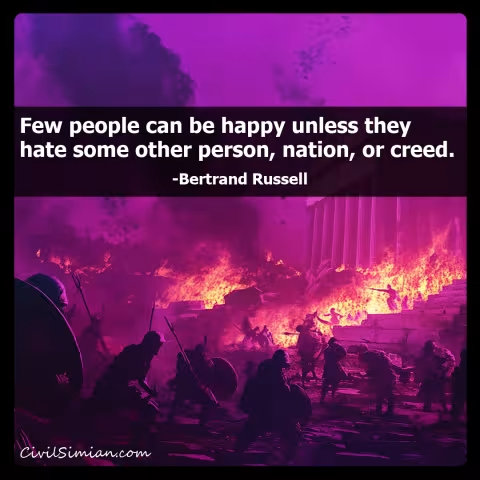
The moral flabbiness born of the exclusive worship of the bitch-goddess SUCCESS. That - with the squalid cash interpretation put on the word success - is our national disease.
▼
Source
source
To H. G. Wells, 9/11/1906
1 week 3 days ago
"He is a slave." His soul, however, may be that of a freeman. "He is a slave." But shall that stand in his way? Show me a man who is not a slave; one is a slave to lust, another to greed, another to ambition, and all men are slaves to fear.

4 months 3 days ago
It is a thorny undertaking, and more so than it seems, to follow a movement so wandering as that of our mind, to penetrate the opaque depths of its innermost folds, to pick out and immobilize the innumerable flutterings that agitate it.
▼
Source
source
Ch. 6. Of Preparation, tr. E. J. Trechmann, 1927
3 months 3 weeks ago
These numerous points at which money is withdrawn from circulation and accumulated in numerous individual hoards or potential money-capitals appears as so many obstacles to circulation, because they immobilise the money and deprive it of its capacity to circulate for a certain time.
▼
Source
source
Vol. II, Ch. XXI, p. 497.
3 months 3 weeks ago
Even atheists rebel and express, like Hardy and Housman, their rage against God although (or because) He does not, on their view, exist...

3 months ago
In any country where talent and virtue produce no advancement, money will be the national god. Its inhabitants will either have to possess money or make others believe that they do. Wealth will be the highest virtue, poverty the greatest vice. Those who have money will display it in every imaginable way. If their ostentation does not exceed their fortune, all will be well. But if their ostentation does exceed their fortune they will ruin themselves. In such a country, the greatest fortunes will vanish in the twinkling of an eye. Those who don't have money will ruin themselves with vain efforts to conceal their poverty. That is one kind of affluence: the outward sign of wealth for a small number, the mask of poverty for the majority, and a source of corruption for all.

3 months 3 weeks ago
The old often envy the young; when they do, they are apt to treat them cruelly.
3 months 3 weeks ago
The finest workers in stone are not copper or steel tools, but the gentle touches of air and water working at their leisure with a liberal allowance of time.

2 months 1 week ago
The collective is the object of all idolatry, this it is which chains us to the earth. In the case of avarice: gold is of the social order. In the case of ambition: power is of the social order. Science and art are full of the social element also. And love? Love is more or less of an exception: that is why we can go to God through love, not through avarice and ambition.
▼
Source
source
p. 121

2 months 2 weeks ago
England is the paradise of individuality, eccentricity, heresy, anomalies, hobbies, and humors.
▼
Source
source
"The British Character"
6 days ago
Woe to that nation whose literature is disturbed by the intervention of power. Because that is not just a violation against "freedom of print", it is the closing down of the heart of the nation, a slashing to pieces of its memory. The nation ceases to be mindful of itself, it is deprived of its spiritual unity, and despite a supposedly common language, compatriots suddenly cease to understand one another Woe to that nation whose literature is cut short by the intrusion of force. This is not merely interference with freedom of the press but the sealing up of a nation's heart, the excision of its memory.
▼
Source
source
Variant translation, as quoted in TIME
CivilSimian.com created by AxiomaticPanic, CivilSimian, Kalokagathia