
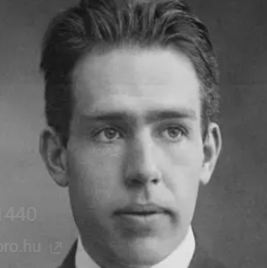
Niels Bohr — The Quantum Atom and the Philosophy of Complementarity (1885–1962)
Niels Bohr was a Danish physicist whose model of the atom and foundational contributions to quantum mechanics permanently transformed humanity's understanding of matter.
More than a theorist, he was the philosophical conscience of the quantum revolution — the figure who insisted that the strange new physics demanded not just new equations but a new way of thinking about knowledge itself.
His central concern: that nature at the quantum level resists classical description — and that accepting this honestly is the beginning of genuine understanding, not a failure of it.
The Bohr Model of the Atom
In 1913 Bohr proposed a radical new picture of the atom — one in which electrons occupy discrete orbits and emit or absorb light only when jumping between them.
The model was a brilliant hybrid: it grafted Planck's quantum hypothesis onto Rutherford's nuclear atom, producing for the first time a coherent explanation of the spectral lines of hydrogen that had puzzled physicists for decades.
It was known to be incomplete even as it was celebrated — a provisional structure that worked without anyone fully understanding why. Bohr accepted this with characteristic equanimity, regarding the model as a first step rather than a final answer.
The step proved enormously fruitful, opening the path that led to full quantum mechanics a decade later.
"An expert is a person who has made all the mistakes that can be made in a very narrow field."
Copenhagen and the Quantum Revolution
Through the 1920s Bohr's institute in Copenhagen became the epicenter of the quantum revolution — drawing Heisenberg, Pauli, Kramers, Dirac, and dozens of others into an extraordinary collaborative ferment.
Bohr's method was Socratic and relentless. He thought by talking, by arguing, by pressing every idea until it either clarified or collapsed. Visitors recalled sessions that lasted into the small hours, Bohr pacing and murmuring, searching for the precise formulation that would make the physics honest.
The Copenhagen interpretation of quantum mechanics — the account of what the new theory actually means — emerged from this atmosphere, bearing Bohr's philosophical stamp throughout.
It remains the most widely taught interpretation of quantum theory, and the most contested.
"If quantum mechanics hasn't profoundly shocked you, you haven't understood it yet."
Complementarity
Bohr's deepest philosophical contribution was the principle of complementarity — his response to the apparent paradox that quantum objects behave as waves in some experiments and as particles in others.
Rather than seeking a single unified picture, Bohr argued that wave and particle descriptions are mutually exclusive yet equally necessary — complementary aspects of a reality that resists capture in any single classical framework.
The experimental arrangement itself, he insisted, is part of what determines which aspect of reality can be observed. There is no view from nowhere — no description of nature that is independent of the conditions under which it is obtained.
Complementarity was for Bohr not just physics but a general epistemological principle — one he believed applied wherever complete descriptions seemed to generate irreducible contradictions.
"The opposite of a fact is a falsehood, but the opposite of one profound truth may very well be another profound truth."
The Debate with Einstein
The greatest intellectual confrontation of twentieth century physics was the running debate between Bohr and Einstein over the meaning of quantum mechanics.
Einstein could not accept that the theory was complete — that nature at its deepest level was irreducibly probabilistic, that God, as he memorably put it, played dice. At successive Solvay conferences he constructed ingenious thought experiments designed to show that Bohr's interpretation led to contradiction.
Each time, Bohr found the flaw — often after a sleepless night of concentrated effort. The exchanges were conducted with mutual respect and genuine affection, two great minds pressing each other toward precision.
History has largely sided with Bohr on the specific arguments, while the deeper questions Einstein raised remain philosophically alive to this day.
"Einstein, stop telling God what to do."
Legacy — Physics, Philosophy, and the Atomic Age
Bohr was awarded the Nobel Prize in Physics in 1922. During the Second World War he escaped Nazi-occupied Denmark and contributed to the Manhattan Project, though he spent much of his time there urging the Allied leadership to pursue international control of atomic weapons — a campaign that fell on deaf ears but spoke to the seriousness with which he took the moral dimensions of scientific power.
His legacy operates on two levels. As a physicist he is among the handful of figures who created the quantum world — a contribution so fundamental that modern chemistry, materials science, electronics, and nuclear physics are all built upon it.
As a philosopher of science he raised questions that have not been resolved — about the nature of measurement, the role of the observer, and what it means for a theory to describe reality — that remain at the frontier of both physics and philosophy.
He taught that the deepest honesty in science sometimes means resisting the demand for a picture and learning to live with irreducible strangeness.
"It is wrong to think that the task of physics is to find out how nature is. Physics concerns what we can say about nature."
CivilSimian.com created by AxiomaticPanic, CivilSimian, Kalokagathia