
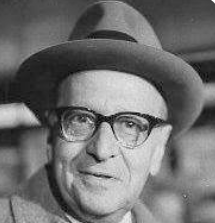
Max Horkheimer — Critical Theory and the Critique of Instrumental Reason (1895–1973)
Max Horkheimer was the architect of Critical Theory — a philosophy that refused to separate thought from social power. Against traditions that treated reason as neutral and timeless, he argued that ideas are shaped by economic systems, political domination, and historical trauma. Philosophy, for Horkheimer, must not only interpret the world, but diagnose why it so often becomes inhuman.
From Bourgeois Society to Marxist Critique
Born into a wealthy Jewish family in Stuttgart, Horkheimer initially worked in his father’s factory before turning to philosophy and sociology. The collapse of European liberalism after World War I convinced him that classical Enlightenment ideals could no longer be taken at face value.
He became director of the Institute for Social Research in Frankfurt, transforming it into an interdisciplinary project that blended philosophy, economics, psychology, and history in the study of domination.
“The task of philosophy is to translate what people suffer into conscious knowledge.”
Traditional Theory vs. Critical Theory
Horkheimer drew a sharp distinction between what he called traditional theory and critical theory. Traditional theory seeks neutral explanations, treating society as an object to be analyzed from outside.
Critical theory, by contrast, understands that theorists themselves are part of society. Knowledge is not detached from interests. Theory is already a form of social practice.
Its goal is not merely to explain how systems function, but to reveal how they produce suffering and constraint.
“A theory which aims at changing society must itself be socially conditioned.”
Instrumental Reason — When Rationality Becomes a Tool of Domination
Horkheimer argued that modern societies had reduced reason to a purely instrumental function: calculating efficiency, control, and utility. Questions of meaning, justice, and ends were pushed aside.
When reason becomes only a tool, it can serve any goal, including destructive ones. Technological progress then coexists easily with moral regression.
Rational systems can become irrational in their effects.
“Reason has become an instrument of domination.”
Dialectic of Enlightenment
In collaboration with Theodor Adorno, Horkheimer wrote Dialectic of Enlightenment, a dark meditation on how the Enlightenment’s promise of liberation had turned into new forms of control.
The drive to master nature, they argued, also became a drive to dominate human beings. Myth and reason, once thought opposites, reappeared inside one another.
The result was a society that prized conformity, efficiency, and mass culture over reflection and autonomy.
“Enlightenment is totalitarian.”
Exile, Trauma, and Pessimism
The rise of Nazism forced Horkheimer and the Frankfurt School into exile, first in Europe and then in the United States. The Holocaust permanently shaped his understanding of civilization’s fragility.
After the war, his thought grew more pessimistic. He became increasingly skeptical that social progress could be guaranteed by rational institutions alone.
History had proven otherwise.
Ethics Without Illusions
Horkheimer rejected grand moral systems. Instead, he grounded ethics in resistance to suffering. What matters most is not abstract virtue, but concrete injustice.
Solidarity begins with attentiveness to pain, not with ideological certainty.
Philosophy must stay close to the wounded.
Legacy — Critique as a Form of Responsibility
Horkheimer reshaped social philosophy by insisting that thought is never innocent of power. His work laid the foundation for later figures such as Habermas, Marcuse, and contemporary critical social theory.
His legacy is not a system, but a demand: that philosophy remain suspicious of easy optimism and attentive to the ways rational order can conceal cruelty.
To think critically is to refuse reconciliation with injustice.
“The demand that Auschwitz not happen again is the first of all education.”
CivilSimian.com created by AxiomaticPanic, CivilSimian, Kalokagathia