


2 months 2 weeks ago
The sun will be darkened, and the moon will not give its light; the stars will fall from the sky, and the heavenly bodies will be shaken. They will see the Son of Man coming on the clouds of the sky, with power and great glory... I tell you the truth, this generation will certainly not pass away until all these things have happened.
▼
Source
source
24:29-34 (NIV)
2 weeks 3 days ago
From the point of view of the development of Marx's theories, his early journalistic writings are important for two main reasons. In his sharp attacks on the censorship law he spoke out unequivocally for the freedom of the Press, against the levelling effect of government restriction ('You don't expect a rose to smell like a violet; why then should the human spirit, the richest thing we have, exist only in a single form?'), and also expressed views concerning the whole nature of the state and the essence of freedom. Pointing out that the vagueness and ambiguity of the Press law placed arbitrary power in the hands of officials, Marx went on to argue that censorship was contrary not only to the purposes of the Press, but to the nature of the state as such.
▼
Source
source
(pp. 120-1)
5 days ago
The great secret of success is to go through life as a man who never gets used up. That is possible for him who never argues and strives with men and facts, but in all experience retires upon himself, and looks for the ultimate cause of things in himself.

2 months 2 weeks ago
No position is so false as having understood and still remaining alive.

5 days ago
The more we struggle for life (as pleasure), the more we are actually killing what we love.
▼
Source
source
p. 32

3 months 3 weeks ago
I became my own only when I gave myself to Another.
▼
Source
source
Letters of C. S. Lewis (17 July 1953), para. 2, p. 251 - as reported in The Quotable Lewis (1989), p. 334
2 weeks 5 days ago
Men accept servility in order to acquire wealth; as if they could acquire anything of their own when they cannot even assert that they belong to themselves.
▼
Source
source
Part 3
2 months 3 weeks ago
What has always made the state a hell on earth has been precisely that man has tried to make it heaven.
3 months 1 week ago
Lysander said, "Where the lion's skin will not reach, it must be pieced with the fox's."
▼
Source
source
60 Lysander
3 months 3 weeks ago
A command can express no more than an ought or a shall, because it is a universal, but it does not express an 'is'; and this at once makes plain its deficiency. Against such commands Jesus sets virtue, i.e., a loving disposition, which makes the content of the command superfluous and destroys its form as a command, because that form implies an opposition between a commander and something resisting the command.

1 month 1 day ago
Human beings act, certainly. But none of them knows why they act as they do. There is a scattering of facts, which can be known and reported. Beyond these facts are the stories that are told. Human beings may behave like puppets, but no one is pulling the strings.
▼
Source
source
In The Puppet Theatre: Puppetry, Conspiracy and Ouija Boards (p. 136)
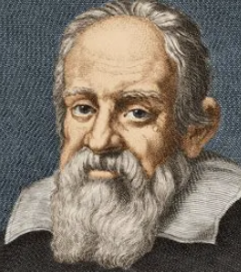
2 weeks 4 days ago
This [experimentation] is the custom-and properly so-in those sciences where mathematical demonstrations are applied to natural phenomena, as is seen in the case of perspective, astronomy, mechanics, music, and others where the principles, once established by well-chosen experiments, become the foundations of the entire superstructure.
▼
Source
source
Salviati, Third Day. Change of Position
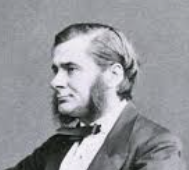
1 month 1 week ago
All truth, in the long run, is only common sense clarified.
▼
Source
source
"On the Study of Biology"
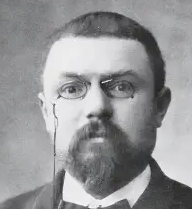
2 weeks 4 days ago
Mathematics have a triple aim. They must furnish an instrument for the study of nature. But that is not all: they have a philosophic aim and, I dare maintain, an esthetic aim. They must aid the philosopher to fathom the notions of number, of space, of time. And above all, their adepts find therein delights analogous to those given by painting and music. They admire the delicate harmony of numbers and forms; they marvel when a new discovery opens to them an unexpected perspective; and has not the joy they thus feel the esthetic character, even though the senses take no part therein? Only a privileged few are called to enjoy it fully, it is true, but is not this the case for all the noblest arts?This is why I do not hesitate to say that mathematics deserve to be cultivated for their own sake, and the theories inapplicable to physics as well as the others. Even if the physical aim and the esthetic aim were not united, we ought not to sacrifice either.
▼
Source
source
Ch. 5: Analysis and Physics
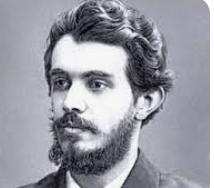
2 months 1 week ago
The greater part of Eastern teachers of the Church, from Clement of Alexandria to Maximus the Confessor, were supporters of Apokatastasis, of universal salvation and resurrection. And this is characteristic of (contemporary) Russian religious thought. Orthodox thought has never been suppressed by the idea of Divine justice and it never forgot the idea of Divine love. Chiefly - it did not define man from the point of view of Divine justice but from the idea of transfiguration and Deification of man and cosmos.
▼
Source
source
"The Truth of Orthodoxy" as translated in Vestnik of the Russian West European Patriarchal Exarchate
3 months 3 weeks ago
The imagination is always restless and suggests a variety of thoughts, and the will, reason being laid aside, is ready for every extravagant project; and in this State, he that goes farthest out of the way, is thought fittest to lead, and is sure of most followers: And when Fashion hath once Established, what Folly or craft began, Custom makes it Sacred, and 'twill be thought impudence or madness, to contradict or question it. He that will impartially survey the Nations of the World, will find so much of the Governments, Religion, and Manners brought in and continued amongst them by these means, that they will have but little Reverence for the Practices which are in use and credit amongst Men.
▼
Source
source
First Treatise of Government
2 months 4 days ago
It is at work everywhere, functioning smoothly at times, at other times in firs and starts . It breathes, it heats, it eats. It shits and fucks. What a mistake to have ever said the id. Everywhere it is machines- real ones, not figurative ones: machines driving other machines, machines being driven by other machines, with all the necessary couplings and connections. An organ-machine is plugged into an energy-source-machine: the one produces a flow that the other interrupts The breast is a machine that produces milk, and the mouth a machine coupled to it.
▼
Source
source
The Desiring Machine
2 months 2 weeks ago
How many disappointments are conducive to bitterness? One or a thousand, depending on the subject.

2 months 2 weeks ago
But no mental action seems necessary or invariable in its character. In whatever manner the mind has reacted under a given sensation, in that manner it is the more likely to react again; were this, however, an absolute necessity, habits would become wooden and ineradicable, and no room being left for the formulation of new habits, intellectual life would come to a speedy close. Thus, the uncertainty of the mental law is no mere defect of it, but is on the contrary of its essence. The truth is, the mind is not subject to "law," in the same rigid sense that matter is. It only experiences gentle forces which merely render it more likely to act a given way than it otherwise would be. There always remains a certain amount of arbitrary spontaneity in its action, without which it would be dead.

2 weeks 1 day ago
And wonderful it is to see how the Ideal or Soul, place it in what ugliest Body you may, will irradiate said Body with its own nobleness; will gradually, incessantly, mould, modify, new-form or reform said ugliest Body, and make it at last beautiful, and to a certain degree divine!

3 months 3 weeks ago
Always put the best interpretation on a tenet. Why not on Christianity, wholesome, sweet, and poetic? It is the record of a pure and holy soul, humble, absolutely disinterested, a trutn-speaker, and bent on serving, teaching, and uplifting men. Christianity taught the capacity, the element, to Jove the All-perfect without a stingy bargain for personal happiness. It taught that to love him was happiness,-to love him in other's virtues.

3 months 2 weeks ago
Discourses are tactical elements or blocks operating in the field of force relations; there can exist different and even contradictory discourses within the same strategy; they can, on the contrary, circulate without changing their form from one strategy to another, opposing strategy.
▼
Source
source
Vol I, pp. 101-102

3 months 3 weeks ago
Our island is this earth; and the most striking object we behold is the sun. As soon as we pass beyond our immediate surroundings, one or both of these must meet our eye. Thus the philosophy of most savage races is mainly directed to imaginary divisions of the earth or to the divinity of the sun.

3 months 3 weeks ago
Despotic government supports itself by abject civilization, in which debasement of the human mind, and wretchedness in the mass of the people, are the chief criterions. Such governments consider man merely as an animal; that the exercise of intellectual faculty is not his privilege; that he has nothing to do with the laws but to obey them; and they politically depend more upon breaking the spirit of the people by poverty, than they fear enraging it by desperation.
▼
Source
source
Means by Which the Fund Is to Be Created

3 months 3 weeks ago
Self-respect will keep a man from being abject when he is in the power of enemies, and will enable him to feel that he may be in the right when the world is against him.
▼
Source
source
Authority and the Individual (1949), p. 59
2 months 2 weeks ago
Blessed is the lion which becomes man when consumed by man; and cursed is the man whom the lion consumes, and the lion becomes man. (7) This saying has been interpreted by some as referring to such anger as consumes a man…(rather than is consumed by him, through his reason and love), 'til that man is the lion of Anger. Other more mystical interpretations might also be found or devised that have merit.

2 months 1 week ago
It must be borne in mind that it is through the channel of the child that the development of the mature man must go, and that the present ideas of the educating or training of the latter in the school and the family - even the family of the liberal or radical - are such as to stifle the natural growth of the child. Every institution of our day, the family, the State, our moral codes, sees in every strong, beautiful, uncompromising personality a deadly enemy; therefore every effort is being made to cramp human emotion and originality of thought in the individual into a straight-jacket from its earliest infancy; or to shape every human being according to one pattern; not into a well-rounded individuality, but into a patient work slave, professional automaton, tax-paying citizen, or righteous moralist.

3 months 3 weeks ago
The great thing, then, in all education, is to make our nervous system our ally instead of our enemy.
▼
Source
source
Ch. 4
5 days ago
If only there were evil people somewhere insidiously committing evil deeds, and it were necessary only to separate them from the rest of us and destroy them. But the line dividing good and evil cuts through the heart of every human being. And who is willing to destroy a piece of his own heart?
▼
Source
source
The Gulag Archipelago
4 months 1 week ago
Who are those people by whom you wish to be admired? Are they not these about whom you are in the habit of saying that they are mad? What then? Do you wish to be admired by the mad?
▼
Source
source
Book I, ch. 21, 4.
2 months 2 weeks ago
Let us not pretend to doubt in philosophy what we do not doubt in our hearts.
▼
Source
source
Vol. V, par. 265
2 months 2 weeks ago
Are not five sparrows sold for two farthings, and not one of them is forgotten before God? But even the very hairs of your head are all numbered. Fear not therefore: ye are of more value than many sparrows.
▼
Source
source
12:6-7

3 months 6 days ago
Wish not the thing, which thou mayest not obtain!
3 months 2 weeks ago
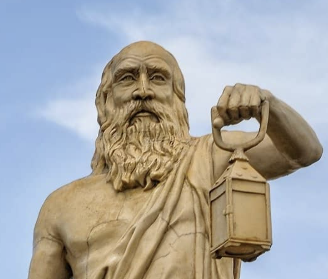
To Xeniades, who had purchased Diogenes at the slave market, he said, "Come, see that you obey orders."
▼
Source
source
Diogenes Laërtius, vi. 36
2 months 2 weeks ago
Ambition is a drug that makes its addicts potential madmen.
3 months 6 days ago
None but a Craftsman can judge of a craft.

4 months 2 days ago
Once conform, once do what others do because they do it, and a kind of lethargy steals over all the finer senses of the soul.
1 month 3 weeks ago
The problem posed by indirect speech acts is the problem of how it is possible for the speaker to say one thing and mean that but also to mean something else.
▼
Source
source
Expression and Meaning, p. 31, Cambridge University Press (1979).

8 months ago
Ideology is not a dreamlike illusion that we build to escape insupportable; in its basic dimension, it is a fantasy-construction which serves as a support for our reality itself; an illusion which structures our effective, real social relations and thereby masks some insupportable, real, impossible kernel.
3 months 3 weeks ago
We are spinning our own fates, good or evil, and never to be undone. Every smallest stroke of virtue or of vice leaves its never so little scar. ...Nothing we ever do is, in strict scientific literalness, wiped out.
▼
Source
source
Ch. 4
5 days ago
There is a word very commonly used these days: "anti-communism." It's a very stupid word, badly put together. It makes it appear as though communism were something original, something basic, something fundamental. Therefore, it is taken as the point of departure, and anti-communism is defined in relation to communism. Here is why I say that this word was poorly selected, that it was put together by people who do not understand etymology: the primary, the eternal concept is humanity. And communism is anti-humanity. Whoever says "anti-communism" is saying, in effect, anti-anti-humanity. A poor construction. So we should say: that which is against communism is for humanity. Not to accept, to reject this inhuman Communist ideology is simply to be a human being. It isn't being a member of a party.
▼
Source
source
Speech in Washington D.C. (30 June 1975), published in Solzhenitsyn: The Voice of Freedom (1975), p. 30
3 months 3 weeks ago
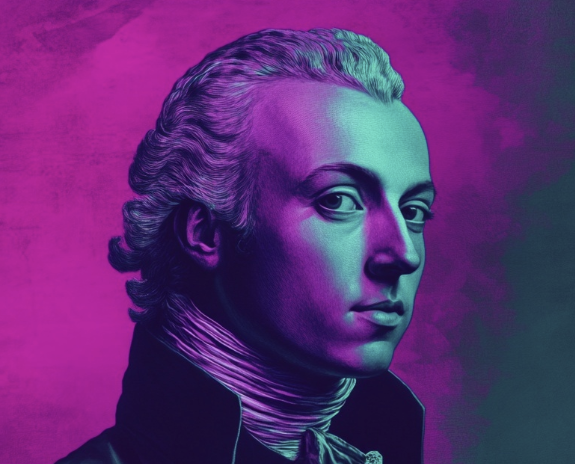
All wars are accordingly so many attempts (not in the intention of man, but in the intention of Nature) to establish new relations among states, and through the destruction or at least the dismemberment of all of them to create new political bodies, which, again, either internally or externally, cannot maintain themselves and which must thus suffer like revolutions; until finally, through the best possible civic constitution and common agreement and legislation in external affairs, a state is created which, like a civic commonwealth, can maintain itself automatically.
▼
Source
source
Seventh Thesis
1 month 1 week ago
A man possessed of splendid talents, which he often abused, and of a sound judgment, the admonitions of which he often neglected; a man who succeeded only in an inferior department of his art, but who in that department succeeded pre-eminently.
▼
Source
source
p. 231
3 months 3 weeks ago
One who believes, as I do, that the free intellect is the chief engine of human progress, cannot but be fundamentally opposed to Bolshevism, as much as to the Church of Rome.
▼
Source
source
Part I, Ch. 9: International Policy
2 weeks 1 day ago
Enjoying things which are pleasant; that is not the evil: it is the reducing of our moral self to slavery by them that is.
3 months 3 weeks ago
The auspices for philosophy are bad if, when proceeding ostensibly on the investigation of truth, we start saying farewell to all uprightness, honesty and sincerity, and are intent only on passing ourselves off for what we are not. We then assume, like those three sophists [Fichte, Schelling and Hegel], first a false pathos, then an affected and lofty earnestness, then an air of infinite superiority, in order to impose where we despair of ever being able to convince.
▼
Source
source
E. Payne, trans. (1974) Vol. 1, p. 22

3 months 3 weeks ago
Communism... is the genuine resolution of the antagonism between man and nature and between man and man; it is the true resolution of the conflict between existence and essence, objectification and self-affirmation, freedom and necessity, individual and species. It is the riddle of history solved and knows itself as the solution.
▼
Source
source
Private Property and Communism, p. 43.
3 months 3 weeks ago
Now, to-day, this moment, is our chance to choose the right side. God is holding back to give us that chance. It will not last for ever. We must take it or leave it.
▼
Source
source
Book II, Chapter 5, "The Practical Conclusion"
3 months 3 weeks ago
The fundamental defect of fathers, in our competitive society, is that they want their children to be a credit to them.
▼
Source
source
Ch. 14: Freedom Versus Authority in Education
CivilSimian.com created by AxiomaticPanic, CivilSimian, Kalokagathia