


2 months 6 days ago
Happiness is the proof that time can accommodate eternity.
2 months 2 weeks ago
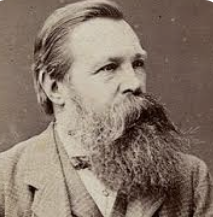
The abolition of private property is, doubtless, the shortest and most significant way to characterize the revolution in the whole social order which has been made necessary by the development of industry - and for this reason it is rightly advanced by communists as their main demand.
3 months 1 week ago
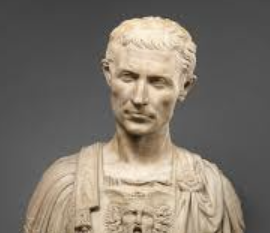
Nay, men, if any of you had heeded what I was ever foretelling and advising, ye would now neither be fearing a single man nor putting your hopes in a single man.
▼
Source
source
Quoted by Plutarch, Life of Cato the Younger, 52 Bernadotte Perrin, ed. Plutarch's Lives, Vol. 8, LCL 100 (1919), pp. 247, 361

1 month 3 weeks ago
The only significance of life consists in helping to establish the kingdom of God; and this can be done only by means of the acknowledgment and profession of the truth by each one of us. Chapter XII, Conclusion-Repent Ye, for the Kingdom of Heaven is at Hand Variant translation: The sole meaning of life is to serve humanity by contributing to the establishment of the kingdom of God, which can only be done by the recognition and profession of the truth by every man.
3 months 3 weeks ago
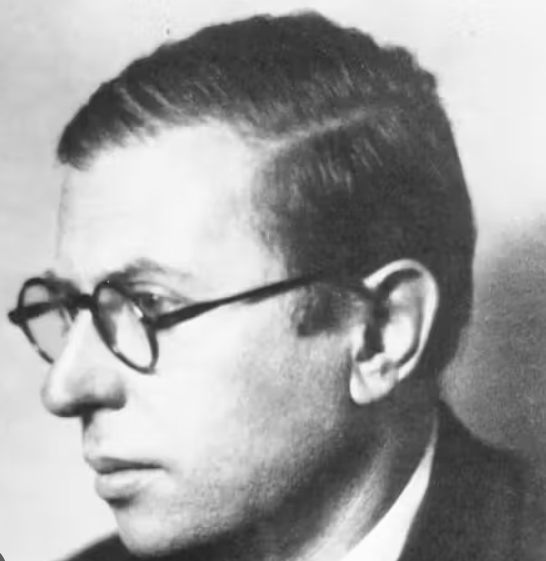
And we feel that the hero has lived all the details of this night like annunciations, promises, or even that he lived only those that were promises, blind and deaf to all that did not herald adventure. We forget that the future was not yet there; the man was walking in the night without forethought, a night which offered him a choice of dull rich prizes, and he did not make his choice.
▼
Source
source
Diary entry of Saturday noon (10 February?)
3 months 3 weeks ago
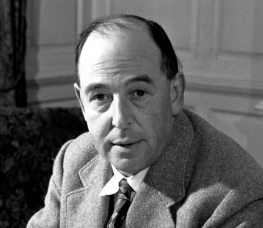
Of course God knew what would happen if they used their freedom the wrong way: apparently He thought it worth the risk.
▼
Source
source
Book II, Chapter 3, "The Shocking Alternative"
2 weeks 3 days ago
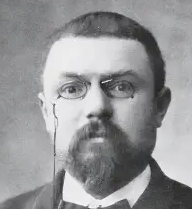
One need only open the eyes to see that the conquests of industry which have enriched so many practical men would never have seen the light, if these practical men alone had existed and if they had not been preceded by unselfish devotees who died poor, who never thought of utility, and yet had a guide far other than caprice.As Mach says, these devotees have spared their successors the trouble of thinking.
▼
Source
source
Author's Essay Prefatory to the Translation: "The Choice of Facts," p.4

3 months 3 weeks ago
But bounty and hospitality very seldom lead to extravagance; though vanity almost always does.
▼
Source
source
Chapter III, Part V, p. 987.
1 month 1 week ago
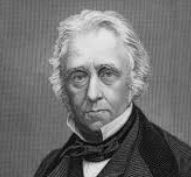
I hold agitation to be essential, not only to the obtaining of good and just measures, but to the existence of a free Government itself. If you choose to adopt the principle of Bishop Horsley, that the people have nothing to do with the laws but to obey them, then, indeed, you may deprecate agitation; but, while we live in a free country, and under a free Government, your deprecation is vain and untenable... I say that the slave-trade would never have been abolished without agitation. I say that slavery would never have been abolished without agitation... What is agitation when it is examined, but the mode in which the people in the great outer assembly debate?
▼
Source
source
Speech in the House of Commons, 29 January 1840
3 months 3 weeks ago
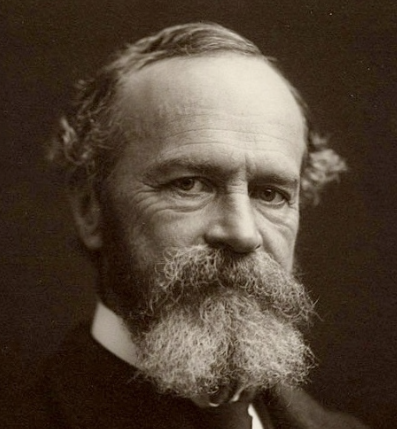
The last peculiarity of consciousness to which attention is to be drawn in this first rough description of its stream is that it is always interested more in one part of its object than in another, and welcomes and rejects, or chooses, all the while it thinks.
▼
Source
source
Ch. 9

3 months 2 weeks ago
Of course, the aim of a constitutional democracy is to safeguard the rights of the minority and avoid the tyranny of the majority. Yet the concrete practice of the US legal system from 1883 to 1964 promoted a tyranny of the white majority much more than a safeguarding of the rights of black Americans.
▼
Source
source
(p. 102-3)

2 months 2 weeks ago
How many disappointments are conducive to bitterness? One or a thousand, depending on the subject.

3 months 3 weeks ago
There are a thousand hacking at the branches of evil to one who is striking at the root, and it may be that he who bestows the largest amount of time and money on the needy is doing the most by his mode of life to produce that misery which he strives in vain to relieve.
▼
Source
source
p. 87
2 months 2 weeks ago
Consciousness is nature's nightmare.

2 weeks ago
The Public is an old woman. Let her maunder and mumble.
▼
Source
source
Journal (1835).

3 months 3 weeks ago
A world without delight and without affection is a world destitute of value.
▼
Source
source
The Scientific Outlook, 1931
2 months 2 weeks ago
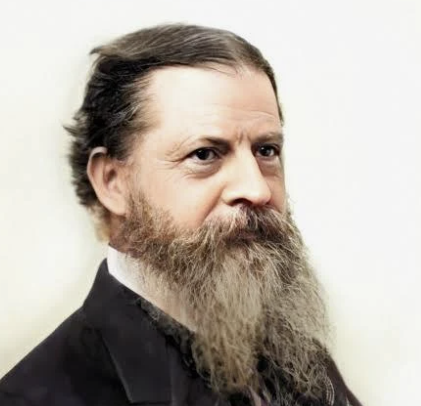
The next simplest feature that is common to all that comes before the mind, and consequently, the second category, is the element of Struggle.
▼
Source
source
Lecture II : The Universal Categories, § 2 : Struggle, CP 5.45
2 months 2 weeks ago
Everything exists; nothing exists. Either formula affords a like serenity. The man of anxiety, to his misfortune, remains between them, trembling and perplexed, forever at the mercy of a nuance, incapable of gaining a foothold in the security of being or in the absence of being.
2 weeks ago
The spoken Word, the written Poem, is said to be an epitome of the man; how much more the done Work. Whatsoever of morality and of intelligence; what of patience, perseverance, faithfulness, of method, insight, ingenuity, energy; in a word, whatsoever of Strength the man had in him will lie written in the Work he does. To work: why, it is to try himself against Nature, and her everlasting unerring Laws; these will tell a true verdict as to the man.

3 months 3 weeks ago
It might otherwise appear paradoxical that money can be replaced by worthless paper; but that the slightest alloying of its metallic content depreciates it.
▼
Source
source
Notebook VII, The Chapter on Capital, p. 734.
2 days ago
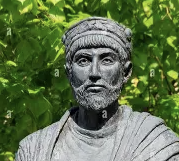
I too am not one to despise myths, and I am far from rejecting those that have the right tendency; indeed I am of the same opinion as you and your admired, or rather the universally admired, Plato. He also often conveyed a serious lesson in his myths.
3 months 3 weeks ago
Be not afraid of life. Believe that life is worth living, and your belief will help create the fact.
▼
Source
source
"Is Life Worth Living?"
2 months 2 days ago
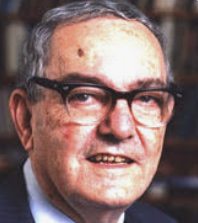
Decision making processes are aimed at finding courses of action that are feasible or satisfactory in the light of multiple goals and constraints.
▼
Source
source
p. 274.

3 months 2 weeks ago
Hearken with your ears to these best counsels,Reflect upon them with illumined judgment.Let each one choose his creed with that freedom of choice each must have at great events.
▼
Source
source
Ahunuvaiti Gatha; Yasna 30, 2.
4 months 3 weeks ago
The natural way of doing this [seeking scientific knowledge or explanation of fact] is to start from the things which are more knowable and obvious to us and proceed towards those which are clearer and more knowable by nature; for the same things are not 'knowable relatively to us' and 'knowable' without qualification. So in the present inquiry we must follow this method and advance from what is more obscure by nature, but clearer to us, towards what is more clear and more knowable by nature. Now what is to us plain and obvious at first is rather confused masses, the elements and principles of which became known to us by later analysis...
2 months 2 weeks ago
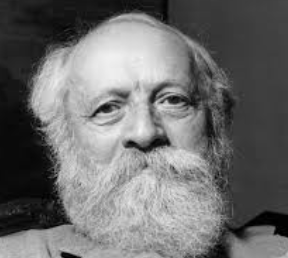
As the oil is in the olive, so is the teshuvah, repentance, hidden within sin.
▼
Source
source
p. 44
1 week 2 days ago
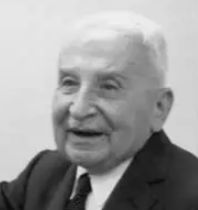
If historical experience could teach us anything, it would be that private property is inextricably linked with civilization.
▼
Source
source
Chapter XV. The Market, § 4 The Scope and Method of Catallactics
2 months 3 days ago
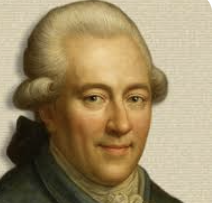
If countries were named after the words you first hear when you go there, England would have to be called Damn It.
▼
Source
source
F 33

2 months 1 week ago
I must avert here once again to my view of the opposition that exists between individuality and personality, notwithstanding the fact that the one demands the other. Individuality is, if I may so express it, the container or thing which contains, personality the content or thing contained, or I might say that my personality is in a certain sense my comprehension, that which I comprehend or embrace within myself - which is in a certain way the whole Universe - and that my individuality is my extension; the one my infinite, the other my finite.
2 months 2 weeks ago
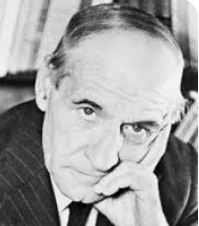
Be it well understood, I am free by compulsion, whether I wish to be or not. Freedom is not an activity pursued by an entity that, apart from and previous to such pursuit, is already possessed of a fixed being. To be free means to be lacking in constitutive identity, not to have subscribed to a determined being, to be able to be other than what one was, to be unable to install oneself once and for all in any given being. The only attribute of the fixed, stable being in the free being is this constitutive instability.
▼
Source
source
"Man has no nature"
2 months 5 days ago
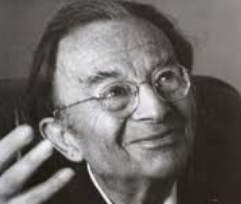
In erotic love, two people who were separate become one. In motherly love, two people who were one become separate. The mother must not only tolerate, she must wish and support the child's separation.
▼
Source
source
Ch. 2
2 months 2 weeks ago
Profound skepticism is favorable to conventions, because it doubts that the criticism of conventions is any truer than they are.
▼
Source
source
"On My Friendly Critics"
1 month 3 weeks ago
Ivan Ilych's life had been most simple and most ordinary and therefore most terrible.
▼
Source
source
Ch. II
3 months 3 weeks ago
My argument against God was that the universe seemed so cruel and unjust. But how had I got this idea of just and unjust? A man does not call a line crooked unless he has some idea of a straight line. What was I comparing this universe with when I called it unjust?
▼
Source
source
Book II, Chapter 1, "The Rival Conceptions of God"

3 months 3 weeks ago
Nor knowest thou what argument Thy life to thy neighbor's creed has lent: All are needed by each one, Nothing is fair or good alone.
▼
Source
source
Each and All, st. 1
2 months 1 week ago
Deniers do not get their views just from simple mistakes about language and truth. Rather, they believe that there is something to worry about in important areas of our thought and in traditional interpretations of those areas; they sense that it has something to do with truth; and (no doubt driven by the familiar desire to say something at once hugely general, deeply important, and reassuringly simple) they extend their worry to the notion of truth itself.
▼
Source
source
p. 6
1 day ago
The purpose of the magnanimous is to be found in procuring benefits for the world and eliminating its calamities. ... Mutual attacks among states, mutual usurpation among houses, mutual injuries among individuals; the lack of grace and loyalty between ruler and ruled, the lack of affection and filial piety between father and son, the lack of harmony between elder and younger brothers - these are the major calamities in the world.
▼
Source
source
Book 4; Universal Love II

3 months 2 weeks ago
I sit astride life like a bad rider on a horse. I only owe it to the horse's good nature that I am not thrown off at this very moment.
▼
Source
source
p. 36e
4 months 3 weeks ago
That which distinguishes the Christian narrow way from the common human narrow way is the voluntary. Christ was not someone who coveted earthly things but had to be satisfied with poverty, no, he chose poverty.
2 months 1 day ago
In short, analytic statements are statements which we all accept and for which we do not give reasons. This is what we mean when we say that they are true by 'implicit convention'. The problem is then to distinguish them from other statements that we accept, and do not give reasons for, in particular from the statements that we unreasonably accept. To resolve this difficulty, we have to point out some of the crucial distinguishing features of analytic statements (e.g. the fact that the subject concept is not a law-cluster concept), and we have to connect these features with what, in the preceding section, was called the 'rationale' of the analytic-synthetic distinction. Having done this, we can see that the acceptance of analytic statements is rational, even though there are no reasons (in the sense of' evidence') in connection with them.
▼
Source
source
The analytic and the synthetic
3 months 3 weeks ago
The observer, when he seems to himself to be observing a stone, is really, if physics is to be believed, observing the effects of the stone upon himself.
▼
Source
source
An Inquiry into Meaning and Truth (1940), Introduction, p. 15
3 months 2 weeks ago
If a false thought is so much as expressed boldly and clearly, a great deal has already been gained.
▼
Source
source
p. 86e
2 months 3 weeks ago
It is an advantage to all narrow wisdom and narrow morals that their maxims have a plausible air; and, on a cursory view, appear equal to first principles. They are light and portable. They are as current as copper coin; and about as valuable. They serve equally the first capacities and the lowest; and they are, at least, as useful to the worst men as to the best. Of this stamp is the cant of not man, but measures; a sort of charm by which many people get loose from every honourable engagement.
2 months 2 weeks ago
He who has never envied the vegetable has missed the human drama.
▼
Source
source
p. 178, first American edition
1 month 3 weeks ago
Amid this life based on coercion, one and the same thought constantly emerged among different nations, namely, that in every individual a spiritual element is manifested that gives life to all that exists, and that this spiritual element strives to unite with everything of a like nature to itself, and attains this aim through love.
▼
Source
source
II

2 months 3 weeks ago
To study the meaning of man and of life - I am making significant progress here. I have faith in myself. Man is a mystery: if you spend your entire life trying to puzzle it out, then do not say that you have wasted your time. I occupy myself with this mystery, because I want to be a man.
▼
Source
source
Personal correspondence (1839), as quoted in Dostoevsky: His Life and Work (1971) by Konstantin Mochulski, as translated by Michael A. Minihan, p. 17
2 months 2 weeks ago
Truths begin by a conflict with the police - and end by calling them in.
3 months 3 weeks ago
In the long run the answer to all those who object to the doctrine of hell, is itself a question: What are you asking God to do? To wipe out their past sins and, at all costs, to give them a fresh start, smoothing every difficulty and offering every miraculous help? But He has done so, on Calvary. To forgive them? They will not be forgiven. To leave them alone? Alas, I am afraid that is what He does.

2 months 3 weeks ago
I have been baptised and educated in the Church of England; and have seen no cause to abandon that communion. ... I think that Church harmonises with our civil constitution, with the frame and fashion of our Society, and with the general Temper of the people. I think it is better calculated, all circumstances considered, for keeping peace amongst the different sects, and of affording to them a reasonable protection, than any other System. Being something in a middle, it is better disposed to moderate.
▼
Source
source
Letter to an unknown correspondent (26 January 1791), quoted in Alfred Cobban and Robert A. Smith (eds.), The Correspondence of Edmund Burke, Volume VI: July 1789-December 1791 (1967), p. 215
CivilSimian.com created by AxiomaticPanic, CivilSimian, Kalokagathia