

2 months 2 weeks ago
As in the presence of the Master, the Servants are equall, and without any honour at all; So are the Subjects, in the presence of the Soveraign. And though they shine some more, some lesse, when they are out of his sight; yet in his presence, they shine no more than the Starres in presence of the Sun.
▼
Source
source
The Second Part, Chapter 18, p. 93

1 month 3 weeks ago
All media work us over completely. They are so pervasive in their personal, political, economic, aesthetic, psychological, moral, ethical, and social consequences that they leave no part of us untouched, unaffected, unaltered. The medium is the massage. Any understanding of social and cultural change is impossible without a knowledge of the way media work as environments. All media are extensions of some human faculty - psychic or physical.
▼
Source
source
(p. 26)
4 months 1 week ago
When the Superior Man (Junzi) eats he does not try to stuff himself; at rest he does not seek perfect comfort; he is diligent in his work and careful in speech. He avails himself to people of the Tao and thereby corrects himself. This is the kind of person of whom you can say, "he loves learning."



2 weeks ago
Clever men are good, but they are not the best.
▼
Source
source
Goethe.

4 months 2 days ago
Above all, every relation must be considered as suspicious, which depends in any degree upon religion, as the prodigies of Livy: And no less so, everything that is to be found in the writers of natural magic or alchemy, or such authors, who seem, all of them, to have an unconquerable appetite for falsehood and fable.
▼
Source
source
Aphorism 29


2 months 3 weeks ago
When he entered into the Whig party, he did not conceive that they pretended to any discoveries. They did not affect to be better Whigs, than those were who lived in the days in which principle was put to the test. Some of the Whigs of those days were then living. They were what the Whigs had been at the Revolution; what they had been during the reign of queen Anne; what they had been at the accession of the present royal family.
▼
Source
source
p. 409

3 months 3 weeks ago
The First [Friend] is the alter ego, the man who first reveals to you that you are not alone in the world by turning out (beyond hope) to share all your most secret delights. There is nothing to be overcome in making him your friend; he and you join like raindrops on a window. But the Second Friend is the man who disagrees with you about everything... Of course he shares your interests; otherwise he would not become your friend at all. But he has approached them all at a different angle. he has read all the right books but has got the wrong thing out of every one... How can he be so nearly right, and yet, invariably, just not right? He is as fascinating (and infuriating) as a woman.
2 months 3 days ago
All mathematical laws which we find in Nature are always suspect to me, in spite of their beauty. They give me no pleasure. They are merely auxiliaries. At close range it is all not true.
▼
Source
source
As quoted in Lichtenberg : A Doctrine of Scattered Occasions (1959) by Joseph Peter Stern, p. 84

3 months 3 weeks ago
In wildness is the preservation of the world. Every tree sends its fibers forth in search of the Wild. The city imports it at any price. Men plow and sail for it. From the forest and wilderness come the tonics and barks which brace mankind.

3 months 3 weeks ago
Religions, which condemn the pleasures of sense, drive men to seek the pleasures of power. Throughout history power has been the vice of the ascetic.
▼
Source
source
The New York Herald-Tribune Magazine, 3/6/1938
3 months 3 weeks ago
Of all forms of caution, caution in love is perhaps the most fatal to true happiness.

2 months 3 weeks ago
Architecture, sculpture, painting, music, and poetry, may truly be called the efflorescence of civilised life.
▼
Source
source
Education: What Knowledge Is of Most Worth?
2 months 2 weeks ago
Some would deny any legitimate use of the word God because it has been misused so much. Certainly it is the most burdened of all human words. Precisely for that reason it is the most imperishable and unavoidable. And how much weight has all erroneous talk about God's nature and works (although there never has been nor can be any such talk that is not erroneous) compared with the one truth that all men who have addressed God really meant him? For whoever pronounces the word God and really means Thou, addresses, no matter what his delusion, the true Thou of his life that cannot be restricted by any other and to whom he stands in a relationship that includes all others.
1 month 3 weeks ago
Without an anti-environment, all environments are invisible.
▼
Source
source
(p. 33)

4 months 2 days ago
Among the celestial bodies that are revolving over our heads, though the motions are not the same, and though the force is not equal, yet they move, and ever have moved, without clashing, and in perfect harmony.
4 months 6 days ago
Five [of the above] rules are of absolute necessity, and cannot be dispensed with without essential defect and often without error.

2 months 2 weeks ago
"Neither this world, nor the next, nor happiness are for the being abandoned to doubt." - This point in the Gita is my death sentence.
2 months 2 weeks ago
Happiness is a matter of one's most ordinary everyday mode of consciousness being busy and lively and unconcerned with self. To be damned is for one's ordinary everyday mode of consciousness to be unremitting agonising preoccupation with self.
▼
Source
source
The Nice and the Good (1968), ch. 22.
4 months 3 weeks ago
The single harmony produced by all the heavenly bodies singing and dancing together springs from one source and ends by achieving one purpose, and has rightly bestowed the name not of "disordered" but of "ordered universe" upon the whole.

3 months 3 weeks ago
The real point at issue always is Turkey in Europe - the great peninsula to the south of the Save and Danube. This splendid territory [the Balkans] has the misfortune to be inhabited by a conglomerate of different races and nationalities, of which it is hard to say which is the least fit for progress and civilization. Slavonians, Greeks, Wallachians, Arnauts, twelve millions of men, are all held in submission by one million of Turks, and up to a recent period, it appeared doubtful whether, of all these different races, the Turks were not the most competent to hold the supremacy which, in such a mixed population, could not but accrue to one of these nationalities.
▼
Source
source
The Russian Menace to Europe, From Karl Marx and Frederick Engels, edited by Paul Blackstock and Bert Hoselitz, and published by George Allen and Unwin, London, 1953
2 weeks ago
All the gifted souls, of every rank, who are born to you in this generation. These are appointed, by the true eternal "divine right" which will never become obsolete, to be your governors and administrators; and precisely as you employ them, or neglect to employ them, will your State be favored of Heaven or disfavored. This noble young soul, you can have him on either of two conditions; and on one of them, since he is here in the world, you must have him. As your ally and coadjutor; or failing that, as your natural enemy: which shall it be? I consider that every Government convicts itself of infatuation and futility, or absolves and justifies itself before God and man, according as it answers this question.

2 months 5 days ago
The great reformers of the world turn into the great misanthropists, if circumstances or organisation do not permit them to act. Christ, if He had been a woman, might have been nothing but a great complainer. Peace be with the misanthropists! They have made a step in progress; the next will make them great philanthropists; they are divided but by a line. The next Christ will perhaps be a female Christ. But do we see one woman who looks like a female Christ? or even like "the messenger before" her "face", to go before her and prepare the hearts and minds for her? To this will be answered that half the inmates of Bedlam begin in this way, by fancying that they are "the Christ." People talk about imitating Christ, and imitate Him in the little trifling formal things, such as washing the feet, saying His prayer, and so on; but if anyone attempts the real imitation of Him, there are no bounds to the outcry with which the presumption of that person is condemned.
3 months 3 weeks ago
The hidden significance of these fables which is sometimes thought to have been detected, the ethics running parallel to the poetry and history, are not so remarkable as the readiness with which they may be made to express a variety of truths. As if they were the skeletons of still older and more universal truths than any whose flesh and blood they are for the time made to wear. It is like striving to make the sun, or the wind, or the sea symbols to signify exclusively the particular thoughts of our day. But what signifies it? In the mythus a superhuman intelligence uses the unconscious thoughts and dreams of men as its hieroglyphics to address men unborn. In the history of the human mind, these glowing and ruddy fables precede the noonday thoughts of men, as Aurora the sun's rays. The matutine intellect of the poet, keeping in advance of the glare of philosophy, always dwells in this auroral atmosphere.
2 weeks 2 days ago
If I work incessantly to the last, nature owes me another form of existence when the present one collapses.
▼
Source
source
Letter to Eckermann
2 months 1 week ago
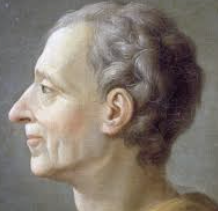
Christians are beginning to lose the spirit of intolerance which animated them: experience has shown the error of the expulsion of the Jews from Spain, and of the persecution of those Christians in France whose belief differed a little from that of the king. They have realized that zeal for the advancement of religion is different from a due attachment to it; and that in order to love it and fulfill its behests, it is not necessary to hate and persecute those who are opposed to it.
▼
Source
source
No. 60. (Usbek writing to Ibben)
3 months 3 weeks ago
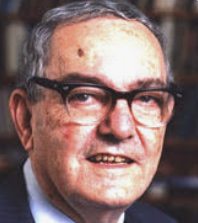
I resolved from the beginning of my quest that I would not be misled by sentiment and desire into beliefs for which there was no good evidence.
▼
Source
source
Fact and Fiction (1961), Part I, Ch. 6: "The Pursuit of Truth", p. 37
2 months 2 days ago
By public administration is meant, in common usage, the activities of the executive branches of national, state, and local governments; independent boards and commissions set up by the congress and state legislatures; government corporations, and certain agencies of a specialized character. Specifically excluded are judicial and legislative agencies within the government and nongovernmental administration.
▼
Source
source
p. 7
2 months 2 weeks ago
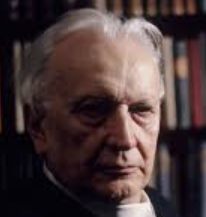
The possibility of peace, on whose behalf many are working, might perhaps become actual because the technical advances in offensive weapons make the prospect of a European war so disastrous, and because, if the nations were at grips again, even the victorious aggressor would be ruined. But there still remains open the possibility of a new war which, more dreadful than any that have preceded it would make an end of contemporary Europeans.
2 months 1 week ago
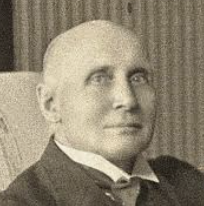
I have always noticed that deeply and truly religious persons are fond of a joke, and I am suspicious of those who aren't.
▼
Source
source
As quoted in Church and Home, Vol. 1 (1964) by United Methodist Church, and Evangelical United Brethren Church, p. 21.
3 months 3 weeks ago
The average man's opinions are much less foolish than they would be if he thought for himself: in science, at least, his respect for authority is on the whole beneficial.
▼
Source
source
On Education, Especially in Early Childhood (1926), Ch. 2: The Aims of Education, p. 63

4 months 3 weeks ago
A robot must obey the orders given it by human beings except where such orders would conflict with the First Law.

3 months 3 weeks ago
But though all the general rules of art are founded only on experience and on the observation of the common sentiments of human nature, we must not imagine, that, on every occasion, the feelings of men will be conformable to these rules.
4 days ago
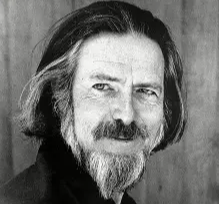
Over the years it has become my firm opinion that sexual activity (even if only through masturbation) is "requisite and necessary, as well for the body as for the soul"; for men and women alike. It stimulates your glands, exercises your pelvis, thrills your nerves, brings mind and body together as one, and culminates in an ecstasy in which there is neither past nor future nor separation between self and other. We need that as we need vitamins, proteins, water, and air.
▼
Source
source
p. 122
3 months 3 weeks ago
For the Supernatural, entering a human soul, opens to it new possibilities both of good and evil. From that point the road branches: one way to sanctity, love, humility, the other to spiritual pride, self-righteousness, persecuting zeal. And no way back to the mere humdrum virtues and vices of the unawakened soul. If the Divine call does not make us better, it will make us very much worse. Of all bad men religious bad men are the worst. Of all created beings the wickedest is one who originally stood in the immediate presence of God.
▼
Source
source
Reflections on the Psalms (1958), p. 32
2 months 4 weeks ago
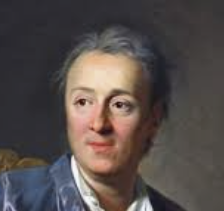
This is a work that cannot be completed except by a society of men of letters and skilled workmen, each working separately on his own part, but all bound together solely by their zeal for the best interests of the human race and a feeling of mutual good will.
▼
Source
source
Article on Encyclopedia, as translated in The Many Faces of Philosophy : Reflections from Plato to Arendt (2001), "Diderot", p. 237
2 months 3 weeks ago
I assert, that the ancient Whigs held doctrines, totally different from those I have last mentioned. I assert, that the foundations laid down by the Commons, on the trial of Doctor Sacheverel, for justifying the revolution of 1688, are the very same laid down in Mr. Burke's Reflections; that is to say,-a breach of the original contract, implied and expressed in the constitution of this country, as a scheme of government fundamentally and inviolably fixed in King, Lords, and Commons.-That the fundamental subversion of this antient constitution, by one of its parts, having been attempted, and in effect accomplished, justified the Revolution. That it was justified only upon the necessity of the case; as the only means left for the recovery of that antient constitution, formed by the original contract of the British state; as well as for the future preservation of the same government. These are, the points to be proved.
▼
Source
source
p. 411
3 months 2 weeks ago
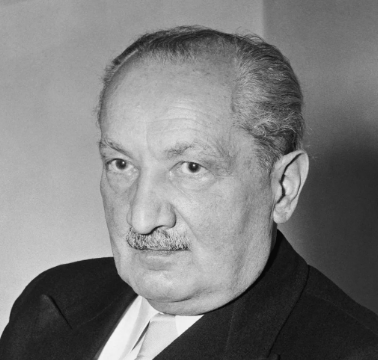
Mathematics is as little a natural science as philosophy is one of the humanities. Philosophy in its essence belongs as little in the philosophical faculty as mathematics belongs to natural science. To house philosophy and mathematics in this way today seems to be a blemish or a mistake in the catalog of the universities. Plato put over the entrance to his Academy the words: "Let no one who has not grasped the mathematical enter here!"
▼
Source
source
p. 69,75
1 month 1 week ago
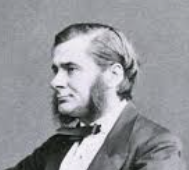
It is quite true that, to the best of my judgment, the argumentation which applies to brutes holds equally good of men; and, therefore, that all states of consciousness in us, as in them, are immediately caused by molecular changes of the brain-substance. It seems to me that in men, as in brutes, there is no proof that any state of consciousness is the cause of change in the motion of the matter of the organism. If these positions are well based, it follows that our mental conditions are simply the symbols in consciousness of the changes which takes place automatically in the organism; and that, to take an extreme illustration, the feeling we call volition is not the cause of a voluntary act, but the symbol of that state of the brain which is the immediate cause of that act.

2 months 4 weeks ago
The President ... may err ... Congress may decide amiss ... But if the Supreme Court is ever composed of imprudent or bad men, the Union may be plunged into anarchy or civil war.
▼
Source
source
Chapter XVIII.
4 months 3 weeks ago
Rhetoric, it seems, is a producer of persuasion for belief, not for instruction in the matter of right and wrong. And so the rhetorician's business is not to instruct a law court or a public meeting in matters of right and wrong, but only to make them believe.
1 month 3 weeks ago
Pornography and obscenity...work by specialism and fragmentation. They deal with a figure without a ground -- situations in which the human factor is suppressed in favor of sensations and kicks.
▼
Source
source
Letter to Clare Westcott, November 26 1975. Letters of Marshall McLuhan, p. 514
4 months 3 weeks ago
Now in this island of Atlantis there was a great and wonderful empire which had rule over the whole island and several others, and over parts of the continent and, furthermore, the men of Atlantis had subjected the parts of Libya within the columns of Heracles as far as Egypt, and of Europe as far as Tyrrhenia. This vast power, gathered into one, endeavored to subdue at a blow our country and yours and the whole of the region within the straits, and then, Solon, your country shone forth, in the excellence of her virtue and strength, among all mankind.
2 months 1 week ago
Barthes's discovery and articulation of the "new" liberatory category of perception and deciphering, semiotic-mythology, belongs to the praxis of his heroic mythologist, alone. This unfortunate theoretical strategy makes the articulation of a coalitional consciousness in social struggle impossible to imagine or enact. ... His terminologies appropriate the technologies of the oppressed for use by academic classes.
▼
Source
source
Chela Sandoval, Methodology of the Oppressed, p. 201
2 months 2 weeks ago
Is this fight against history part of the fight against a dimension of the mind in which centrifugal faculties and forces might develop-faculties and forces that might hinder the total coordination of the individual with the society? Remembrance of the Fast may give rise to dangerous insights, and the established society seems to be apprehensive of the subversive contents of memory. Remembrance is a mode of dissociation from the given facts, a mode of "mediation" which breaks, for short moments, the omnipresent power of the given facts. Memory recalls the terror and the hope that passed. Both come to life again.
▼
Source
source
p. 98
3 months 3 weeks ago
Many of the actions by which men have become rich are far more harmful to the community than the obscure crimes of poor men, yet they go unpunished because they do not interfere with the existing order.
▼
Source
source
Ch. V: Government and Law
2 weeks ago
Innumerable are the illusions and legerdemain-tricks of Custom: but of all these, perhaps the cleverest is her knack of persuading us that the Miraculous, by simple repetition, ceases to be Miraculous.
▼
Source
source
Bk. III, ch. 8.
2 months 1 day ago
Part of what makes moral philosophy an anachronistic field is that its practitioners continue to argue in this very traditional and aprioristic way even though they themselves do not claim that one can provide a systematic and indubitable 'foundation' for the subject. Most of them rely on what are supposed to be 'intuitions' without claiming that those intuitions deliver uncontroversial ethical premises, on the one hand, or that they have an ontological or epistemological explanation of the reliability of those intuitions, on the other.
▼
Source
source
How Not to Solve Ethical Problems
1 month 3 weeks ago
Do not take part in the council, unless you are called.
▼
Source
source
Maxim 310
CivilSimian.com created by AxiomaticPanic, CivilSimian, Kalokagathia