

4 months 1 week ago
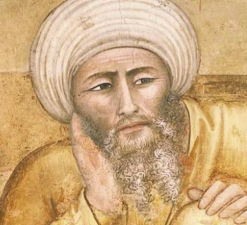
If teleological study of the world is philosophy, and if the Law commands such a study, then the Law commands philosophy.
2 days ago
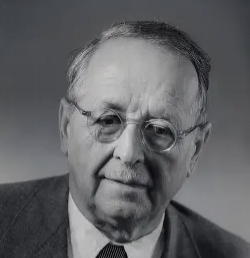
Cartan developed a general scheme of infinitesimal geometry in which Klein's notions were applied to the tangent plane and not to the n-dimensional manifold M itself. On the foundations of general infinitesimal geometry.
▼
Source
source
Bull. Amer. Math. Soc. 35 (1929) 716-725 doi:10.1090/S0002-9904-1929-04812-2 (quote on p. 716)

4 months 2 weeks ago
Modesty is an unnatural attitude, and one which is only with difficulty taught to children.

3 months 3 weeks ago
"If God did not exist, he would have to be invented." But all nature cries aloud that he does exist: that there is a supreme intelligence, an immense power, an admirable order, and everything teaches us our own dependence on it.
▼
Source
source
Voltaire quoting himself in his Letter to Prince Frederick William of Prussia (28 November 1770), translated by S.G. Tallentyre, Voltaire in His Letters, 1919

3 months 3 weeks ago
I have no doubt that the present Prime Minister, for instance, is a most sincere Christian, but I should not advise any of you to go and smite him on one cheek. I think you might find that he thought this text was intended in a figurative sense.
▼
Source
source
"The Character of Christ"

4 months ago
His Mohammed, as has been said, commands that ruling is to be done by the sword, and in his Koran the sword is the commonest and noblest work. Thus the Turk is, in truth, nothing but a murderer or highwayman, as his deeds show before men's eyes.
▼
Source
source
On War against the Turk

1 month 2 weeks ago
You see, if you say something positive like the whole of life - all living things - is descended from a single common ancestor which lived about 4,000 million years ago and that we are all cousins, well that is an exceedingly important and true thing to say and that is what I want to say. Somebody who is religious sees that as threatening and so I am represented as attacking religion, and I am forced into responding to their reaction. But you do not have to see my main purpose as attacking religion. Certainly I see the scientific view of the world as incompatible with religion, but that is not what is interesting about it. It is also incompatible with magic, but that also is not worth stressing. What is interesting about the scientific world view is that it is true, inspiring, remarkable and that it unites a whole lot of phenomena under a single heading. And that is what is so exciting for me.
▼
Source
source
Kam Patel (28 April 1995) . "Going the whole hog". Times Higher Education.

3 months 2 weeks ago
It was an important moment. The old partners of the spectacle of punishment, the body and the blood, gave way. A new character came of the scene, masked. It was the end of a certain kind of tragedy; comedy began, with shadow play, faceless voices, impalpable entities. The apparatus of punitive justice must now bite into this bodiless reality.
▼
Source
source
pp. 17
4 months ago
Some will object that the Law is divine and holy. Let it be divine and holy. The Law has no right to tell me that I must be justified by it.
▼
Source
source
Chapter 2

2 months 3 weeks ago
They all attributed the peaceful dominion of religion in their country mainly to the separation of church and state. I do not hesitate to affirm that during my stay in America I did not meet a single individual, of the clergy or the laity, who was not of the same opinion on this point.
▼
Source
source
Chapter XVII.

2 weeks 3 days ago
There are defects and gaps in a liberal society that are constantly being filled by other longings and... structures... that sometimes end up undermining that liberal project.
▼
Source
source
13:05
3 months 1 week ago
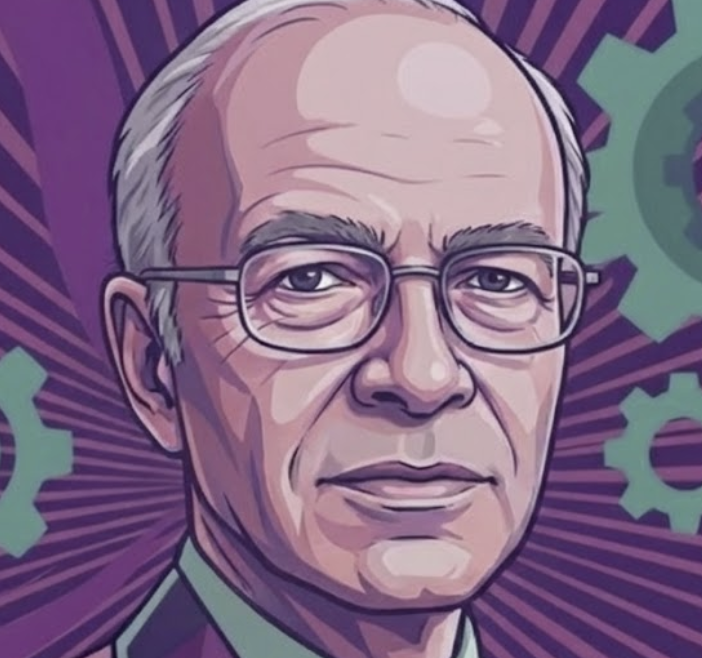
We do not have to make self- sacrifice a necessary element of altruism. We can regard people as altruists because of the kind of interests they have rather than because they are sacrificing their interests.
▼
Source
source
Chapter 9: Altruism and Happiness (p. 103)

2 months 5 days ago
Yet it must be acknowledged that there is a fundamental difference between the sexual impulse in men and women. Her need is for a lover, a protector, a father for her children. His desire is for mastery, conquest, to be allowed to use her body for his own satisfaction. He feels like a bee, burying itself in a flower, apparently doing nothing for the flower but taking its sweetness. If he loves her, then his desire is mixed with a kind of pity.
3 months 1 week ago
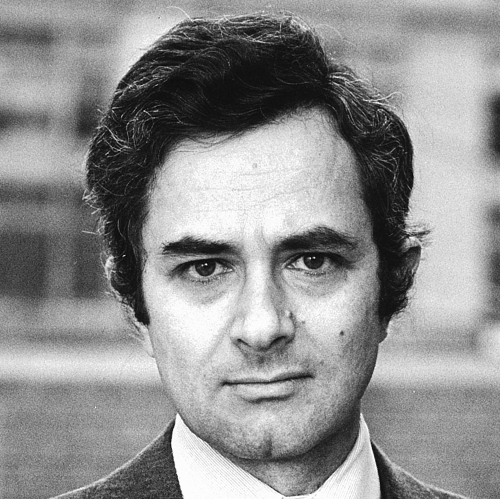
A person may be greedy, envious, cowardly, cold, ungenerous, unkind, vain, or conceited, but behave perfectly by a monumental effort of will.
▼
Source
source
"Moral Luck" (1976), p. 32.

3 months 2 weeks ago
I would in fact tend to have more confidence in the outcome of a democratic decision if there was a minority that voted against it, than if it was unanimous... Social psychology has amply shown the strength of this bandwagon effect.
▼
Source
source
Habermas (1993) "Further reflections on the public sphere", in: Craig Calhoun Eds. Habermas and the Public Sphere. MIT Press. p. 441
2 months 1 week ago
To be sure, exchange-value exerts its power in a special way in the realm of cultural goods. For in the world of commodities this realm appears to be exempted from the power of exchange, to be in an immediate relationship with the goods, and it is this appearance in turn which alone gives cultural goods their exchange-value. But they nevertheless simultaneously fall completely into the world of commodities, are produced for the market, and are aimed at the market.
▼
Source
source
p. 279

2 weeks 4 days ago
In order to properly understand the big picture, everyone should fear becoming mentally clouded and obsessed with one small section of truth.
▼
Source
source
Quoted in: Joan Klostermann-Ketels (2011) HumaniTrees, p. 96
2 months 4 days ago
By necrophilia is meant love for all that is violence and destruction; the desire to kill; the worship of force; attraction to death, to suicide, to sadism; the desire to transform the organic into the inorganic by means of "order." The necrophile, lacking the necessary qualities to create, in his impotence finds it easy to destroy because for him it serves only one quality: force.

3 months 4 weeks ago
I have here only made a nosegay of culled flowers, and have brought nothing of my own but the thread that ties them together.
▼
Source
source
Book III, Ch. 12. Of Physiognomy

3 months 3 weeks ago
The world is upheld by the veracity of good men: they make the earth wholesome.
▼
Source
source
Uses of Great Men
1 week 4 days ago
Life is that which can hold a purpose for three thousand years and never yield. The individual fails, but life succeeds. The individual is foolish, but life holds in its blood and seed the wisdom of generations. The individual dies, but life, tireless and undiscourageble, goes on, wondering, longing, planning, trying, mounting, longing.
▼
Source
source
Ch. 5 : On Death

4 months 3 weeks ago
The immediacy of falling in love recognizes but one immediacy that is ebenburtig (of equal standing), and this is a religious immediacy; falling in love is too virginal to recognize any confidant other than God. But the religious is a new immediacy, has reflection in between-otherwise, paganism would actually be religious and Christianity not. That the religious is a new immediacy every person easily understands who is satisfied with following the honest path of ordinary common sense. And although I imagine I have but few readers, I confess nevertheless that I do imagine my readers to be among these, since I am far from wanting to instruct the admired ones, who make systematic discoveries a la Niels Klim, who have left their good skin in order to put on the “real appearance.
2 months 3 weeks ago
Am I a free agent, or am I merely the manifestation of a foreign power? Neither appear sufficiently well founded.By the most courageous resolve of my life am I reduced to this! what Power can save me from it, from myself?
▼
Source
source
Jane Sinnett, trans 1846 p. 24
2 months 2 weeks ago
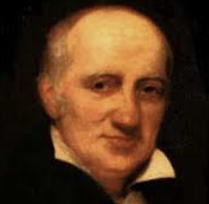
Duty is that mode of action which constitutes the best application of the capacity of the individual to the general advantage. Right is the claim of the individual to his share of the benefit arising from his neighbors' discharge of their several duties.
▼
Source
source
"Summary of Principles". 1.5
6 days ago
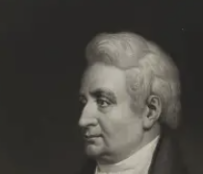
Great men hallow a whole people and lift up all who live in their time.
▼
Source
source
Ireland, published in The Edinburgh Review

2 months 1 week ago
Glorious is the risk! - καλος γαρ ο κινδυνος, glorious is the risk that we are able to run of our souls never dying ... Faced with this risk, I am presented with arguments designed to eliminate it, arguments demonstrating the absurdity of the belief in the immortality of the soul; but these arguments fail to make any impression on me, for they are reasons and nothing more than reasons, and it is not with reasons that the heart is appeased. I do not want to die - no; I neither want to die nor do I want to want to die; I want to live for ever and ever and ever. I want this "I" to live - this poor "I" that I am and that I feel myself to be here and now, and therefore the problem of the duration of my soul, of my own soul, tortures me.
3 months 3 weeks ago
The secret of happiness is to face the fact that the world is horrible, horrible, horrible.
▼
Source
source
Said in conversation with Mrs. Alan Wood; quoted in Alan Wood's Bertrand Russell, the Passionate Sceptic (Allen and Unwin, 1957), pp. 236-7
3 months 1 week ago
Consciousness is what makes the mind-body problem really intractable.
▼
Source
source
p. 165.
3 days ago
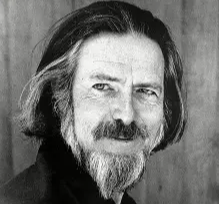
If Christianity is wine and Islam coffee, Buddhism is most certainly tea.
▼
Source
source
p. 190


3 months 3 weeks ago
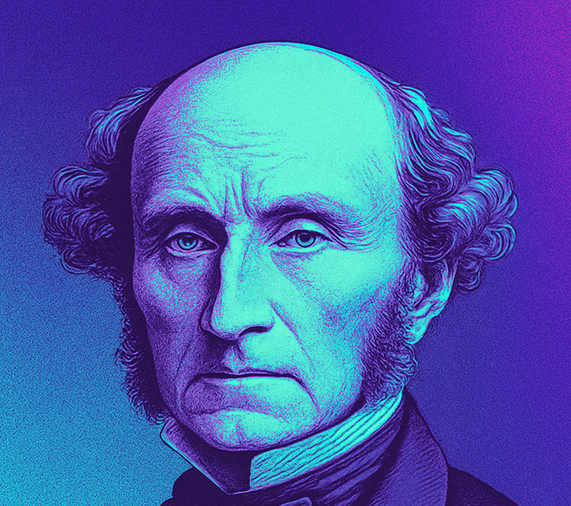
[L]ike Coleridge, he might plead as a set-off that he had been to many persons, through his conversation, a source not only of much instruction but of great elevation of character. On me his influence was most salutary. It was moral in the best sense. He took a sincere and kind interest in me, far beyond what could have been expected towards a mere youth from a man of his age, standing, and what seemed austerity of character. There was in his conversation and demeanour a tone of high-mindedness which did not show itself so much, if the quality existed as much, in any of the other persons with whom at that time I associated. My intercourse with him was the more beneficial, owing to his being of a different mental type from all other intellectual men whom I frequented...
▼
Source
source
(pp. 75-76)
3 months 3 weeks ago
Life seems to me essentially passion, conflict, rage... It is only intellect that keeps me sane; perhaps this makes me overvalue intellect against feeling.
▼
Source
source
Letter to Lady Ottoline Morrell in 1912, as quoted in Clark The life of Bertrand Russell (1976), p. 174
2 months 2 weeks ago
All nature abounds in proofs of other influences than merely mechanical action, even in the physical world. They crowd in upon us at the rate of several every minute. And my observation of men has led me to this little generalization. Speaking only of men who really think for themselves and not of mere reporters, I have not found that it is the men whose lives are mostly passed within the four walls of a physical laboratory who are most inclined to be satisfied with a purely mechanical metaphysics. On the contrary, the more clearly they understand how physical forces work the more incredible it seems to them that such action should explain what happens out of doors. A larger proportion of materialists and agnostics is to be found among the thinking physiologists and other naturalists, and the largest proportion of all among those who derive their ideas of physical science from reading popular books.
▼
Source
source
Lecture II : The Universal Categories, §3. Laws: Nominalism, CP 5.65
2 months 2 weeks ago
For Appetite with an opinion of attaining, is called HOPE.

2 months 5 days ago
The poor, stupid, free American citizen! Free to starve, free to tramp the highways of this great country, he enjoys universal suffrage, and, by that right, he has forged chains about his limbs. The reward that he receives is stringent labor laws prohibiting the right of boycott, of picketing, in fact, of everything, except the right to be robbed of the fruits of his labor.
3 months 3 weeks ago
Whatever crushes individuality is despotism, by whatever name it may be called, and whether it professes to be enforcing the will of God or the injunctions of men.
▼
Source
source
Ch. III: Of Individuality, As One of the Elements of Well-Being
4 months 2 weeks ago
Where any answer is possible, all answers are meaningless.

3 months 3 weeks ago
The violence of love is as much to be dreaded as that of hate. When it is durable, it is serene and equable. Even its famous pains begin only with the ebb of love, for few are indeed lovers, though all would fain be.
▼
Source
source
Pearls of Thought (1881) p. 158
2 months 2 weeks ago
The general co-operation of all members of society for the purpose of planned exploitation of the forces of production, the expansion of production to the point where it will satisfy the needs of all, the abolition of a situation in which the needs of some are satisfied at the expense of the needs of others, the complete liquidation of classes and their conflicts, the rounded development of the capacities of all members of society through the elimination of the present division of labor, through industrial education, through engaging in varying activities, through the participation by all in the enjoyments produced by all, through the combination of city and country - these are the main consequences of the abolition of private property.
3 months 3 weeks ago
In vain I sought relief from my favourite books; those memorials of past nobleness and greatness from which I had always hitherto drawn strength and animation. I read them now without feeling, or with the accustomed feeling minus all its charm; and I became persuaded, that my love of mankind, and of excellence for its own sake, had worn itself out. I sought no comfort by speaking to others of what I felt. If I had loved any one sufficiently to make confiding my griefs a necessity, I should not have been in the condition.
▼
Source
source
(pp. 134-135)

7 months 3 weeks ago
In the more sophisticated versions of the critics of ideology - that developed by the Frankfurt School, for example - it is not just a question of seeing things (that is, social reality) as they 'really are," of throwing away the distorting spectacles of ideology; the main point is to see how the reality itself cannot reproduce itself without this so-called ideological mystification. The mask is not simply hiding the real state of things; the ideological distortion is written into its very essence... the moment we see it 'as it really is,' this being dissolves itself into nothingness or, more precisely, it changes into another kind of reality. That is why we must avoid simple metaphors of demasking, of throwing away the veils which are supposed to hide the naked reality.
2 months 2 weeks ago
Unless man have a natural bent in accordance with nature's, he has no chance of understanding nature at all.
▼
Source
source
IV
4 months 2 weeks ago
The most exciting phrase to hear in science, the one that heralds new discoveries, is not 'Eureka!', but 'That's funny ...'

4 months 6 days ago
It is unlikely that the good of a snail should reside in its shell: so is it likely that the good of a man should?
▼
Source
source
Book I, ch. 20, 17.
2 months 1 week ago
The more the concept of reason becomes emasculated, the more easily it lends itself to ideological manipulation and to propagation of even the most blatant lies. ... Subjective reason conforms to anything.
▼
Source
source
pp. 24-25.

3 months 3 weeks ago
Of all the ways whereby children are to be instructed, and their manners formed, the plainest, easiest, and most efficacious, is, to set before their eyes the examples of those things you would have them do, or avoid; which, when they are pointed out to them, in the practice of persons within their knowledge, with some reflections on their beauty and unbecomingness, are of more force to draw or deter their imitation, than any discourses which can be made to them.
▼
Source
source
Sec. 82

2 months 1 week ago
I can assure you that no kingdom has ever had as many civil wars as the kingdom of Christ.
▼
Source
source
No. 29. (Rica writing to Ibben)

2 months 3 weeks ago
My Lords, to obtain empire is common; to govern it well has been rare indeed. To chastise the guilt of those who have been instruments of imperial sway over other nations by the high superintending justice of the sovereign state has not many striking examples among any people.
▼
Source
source
Speech in opening the impeachment of Warren Hastings (16 February 1788), quoted in The Works of the Right Honourable Edmund Burke, Volume the Ninth (1899), p. 398

1 week ago
Who is everywhere is nowhere. When a person spends all his time in foreign travel, he ends by having many acquaintances, but no friends.
▼
Source
source
Line 2.

3 months 3 weeks ago
The chief pleasure of his life in these days was to go down the road and look through the window in the wall in the hope of seeing the beautiful Island. ... the sight of the Island and the sounds became very rare ... and the yearning for the sight ... became so terrible that John thought he would die if he did not have them again soon. ... it came into his head that he might perhaps get the old feeling-for what, he thought, had the Island ever given him but a feeling?-by imagining. He shut his eyes and set his teeth again and made a picture of the Island in his mind.
▼
Source
source
Pilgrim's Regress 12-13
CivilSimian.com created by AxiomaticPanic, CivilSimian, Kalokagathia