


3 months 4 days ago
Better be mute, than dispute with the Ignorant.

3 months 3 weeks ago
You could send your soul after the good you had expected, instead of turning it to the good you had got. You could refuse the real good; you could make the real fruit taste insipid by thinking of the other.

2 months 6 days ago
Sensitiveness without impulse spells decadence, and impulse without sensitiveness spells brutality.
▼
Source
source
Ch. 13: "Requisites for Social Progress", p. 280

4 months ago
The first law that ever God gave to man was a law of pure obedience; it was a commandment naked and simple, wherein man had nothing to inquire after, nor to dispute; forasmuch as to obey is the proper office of a rational soul, acknowledging a heavenly superior and benefactor.
▼
Source
source
Ch. 12, tr. Cotton, 1685

3 months 2 weeks ago
A confession has to be part of your new life.
▼
Source
source
p. 18e

3 months 3 weeks ago
Let me never fall into the vulgar mistake of dreaming that I am persecuted whenever I am contradicted.
▼
Source
source
November 8, 1838
1 week ago
Yes, so it is that knowledge itself must die in order to blossom forth again in death as will; the freedom of thought, belief, and conscience, these wonderful flowers of three centuries will sink back into the lap of mother earth so that a new freedom, the freedom will, will be nourished with its most noble juices.
▼
Source
source
p. 19

2 months 1 week ago
But the capacity to enjoy is impossible without the capacity to suffer; and the faculty of enjoyment is one with that of pain. Whosoever does not suffer does not enjoy, just as whosoever is insensible to cold is insensible to heat.

1 week ago
Accept in an unruffled spirit that which is inevitable.
4 months 3 weeks ago
Magister Adler was deeply moved by something higher, but now when he wants to express his thoughts in words, wants to communicate, he confuses the subjective with the objective, his altered subjective state with an external event, the dawning of a light upon him with the coming into existence of something new outside him, the falling of the veil from his eyes with his having had a revelation. Subjectively his emotion is carried to the extreme; he wants to select the most powerful expression to describe it and by means of a mental deception grasps the objective qualification: having had a revelation.

1 month 1 week ago
However long Jewish, Christian and Muslim theologians struggle to find multiple meanings in this text, the dominant seems to be this: Abraham's unquestioning willingness to heed gods command to sacrifice the thing he loved most is what qualified him to become the father of what are called still the Abrahamic faiths.
1 day ago
Are you not aware that all offerings whether great or small that are brought to the gods with piety have equal value, whereas without piety, I will not say hecatombs, but, by the gods, even the Olympian sacrifice of a thousand oxen is merely empty expenditure and nothing else?
▼
Source
source
Oration to the Cynic Heracleios

3 months 3 weeks ago
Music is an ocean, but the repertory is hardly even a lake; it is a pond.
▼
Source
source
Interview, Time magazine, December 1957

3 weeks 1 day ago
It's quite true that there were billions of years that I didn't exist that I was never bothered about.
Life itself is sitting in a room with a murderer, while eating a nice meal. You're just waiting for the meal to be over...
LIFE is the terrible condition.
3 months 3 weeks ago
If a person is stupid, we excuse him by saying that he cannot help it; but if we attempted to excuse in precisely the same way the person who is bad, we should be laughed at.
▼
Source
source
E. Payne, trans., vol. 2, p. 230

3 months 3 weeks ago
Truth is a standard both of itself and of falsity.
▼
Source
source
Part II, Prop. XLIII, Scholium

2 months 2 weeks ago
Death is too exact; it has all the reasons on its side. Mysterious for our instincts, it takes shape, to our reflection, limpid, without glamor, and without the false lures of the unknown. By dint of accumulating non-mysteries and monopolizing non-meanings, life inspires more dread than death: it is life which is the Great Unknown.

1 month 2 weeks ago
The inner trip is not the sole prerogative of the LSD traveler; it's the universal experience of TV watchers.

3 months 3 weeks ago
We are delighted to find a person who values us as we value ourselves, and distinguishes us from the rest of mankind, with an attention not unlike that with which we distinguish ourselves.
▼
Source
source
Section III, Chap. I.
4 months 2 weeks ago
What must be remembered in any case is that secret complicity that joins the logical and the everyday to the tragic.
2 months 2 weeks ago
We say: he has no talent, only tone. But tone is precisely what cannot be invented - we're born with it. Tone is an inherited grace, the privilege some of us have of making our organic pulsations felt - tone is more than talent, it is its essence.

3 months 6 days ago
Again, Amyclas the Heracleotean, one of Plato's familiars, and Menæchmus, the disciple, indeed, of Eudoxus, but conversant with Plato, and his brother Dinostratus, rendered the whole of geometry as yet more perfect. But Theudius, the Magnian, appears to have excelled, as well in mathematical disciplines, as in the rest of philosophy. For he constructed elements egregiously, and rendered many particulars more universal. Besides, Cyzicinus the Athenian, flourished at the same period, and became illustrious in other mathematical disciplines, but especially in geometry. These, therefore, resorted by turns to the Academy, and employed themselves in proposing common questions.
▼
Source
source
Ch. IV.

3 months 3 weeks ago
People are said to believe in God, or to disbelieve in Adam and Eve. But in such cases what is believed or disbelieved is that there is an entity answering a certain description. This, which can be believed or disbelieved is quite different from the actual entity (if any) which does answer the description. Thus the matter of belief is, in all cases, different in kind from the matter of sensation or presentation, and error is in no way analogous to hallucination. A hallucination is a fact, not an error; what is erroneous is a judgment based upon it.
▼
Source
source
On the Nature of Acquaintance: Neutral Monism, 1914
2 months 2 weeks ago
It seems that I have spent my entire time trying to make life more rational and that it was all wasted effort.
▼
Source
source
As quoted in The Observer (17 August 1986).
1 day ago
The question "cui bono" to what practical end and advantage do your researches tend? is one which the speculative philosopher who loves knowledge for its own sake, and enjoys, as a rational being should enjoy, the mere contemplation of harmonious and mutually dependent truths, can seldom hear without a sense of humiliation. He feels that there is a lofty and disinterested pleasure in his speculations which ought to exempt them from such questioning; communicating as they do to his own mind the purest happiness (after the exercise of the benevolent and moral feelings) of which human nature is susceptible, and tending to the injury of no one, he might surely allege this as a sufficient and direct reply to those who, having themselves little capacity, and less relish for intellectual pursuits, are constantly repeating upon him this enquiry.
2 months 2 weeks ago
A heart without music is like beauty without melancholy.
1 week ago
You see that man can endure toil: Cato, on foot, led an army through African deserts. You see that thirst can be endured: he marched over sun-baked hills, dragging the remains of a beaten army and with no train of supplies, undergoing lack of water and wearing a heavy suit of armour; always the last to drink of the few springs which they chanced to find. You see that honour, and dishonour too, can be despised: for they report that on the very day when Cato was defeated at the elections, he played a game of ball. You see also that man can be free from fear of those above him in rank: for Cato attacked Caesar and Pompey simultaneously, at a time when none dared fall foul of the one without endeavouring to oblige the other. You see that death can be scorned as well as exile: Cato inflicted exile upon himself and finally death, and war all the while.
1 month 1 week ago
Identical in the physical processes by which he originates-identical in the early stages of his formation-identical in the mode of his nutrition before and after birth, with the animals which lie immediately below him in the scale-Man, if his adult and perfect structure be compared with theirs, exhibits, as might be expected, a marvellous likeness of organization. He resembles them as they resemble one another-he differs from them as they differ from one another.-And, though these differences and resemblances cannot be weighed and measured, their value may be readily estimated; the scale or standard of judgment, touching that value, being afforded and expressed by the system of classification of animals now current among zoologists.
▼
Source
source
Ch.2, p. 83
2 months 2 weeks ago
The poor maidservant who used to say that she only believed in God when she had a toothache puts all theologians to shame.
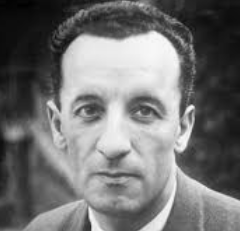
2 months 1 week ago
Hardness and softness, roughness and smoothness, moonlight and sunlight present themselves in our recollection not preeminently as sensory contents but as certain kinds of symbioses, certain ways outside has of invading us and certain ways we have of meets this invasion...
▼
Source
source
p. 317
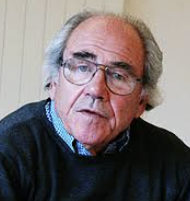
1 month 3 weeks ago
Driving is a spectacular form of amnesia. Everything is to be discovered, everything to be obliterated. Admittedly, there is the primal shock of the deserts and the dazzle of California, but when this is gone, the secondary brilliance of the journey begins, that of the excessive, pitiless distance, the infinity of anonymous faces and distances, or of certain miraculous geological formations, which ultimately testify to no human will, while keeping intact an image of upheaval. This form of travel admits of no exceptions: when it runs up against a known face, a familiar landscape, or some decipherable message, the spell is broken: the amnesic, ascetic, asymptotic charm of disappearance succumbs to affect and worldly semiology.
▼
Source
source
Vanishing Point (pp. 9-10)
2 months 2 weeks ago
In order to deceive melancholy, you must keep moving. Once you stop, it wakens, if in fact it has ever dozed off.

4 weeks 1 day ago
Not everything in religion is precious or deserving of reverence. There is an inheritance of anthropocentrism, the ugly fantasy that the Earth exists to serve humans, which most secular humanists share. There is the claim of religious authorities, also made by atheist regimes, to decide how people can express their sexuality, control their fertility and end their lives, which should be rejected categorically. Nobody should be allowed to curtail freedom in these ways, and no religion has the right to break the peace.
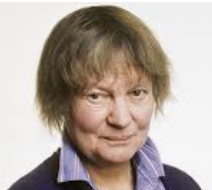
2 months 2 weeks ago
Happiness is a matter of one's most ordinary everyday mode of consciousness being busy and lively and unconcerned with self. To be damned is for one's ordinary everyday mode of consciousness to be unremitting agonising preoccupation with self.
▼
Source
source
The Nice and the Good (1968), ch. 22.
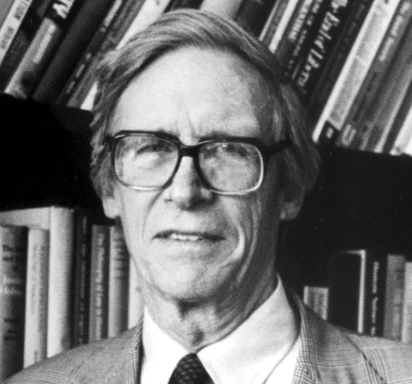
3 months 3 weeks ago
The intolerant can be viewed as free-riders, as persons who seek the advantages of just institutions while not doing their share to uphold them.
▼
Source
source
Chapter VI, Section 59, pg. 388

2 months 3 weeks ago
In their nomination to office they will not appoint to the exercise of authority as to a pitiful job, but as to a holy function.
▼
Source
source
Volume iii, p. 356
4 months 3 weeks ago
From the Christian point of view it stands firm that the truly Christian venturing requires probability.
2 weeks ago
He who exerts his mind to the utmost knows his nature.
▼
Source
source
7A:1, as translated by Wing-tsit Chan in A Source Book in Chinese Philosophy (1963), p. 62

1 week 6 days ago
My father's education was altogether of the worst and most limited. I believe he was never more than three months at any school. What he learned there showed what he might have learned. A solid knowledge of arithmetic, a fine antique handwriting - these, with other limited practical etceteras, were all the things he ever heard mentioned as excellent. He had no room to strive for more.

2 months 3 weeks ago
Neither a person nor a nation can exist without some higher idea. And there is only one higher idea on earth, and it is the idea of the immortality of the human soul, for all other "higher" ideas of life by which humans might live derive from that idea alone.
▼
Source
source
A Writer's Diary, Vol. 1: 1873-1876, ed. Kenneth Lantz (1994), p. 734

1 month 2 weeks ago
They are in you and me; they created us, body and mind; and their preservation is the ultimate rationale for our existence. They have come a long way, those replicators. Now they go by the name of genes, and we are their survival machines.
▼
Source
source
Ch. 2. The replicators
3 months 3 weeks ago
All mortals tend to turn into the thing they are pretending to be.
▼
Source
source
Letter X
2 months 2 weeks ago
In relation to any act of life, the mind acts as a killjoy.

2 months 1 week ago
Liberty, taking the word in its concrete sense, consists in the ability to choose.
▼
Source
source
Ch. 3, Liberty
1 month 2 weeks ago
The space of early Greek cosmology was structured by logos - resonant utterance or word.
▼
Source
source
p. 35
4 months 3 weeks ago
Lord Jesus Christ, our foolish minds are weak; they are more than willing to be drawn-and there is so much that wants to draw us to itself. There is pleasure with its seductive power, the multiplicity with its bewildering distractions, the moment with its infatuating importance and the conceited laboriousness of busyness and the careless time-wasting of light-mindedness and the gloomy brooding of heavy-mindedness-all this will draw us away from ourselves to itself in order to deceive us. But you, who are truth, only you, our Savior and Redeemer, can truly draw a person to yourself, which you have promised to do-that you will draw all to yourself. Then may God grant that by repenting we may come to ourselves, so that you, according to your Word, can draw us to yourself-from on high, but through lowliness and abasement.

2 months 2 weeks ago
The erotic instinct is something questionable, and will always be so whatever a future set of laws may have to say on the matter. It belongs, on the one hand, to the original animal nature of man, which will exist as long as man has an animal body. On the other hand, it is connected with the highest forms of the spirit. But it blooms only when the spirit and instinct are in true harmony. If one or the other aspect is missing, then an injury occurs, or at least there is a one-sided lack of balance which easily slips into the pathological. Too much of the animal disfigures the civilized human being, too much culture makes a sick animal.
4 months 3 weeks ago
If someone were to expound that godliness is to belong to childhood in the temporal sense and thus dwindle and die with the years as childhood does, is to be a happy frame of mind that cannot be preserved but only recollected; if someone were to expound that repentance as a weakness of old age accompanies the decline of one's powers, when the senses are dulled, when sleep no longer strengthens but increases lethargy-this would be ungodliness and foolishness.
3 months 3 weeks ago
Rhodora! if the sages ask thee why This charm is wasted on the earth and sky, Tell them, dear, that, if eyes were made for seeing, Then beauty is its own excuse for Being.
▼
Source
source
The Rhodora
CivilSimian.com created by AxiomaticPanic, CivilSimian, Kalokagathia