

2 days ago
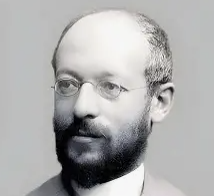
Every social occurrence as such, consists of an interaction between individuals. In other words, each individual is at the same time an active and a passive agent in a transaction. In case of superiority and inferiority, however, the relation assumes the appearance of a one-sided operation ; the one party appears to exert, while the other seems merely to receive an influence.
▼
Source
source
p. 169

3 months 3 weeks ago
Faith consists in believing what reason cannot.
▼
Source
source
"The Flood", 1764
3 months 2 weeks ago
I don't know why we are here, but I'm pretty sure that it is not in order to enjoy ourselves.
▼
Source
source
As quoted in The Beginning of the End (2004) by Peter Hershey, p. 109 Also, as quoted in "The Relentless Rise of Science as Fun", by Jeremy Burgess, in New Scientist, Volume 143, Issues 1932-1945, originally published 1994.
2 months 1 week ago
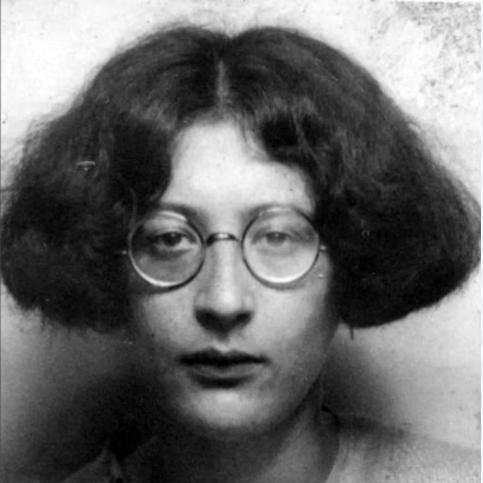
If people were told: what makes carnal desire imperious in you is not its pure carnal element. It is the fact that you put into it the essential part of yourself-the need for Unity, the need for God - they wouldn't believe it. To them it seems obvious that the quality of imperious need belongs to the carnal desire as such. In the same way it seems obvious to the miser that the quality of desirability belongs to gold as such, and not to its exchange value.

3 months 3 weeks ago
The violence of love is as much to be dreaded as that of hate. When it is durable, it is serene and equable. Even its famous pains begin only with the ebb of love, for few are indeed lovers, though all would fain be.
▼
Source
source
Pearls of Thought (1881) p. 158
2 months 2 weeks ago
By freedom he meant a condition in which men were not prevented from choosing both the object and the manner of their worship. For him only a society in which this condition was realised could be called fully human. Its realisation was an ideal which Mill regarded as more precious than life itself.

2 months 2 weeks ago
Whoever blasphemes against the Father will be forgiven, and whoever blasphemes against the Son will be forgiven, but whoever blasphemes against the Holy Spirit will not be forgiven either on earth or in heaven.

2 months 2 weeks ago
In every man sleeps a prophet, and when he wakes there is a little more evil in the world.
3 months 3 weeks ago
I do not give a damn about the dead. They died for the [Communist] Party and the Party can decide what it wants. I practice a live man's politics, for the living.
▼
Source
source
Act 5, sc. 3

2 months 3 weeks ago
You can never plan the future by the past.
▼
Source
source
Letter to a Member of the National Assembly (1791), Volume IV, p. 55.
3 months 2 weeks ago
Maybe the target nowadays is not to discover what we are but to refuse what we are.
▼
Source
source
p. 785

3 months 3 weeks ago
So much of our time is spent in preparation, so much in routine and so much in retrospect, that the amount of each person's genius is confined to a very few hours.
▼
Source
source
Quoted in Simon Brown (ed.) The New England Farmer, vol. 9 (January 1857) p. 18
1 month 3 weeks ago
Materialism ends up denying the existence of any irreducible subjective qualitative states of sentience or awareness.
▼
Source
source
Consciousness and Language (2002) p. 47.

2 months 2 weeks ago
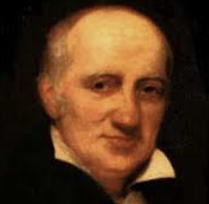
One principle, that I believe is wanting in you, and all our too fervent and impetuous reformers, is the thought, that almost every institution or form of society is good in its place, and in the period of time to which it belongs. How many beautiful and admirable effects grew out of Popery and the monastic institutions, in the period, when they were in their genuine health and vigour! To them we owe almost all our logic and our literature. What excellent effects do we reap, even at this day, from the feudal system and from chivalry! In this point of view, nothing can, perhaps, be more worthy of our applause than the English constitution.
▼
Source
source
Letter to Percy Bysshe Shelley (4 March 1812), quoted in Thomas Jefferson Hogg, The Life of Percy Bysshe Shelley, Vol. II (1858), p. 86
2 months 2 weeks ago
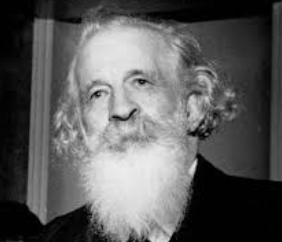
A man is a man to the extent that he is a superman. A man should be defined by the sum of those tendencies which impel him to surpass the human condition.
▼
Source
source
Introduction
4 months ago
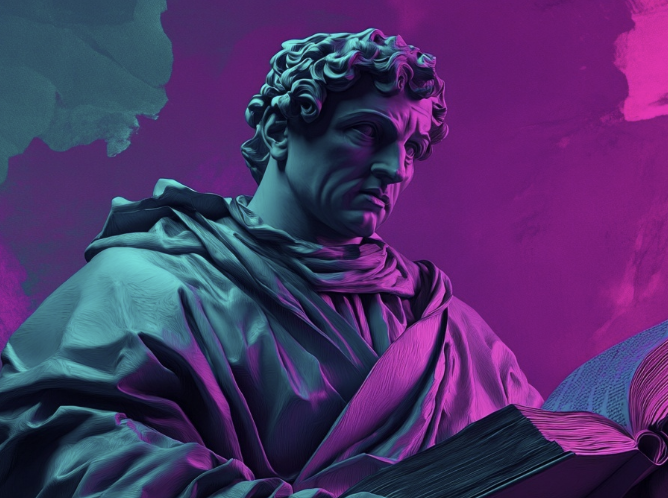
Faith is born and preserved in us by preaching why Christ came, what he brought and gave to us, and the benefits we obtain when we receive him. This happens when Christian liberty - which he gives to us - is rightly taught and we are told in what way as Christians we are all kings and priests and therefore lords of all.
▼
Source
source
p. 70
2 months 2 weeks ago
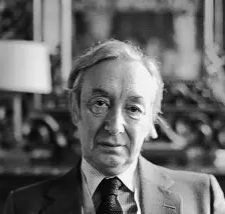
While moral rules may be propounded by authority the fact that these were so propounded would not validate them.
▼
Source
source
"The Meaning of Life".
2 weeks 2 days ago
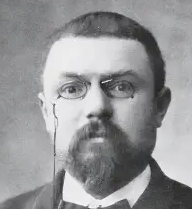
If... it be supposed that another way of measuring time is adopted... enunciation of the law would be... translated into another language... much less simple. So that the definition implicitly adopted by the astronomers may be summed up..: Time should be so defined that the equations of mechanics may be as simple as possible... [i.e.,] there is not one way of measuring time more true... only more convenient.
3 months 3 weeks ago
That is precisely what we should have expected, since Genet wants to live simultaneously creation, destruction, the impossibility of destroying and the impossibility of creating, since he wants both to show his rejection of the divine creation and to manifest, in the absolute, human impotence as man's reproval of God and as the testimony of his grandeur.
▼
Source
source
p. 424

1 week 6 days ago
In all European countries, especially in England, one class of Captains and commanders of men, recognizable as the beginning of a new real and not imaginary "Aristocracy," has already in some measure developed itself: the Captains of Industry;-happily the class who above all, or at least first of all, are wanted in this time. In the doing of material work, we have already men among us that can command bodies of men. And surely, on the other hand, there is no lack of men needing to be commanded: the sad class of brother-men whom we had to describe as "Hodge's emancipated horses," reduced to roving famine,-this too has in all countries developed itself; and, in fatal geometrical progression, is ever more developing itself, with a rapidity which alarms every one. On this ground, if not on all manner of other grounds, it may be truly said, the "Organization of Labor" (not organizable by the mad methods tried hitherto) is the universal vital Problem of the world.
1 week 6 days ago
Let us honor all honest human power of contrivance in its degree. The beaver intellect, so long as it steadfastly refuses to be vulpine, and answers the tempter pointing out short routes to it with an honest "No, no," is truly respectable to me; and many a highflying speaker and singer whom I have known, has appeared to me much less of a developed man than certain of my mill-owning, agricultural, commercial, mechanical, or otherwise industrial friends, who have held their peace all their days and gone on in the silent state. If a man can keep his intellect silent, and make it even into honest beaverism, several very manful moralities, in danger of wreck on other courses, may comport well with that, and give it a genuine and partly human character; and I will tell him, in these days he may do far worse with himself and his intellect than change it into beaverism, and make honest money with it.
3 months 1 week ago
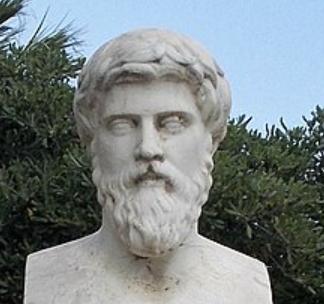
Cato the elder wondered how that city was preserved wherein a fish was sold for more than an ox.
▼
Source
source
Cato the Elder
1 month 1 day ago
Money is everywhere but so is poetry. What we lack are the poets.
▼
Source
source
Poets
3 days ago
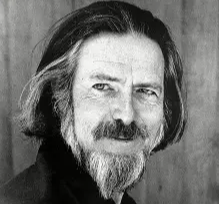
One sees that all explicit opposites are implicit allies-correlative in the sense that they "gowith" each other and cannot exist apart. This, rather than any miasmic absorption of differences into acontinuum of ultimate goo, is the metaphysical unity underlying the world. For this unity is not mere one-ness as opposed to multiplicity, since these two terms are themselves polar. The unity, or inseparability, of one and many is therefore referred to in Vedanta philosophy as "nonduality" (advaita) to distinguish it from simple uniformity.
▼
Source
source
p. 107-108
1 month 1 day ago
Many city-dwellers have a romanticized conception of the living world. From another perspective, some "conservation biologists" favour e.g. "Pleistocene rewilding". By contrast, I think any truly compassionate person should be horrified at the terrible suffering of Nature "red in tooth and claw". Why not aim for a cruelty-free world instead?
▼
Source
source
"Interview with Pensata Animal", Pensata Animal, 25 Oct. 2009
2 months 1 week ago
We have a tendency to overcome any strong tension between desire and impotence by depreciating or denying the positive value of the desired object.
▼
Source
source
L. Coser, trans. (1973), p. 73

1 month 3 weeks ago
I'm prepared to teach acceptance of religion, but, religion has to agree to the social contract. If we have to do it church by church, I'm ready.

2 months 5 days ago
Anarchism is the only philosophy which brings to man the consciousness of himself; which maintains that God, the State, and society are non-existent, that their promises are null and void, since they can be fulfilled only through man's subordination.
2 months 1 week ago
We cannot credit our enjoyment of a flower or of the atmosphere of a room to an autonomous esthetic instinct. Man's esthetic responsiveness relates in its prehistory to various forms of idolatry; his belief in the goodness or sacredness of a thing precedes his enjoyment of its beauty. The applies no less to such concepts as freedom and humanity.
▼
Source
source
p. 36.

1 month 3 weeks ago
Ivan Ilych saw that he was dying, and he was in continual despair. In the depth of his heart he knew he was dying, but not only was he not accustomed to the thought, he simply did not and could not grasp it. The syllogism he had learnt from Kiesewetter's Logic: "Caius is a man, men are mortal, therefore Caius is mortal," had always seemed to him correct as applied to Caius, but certainly not as applied to himself. That Caius - man in the abstract - was mortal, was perfectly correct, but he was not Caius, not an abstract man, but a creature quite, quite separate from all others.
▼
Source
source
Ch. VI
2 months 1 week ago
Such words as spontaneity, sincerity, gratuitousness, richness, enrichment - words which imply an almost total indifference to contrasts of value - have come more often from their [the surrealists'] pens than words which contain a reference to good and evil. Moreover, this latter class of words has become degraded, especially those which refer to the good, as Valéry remarked some years ago. Words like virtue, nobility, honor, honesty, generosity, have become almost impossible to use or else they have acquired bastard meanings; language is no longer equipped for legitimately praising a man's character.
▼
Source
source
"The responsibility of writers," p. 168
1 week 6 days ago
It is the very joy of man's heart to admire, where he can; nothing so lifts him from all his mean imprisonments, were it but for moments, as true admiration.
3 days ago
To have faith is to trust yourself to the water. When you swim you don't grab hold of the water, because if you do you will sink and drown. Instead you relax, and float.
▼
Source
source
The Essence of Alan Watts

3 months 3 weeks ago
You never know how much you really believe anything until its truth or falsehood becomes a matter of life and death to you. It is easy to you believe a rope to be strong and sound as long as you are merely using it to cord a box. But suppose that you had to hang by that rope over a precipice. Wouldn't you then first discover how much you really trusted it? ... Only a real risk tests the reality of a belief.

3 months 1 week ago
A life without a holiday is like a long journey without an inn to rest at.

3 months 3 weeks ago
Look round the world: contemplate the whole and every part of it: You will find it to be nothing but one great machine, subdivided into an infinite number of lesser machines, which again admit of subdivisions, to a degree beyond what human senses and faculties can trace and explain. All these various machines, and even their most minute parts, are adjusted to each other with an accuracy, which ravishes into admiration all men, who have ever contemplated them. The curious adapting of means to ends, throughout all nature, resembles exactly, though it much exceeds, the productions of human contrivance; of human design, thought, wisdom, and intelligence.
▼
Source
source
Philo to Cleanthes, Part II
2 months 1 week ago
The human soul has need of truth and of freedom of expression. The need for truth requires that intellectual culture should be universally accessible, and that it should be able to be acquired in an environment neither physically remote nor psychologically alien.
2 weeks 3 days ago
Tyrants would distribute largess, a bushel of wheat, a gallon of wine, and a sesterce: and then everybody would shamelessly cry, "Long live the King!" The fools did not realize that they were merely recovering a portion of their own property, and that their ruler could not have given them what they were receiving without having first taken it from them.
▼
Source
source
Part 2
2 weeks 4 days ago
The familial union presents as well a mixture of inconvenient ages and characters that inhibit conversation. Morality engenders a frigid atmosphere, as in all places where it reigns.
▼
Source
source
Oeuvres completetes de Charles Fourier

1 month 2 weeks ago
Literacy, in translating man out of the closed world of tribal depth and resonance, gave man an eye for an ear and ushered him into a visual open world of specialized and divided consciousness.
3 months 3 weeks ago
Out of the crooked timber of humanity, no straight thing was ever made.
▼
Source
source
Idea for a General History with a Cosmopolitan Purpose (1784), Proposition 6.
2 months 5 days ago
The huge laugh is a most extreme expression of freedom.
2 months 4 days ago
What is it that distinguishes man from animals? It is not his upright posture. That was present in the apes long before the brain began to develop. Nor is it the use of tools. It is something altogether new, a previously unknown quality: self-awareness. Animals, too, have awareness. They are aware of objects; they know this is one thing and that another. But when the human being as such was born he had a new and different consciousness, a consciousness of himself; he knew that he existed and that he was something different, something apart from nature, apart from other people, too. He experienced himself. He was aware that he thought and felt. As far as we know, there is nothing analogous to this anywhere in the animal kingdom. That is the specific quality that makes human beings human.
▼
Source
source
Affluence and Ennui in Our Society in For the Love of Life (1986) translated by Robert and Rita Kimber
3 months 3 weeks ago
The universal and lasting establishment of peace constitutes not merely a part, but the whole final purpose and end of the science of right as viewed within the limits of reason.

1 week ago
Take your fill when the cask is first opened and when it is nearly spent, but midways be sparing: it is poor saving when you come to the lees.
▼
Source
source
Line 5 This quote is often directly attributed to Seneca, but he is referring to lines 368-369 of Works and Days by the Greek poet Hesiod, (translated by Hugh G. Evelyn-White)

4 months ago
At the very beginning of my fevers and sicknesses that cast me down, whilst still entire, and but little, disordered in health, I reconcile myself to Almighty God by the last Christian, offices, and find myself by so doing less oppressed and more easy, and have got, methinks, so much the better of my disease. And I have yet less need of a notary or counsellor than of a physician.
▼
Source
source
Ch. 9
1 month 2 weeks ago
All meaning alters with acceleration, because all patterns of personal and political interdependence change with any acceleration of information.
▼
Source
source
(p. 178-179)
1 month 2 weeks ago
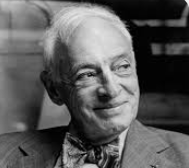
When we read the best nineteenth- and twentieth-century novelists, we soon realize that they are trying in a variety of ways to establish a definition of human nature, to justify the continuation of life as well as the writing of novels.
▼
Source
source
"The Sealed Treasure" (1960), p. 60
CivilSimian.com created by AxiomaticPanic, CivilSimian, Kalokagathia