


3 months 3 weeks ago
Is a fixed income not a good thing? Does not everyone love to count on a sure thing? Especially every petty-bourgeois, narrow-minded Frenchman? the 'ever needy' man?
▼
Source
source
(Bastiat and Carey), pp. 809-810.
2 months 2 weeks ago
How do you think the transition from the present situation to community of Property is to be effected? The first, fundamental condition for the introduction of community of property is the political liberation of the proletariat through a democratic constitution.
▼
Source
source
Draft of a Communist Confession of Faith
2 months 2 weeks ago
Whatsoever therefore is consequent to a time of Warre, where every man is Enemy to every man; the same is consequent to the time, wherein men live without other security, than what their own strength, and their own invention shall furnish them withall. In such condition, there is no place for Industry; because the fruit thereof is uncertain: and consequently no Culture of the Earth; no Navigation, nor use of the commodities that may be imported by Sea; no commodious Building; no Instruments of moving, and removing things as require much force; no Knowledge of the face of the Earth; no account of Time; no Arts; no Letters; no Society; and which is worst of all, continuall feare, and danger of violent death; And the life of man solitary, poore, nasty, brutish, and short.
▼
Source
source
The First Part, Chapter 13, p. 62

4 months 2 weeks ago
The purpose of aphorisms is to keep fools who have memorised them from having nothing to say.

4 months 2 weeks ago
Then the case is the same in all the other arts for the orator and his rhetoric; there is no need to know the truth of the actual matters, but one merely needs to have discovered some device of persuasion which will make one appear to those who do not know to know better than those who know.

2 months 3 weeks ago
The person who grieves, suffers his passion to grow upon him; he indulges it, he loves it; but this never happens in the case of actual pain, which no man ever willingly endured for any considerable time.
▼
Source
source
Part I Section V

3 months 3 weeks ago
Self-trust is the first secret of success.
▼
Source
source
Success



3 months 3 weeks ago
To eat is to appropriate by destruction.
▼
Source
source
Part 3: Being-For-Others
4 months 1 week ago
Hence, as Narcissus, by catching at the shadow, plunged himself in the stream and disappeared, so he who is captivated by beautiful bodies, and does not depart from their embrace, is precipitated, not with his body, but with his soul, into a darkness profound and repugnant to intellect (the higher soul), through which, remaining blind both here and in Hades, he associates with shadows.
3 months 2 weeks ago
A real subjection is born mechanically from a fictitious relation. So it is not necessary to use force to constrain the convict to good behavior, the madman to calm, the worker to work, the schoolboy to application, the patient to the observation of the regulations.
▼
Source
source
Part Four, Complete and austere institutions
2 months 5 days ago
Emptiness simply prevents what is individual from insisting on itself.

2 weeks 4 days ago
It is no coincidence that the ABM Treaty was signed midway between the delinking of the U.S. dollar from the gold standard in 1971 and the first oil crisis in 1973. These were the years not only of monetary and economic crises but also of both the beginning of the destruction of the welfare state and the shift of the hegemony of economic production from the factory to more social and immaterial sectors. One might think of these various transformations as different faces of one common phenomenon, one grand social transformation.
▼
Source
source
39

3 months 2 weeks ago
Philosophy may in no way interfere with the actual use of language; it can in the end only describe it.
▼
Source
source
§ 124
3 months 3 weeks ago
Nature has willed that man should, by himself, produce everything that goes beyond the mechanical ordering of his animal existence, and that he should partake of no other happiness or perfection than that which he himself, independently of instinct, has created by his own reason.
▼
Source
source
Third Thesis

2 months 2 weeks ago
I find that all my thoughts circle around God like the planets around the sun, and are as irresistibly attracted by Him. I would feel it to be the grossest sin if I were to oppose any resistance to this force.
▼
Source
source
Sources: David John Tacey (2007)

3 months 3 weeks ago
Democracy is still upon its trial. The civic genius of our people is its only bulwark.
▼
Source
source
Robert Gould Shaw: Oration upon the Unveiling of the Shaw Monument
1 day ago
By the gods I do not want the Galileans to be killed or beaten unjustly nor to suffer any other ill. I do, however, state that the god-fearing (theosebeis) should be preferred to them ... honour should go to the gods and to the men and cities that worship them.
▼
Source
source
As quoted in Julian the Apostate (1978), by G. W. Bowersock, Ch. 8 : The Puritanical Pagan, p, 83
1 month 3 weeks ago
Boredom is like a pitiless zooming in on the epidermis of time. Every instant is dilated and magnified like the pores of the face.
▼
Source
source
Chapter 3
Just now
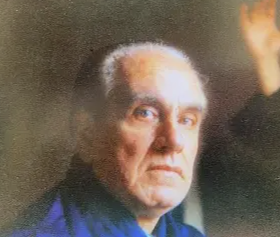
However, what is really required to defend 'the West' against the sudden rise of these barbaric and elemental forces is the strengthening, to an extent perhaps still unknown to Western man, of a heroic vision of life. Apart from the military-technical apparatus the world of the 'Westerners' has at its disposal only a limp and shapeless substance - and the cult of the skin, the myth of 'safety' and of 'war on war', and the ideal of the long, comfortable guaranteed, 'democratic' existence, which is preferred to the ideal of the fulfilment which can be grasped only on the frontiers between life and death in the meeting of the essence of living with the extreme of danger.
▼
Source
source
p. 152
1 month 1 week ago
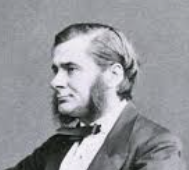
Identical in the physical processes by which he originates-identical in the early stages of his formation-identical in the mode of his nutrition before and after birth, with the animals which lie immediately below him in the scale-Man, if his adult and perfect structure be compared with theirs, exhibits, as might be expected, a marvellous likeness of organization. He resembles them as they resemble one another-he differs from them as they differ from one another.-And, though these differences and resemblances cannot be weighed and measured, their value may be readily estimated; the scale or standard of judgment, touching that value, being afforded and expressed by the system of classification of animals now current among zoologists.
▼
Source
source
Ch.2, p. 83
2 months 1 week ago
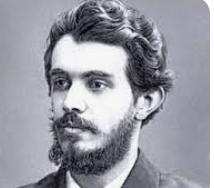
There is absolute truth in anarchism and it is to be seen in its attitude to the sovereignty of the state and to every form of state absolutism. ... The religious truth of anarchism consists in this, that power over man is bound up with sin and evil, that a state of perfection is a state where there is no power of man over man, that is to say, anarchy. The Kingdom of God is freedom and the absence of such power... the Kingdom of God is anarchy.
▼
Source
source
Slavery and Freedom (1939), p. 147

2 months 3 weeks ago
If you are penitent, you love. And if you love you are of God. All things are atoned for, all things are saved by love. If I, a sinner even as you are, am tender with you and have pity on you, how much more will God have pity upon you. Love is such a priceless treasure that you can redeem the whole world by it, and cleanse not only your own sins but the sins of others.
▼
Source
source
Book II, Chapter 3 (trans. Constance Garnett) The Elder Zossima, speaking to a devout widow afraid of death
3 months 1 week ago
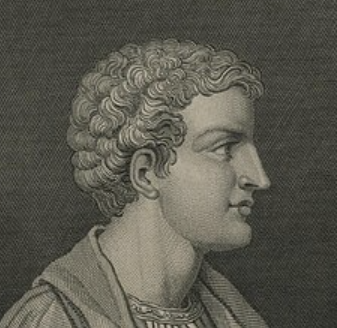
People are enticed by a desire which continually cheats them.'Nothing is enough,' they say, 'for you're only worth what you have.'
▼
Source
source
Book I, satire i, lines 61-62, as translated by N. Rudd

2 months 2 weeks ago
And then if any man shall say to you, Lo, here is Christ; or, lo, he is there; believe him not: For false Christs and false prophets shall rise, and shall shew signs and wonders, to seduce, if it were possible, even the elect. But take ye heed: behold, I have foretold you all things. But in those days, after that tribulation, the sun shall be darkened, and the moon shall not give her light, And the stars of heaven shall fall, and the powers that are in heaven shall be shaken. And then shall they see the Son of man coming in the clouds with great power and glory. And then shall he send his angels, and shall gather together his elect from the four winds, from the uttermost part of the earth to the uttermost part of heaven.
▼
Source
source
13:21-27 (KJV)
4 months 2 weeks ago
It is surely better to be wronged than to do wrong.
3 months 2 weeks ago
I must plunge into the water of doubt again and again.
▼
Source
source
Ch. 7 : Remarks on Frazer's Golden Bough, p. 119

3 months 2 weeks ago
The usage of the words "public" and "public sphere" betrays a multiplicity of concurrent meanings. Their origins go back to various historical phases and, when applied synchronically to the conditions of a bourgeois society that is industrially advanced and constituted as a social-welfare state, they fuse into a clouded amalgam. Yet the very conditions that make the inherited language seem inappropriate appear to require these words, however confused their employment.
▼
Source
source
p. 1 as cited in: Gandy, M (1997) "Ecology, modernity and the intellectual legacy of the Frankfurt School". In: Light, A and Smith, JM, (eds.) Space, Place and Environmental Ethics. p. 240

2 months 5 days ago
For this is our central human problem: that we are almost constantly the victims of our emotions, always being swept up and down on a kind of inner-switchback. We possess a certain control over them; we can 'direct our thoughts' -- or feelings -- in such a way as to intensify them. This is certainly our most remarkable human characteristic: imagination. Animals require actual physical stimuli to trigger their experience. A man can retreat into a book -- or a daydream -- and live through certain experiences quite independent of the physical world. He can even, for example, imagine a sexual encounter, and not only experience all the appropriate physical responses, but even the sexual climax. Such a curious ability is far beyond the power of any animal.
▼
Source
source
p. 23
1 week 5 days ago
This, evidently was not a minor civilization, produced by inferior people. It ranks with the highest civilizations of history, and some, like Keyserling, would place it at the head and summit of all. The British conquest of India was the invasion and destruction of a high civilization by a trading company utterly without scruple or principle, careless of art, greedy of gain, overrunning with fire and sword a country temporarily disordered and helpless, bribing and murdering, annexing and stealing, and beginning that career of illegal and "legal" plunder which has now gone on ruthlessly for one hundred and seventy-three years, and goes on at this moment while in our secure comfort we write and read. Those who have seen the unspeakable poverty and physiological weakness of the Hindus today will hardly believe that it was the wealth of eighteenth century India which attracted the commercial pirates of England and France.
3 months 3 weeks ago
We can come to look upon the deaths of our enemies with as much regret as we feel for those of our friends, namely, when we miss their existence as witnesses to our success.
▼
Source
source
Vol. 2, Ch. 26, sect. 311a

2 months 6 days ago
I have wanted them to have this simple definition to read again and again so they know: Feminism is a movement to end sexism, sexist exploitation, and oppression.
▼
Source
source
Feminism is for Everybody: Passionate Politics (2014), p.XII
3 months 1 week ago
For why do you hasten to remove things that hurt your eyes, but if anything gnaws your mind, defer the time of curing it from year to year?
▼
Source
source
Book I, epistle ii, lines 37-39; translation by C. Smart
4 months ago
The people resemble a wild beast, which, naturally fierce and accustomed to live in the woods, has been brought up, as it were, in a prison and in servitude, and having by accident got its liberty, not being accustomed to search for its food, and not knowing where to conceal itself, easily becomes the prey of the first who seeks to incarcerate it again.
▼
Source
source
Book 1, Ch. 16
3 months 2 weeks ago
One can say that the author is an ideological product, since we represent him as the opposite of his historically real function. (When a historically given function is represented in a figure that inverts it, one has an ideological production.) The author is therefore the ideological figure by which one marks the manner in which we fear the proliferation of meaning.
▼
Source
source
What is an author?
3 months 2 weeks ago
As soon as we cease to believe in such an engineer and in a discourse which breaks with the received historical discourse, and as soon as we admit that every finite discourse is bound by a certain bricolage and that the engineer and the scientist are also species of bricoleurs, then the very idea of bricolage is menaced and the difference in which it took on its meaning breaks down.
▼
Source
source
"Structure, Sign, and Play in the Discourse of the Human Sciences," Writing and Difference, tr. w/ intro & notes by Alan Bass. The University of Chicago Press. Chicago, 1978. p. 285

1 month 1 day ago
All moral tradeoffs are messy. However, on some fairly modest ethical assumptions, when a severe and irreconcilable conflict of interests occurs, then the interests of the more sentient take precedence over the less sentient. This rule of thumb holds regardless of the age, race or species of the victim. Reply to "Why is David Pearce a vegan and a negative utilitarian given industrial agriculture's decimation of insect populations and, therefore, suffering the greater number of insects than farm animals? Shouldn't insects outweigh farm animals?
▼
Source
source
, Quora, 3 Sept. 2019

3 months 3 weeks ago
In fact, contempt for happiness is usually contempt for other people's happiness, and is an elegant disguise for hatred of the human race.
▼
Source
source
p. 198

2 months 2 weeks ago
Pursued by our origins...we all are.
4 months 2 weeks ago
Radiation, unlike smoking, drinking, and overeating, gives no pleasure, so the possible victims object.
3 months 3 weeks ago
Without risks or prizes for the darer, history would be insipid indeed; and there is a type of military character which every one feels that the race should never cease to breed, for everyone is sensitive to its superiority. The duty is incumbent on mankind, of keeping military character in stock - if keeping them, if not for use, then as ends in themselves and as pure pieces of perfection, - so that Roosevelt's weaklings and mollycoddles may not end by making everything else disappear from the face of nature.

3 months 6 days ago
The Athenians are right to accept advice from anyone, since it is incumbent on everyone to share in that sort of excellence, or else there can be no city at all.
▼
Source
source
As quoted in Protagoras by Plato

3 months 3 weeks ago
The directors of such [joint-stock] companies, however, being the managers rather of other people's money than of their own, it cannot well be expected, that they should watch over it with the same anxious vigilance with which the partners in a private copartnery frequently watch over their own.... Negligence and profusion, therefore, must always prevail, more or less, in the management of the affairs of such a company.
▼
Source
source
Chapter I, Part III, Article I, orig.p. 233.

4 months 1 week ago
Those who deny the first principle should be flogged or burned until they admit that it is not the same thing to be burned and not burned, or whipped and not whipped.

1 month 2 weeks ago
Disarmament is illogical and futile, unless one is prepared to regard the available means of production and social organization as affording unique social ends. To divert electrical energy and circuitry into atomic bombs shows the same imaginative power as wiring the dining-room chairs to enable one to electrocute the sitter in the event that he might prove hostile. It is part of the age-old habit of using new means for old purposes instead of discovering what are the new goals contained in the new means.
▼
Source
source
(p.202)
3 months 3 weeks ago
Most people would sooner die than think; in fact, they do so.

4 months ago
When speaking of the spiritual nature or the soul, we are referring to that which is "inner" or "new." When speaking of the bodily nature, or that which is flesh and blood, we are referring to that which is called "sensual," "outward," or "old." Paul writes in 2 Corinthians 4:16: "Even though our outer nature is wasting away, our inner nature is being renewed day by day."
▼
Source
source
p. 51

3 months 3 weeks ago
It would be worth the while to look closely into the eye which has been open and seeing at such hours, and in such solitudes, its dull, yellowish, greenish eye. Methinks my own soul must be a bright invisible green.
2 months 3 weeks ago
Their principles always go to the extreme. They who go with the principles of the ancient Whigs, which are those contained in Mr. Burke's book, never can go too far. ... The opinions maintained in that book never can lead to an extreme, because their foundation is laid in an opposition to extremes.
▼
Source
source
p. 470
4 months 3 weeks ago
For legislators make the citizens good by forming habits in them, and this is the wish of every legislator, and those who do not effect it miss their mark, and it is in this that a good constitution differs from a bad one.
CivilSimian.com created by AxiomaticPanic, CivilSimian, Kalokagathia