


3 months 2 weeks ago
Man is free at the instant he wants to be.
▼
Source
source
Source Brutus, act II, scene I, 1730

1 month 4 weeks ago
History is full of religious wars; but, we must take care to observe, it was not the multiplicity of religions that produced these wars, it was the intolerating spirit which animated that one which thought she had the power of governing.
▼
Source
source
No. 65. (Usbek writing to his wives)

4 months 1 week ago
One does not discover the absurd without being tempted to write a manual of happiness. "What! — by such narrow ways — ?" There is but one world, however. Happiness and the absurd are two sons of the same earth. They are inseparable. It would be a mistake to say that happiness necessarily springs from the absurd discovery. It happens as well that the feeling of the absurd springs from happiness.

1 month 3 weeks ago
Not all women, in fact, very few, have had the good fortune to live and work among women and men actively involved in the feminist movement. Many of us live in circumstances and environments where we must engage in feminist struggle alone, with only occasional support and affirmation.
▼
Source
source
Acknowledgments.
3 months 1 week ago
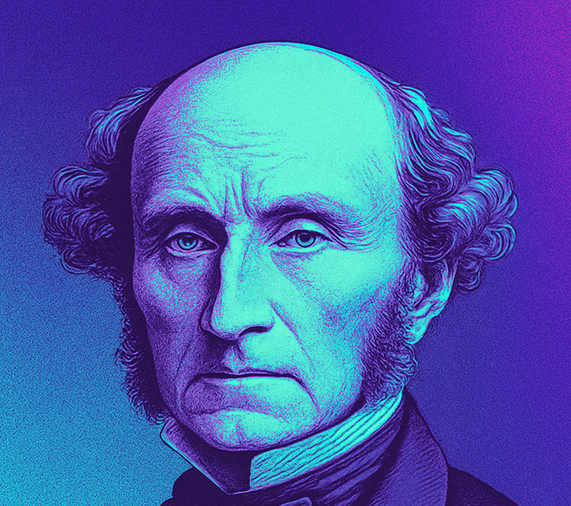
I regard utility as the ultimate appeal on all ethical questions; but it must be utility in the largest sense, grounded on the permanent interests of man as a progressive being.
▼
Source
source
Ch. 1: Introductory
4 months 1 week ago
Life continues, and some mornings, weary of the noise, discouraged by the prospect of the interminable work to keep after, sickened also by the madness of the world that leaps at you from the newspaper, finally convinced that I will not be equal to it and that I will disappoint everyone, all I want to do is sit down and wait for evening. This is what I feel like, and sometimes I yield to it.

3 months 1 week ago
Language is a part of our organism and no less complicated than it.
▼
Source
source
Journal entry (14 May 1915), p. 48
2 months 2 weeks ago
The wisest among us is very lucky never to have met the woman, be she beautiful or ugly, intelligent or stupid, who could drive him crazy enough to be fit to be put into an asylum.
▼
Source
source
Ceci n'est pas un conte [This Is No Tale] (1796),

4 months 2 days ago
Listen widely to remove your doubts and be careful when speaking about the rest and your mistakes will be few. See much and get rid of what is dangerous and be careful in acting on the rest and your causes for regret will be few. Speaking without fault, acting without causing regret: 'upgrading' consists in this.
1 month 1 week ago
Falling in love is the one illogical adventure, the one thing of which we are tempted to think as supernatural, in our trite and reasonable world. The effect is out of all proportion with the cause. Two persons, neither of them, it may be, very amiable or very beautiful, meet, speak a little, and look a little into each other's eyes. That has been done a dozen or so of times in the experience of either with no great result. But on this occasion all is different. They fall at once into that state in which another person becomes to us the very gist and centrepoint of God's creation, and demolishes our laborious theories with a smile; in which our ideas are so bound up with the one master-thought that even the trivial cares of our own person become so many acts of devotion, and the love of life itself is translated into a wish to remain in the same world with so precious and desirable a fellow-creature.
▼
Source
source
Virginibus Puerisque, Ch. 3.
2 months 1 week ago
The first Man is the first Spirit-seer; all appears to him as Spirit. What are children, but first men? The fresh gaze of the Child is richer in significance than the forecasting of the most indubitable Seer.

1 month 3 weeks ago
Ritual practices ensure that we treat not only other people but also things in beautiful ways, that there is an affinity between us and other people as well as things.

4 months 1 week ago
Those who assert that the mathematical sciences say nothing of the beautiful or the good are in error. For these sciences say and prove a great deal about them; if they do not expressly mention them, but prove attributes which are their results or definitions, it is not true that they tell us nothing about them. The chief forms of beauty are order and symmetry and definiteness, which the mathematical sciences demonstrate in a special degree.

3 months 1 week ago
Freedom is what you do with what's been done to you.

1 month 1 week ago
Mutation may be random, but selection definitely is not.
▼
Source
source
Chapter 3, "The Message from the Mountain" (p. 82)

2 months 5 days ago
Verily I say unto thee, That this night, before the cock crow, thou shalt deny me thrice.
▼
Source
source
26:34 (KJV) Said to Peter.
3 months 2 weeks ago
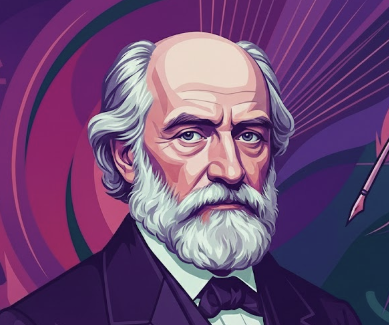
Philosophy of religion ... really amounts to ... philosophizing on certain favorite assumptions that are not confirmed at all.
▼
Source
source
E. Payne, trans. (1974) Vol. 1, p. 143

2 months 5 days ago
This language controls by reducing the linguistic forms and symbols of reflection, abstraction, development, contradiction; by substituting images for concepts. It denies or absorbs the transcendent vocabulary; it does not search for but establishes and imposes truth and falsehood.
▼
Source
source
p. 103
2 months 5 days ago
Kierkegaard's individualistic interpretation of 'the negation of philosophy' inevitably developed a fierce opposition to Western rationalism. .... According to Kierkegaard, the individual is not the knowing but only the 'ethically existing subjectivity.' The sole reality that matters to him is his own 'ethical existence'.
▼
Source
source
P. 263-264
2 months 4 days ago
In all ranges of experience, externality of means defines the mechanical.
▼
Source
source
p. 206
3 months 2 days ago
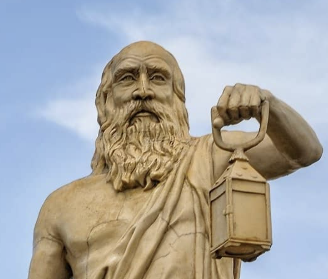
If you are to be kept right, you must possess either good friends or red-hot enemies. The one will warn you, the other will expose you.
▼
Source
source
Plutarch, Moralia, 74C

3 months 2 weeks ago
How many people ruin themselves by laying out money on trinkets of frivolous utility? What pleases these lovers of toys is not so much the utility, as the aptness of the machines which are fitted to promote it. All their pockets are stuffed with little conveniences. They contrive new pockets, unknown in the clothes of other people, in order to carry a greater number. They walk about loaded with a multitude of baubles, in weight and sometimes in value not inferior to an ordinary Jew's-box, some of which may sometimes be of some little use, but all of which might at all times be very well spared, and of which the whole utility is certainly not worth the fatigue of bearing the burden.
▼
Source
source
Chap. I.

1 week ago
To write well is to think well; there is no art of style distinct from the culture of the mind. The good writer is a complete mind, gifted with judgment, passion, imagination, and at the same time well trained. The inner qualities of rectitude, of brilliant geniality, are not given; instruction, wealth of information, fulness of knowledge, are acquired. Thus good training of the mind is the only school of good style. Wanting that, you have merely rhetoric and bad taste.
▼
Source
source
As quoted in The Art of Authorship (1890) by George Bainton

3 months 2 weeks ago
Men being, as has been said, by nature, all free, equal and independent, no one can be put out of this estate, and subjected to the political power of another, without his own consent.
▼
Source
source
Second Treatise of Government, Ch. VIII, sec. 95
3 months 2 weeks ago
Women are the most charitable creatures, and the most troublesome. He who shuns women passes up the trouble, but also the benefits. He who puts up with them gains the benefits, but also the trouble. As the saying goes, there's no honey without bees.
▼
Source
source
Act III, scene iv

3 months 1 week ago
They reckon ill who leave me out; When me they fly, I am the wings; I am the doubter and the doubt; And I the hymn the Brahmin sings.
▼
Source
source
Brahma, st. 3

3 months 1 week ago
"They would say," he answered, "that you do not fail in obedience through lack of love, but have lost love because you never attempted obedience."
▼
Source
source
Ch. 7 : The Pendragon, section 2


1 month 3 weeks ago
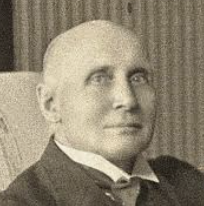
Philosophy is the self-correction by consciousness of its own initial excess of subjectivity. Each actual occasion contributes to the circumstances of its origin additional formative elements deepening its own peculiar individuality. Consciousness is only the last and greatest of such elements by which the selective character of the individual obscures the external totality from which it originates and which it embodies. An actual individual, of such higher grade, has truck with the totality of things by reason of its sheer actuality; but it has attained its individual depth of being by a selective emphasis limited to its own purposes. The task of philosophy is to recover the totality obscured by the selection.
▼
Source
source
Pt. I, ch. 1, sec. 6.

2 months 3 weeks ago
Reason is immortal, all else mortal.
▼
Source
source
As quoted in Lives and Opinions of Eminent Philosophers, Sect. 30, as translated by Robert Drew Hicks (1925)

7 months 2 weeks ago
First, [the bourgeoisie] must recognize his own impotence, his incapacity to believe in a sense of history, even if his reason leans towards the truth, the passions and prejudices produced by his class position, prevent him from accepting it. So he should not exert himself with proving the truth of the historical mission of the working class; rather, he should learn to subdue his petty bourgeois passions and prejudices. He should take lessons from those who were once as important as he is now but are ready to risk all for the revolutionary Cause.

2 months 2 weeks ago
Be substantially great in thyself, and more than thou appearest unto others.
▼
Source
source
Part I, Section XIX

4 weeks ago
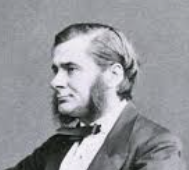
The antagonism between science and religion, about which we hear so much, appears to me to be purely factitious - fabricated, on the one hand, by short-sighted religious people who confound a certain branch of science, theology, with religion; and, on the other, by equally short-sighted scientific people who forget that science takes for its province only that which is susceptible of clear intellectual comprehension; and that, outside the boundaries of that province, they must be content with imagination, with hope, and with ignorance.
▼
Source
source
"The interpreters of Genesis and the interpreters of Nature"

3 weeks ago
... our descendants may recognize that we are the sociopathic emotional primitives in the grip of an affective psychosis. Jealousy, envy, resentment, ridicule, hate, anger, disgust, spite, contempt, schadenfreude and a whole gamut of nameless but mean-spirited states we undergo each day are a toxic legacy of our Darwinian past. More commonly, perhaps, our genetic make-up ensures we simply feel indifference to the plight of all but a handful of significant others in our lives. Right now, for instance, one knows dimly at some level that there is frightful and preventable suffering in the world. Yet most of us feel no overpowering moral urgency to do anything about it.
▼
Source
source
"Utopian Pharmacology: Mental Health in the Third Millennium MDMA and Beyond", BLTC Research, last updated 2020
3 months 3 days ago
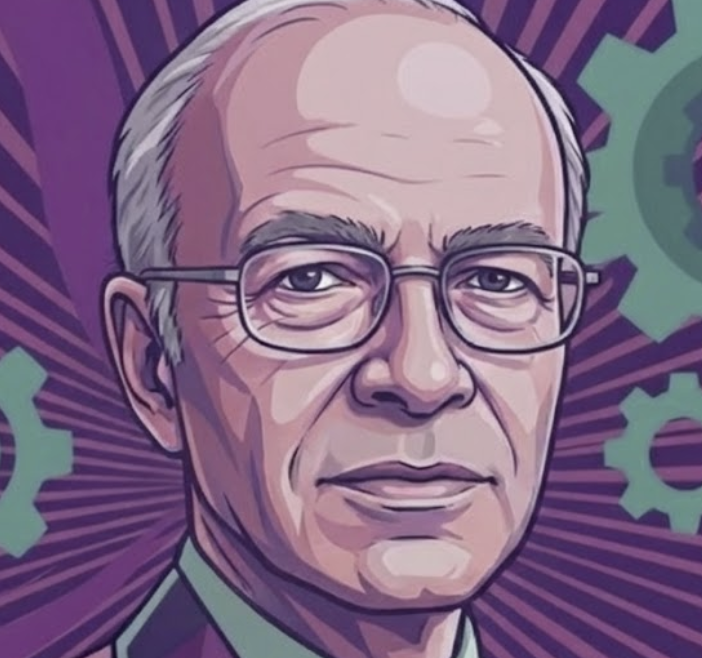
Animal Liberation is Human Liberation too.
▼
Source
source
Preface




1 month 1 week ago
Visual space is the space of detachment. Audile-tactile space is the space of involvement.
▼
Source
source
(p. 194)

3 weeks 5 days ago
The system of technological production that we have today has been justified in terms of creating more goods to feed more people and to meet more needs. But it actually destroys more of the resources that we need in order to meet those multiple needs. If we shift to an ecological perception, a diversity perception, we realize that some of the instruments of which we are very proud are actually extremely primitive for dealing with nature. To me that is the great lesson of ecological awareness at the turn of the millennium.
▼
Source
source
1998
1 month 1 week ago
World War I a railway war of centralization and encirclement. World War II a radio war of decentralization concluded by the Bomb. World War III a TV guerrilla war with no divisions between civil and military fronts.
▼
Source
source
(p. 152)
1 month 4 weeks ago
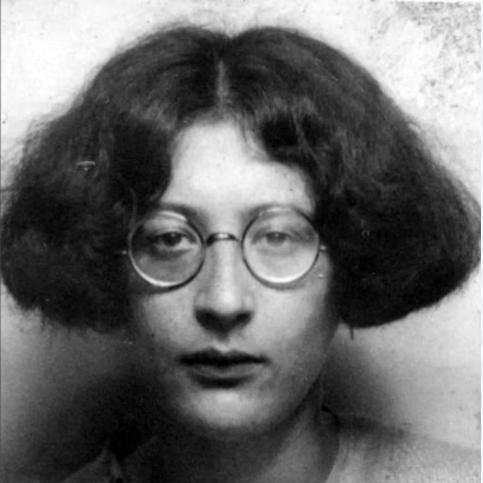
The capacity to give one's attention to a sufferer is a very rare and difficult thing; it is almost a miracle; it is a miracle. Nearly all those who think they have this capacity do not possess it. Warmth of heart, impulsiveness, pity are not enough.

2 months 1 week ago
We too often forget that not only is there "a soul of goodness in things evil," but very generally also, a soul of truth in things erroneous.
▼
Source
source
Pt. I, The Unknowable; Ch. I, Religion and Science; quoting from "There is some soul of goodness in things evil / Would men observingly distil it out", William Shakespeare, Henry V, act iv. sc. i
3 months 2 weeks ago
I cannot imagine how the clockwork of the universe can exist without a clockmaker.
▼
Source
source
As attributed in More Random Walks in Science : An Anthology (1982) by Robert L. Weber, p. 65
2 months 5 days ago
It is more blessed to give than to receive.
▼
Source
source
Acts 20:35b

3 months 2 weeks ago
In the metaphysical elements of aesthetics the various nonmoral feelings are to be made use of; in the elements of moral metaphysics the various moral feelings of men, according to the differences in sex, age, education, and government, of races and climates, are to be employed.
▼
Source
source
Part III : Selection on Education from Kant's other Writings, Ch. I Pedagogical Fragments, # 58
2 months 1 week ago
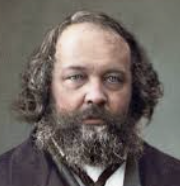
My dignity as a man, my human right which consists of refusing to obey any other man, and to determine my own acts in conformity with my convictions is reflected by the equally free conscience of all and confirmed by the consent of all humanity. My personal freedom, confirmed by the liberty of all, extends to infinity. The materialistic conception of freedom is therefore a very positive, very complex thing, and above all, eminently social, because it can be realized only in society and by the strictest equality and solidarity among all men.
1 month 1 week ago
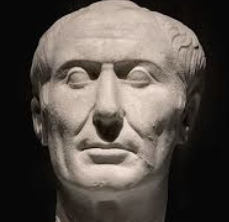
He who helps the guilty, shares the crime.
▼
Source
source
Maxim 139

3 months 3 weeks ago
My mind is calm, for my fortune is not my felicity. I know I have clean hands and a clean heart, and I hope a clean house for friends or servants; but Job himself, or whoever was the justest judge, by such hunting for matters against him as hath been used against me, may for a time seem foul, especially in a time when greatness is the mark and accusation is the game.
▼
Source
source
Quoted by Thomas Fowler in "Francis Bacon 1561-1626
CivilSimian.com created by AxiomaticPanic, CivilSimian, Kalokagathia