
...or justify inhumane treatment, human over human, because animals do it...


Whatever you see in the more material part of yourself, learn to refer to God and to the invisible part of yourself. In that way, whatever offers itself to the senses will become for you an occasion for the practice of piety.

Books-there is a good kind of a book and a bad kind of a book. I am not to assume that you are all ill acquainted with this; but I may remind you that it is a very important consideration at present. It casts aside altogether the idea that people have that if they are reading any book-that if an ignorant man is reading any book, he is doing rather better than nothing at all.

Society is not a disease, it is a disaster. What a stupid miracle that one can live in it.
And why were those haughty [French] nobles destroyed with that utter destruction? Why were they scattered over the face of the earth, their titles abolished, their escutcheons defaced, their parks wasted, their palaces dismantled, their heritage given to strangers? Because they had no sympathy with the people, no discernment of the signs of their time; because, in the pride and narrowness of their hearts, they called those whose warnings might have saved them theorists and speculators; because they refused all concession till the time had arrived when no concession would avail.
The purpose of the State is, as we have already shown in our last lecture, no other than that of the Human Race itself:-to order all its relations according to the Laws of Reason. It is only after the Age of Reason as Science shall have been traversed, and we shall have arrived at the Age of Reason as Art, that the State can reflect upon this purpose with clear consciousness. Till then it constantly promotes this purpose, but without its own knowledge, or free pre meditated design; prompted thereto by the natural law of the development of our Race, even while it has a totally different purpose in view;-with which purpose of its own, Nature has indissolubly bound up the purpose of the whole Race.

Our mass media have little difficulty in selling particular interests as those of all sensible men. The political needs of society become individual needs and aspirations, their satisfaction promotes business and the commonweal, and the whole appeals to be the very embodiment of Reason.

No production without a need. But consumption reproduces the need.

In obedience to the feeling of reality, we shall insist that, in the analysis of propositions, nothing "unreal" is to be admitted. But, after all, if there is nothing unreal, how, it may be asked, could we admit anything unreal? The reply is that, in dealing with propositions, we are dealing in the first instance with symbols, and if we attribute significance to groups of symbols which have no significance, we shall fall into the error of admitting unrealities, in the only sense in which this is possible, namely, as objects described.

You may have made a Revolution, but not a Reformation. You may have subverted Monarchy, but not recover'd freedom.
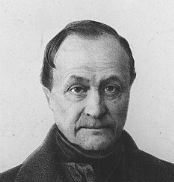
It was under Catholic Feudalism that they were first united; a union for which their incorporation into the Roman empire had prepared them, and which was finally organized by the incomparable genius of Charlemagne.
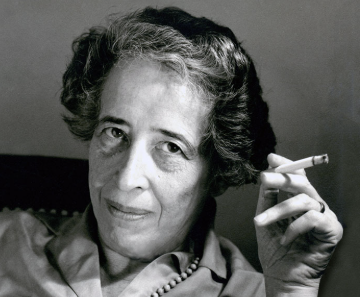
Metaphysical fallacies contain the only clues we have to what thinking means to those who engage in it.
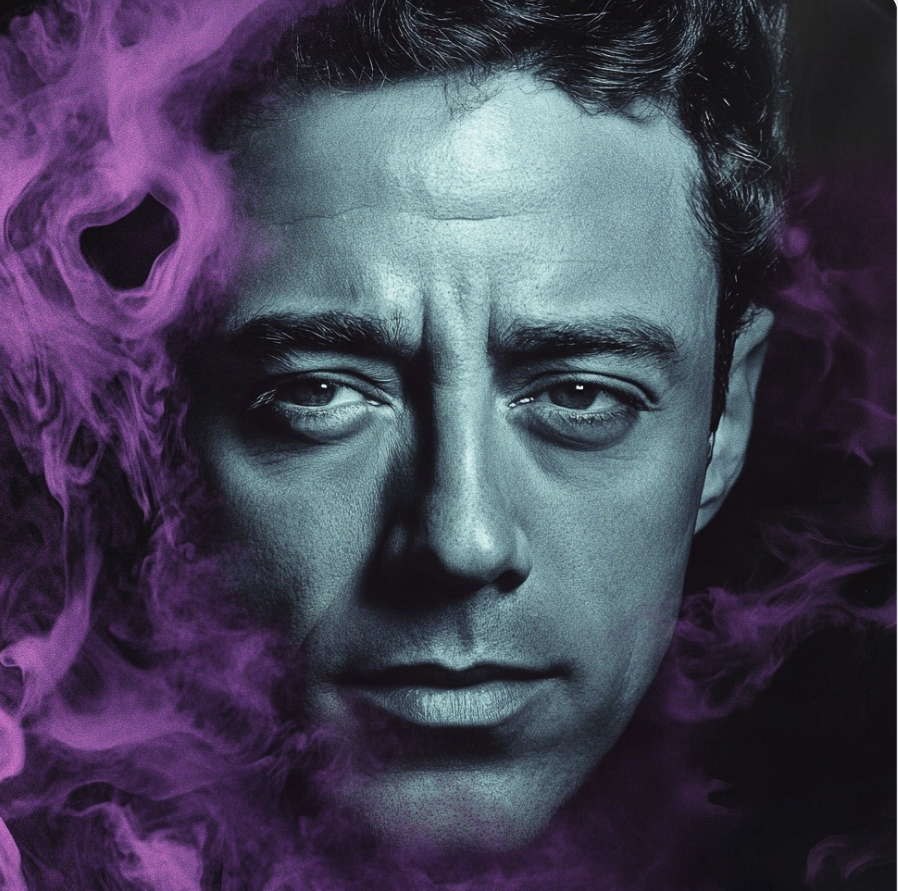
Capital punishment is the most premeditated of murders, to which no criminal's deed, however calculated, can be compared. For there to be an equivalency, the death penalty would have to punish a criminal who had warned his victim of the date on which he would inflict a horrible death on him and who, from that moment onward, had confined him at his mercy for months. Such a monster is not to be encountered in private life.
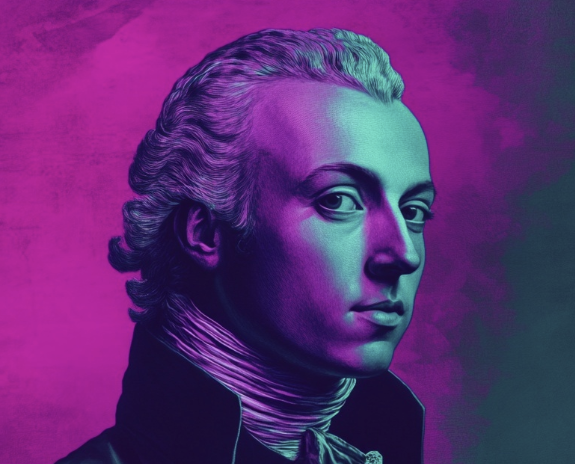
Thoughts without content are empty, intuitions without concepts are blind. The understanding can intuit nothing, the senses can think nothing. Only through their unison can knowledge arise.
If there is anything in the world that can really be called a man's property, it is surely that which is the result of his mental activity.
Vague a l'ame - melancholy yearning for the end of the world.
If we would regain our freedom, we must shake off the burden of sensation, no longer react to the world by our senses, break our bonds. For all sensation is a bond, pleasure as much as pain, joy as much as misery. The only free mind is the one that, pure of all intimacy with beings or objects, plies its own vacuity.

If you use a trick in logic, whom can you be tricking other than yourself?

Don't waste yourself in rejection, nor bark against the bad, but chant the beauty of the good.
We have to learn to think in a new way. We have to learn to ask ourselves, not what steps can be taken to give military victory to whatever group we prefer, for there no longer are such steps; the question we have to ask ourselves is: what steps can be taken to prevent a military contest of which the issue must be disastrous to all parties?
Each generation is a filter, a sieve; good genes tend to fall through the sieve into the next generation; bad genes tend to end up in bodies that die young or without reproducing.
Is there anything in life so disenchanting as attainment?
One ought to fast, watch, and labor to the extent that such activities are needed to harness the body's desires and longings; however, those who presume that they are justified by works pay no attention to the need for self-discipline but see the works themselves as the way to righteousness. They believe that if they do a great number of impressive works all will be well and righteousness will be the result. Sometimes this is pursued with such zeal that they become mentally unstable and their bodies are sapped of all strength. Such disastrous consequences demonstrate that the belief that we are justified and saved by works without faith is extremely foolish.

These effects of mescalin are the sort of effects you could expect to follow the administration of a drug having the power to impair the efficiency of the cerebral reducing valve. When the brain runs out of sugar, the undernourished ego grows weak, can't be bothered to undertake the necessary chores, and loses all interest in those spatial and temporal relationships which mean so much to an organism bent on getting on in the world. As Mind at Large seeps past the no longer watertight valve, all kinds of biologically useless things start to happen. ... Other persons discover a world of visionary beauty. To others again is revealed the glory, the infinite value and meaningfulness of naked existence, of the given, unconceptualized event.
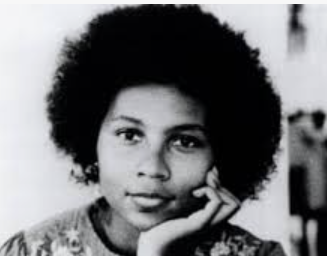
Feminist thought and practice were fundamentally altered when radical women of color and white women allies began to rigorously challenge the notion of "gender" was the primary factor determining a woman's fate. I can still recall how it upset everyone in the first women's studies class I attended-a class where everyone except me was white and female and mostly from privileged backgrounds-when I interrupted a discussion about the origins of domination in which it was argued that when a child is coming out of the womb the factor deemed most important is gender. I stated that when the child of two black parents is coming out of the womb the factor that is considered first is skin color, then gender, because race and gender will determine that child's fate. Looking at the interlocking nature of gender, race, and class was the perspective that changed the direction of feminist thought.
I observe that a very large portion of the human race does not believe in God and suffers no visible punishment in consequence. And if there were a God, I think it very unlikely that he would have such an uneasy vanity as to be offended by those who doubt his existence.

Then I dreamed that one day there was nothing but milk for them and the jailer said as he put down the pipkin:'Our relations with the cow are not delicate-as you can easily see if you imagine eating any of her other secretions.' ... John said, 'Thank heavens! Now at last I know that you are talking nonsense. You are trying to pretend that unlike things are like. You are trying to make us think that milk is the same sort of thing as sweat or dung.' 'And pray, what difference is there except by custom?''Are you a liar or only a fool, that you see no difference between that which Nature casts out as refuse and that which she stores up as food?'
If I were asked to summarize as briefly as possible my vision of things, to reduce it to its most succinct expression, I should replace words with an exclamation point, a definitive !

Those animals which are incapable of making binding agreements with one another not to inflict nor suffer harm are without either justice or injustice; and likewise for those peoples who either could not or would not form binding agreements not to inflict nor suffer harm.

I recognize the necessity of animal experiments with my mind but not with my heart.
Karl Marx was born at Trier on 5 May 1818, the child of Jewish parents with a long rabbinical tradition on both sides. His grandfathers were rabbis; his father, a well-to-do lawyer, changed his first name from Herschel to Heinrich and adopted Protestantism, which in Prussia was a necessary condition of professional and cultural emancipation.
The most interesting aspect of suffering is the sufferer's belief in its absoluteness. He believes he has a monopoly on suffering. I think that I alone suffer, that I alone have the right to suffer, although I also realize that there are modalities of suffering more terrible than mine, pieces of flesh falling from the bones, the body crumbling under one's very eyes, monstrous, criminal , shameful sufferings. One asks oneself, How can this be, and if it be, how can one still speak of finality and other such old wives' tales? Suffering moves me so much that I lose all my courage. I lose heart because I do not understand why there is suffering in the world.
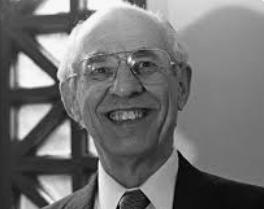
On another possible world or another planet a word might be associated with much the same stereotype and much the same criteria as our term 'water', but it might designate XYZ and not H₂O. At least this could happen in a prescientific era. And it would not follow that XYZ was water; it would only follow that XYZ could look like water, taste like water, etc. What 'water' refers to depends on the actual nature of the paradigms, not just on what is in our heads.

In spite the mountains of books written about art, no precise definition of art has been constructed. And the reason for this is that the conception of art has been based on the conception of beauty.
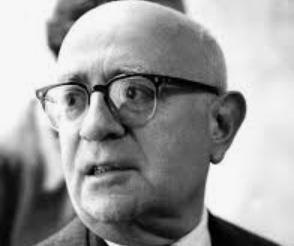
We are really no longer ourselves a part of nature at the moment when we notice, when we recognize, that we are a part of nature.

Religion in so far as it is a source of consolation is a hindrance to true faith; and in this sense atheism is a purification. I have to be an atheist with that part of myself which is not made for God. Among those in whom the supernatural part of themselves has not been awakened, the atheists are right and the believers wrong.
For the inquisition of Final Causes is barren, and like a virgin consecrated to God produces nothing.
Parnenides: When there is a number of things which seem to you to be great, you may think, as you look at them all, that there is one and the same idea in them, and hence you think the great is one. But if with your mind's eye you regard the absolute great and these many great things in the same way, will not another great appear beyond, by which all these must appear to be great?
Systems, scientific and philosophic, come and go. Each method of limited understanding is at length exhausted. In its prime each system is a triumphant success: in its decay it is an obstructive nuisance.
At the classical origins of philosophic thought, the transcending concepts remained committed to the prevailing separation between intellectual and manual labor to the established society of enslavement. ... Those who bore the brunt of the untrue reality and who, therefore, seemed to be most in need of attaining its subversion were not the concern of philosophy. It abstracted from them and continued to abstract from them.
I'm not clever enough to be a physicist. When asked about why he chose to become a biologist.
Someday, someday, this crazy world will have to end, And our God will take things back that He to us did lend. And if, on that sad day, you want to scold our God, Why go right ahead and scold Him. He'll just smile and nod.

From fanaticism to barbarism is only one step.
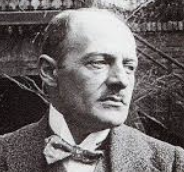
The precepts "Love your enemies, do good to them which hate you, bless them that curse you" ... are born from the Gospel's profound spirit of individualism, which refuses to let one's own actions and conduct depend in any way on somebody else's acts. The Christian refuses to let his acts be mere reactions-such conduct would lower him to the level of his enemy. The act is to grow organically from the person, "as the fruit from the tree." ... What the Gospel demands is not a reaction which is the reverse of the natural reaction, as if it said: "Because he strikes you on the cheek, tend the other"-but a rejection of all reactive activity, of any participation in common and average ways of acting and standards of judgment.
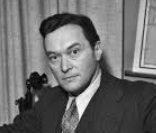
The man who says that the world is a machine has really advanced no further than to say that he is so well satisfied with the analogy that he is through with searching any further.
The precise reason why abstinence from animal food will be the first act ... of a moral life is admirably explained in the book, The Ethics of Diet [by Howard Williams]; and not by one man only, but by all mankind in the persons of its best representatives during all the conscious life of humanity. ... the moral progress of humanity - which is the foundation of every other kind of progress - is always slow; but ... the sign of true, not casual, progress is its uninterruptedness and its continual acceleration. And the progress of vegetarianism is of this kind. That progress, is expressed both in the words of the writers cited in the above-mentioned book and in the actual life of mankind, which from many causes is involuntarily passing metre and more from carnivorous habits to vegetable food, and is also deliberately following the same path in a movement which shows evident strength, and which is growing larger and larger - viz., vegetarianism.
Space is employed as the type even of the concept of time itself, representing it by a line, and its limits - moments - by points. Time, on the other had, approaches more to a universal and rational concept, comprising under its relations all things whatsoever, to wit, space itself, and besides, those accidents which are not comprehended in the relations of space, such as the thoughts of the soul. Again, time, besides this, though it certainly does not dictate the laws of reason, yet constitutes the principal conditions tinder favor of which the mind compares its notions according to the laws of reason. Thus, I cannot judge what is impossible except by predicating a and not-a of the same subject at the same time.
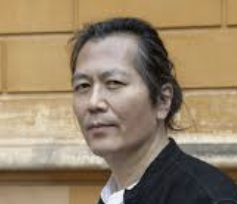
Promising, committment, and fidelity, for instance, are genuinely temporal practices.
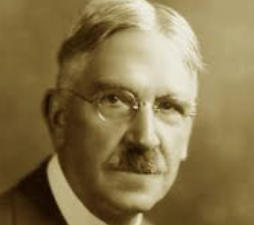
Just because emotion is essential to that act of expression which produces a work of art, it is easy for inaccurate analysis to misconceive its mode of operation and conclude that the work of art has emotion for its significant content. One may cry out with joy or even weep upon seeing a friend from whom one has been long separated. The outcome is not an expressive object -- save to the onlooker. But if the emotion leads one to gather material that is affiliated to the mood which is aroused, a poem may result. In the direct outburst, an objective situation is the stimulus, the cause, of the emotion. In the poem, objective material becomes the content and matter of the emotion, not just its evocative occasion.
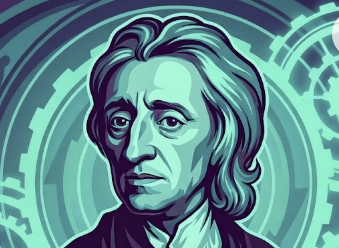
If pains be to be taken to give him a manly air and assurance betimes, it is chiefly as a fence to his virtue when he goes into the world under his own conduct.
CivilSimian.com created by AxiomaticPanic, CivilSimian, Kalokagathia