


2 months 1 week ago
For socialism is not merely the labour question, it is before all things the atheistic question, the question of the form taken by atheism to-day, the question of the tower of Babel built without God, not to mount to heaven from earth but to set up heaven on earth.

3 months 1 week ago
Life has no meaning a priori ... It is up to you to give it a meaning, and value is nothing but the meaning that you choose.
▼
Source
source
p. 58

3 months 1 week ago
The ornament of a house is the friends who frequent it.
▼
Source
source
Domestic Life
3 months 6 days ago
At the end of Being and Nothingness, ... Being in-itself and Being for-itself were of Being; and this totality of beings, in which they were effected, itself was linked up to itself, relating and appearing to itself, by means of the essential project of human-reality. What was named in this way, in an allegedly neutral and undetermined way, was nothing other than the metaphysical unity of man and God, the relation of man to God, the project of becoming God as the project constituting human-reality. Atheism changes nothing in this fundamental structure.
▼
Source
source
Chicago, 1982. (original French published in Paris, 1972, as Marges de la philosophie). p. 116

2 months 2 weeks ago
A man may be in as just possession of Truth as of a City, and yet be forced to surrender.
▼
Source
source
Section 6

3 months 1 week ago
Love may forgive all infirmities and love still in spite of them: but Love cannot cease to will their removal.

1 month 3 weeks ago
What is the good of drawing conclusions from experience? I don't deny we sometimes draw the right conclusions, but don't we just as often draw the wrong ones?
▼
Source
source
F 123

2 days ago
I knew Robert Burns, and I knew my father. Yet were you to ask me which had the greater natural faculty, I might perhaps actually pause before replying. Burns had an infinitely wider education, my father a far wholesomer. Besides, the one was a man of musical utterance; the other wholly a man of action, with speech subservient thereto. Never, of all the men I have seen, has one come personally in my way in whom the endowment from nature and the arena from fortune were so utterly out of all proportion. I have said this often, and partly know it. As a man of speculation - had culture ever unfolded him - he must have gone wild and desperate as Burns; hut he was a man of conduct, and work keeps all right. What strange shapable creatures we are!


3 months 2 days ago
The resolute one who moved by the principles of Thy FaithExtends the prosperity of order to his neighbors And works the land the evil now hold desolate, Earns through Righteousness, the Blessed Recompense Thy Good Mind has promised in Thy Kingdom of Heaven.
▼
Source
source
Spenta Mainyu Gatha; Yasna 50, 3.
3 months 1 day ago
One should attend to one's enemies, for they are the first persons to detect one's errors.
▼
Source
source
§ 5
3 months 1 week ago
Popery so threatens and so nearly surrounds us...every sober man would think it seasonable at this time that all dissenting Protestants should be brought to a good understanding and compliance one with another...I think all Protestants ought now by all ways to be stirred up against them [Catholics] as People that have declared themselves ready by blood, violence, and destruction to ruine our Religion and Government...[they] are nothing but either Enemys in our bowells or spies among us, whilst their General commanders whom they blindly obey declare warr, and an unalterable designe to destroy us.
▼
Source
source
Critical Notes Upon Edward Stillingfleet's Mischief and Unreasonableness of Separation' (c. May 1681), quoted in John Marshall, John Locke: Resistance, Religion and Responsibility (Cambridge University Press, 1994), p. 110
2 days ago
There have been other Priests perhaps equally notable, in calmer times, for doing faithfully the office of a Leader of Worship; bringing down, by faithful heroism in that kind, a light from Heaven into the daily life of their people; leading them forward, as under God's guidance, in the way wherein they were to go. But when this same way was a rough one, of battle, confusion and danger, the spiritual Captain, who led through that, becomes, especially to us who live under the fruit of his leading, more notable than any other.
1 month 1 week ago
The state monopolizes violence by calling its critics "violent". [...] Hence, we should be wary about those who claim that violence is necessary to curb or check violence; those who praise the forces of law, including the police and the prisons, as the final arbiters. To oppose violence is to understand that violence does not always take the form of the blow.
▼
Source
source
p. 63
2 days ago
Paganism we recognized as a veracious expression of the earnest awe-struck feeling of man towards the Universe; veracious, true once, and still not without worth for us. But mark here the difference of Paganism and Christianism; one great difference. Paganism emblemed chiefly the Operations of Nature; the destinies, efforts, combinations, vicissitudes of things and men in this world; Christianism emblemed the Law of Human Duty, the Moral Law of Man. One was for the sensuous nature: a rude helpless utterance of the first Thought of men,-the chief recognized virtue, Courage, Superiority to Fear. The other was not for the sensuous nature, but for the moral. What a progress is here, if in that one respect only-!
3 months 1 week ago
Every time you make a choice you are turning the central part of you, the part of you that chooses, into something a little different from what it was before. And taking your life as a whole, with all your innumerable choices, all your life long you are slowly turning this central thing either into a heavenly creature or into a hellish creature: either into a creature that is in harmony with God, and with other creatures, and with itself, or else into one that is in a state of war and hatred with God, and with its fellow-creatures, and with itself. To be the one kind of creature is heaven: that is, it is joy and peace and knowledge and power. To be the other means madness, horror, idiocy, rage, impotence, and eternal loneliness. Each of us at each moment is progressing to the one state or the other.
▼
Source
source
Book III, Chapter 4, "Morality and Psychoanalysis"

3 months 1 week ago
New truth is often uncomfortable, especially to the holders of power; nevertheless, amid the long record of cruelty and bigotry, it is the most important achievement of our intelligent but wayward species.
▼
Source
source
Religion and Science (1935), Ch. X: Conclusion
3 months 1 week ago
A masterpiece of art has in the mind a fixed place in the chain of being, as much as a plant or a crystal.
▼
Source
source
Art

1 month 4 weeks ago
And neither ought we to be surprised by the affirmation that the consciousness of the Universe is composed and integrated by the consciousnesses of the beings which form the Universe, by the consciousnesses of all the beings that exist, and that nevertheless it remains a personal consciousness distinct from those which compose it. Only thus is it possible to understand how in God we live, move, and have our being.
2 months 2 weeks ago
To understand a science it is necessary to know its history.
▼
Source
source
A Course of Positive Philosophy (1832 - 1842) [Six volumes]

2 months 1 week ago
It is trifling to believe in what you do or in what others do. You should avoid simulacra and even "realities"; you should take up a position external to everything and everyone, drive off or grind down your appetites, live, according to a Hindu adage, with as few desires as a "solitary elephant.

3 months 2 weeks ago
We must calm the mind of the common man, and tell him to abstain from the words and even the passions which lead to insurrection.
▼
Source
source
p. 62
3 months 2 days ago
Absurdity is one of the most human things about us: a manifestation of our most advanced and interesting characteristics. ... It is possible only because we possess a certain kind of insight - the capacity to transcend ourselves in thought.If a sense of the absurd is a way of perceiving our true situation (even though the situation is not absurd until the perception arises), then what reason can we have to resent or escape it? ... It results from the ability to understand our human limitations. It need not be a matter of agony unless we make it so. Nor need it evoke a defiant contempt of fate that allows us to feel brave or proud. Such dramatics even if carried on in private, betray a failure to appreciate the cosmic unimportance of the situation. If sub specie aeternitatis there is no reason to believe that anything matters, then that does not matter either, and we can approach our absurd lives with irony instead of heroism or despair.
▼
Source
source
"The Absurd" (1971), p. 23.
3 months 1 week ago
I do not think it can be questioned that sympathy is a genuine motive, and that some people at some times are made somewhat uncomfortable by the sufferings of some other people. It is sympathy that has produced the many humanitarian advances of the last hundred years. We are shocked when we hear stories of the ill-treatment of lunatics, and there are now quite a number of asylums in which they are not ill-treated. Prisoners in Western countries are not supposed to be tortured, and when they are, there is an outcry if the facts are discovered. We do not approve of treating orphans as they are treated in Oliver Twist.
1 month 1 week ago
Avarice is as destitute of what it has, as what it has not.
▼
Source
source
Maxim 927
1 month 3 weeks ago
The two most far-reaching critical theories at the beginning of the latest phase of industrial society were those of Marx and Freud. Marx showed the moving powers and the conflicts in the social-historical process. Freud aimed at the critical uncovering of the inner conflicts. Both worked for the liberation of man, even though Marx's concept was more comprehensive and less time-bound than Freud's.
▼
Source
source
The Art of Being" Pt. 3
3 weeks 6 days ago
So far from the posterior lobe, the posterior cornu, and the hippocampus minor, being structures peculiar to and characteristic of man, as they have been over and over again asserted to be, even after the publication of the clearest demonstration of the reverse, it is precisely these structures which are the most marked cerebral characters common to man with the apes. They are among the most distinctly Simian peculiarities which the human organism exhibits.
▼
Source
source
Ch.2, p. 119
3 months 1 week ago
I cannot escape from the conclusion that the great ages of progress have depended upon a small number of individuals of transcendent ability.
▼
Source
source
Ch. 8: Western Civilisation
3 months 3 weeks ago
People almost invariably arrive at their beliefs not on the basis of proof but on the basis of what they find attractive.
▼
Source
source
De l'Art de persuader ["On the Art of Persuasion"], written 1658; published posthumously.
3 months 1 week ago
When one admits that nothing is certain one must, I think, also admit that some things are much more nearly certain than others. It is much more nearly certain that we are assembled here tonight than it is that this or that political party is in the right. Certainly there are degrees of certainty, and one should be very careful to emphasize that fact, because otherwise one is landed in an utter skepticism, and complete skepticism would, of course, be totally barren and completely useless.
▼
Source
source
"Skepticism"
3 months 1 week ago
Of course God knew what would happen if they used their freedom the wrong way: apparently He thought it worth the risk.
▼
Source
source
Book II, Chapter 3, "The Shocking Alternative"

3 months 1 week ago
Freud's fanciful pseudo-explanations (precisely because they are brilliant) perform a disservice. (Now any ass has these pictures available to use in "explaining" symptoms of an illness).
▼
Source
source
p. 55e
3 months 1 week ago
Obey the voice at eve obeyed at prime.
▼
Source
source
Terminus
2 months 1 week ago
The more you live, the less useful it seems to have lived.
3 months 1 week ago
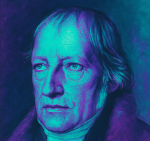
Between the Shaman of the Tungus, the European prelate who rules church and state, the Voguls, and the Puritans, on the one hand, and the man who listens to his own command of duty, on the other, the difference is not that the former make themselves slaves, while the latter is free, but that the former have their lord outside themselves, while the latter carries his lord in himself, yet at the same time is his own slave.
2 months 1 week ago
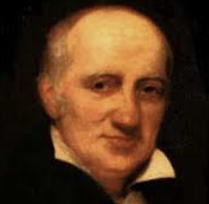
It is false that kings are entitled to the eminence they obtain. They possess no intrinsic superiority over their subjects. The line of distinction that is drawn is the offspring of pretense, an indirect means employed for effecting certain purposes, and not the language of truth. It tramples upon the genuine nature of things, and depends for its support upon this argument, 'that, were it not for impositions of a similar nature, mankind would be miserable.'
▼
Source
source
Book V, Ch. 6, "Of Subjects"

3 months 1 week ago
Habit is thus the enormous fly-wheel of society, its most precious conservative agent. It alone is what keeps us all within the bounds of ordinance, and saves the children of fortune from the envious uprisings of the poor.
▼
Source
source
Ch. 4
3 months 1 week ago
England's genius filled all measure Of heart and soul, of strength and pleasure, Gave to the mind its emperor, And life was larger than before: Nor sequent centuries could hit Orbit and sum of Shakespeare's wit. The men who lived with him became Poets, for the air was fame.
▼
Source
source
Solution, ll. 35-42
2 months 4 weeks ago
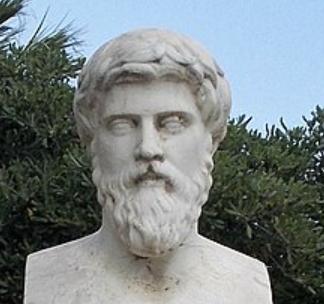
The great god Pan is dead.
▼
Source
source
Why the Oracles cease to give Answers (Tr. Goodwin)
2 days ago
On the whole, ought I not to rejoice that God was pleased to give me such a father; that from earliest years I had the example of a real man of God's own making continually before me? Let me learn of him. Let me write my books as he built his houses, and walk as blamelessly through this shadow world; if God so will, to rejoin him at last. Amen.

3 months 1 week ago
To talk about religion except in terms of human psychology is an irrelevance.
▼
Source
source
"One and Many," p. 3

3 months 2 weeks ago
It is good to rub and polish our brain against that of others.
▼
Source
source
Book I, Ch. 26
5 days ago
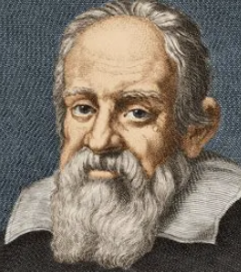
We seek not what God could have done but what He has done.... God could have caused birds to fly with bones of solid gold, with veins full of quicksilver, with flesh heavier than lead and very small and heavy wings, so as to better show His power ... but He wanted to make their bones, flesh and feathers very light ... to teach us that He likes simplicity and ease.
▼
Source
source
Notes in a copy of Jean-Baptiste Morin's "Famous and ancient problems of the earth's motion or rest, yet to be solved" (published 1631).

3 months 1 week ago
Money, then, appears as this overturning power both against the individual and against the bonds of society, etc., which claim to be essences in themselves. It transforms fidelity into infidelity, love into hate, hate into love, virtue into vice, vice into virtue, servant into master, master into servant, idiocy into intelligence and intelligence into idiocy.
▼
Source
source
"The Power of Money in Bourgeois Society" p. 105, The Marx-Engels Reader

1 month 1 week ago
It is the medium that shapes and controls the scale and form of human association and action.
▼
Source
source
(p. 9)
4 months ago
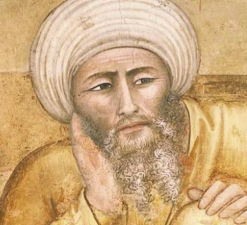
If we admit the existence of the prophetic mission, by putting the idea of possibility, which is in fact ignorance, in place of certainty, and make miracles a proof of the truth of man who claims to be a prophet it becomes necessary that they should not be used by a person, who says that they can be performed by others than prophets, as the Mutakallimun do.
2 months 4 days ago
The concept of labor is not peripheral in Hegel's system, but is the central notion through which he conceives the development of society. Driven by the insight that opened this dimension to him, Hegel describes the mode of integration prevailing in a commodity-producing society in terms that clearly fore-shadow Marx's critical approach.
▼
Source
source
P. 78
3 months 1 week ago
The unity is brought about by force.
▼
Source
source
Notebook I, The Chapter on Money, p. 70.

2 months 3 weeks ago
For this, to draw a right line from every point, to every point, follows the definition, which says, that a line is the flux of a point, and a right line an indeclinable and inflexible flow.
▼
Source
source
Book III. Concerning Petitions and Axioms.
CivilSimian.com created by AxiomaticPanic, CivilSimian, Kalokagathia