


2 months 3 days ago
The notion that one will not survive a particular catastrophe is, in general terms, a comfort since it is equivalent to abolishing the catastrophe.
▼
Source
source
The Message to the Planet (1989) p. 532.

4 months 1 week ago
I do not have much liking for the too famous existential philosophy, and, to tell the truth, I think its conclusions false.

8 months 3 days ago
A common goal...
Issue:
Because of subgrouping, physical separation, different types of genetics and other cultural factors, as well as limited isolation people subjectively deviate from their universal human necessity. They become aware of it when they are exposed to difference regularly.
Solution:
With controlled information delivery, as well as a clear ideological goal like universality, we can clear away the noise of chaos to understand deterministic goals directly.

2 months 1 week ago
How can a rational being be ennobled by anything that is not obtained by its own exertions?
▼
Source
source
Ch. 3

1 month 3 weeks ago
No revolution can ever succeed as a factor of liberation unless the MEANS used to further it be identical in spirit and tendency with the PURPOSES to be achieved. Revolution is the negation of the existing, a violent protest against man's inhumanity to man with all the thousand and one slaveries it involves. It is the destroyer of dominant values upon which a complex system of injustice, oppression, and wrong has been built up by ignorance and brutality. It is the herald of NEW VALUES, ushering in a transformation of the basic relations of man to man, and of man to society.

3 months 1 week ago
The human body is the best picture of the human soul.
▼
Source
source
Pt II, p. 178

1 month 1 week ago
Although it is commonly supposed that war making is the specific activity of nations, the blind rage that motivates war destroys the very social bonds that make nations possible. Of course, it can fortify the nationalism of a nation, producing a provisional coherence bolstered by war and enmity, but it also erodes the social relations that make politics possible. The power of destruction unleashed by war breaks social ties and produces anger, revenge, and distrust ("embitterment") such that it becomes unclear whether reparation is possible, undermining not only those relations that may have been built in the past, but also the future possibility of peaceful coexistence.
▼
Source
source
p. 154

1 month 4 weeks ago
But Don Quixote was converted. Yes - and died, poor soul. But the other, the real Don Quixote, he who remained on earth and lives among us with his spirit - this Don Quixote was not converted, this Don Quixote continues to incite us to make ourselves ridiculous, this Don Quixote must never die.

3 months 1 week ago
None shall rule but the humble, And none but Toil shall have.
▼
Source
source
Boston Hymn



1 month 1 week ago
The oppression of a majority by a minority, and the demoralization inevitably resulting from it, is a phenomenon that has always occupied me and has done so most particularly of late.
▼
Source
source
I

2 months 1 week ago
Under the pressure of the cares and sorrows of our mortal condition, men have at all times, and in all countries, called in some physical aid to their moral consolations - wine, beer, opium, brandy, or tobacco.
2 months 1 week ago
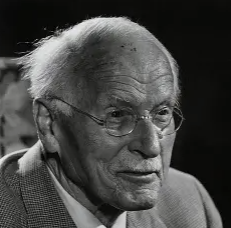
The whole nature of man presupposes woman, both physically and spiritually. His system is tuned into woman from the start, just as it is prepared for a quite definite world where there is water, light, air, salt, carbohydrates etc.
▼
Source
source
"Two Essays in Analytical Psychology" In CW 7: P. 188

2 months 3 weeks ago
Hope is the only good that is common to all men; those who have nothing else possess hope still.
▼
Source
source
A Dictionary of Thoughts (1908) by Tryon Edwards, p. 234
1 month 1 week ago
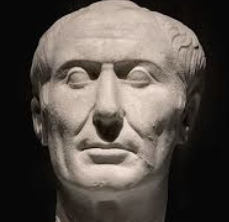
To forget the wrongs you receive, is to remedy them.
▼
Source
source
Maxim 383

1 month 3 weeks ago
Every intellectual revolution which has ever stirred humanity into greatness has been a passionate protest against inert ideas. Then, alas, with pathetic ignorance of human psychology, it has proceeded by some educational scheme to bind humanity afresh with inert ideas of its own fashioning.

3 months 1 week ago
There is wishful thinking in Hell as well as on Earth.
▼
Source
source
Preface

1 month 3 weeks ago
Culture is an instrument wielded by professors to manufacture professors, who, when their turn comes, will manufacture professors.
▼
Source
source
The Need for Roots, part 2: Uprootedness, chapter 1: Uprootedness in the Towns

3 months 3 weeks ago
The living force of his soul gained the day: on he passed far beyond the flaming walls of the world and traversed throughout in mind and spirit the immeasurable universe.
▼
Source
source
Book I, lines 72-74 (tr. H. A. J. Munro); of Epicurus.

3 months 1 week ago
It is the duty of every patriot to protect his country from its government.
▼
Source
source
Edward Abbey, "A patriot must always be ready to defend his country against his government." as written in "A Voice Crying in the Wilderness" (Vox Clamantis en Deserto): Notes from a Secret Journal (1990), ISBN 0312064888
2 months 2 days ago
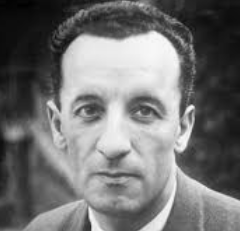
The philosopher will ask himself ... if the criticism we are now suggesting is not the philosophy which presses to the limit that criticism of false gods which Christianity has introduced into our history.
▼
Source
source
p. 47

2 weeks 6 days ago
The biology of suffering in intelligent agents is a deep underlying source of existential risk - and one that can potentially be overcome.
▼
Source
source
"Unsorted Postings", pre-2014

3 months 2 weeks ago
There is nothing in any object, consider'd in itself, which can afford us a reason for drawing a conclusion beyond it; [...] even after the observation of the frequent or constant conjunction of objects, we have no reason to draw any inference concerning any object beyond those of which we have had experience.
▼
Source
source
Part 3, Section 12
2 months 1 week ago
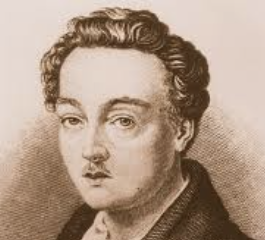
The death clock is ticking slowly in our breast, and each drop of blood measures its time, and our life is a lingering fever.
▼
Source
source
Act II.
4 months 1 week ago
Man cannot do without beauty, and this is what our era pretends to want to disregard. It steels itself to attain the absolute and authority; it wants to transfigure the world before having exhausted it, to set it to rights before having understood it. Whatever it may say, our era is deserting this world.

4 months 1 week ago
If a man knows what it is right to do, he does not require a formal reason. And a person that has been thus trained, either possesses these first principles already, or can easily acquire them.
1 month 1 week ago
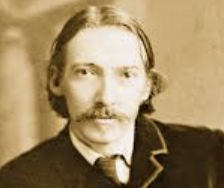
It is a sore thing to have laboured along and scaled the arduous hilltops, and when all is done, find humanity indifferent to your achievement. Hence physicists condemn the unphysical; financiers have only a superficial toleration for those who know little of stocks; literary persons despise the unlettered; and people of all pursuits combine to disparage those who have none. But though this is one difficulty of the subject, it is not the greatest. You could not be put in prison for speaking against industry, but you can be sent to Coventry for speaking like a fool. The greatest difficulty with most subjects is to do them well; therefore, please to remember this is an apology. It is certain that much may be judiciously argued in favour of diligence; only there is something to be said against it, and that is what, on the present occasion, I have to say.
▼
Source
source
An Apology for Idlers.
1 day ago
Time, subjectively, is the conscious sequence of perceptions.
▼
Source
source
Ch. 6 : Our Souls
2 months 1 week ago
I find that all my thoughts circle around God like the planets around the sun, and are as irresistibly attracted by Him. I would feel it to be the grossest sin if I were to oppose any resistance to this force.
▼
Source
source
Sources: David John Tacey (2007)

4 months 1 day ago
The superior man, while there is anything he has not studied, or while in what he has studied there is anything he cannot understand, Will not intermit his labor. While there is anything he has not inquired about, or anything in what he has inquired about which he does not know, he will not intermit his labor. While there is anything which he has not reflected on, or anything in what he has reflected on which he does not apprehend, he will not intermit his labor. While there is anything which he has not discriminated or his discrimination is not clear, he will not intermit his labor. If there be anything which he has not practiced, or his practice fails in earnestness, he will not intermit his labor. If another man succeed by one effort, he will use a hundred efforts. If another man succeed by ten efforts, he will use a thousand. Let a man proceed in this way, and, though dull, he will surely become intelligent; though weak, he will surely become strong.
2 months 2 weeks ago
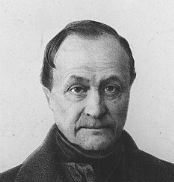
The mathematical thermology created by Fourier may tempt us to hope that, as he has estimated the temperature of the space in which we move, me may in time ascertain the mean temperature of the heavenly bodies: but I regard this order of facts as for ever excluded from our recognition. We can never learn their internal constitution, nor, in regard to some of them, how heat is absorbed by their atmosphere. We may therefore define Astronomy as the science by which we discover the laws of the geometrical and mechanical phenomena presented by the heavenly bodies.
▼
Source
source
Book II: Astronomy, Ch. I: General View
3 months 1 week ago
Ever from one who comes to-morrow Men wait their good and truth to borrow.
▼
Source
source
Merlin's Song, II

3 months 2 weeks ago
Great abuses in the world are begotten, or, to speak more boldly, all the abuses of the world are begotten, by our being taught to be afraid of professing our ignorance, and that we are bound to accept all things we are not able to refute: we speak of all things by precepts and decisions. The style at Rome was that even that which a witness deposed to having seen with his own eyes, and what a judge determined with his most certain knowledge, was couched in this form of speaking: "it seems to me." They make me hate things that are likely, when they would impose them upon me as infallible.
▼
Source
source
Ch. 12, tr. Cotton, rev. W. Carew Hazlitt, 1877

3 months 1 week ago
There is something in human history like retribution; and it is a rule of historical retribution that its instrument be forged not by the offended, but by the offender himself. The first blow dealt to the French monarchy proceeded from the nobility, not from the peasants. The Indian revolt does not commence with the ryots, tortured, dishonoured and stripped naked by the British, but with the sepoys, clad, fed and petted, fatted and pampered by them.
▼
Source
source
In an article written for the New York Daily Tribune, September 16, 1857

1 month 3 weeks ago
Catastrophic fatality abruptly switches over into salvation.
1 month 1 week ago
The world is a great place and stocked with wealth and beauty, and there is no limit to the rewards that may be offered. Such an one who would refuse a million of money may sell his honour for an empire or the love of a woman.
▼
Source
source
The Rajah's Diamond, The Adventure of Prince Florizel and a Detective.

1 month 1 week ago
One touch of nature makes the whole world tin.
1 month 3 weeks ago
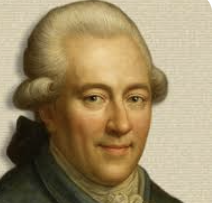
Prejudices are so to speak the mechanical instincts of men: through their prejudices they do without any effort many things they would find too difficult to think through to the point of resolving to do them.
▼
Source
source
A 58

3 months 2 weeks ago
In this consists the difference between the character of a miser and that of a person of exact economy and assiduity. The one is anxious about small matters for their own sake; the other attends to them only in consequence of the scheme of life which he has laid down to himself.
▼
Source
source
Chap. VI.
2 months 2 days ago
Montaigne puts not self-satisfied understanding but a consciousness astonished at itself at the core of human existence.
▼
Source
source
Signs, trans. R. McCleary (Evanston: 1964), p. 203
2 months 1 week ago
[France is] a Country where the people, along with their political servitude, have thrown off the Yoke of Laws and morals.
▼
Source
source
Letter to William Windham (27 September 1789), quoted in Alfred Cobban and Robert A. Smith (eds.), The Correspondence of Edmund Burke, Volume VI: July 1789-December 1791 (1967), p. 25

3 months 1 week ago
In this frame of mind it occurred to me to put the question directly to myself: "Suppose that all your objects in life were realized; that all the changes in institutions and opinions which you are looking forward to, could be completely effected at this very instant: would this be a great joy and happiness to you?" And an irrepressible self-consciousness distinctly answered, "No!" At this my heart sank within me: the whole foundation on which my life was constructed fell down. All my happiness was to have been found in the continual pursuit of this end. The end had ceased to charm, and how could there ever again be any interest in the means? I seemed to have nothing left to live for.
▼
Source
source
(pp. 133-134)

2 days ago
Our true Deity is Mechanism. It has subdued external Nature for us, and we think it will do all other things. We are Giants in physical power: in a deeper than metaphorical sense, we are Titans, that strive, by heaping mountain on mountain, to conquer Heaven also.
4 months 1 week ago
Every revolutionary ends as an oppressor or a heretic.

4 months 1 week ago
It is important to remember that the viciousness and wrongs of life stick out very plainly but that even at the worst times there is a great deal of goodness, kindness, and day-to-day decency that goes unnoticed and makes no headlines.
3 months 2 weeks ago
The more exquisite any good is, of which a small specimen is afforded us, the sharper is the evil, allied to it; and few exceptions are found to this uniform law of nature. The most sprightly wit borders on madness; the highest effusions of joy produce the deepest melancholy; the most ravishing pleasures are attended with the most cruel lassitude and disgust; the most flattering hopes make way for the severest disappointments. And, in general, no course of life has such safety (for happiness is not to be dreamed of) as the temperate and moderate, which maintains, as far as possible, a mediocrity, and a kind of insensibility, in every thing. As the good, the great, the sublime, the ravishing are found eminently in the genuine principles of theism; it may be expected, from the analogy of nature, that the base, the absurd, the mean, the terrifying will be equally discovered in religious fictions and chimeras.
▼
Source
source
Part XV - General corollary

3 months 2 days ago
Make thyself pure, 0 righteous man! Anyone in the world here below can win purity for himself, namely, when he cleanses himself with Good Thoughts, Good Words, and Good Deeds.
4 months 1 week ago
It is my own experience ... that commentators are far more ingenious at finding meaning than authors are at inserting it.
3 months 2 weeks ago
Labour not after riches first, and think thou afterwards wilt enjoy them. He who neglecteth the present moment, throweth away all that he hath. As the arrow passeth through the heart, while the warrior knew not that it was coming; so shall his life be taken away before he knoweth that he hath it.
CivilSimian.com created by AxiomaticPanic, CivilSimian, Kalokagathia