


3 months 2 weeks ago
Some impose upon the world that they believe that which they do not; others, more in number, make themselves believe that they believe, not being able to penetrate into what it is to believe.
▼
Source
source
Book II, Ch. 12. Apology for Raimond Sebond

3 months 2 weeks ago
IV. Every tax ought to be contrived as both to take out and to keep out of the pockets of the people as little as possible, over and above what it brings into the public treasury of the state.
▼
Source
source
Chapter II, Part II, p. 893.

1 month 3 weeks ago
The ideas of Freud were popularized by people who only imperfectly understood them, who were incapable of the great effort required to grasp them in their relationship to larger truths, and who therefore assigned to them a prominence out of all proportion to their true importance.
▼
Source
source
Ch. 28, June 3, 1943.

3 months 1 week ago
Scott does this still better than Wordsworth, and a very second-rate landscape does it more effectually than any poet. What made Wordsworth's poems a medicine for my state of mind, was that they expressed, not mere outward beauty, but states of feeling, and of thought coloured by feeling, under the excitement of beauty. They seemed to be the very culture of the feelings, which I was in quest of. In them I seemed to draw from a Source of inward joy, of sympathetic and imaginative pleasure, which could be shared in by all human beings; which had no connexion with struggle or imperfection, but would be made richer by every improvement in the physical or social condition of mankind. From them I seemed to learn what would be the perennial sources of happiness, when all the greater evils of life shall have been removed. And I felt myself at once better and happier as I came under their influence.
▼
Source
source
(pp. 147-148)

1 month 3 weeks ago
Not all women, in fact, very few, have had the good fortune to live and work among women and men actively involved in the feminist movement. Many of us live in circumstances and environments where we must engage in feminist struggle alone, with only occasional support and affirmation.
▼
Source
source
Acknowledgments.
3 months 1 day ago
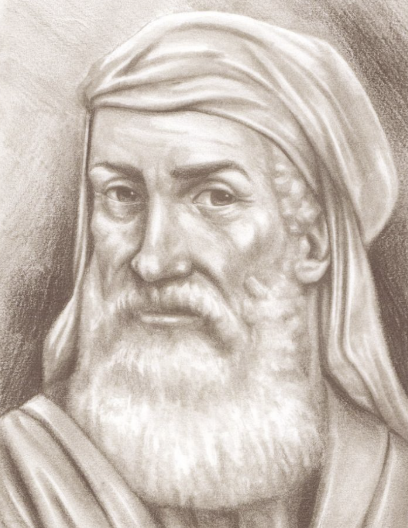
Nothing of the All is either empty or superfluous.
▼
Source
source
fr. 13

1 month 3 weeks ago
It was Rousseau who was largely responsible for the problem by giving currency to the idea that freedom can exist without responsibility and discipline.
▼
Source
source
Introductory Essay, p. xx

1 week 1 day ago
If an action ... involves little profit but much righteousness, do it.
▼
Source
source
Readings in Classical Chinese Philosophy (2001), p. 263

3 months 1 week ago
Those who forget good and evil and seek only to know the facts are more likely to achieve good than those who view the world through the distorting medium of their own desires.
▼
Source
source
Ch. 1: Mysticism and Logic

2 days ago
Considered as the last finish of education, or of human culture, worth and acquirement, the art of speech is noble, and even divine; it is like the kindling of a Heaven's light to show us what a glorious world exists, and has perfected itself, in a man.

2 months 1 week ago
As incompetent in life as in death, I loathe myself and in this loathing I dream of another life, another death. And for having sought to be a sage such as never was, I am only a madman among the mad.

3 months 3 weeks ago
So rolling time changes the seasons of things. What was of value, becomes in turn of no worth.
▼
Source
source
Book V, lines 1276-1277 (tr. Bailey)

3 months 4 weeks ago
For creation is not a change, but that dependence of the created existence on the principle from which it is instituted, and thus is of the genus of relation; whence nothing prohibits it being in the created as in the subject. Creation is thus said to be a kind of change, according to the way of understanding, insofar as our intellect accepts one and the same thing as not existing before and afterwards existing.
▼
Source
source
II, 18, 2 (see also Summa Theologica I, q. 45, art. 3 ad 2)

3 months 1 week ago
'Our kingdom go' is the necessary and unavoidable corollary of 'Thy kingdom come.' For the more there is of self, the less there is of God.
▼
Source
source
Chapter VI - Mortification, Non-Attachment, Right Livelihood
3 weeks ago
Treat your kid like a darling for the first five years. For the next five years, scold them. By the time they turn sixteen, treat them like a friend. Your grown up children are your best friends.
1 month 3 weeks ago
There is absolute truth in anarchism and it is to be seen in its attitude to the sovereignty of the state and to every form of state absolutism. ... The religious truth of anarchism consists in this, that power over man is bound up with sin and evil, that a state of perfection is a state where there is no power of man over man, that is to say, anarchy. The Kingdom of God is freedom and the absence of such power... the Kingdom of God is anarchy.
▼
Source
source
Slavery and Freedom (1939), p. 147

3 months 2 days ago
Thus to the Lord doth Asha, the Truth, reply:"No guide is known who can shelter the world from woe, None who knows what moves and works Thy lofty plans."
▼
Source
source
Ahunuvaiti Gatha; Yasna 29, 3.

3 months 1 week ago
For a large class of cases - though not for all - in which we employ the word meaning it can be explained thus: the meaning of a word is its use in the language.
▼
Source
source
§ 43, this has often been quoted as simply: The meaning of a word is its use in the language.

2 months 1 week ago
We must all obey the great law of change. It is the most powerful law of nature, and the means perhaps of its conservation.
▼
Source
source
Letter to Sir Hercules Langrishe

4 months 1 week ago
But the greatest thing by far is to have a command of metaphor. This alone cannot be imparted by another; it is the mark of genius, for to make good metaphors implies an eye for resemblances.

3 months 2 weeks ago
Man can, indeed, act contrarily to the decrees of God, as far as they have been written like laws in the minds of ourselves or the prophets, but against that eternal decree of God, which is written in universal nature, and has regard to the course of nature as a whole, he can do nothing.
▼
Source
source
Ch. 2, Of Natural Right
2 days ago
A poet without love were a physical and metaphysical impossibility.
▼
Source
source
Burns (1828).

2 months 4 days ago
The kingdom of heaven is like to a grain of mustard seed, which a man took, and sowed in his field: Which indeed is the least of all seeds: but when it is grown, it is the greatest among herbs, and becometh a tree, so that the birds of the air come and lodge in the branches thereof.
▼
Source
source
13:31-32 (KJV)

1 month 1 week ago
Some teachers of mankind - as Plato... the first Christians, the orthodox Muslims, and the Buddhists - have gone so far as to repudiate art. ...[They consider it] so highly dangerous in its power to infect people against their wills, that mankind will lose far less by banishing all art than by tolerating each and every art. ...such people were wrong in repudiating all art, for they denied that which cannot be denied - one of the indispensable means of communication, without which mankind could not exist. ...Now there is only fear, lest we should be deprived of any pleasures art can afford, so any type of art is patronized. And I think the last error is much grosser than the first and that its consequences are far more harmful.

1 month 1 week ago
What worries me about religion is that it teaches people to be satisfied with not understanding the world they live in.
▼
Source
source
Heart Of The Matter: God Under The Microscope | BBC
2 months 3 days ago
The artist in realizing his own individuality reveals potentialities hitherto unrealized. The revelation is the inspiration of other individuals to make the potentialities real, for it is not sheer revolt against things as they are which stirs human endeavor to its depth, but vision of what might be and is not. Subordination of the artists to any special cause no matter how worthy does violence not only to the artist but to the living source of a new and better future.

1 month 1 week ago
At the very high speed of living, everybody needs a new career and a new job and a totally new personality every ten years.

3 months 1 week ago
Mr. Sensible learned only catchwords from them. He could talk like Epicurus of spare diet, but he was a glutton. He had from Montaigne the language of friendship, but no friend.
▼
Source
source
Pilgrim's Regress 176
3 months 6 days ago
If we compare the third-person attitude of someone who simply says how things stand (this is the attitude of the scientist, for example) with the performative attitude of someone who tries to understand what is said to him (this is the attitude of the interpreter, for example), the implications ... become clear. ... First, interpreters relinquish superiority that observers have by virtue of their privileged position, in that they themselves are drawn, at least potentially, into negotiations about the meaning and validity of utterances. By taking part in communicative action, they accept in principle the same status as those whose utterances they are trying to understand. ... It is impossible to decide a priori who is to learn from whom.
▼
Source
source
p. 26
1 month 5 days ago
My life was not useless; I gave important truths to the world, and it was only for want of understanding that they were disregarded. I have been ahead of my time.
▼
Source
source
Deathbed statement (November 1858), in response to a church minister who asked if he regretted wasting his life on fruitless projects; as quoted in Harold Hill : A People's History
1 month 2 weeks ago
To dissimulate is to pretend not to have what one has. To simulate is to feign to have what one doesn't have. One implies a presence, the other an absence. But it is more complicated than that because simulating is not pretending: "Whoever fakes an illness can simply stay in bed and make everyone believe he is ill. Whoever simulates an illness produces in himself some of the symptoms" (Littré). Therefore, pretending, or dissimulating, leaves the principle of reality intact: the difference is always clear, it is simply masked, whereas simulation threatens the difference between the "true" and the "false," the "real" and the "imaginary."
▼
Source
source
"The Precession of Simulacra," p. 3
3 months 2 weeks ago
So it is with minds. Unless you keep them busy with some definite subject that will bridle and control them, they throw themselves in disorder hither and yon in the vague field of imagination. ..And there is no mad or idle fancy that they do no bring forth in the agitation.

Just now
There should be 2 systems. One for needs and one for wants. We shouldn't have to compete for needs, and we shouldn't expect the things we want. An ideal system would definitely be a seriously regulated capitalism with an uncompromised safety net that we focus on with automation and AI. But, those with just want those without to die. In the end, they will lose.

3 months 1 week ago
The only possible solution which will preserve Germany's honor and Germany's interest is, we repeat, a war with Russia.
▼
Source
source
Marx-Engels Gesamt-Ausgabe, Erste Abteilung, Volume 7, March to December 1848, p. 304.
3 months 1 week ago
There are those who blame the Press, but in this I think they are mistaken. The Press is such as the public demands, and the public demands bad newspapers because it has been badly educated.
▼
Source
source
p. 133

4 months 1 day ago
The wise find pleasure in water; the virtuous find pleasure in hills. The wise are active; the virtuous are tranquil. The wise are joyful; the virtuous are long-lived.
3 days ago
Benevolence is the tranquil habitation of man, and righteousness is his straight path.
▼
Source
source
Justice and Truth, no. 100

2 months 1 week ago
We too often forget that not only is there "a soul of goodness in things evil," but very generally also, a soul of truth in things erroneous.
▼
Source
source
Pt. I, The Unknowable; Ch. I, Religion and Science; quoting from "There is some soul of goodness in things evil / Would men observingly distil it out", William Shakespeare, Henry V, act iv. sc. i
1 month 4 weeks ago
Horace and Aristotle told us of the virtues of their fathers, and the vices of their own time, and authors down through the centuries have told us the same. If they were right, men would now be bears.

3 months 1 week ago
That the outer man is a picture of the inner, and the face an expression and revelation of the whole character, is a presumption likely enough in itself, and therefore a safe one to go on; borne out as it is by the fact that people are always anxious to see anyone who has made himself famous .... Photography ... offers the most complete satisfaction of our curiosity.
▼
Source
source
Vol. 2, Ch. 29, § 377
2 months 1 week ago
We scarce ever had a prince, who by fraud, or violence, had not made some infringement on the constitution. We scarce ever had a parliament which knew, when it attempted to set limits to the royal authority, how to set limits to its own. Evils we have had continually calling for reformation, and reformations more grievous than any evils. Our boasted liberty sometimes trodden down, sometimes giddily set up, and ever precariously fluctuating and unsettled; it has only been kept alive by the blasts of continual feuds, wars, and conspiracies.
1 week ago
Nowhere is there more constancy and more unanimity than among the French to subordinate that sex which they pretend to honor so highly.
▼
Source
source
The Theory of Social Organization
3 months 1 week ago
But ordinary language is all right.
▼
Source
source
p. 28

1 month 3 weeks ago
Those who will not worship at the shrine of money, need not hope for recognition. On the other hand, they will also not have to think other people's thoughts or wear other people's political clothes. They will not have to proclaim as true that which is false, nor praise that as humanitarian which is brutal.
2 months 1 week ago
History proves nothing because it contains everything.
3 days ago
It is a course which perhaps would not have been necessary had it been possible to form a state composed of wise men, but as every multitude is fickle, full of lawless desires, unreasoned passion, and violent anger, the multitude must be held in by invisible terrors and suchlike pageantry. For this reason I think, not that the ancients acted rashly and at haphazard in introducing among the people notions concerning the gods and beliefs in the terrors of hell, but that the moderns are most rash and foolish in banishing such beliefs.
CivilSimian.com created by AxiomaticPanic, CivilSimian, Kalokagathia