

2 months 1 week ago
It was Rudolf Carnap's dream for the last three decades of his life to show that science proceeds by a formal syntactic method; today no one to my knowledge holds out any hope for that project.
▼
Source
source
Hilary Putnam, in: James Conant, Urszula M. Zeglen (2012) Hilary Putnam: Pragmatism and Realism. p. 14

4 months 2 days ago
The bitterest tragic element in life to be derived from an intellectual source is the belief in a brute Fate or Destiny.
▼
Source
source
"The Tragic", p. 217. From The Dial (April 1844) p. 515
1 month 4 weeks ago
If you want to do evil, science provides the most powerful weapons to do evil; but equally, if you want to do good, science puts into your hands the most powerful tools to do so. The trick is to want the right things, then science will provide you with the most effective methods of achieving them.
2 months 2 weeks ago
Among most Christians the Old Testament is little read in comparison to the New Testament. Furthermore, much of what is read is often distorted by prejudice. Frequently the Old Testament is believed to express exclusively the principles of justice and revenge, in contrast to the New Testament, which represents those of love and mercy; even the sentence, "Love your neighbor as yourself," is thought by many to derive from the New, not the Old Testament. Or the Old Testament is believed to have been written exclusively in the spirit of narrow nationalism and to contain nothing of supranational universalism so characteristic of the New Testament.
▼
Source
source
You Shall Be as Gods: A Radical Interpretation of the Old Testament and Its Tradition (1966) "Introduction"

4 months 1 week ago
I speak the truth, not my fill of it, but as much as I dare speak; and I dare to do so a little more as I grow old.
▼
Source
source
Ch. 2

2 months 4 weeks ago
Only the idiot is equipped to breathe.

3 months 1 week ago
Coulson Turnbull in Life and Teachings of Giordano Bruno : Philosopher, Martyr, Mystic 1548 - 1600 (1913), p. 41

4 months 3 days ago
Whenever I have read any part of the Vedas, I have felt that some unearthly and unknown light illuminated me. In the great teaching of the Vedas, there is no touch of sectarianism. It is of all ages, climes and nationalities and is the royal road for the attainment of the Great Knowledge. When I am at it, I feel that I am under the spangled heavens of a summer night.
▼
Source
source
Quoted in Bansi Pandit, The Hindu Mind (B & V Enterprises, 1996) p. 307
1 month 1 week ago
In future, nerve cell responsiveness to naturally occurring endogenous opioids can be increased via receptor enrichment in the brain too. In principle, we can modulate their lifelong "overexpression", intermittently heightened (or gently diminished) by whatever kinds of personal and environmental contingencies we judge fit. Both functionally and anatomically, our reward pathways can be made "bigger and better". But intelligent emotional self-mastery will involve re-engineering the mind-brain so we derive the most intense rewards from activities we deem most lastingly worthwhile: i.e. prioritising our higher-order desires over legacy first-order appetites. Natural selection has "encephalised" our emotions to benefit our genes. Rational agents can "re-encephalise" our emotions to benefit us.
▼
Source
source
Utopian Neuroscience, BLTC Research, 2019

5 months 5 days ago
We produce these representations in and from ourselves with the same necessity with which the spider spins. If we are forced to comprehend all things only under these forms, then it ceases to be amazing that in all things we actually comprehend nothing but these forms. For they must all bear within themselves the laws of number, and it is precisely number which is most astonishing in things. All that conformity to law, which impresses us so much in the movement of the stars and in chemical processes, coincides at bottom with those properties which we bring to things. Thus it is we who impress ourselves in this way
3 months 2 days ago
That is a long word: forever!
▼
Source
source
Act I.

3 months 4 weeks ago
Resting on your laurels is as dangerous as resting when you are walking in the snow. You doze off and die in your sleep.
▼
Source
source
p. 35e
2 months 3 weeks ago
The man with the clear head is the man who frees himself from those fantastic "ideas" and looks life in the face, realises that everything in it is problematic, and feels himself lost. As this is the simple truth - that to live is to feel oneself lost - he who accepts it has already begun to find himself, to be on firm ground. Instinctively, as do the shipwrecked, he will look round for something to which to cling, and that tragic, ruthless glance, absolutely sincere, because it is a question of his salvation, will cause him to bring order into the chaos of his life.
▼
Source
source
Chapter XIV: Who Rules The World?
4 months 3 days ago
A poem is one undivided unimpeded expression fallen ripe into literature, and it is undividedly and unimpededly received by those for whom it was matured.

3 months 3 weeks ago
Bear no improper envy, so that thy life may not become tasteless.
3 months 2 days ago
No nation which has sunk into this state of dependence can raise itself out of it by the means which have usually been adopted hitherto. Since resistance was useless to it when it was still in possession of all its powers, what can such resistance avail now that it has been deprived of the greater part of them?
▼
Source
source
Introduction p. 9-10
4 months 1 week ago
I find that the best goodness I have has some tincture of vice.
▼
Source
source
Ch. 20
2 months 3 weeks ago
The French symbolists had a special term to express their love for things that had lost their objective significance, namely, 'spleen.' The conscious, challenging arbitrariness in the choice of objects, its 'absurdity' and 'perverseness,' as if by a silent gesture discloses the irrationality of utilitarian logic, which it then slaps in the face in order to demonstrate its inadequacy with regard to human experience. And while making it conscious, by this shock, of the fact that it forgets the subject, the gesture simultaneously expresses the subject's sorrow over his inability to achieve an objective order. Twentieth-century society is not troubled by such inconsistencies. For it, meaning can be achieved in only one way-service for a purpose.
▼
Source
source
p. 38.

4 months 4 weeks ago
When the imagination sleeps, words are emptied of their meaning: a deaf population absent-mindedly registers the condemnation of a man. ... there is no other solution but to speak out and show the obscenity hidden under the verbal cloak.

3 weeks 6 days ago
The idea of universal human dignity ultimately comes out of Christianity... the view that all human beings are equal in the sight of God because they have the capacity for moral choice. As Western thought developed in the 17th-18th centuries, this took on a secular form under thinkers like Jean-Jacques Rousseau or Immanuel Kant or Georg Hegel, who argued that human equality is... based on human autonomy.
▼
Source
source
11:12
3 months 4 weeks ago
Enjoyment of the work consists in participation in the creative state of the artist.
▼
Source
source
p. 117
1 week 6 days ago
Reverence for life, veneratio vitæ, is the most direct and at the same time the profoundest achievement of my will-to-live. In reverence for life my knowledge passes into experience. The simple world- and life-affirmation which is within me just because I am will-to-live has, therefore, no need to enter into controversy with itself, if my will-to-live learns to think and yet does not understand the meaning of the world. In spite of the negative results of knowledge, I have to hold fast to world- and life-affirmation and deepen it. My life carries its own meaning in itself. This meaning lies in my living out the highest idea which shows itself in my will-to-live, the idea of reverence for life. With that for a starting-point I give value to my own life and to all the will-to-live which surrounds me, I persevere in activity, and I produce values.

2 months 3 weeks ago
Art is not the possession of the few who are recognized writers, painters, musicians; it is the authentic expression of any and all individuality. Those who have the gift of creative expression in unusually large measure disclose the meaning of the individuality of others to those others. In participating in the work of art, they become artists in their activity. They learn to know and honor individuality in whatever form it appears. The fountains of creative activity are discovered and released. The free individuality which is the source of art is also the final source of creative development in time.
4 months 4 weeks ago
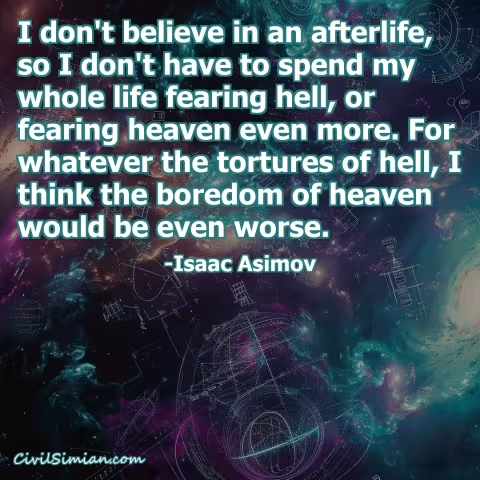
Every ideology is contrary to human psychology.
1 month 2 weeks ago
There is a strong affinity between the forces of empire and a politics of hate that justifies policies of domination and exclusion. So long as people's attention is focused on fear and hatred of foreigners or members of a particular religious group, such as Muslims, they are distracted from organizing to deal with the system of institutional domination and exploitation that is the real source of their insecurity.
1 week 6 days ago
Socrates' way of life is the consequence of his recognition that we can know what it is that we do not know about the most important things and that we are by nature obliged to seek that knowledge.
▼
Source
source
Western Civ, p. 18.
3 months 4 weeks ago
You could attach prices to thoughts. Some cost a lot, some a little. And how does one pay for thoughts? The answer, I think, is: with courage.
▼
Source
source
p. 52e

3 months 3 days ago
The arrogance of age must submit to be taught by youth.
▼
Source
source
Letter to Frances Burney
4 months 2 weeks ago
The whole title by which you possess your property, is not a title of nature but of a human institution.
3 days ago
The entire Earth, with her trees and her waters, with her animals, with her men and her gods, calls from within your breast. Earth rises up in your brains and sees her entire body for the first time.
2 months 4 weeks ago
In fact, this infinitesimally spread-out consciousness is a direct feeling of its contents as spread out. In an infinitesimal interval we directly perceive the temporal sequence of its beginning, middle, and end... Now upon this interval follows another, whose beginning is the middle of the former, and whose middle is the end of the former. Here we have an immediate perception of the temporal sequence of its beginning, middle and end, or say, of the second, third, and fourth instants.
2 months 4 weeks ago
The Protestant churches generally hold that the elements of the sacrament are flesh and blood only in a tropical sense; they nourish our souls as meat and the juice of it would our bodies. But the Catholics maintain that they are literally just that; although they possess all the sensible qualities of wafer-cakes and diluted wine. But we can have no conception of wine except what may enter into a belief, either -
2 months ago
Society in shipwreck is a comfort to all.
▼
Source
source
Maxim 144
2 months 3 weeks ago
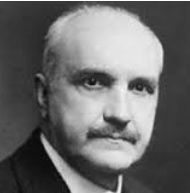
Prosperity, both for individuals and for states, means possessions; and possessions mean burdens and harness and slavery; and slavery for the mind, too, because it is not only the rich man's time that is pre-empted, but his affections, his judgement, and the range of his thoughts.
▼
Source
source
"The Irony of Liberalism"

2 months 2 weeks ago
For this is our central human problem: that we are almost constantly the victims of our emotions, always being swept up and down on a kind of inner-switchback. We possess a certain control over them; we can 'direct our thoughts' -- or feelings -- in such a way as to intensify them. This is certainly our most remarkable human characteristic: imagination. Animals require actual physical stimuli to trigger their experience. A man can retreat into a book -- or a daydream -- and live through certain experiences quite independent of the physical world. He can even, for example, imagine a sexual encounter, and not only experience all the appropriate physical responses, but even the sexual climax. Such a curious ability is far beyond the power of any animal.
▼
Source
source
p. 23
3 months 4 weeks ago
So we do sometimes think because it has been found to pay.
▼
Source
source
§ 470
2 months 4 weeks ago
There are no arguments. Can anyone who has reached the limit bother with arguments, causes, effects, moral considerations, and so forth? Of course not. For such a person there are only unmotivated motives for living. On the heights of despair, the passion for the absurd is the only thing that can still throw a demonic light on chaos. When all the current reasons - moral, esthetic, religious, social, and so on - no longer guide one's life, how can one sustain life without succumbing to nothingness? Only by a connection with the absurd, by love of absolute uselessness, loving something which does not have substance but which simulates an illusion of life. I live because the mountains do not laugh and the worms do not sing.
3 months 4 weeks ago
A serious and good philosophical work could be written consisting entirely of jokes.
▼
Source
source
As quoted in "A View from the Asylum" in Philosophical Investigations from the Sanctity of the Press (2004), by Henry Dribble, p. 87
2 months 3 weeks ago
Calvin's theocentric irrationalism eventually revealed itself as the cunning to technocratic reason which had to shape its human material. Misery and the poor laws did not suffice to drive men into the workshops of the early capitalistic era. The new spirit helped to supplement external pressures with a concern for wife and child to which the moral autonomy of the introverted subject in reality was tantamount.
▼
Source
source
p. 34.
3 months ago
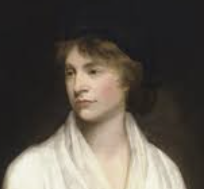
It is vain to expect virtue from women till they are in some degree independent of men; nay, it is vain to expect that strength of natural affection which would make them good wives and mothers. Whilst they are absolutely dependent on their husbands they will be cunning, mean, and selfish.
▼
Source
source
Ch. 9

4 months 1 day ago
Lord, you have cursed Cain and Cain's children: thy will be done. You have allowed men's hearts to be corrupted, that their intentions be rotten, that their actions putrefy and stink: thy will be done.
▼
Source
source
Act 1
1 month 2 weeks ago
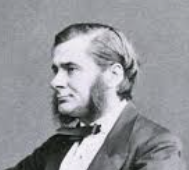
The whole analogy of natural operations furnishes so complete and crushing an argument against the intervention of any but what are termed secondary causes, in the production of all the phenomena of the universe; that, in view of the intimate relations between Man and the rest of the living world; and between the forces exerted by the latter and all other forces, I can see no excuse for doubting that all are co-ordinated terms of Nature's great progression, from the formless to the formed-from the inorganic to the organic-from blind force to conscious intellect and will.
▼
Source
source
Ch.1 (1884 edition) p. 28
4 months 3 days ago
Politics is, as it were, the gizzard of society, full of grit and gravel, and the two political parties are its two opposite halves, - sometimes split into quarters, it may be, which grind on each other. Not only individuals, but States, have thus a confirmed dyspepsia, which expresses itself, you can imagine by what sort of eloquence. Thus our life is not altogether a forgetting, but also, alas! to a great extent, a remembering of that which we should never have been conscious of, certainly not in our waking hours. Why should we not meet, not always as dyspeptics, to tell our bad dreams, but sometimes as eupeptics, to congratulate each other on the ever glorious morning? I do not make an exorbitant demand, surely.
▼
Source
source
p. 495
2 months ago
We should provide in peace what we need in war.
▼
Source
source
Maxim 709

4 months 4 days ago
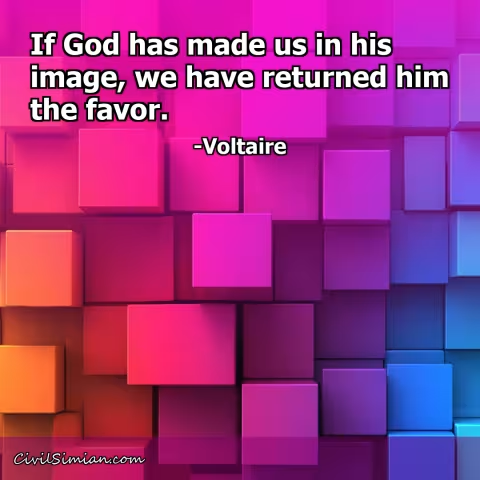
Morality is everywhere the same for all men, therefore it comes from God; sects differ, therefore they are the work of men.
▼
Source
source
"Atheist", 1764
2 months 1 week ago
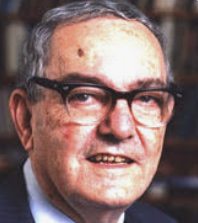
We are organization watchers in our role as citizens. Increasing attention has been fixed in recent years upon the functioning of society's organizations: its large corporations and its governments. Hence this could also be described as a book for Everyman-for it proposes a way of thinking about organizational issues that concern us all.
▼
Source
source
Simon (1975, p. ix); As cited in Stefano Franchi(2006) "Herbert simon, anti-philosopher." Computing and Philosophy. p. 34.
2 days ago
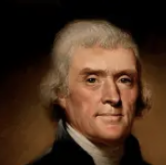
Every man should be protected in his lawful acts, and be certain that no ex post facto law shall punish or endamage him for them. ...The sentiment that ex post facto laws are against natural right, is so strong in the United States, that few, if any, of the State constitutions have failed to proscribe them. The federal constitution indeed interdicts them in criminal cases only; but they are equally unjust in civil as in criminal cases, and the omission of a caution which would have been right, does not justify the doing what is wrong. Nor ought it to be presumed that the legislature meant to use a phrase in an unjustifiable sense, if by rules of construction it can be ever strained to what is just.
CivilSimian.com created by AxiomaticPanic, CivilSimian, Kalokagathia