


4 months 3 days ago
The greatest compliment that was ever paid me was when one asked me what I thought, and attended to my answer. I am surprised, as well as delighted, when this happens, it is such a rare use he would make of me, as if he were acquainted with the tool.
▼
Source
source
p. 484

4 months 4 weeks ago
A man is more a man through the things he keeps to himself than through those he says.

4 months 2 days ago
The sentiment of reality can indeed attach itself so strongly to our object of belief that our whole life is polarized through and through, so to speak, by its sense of the existence of the thing believed in, and yet that thing, for the purpose of definite description, can hardly be said to be present to our mind at all.
▼
Source
source
Lecture III, "The Reality of the Unseen"

2 days ago
Whether the succeeding generation is to be more virtuous than their predecessors, I cannot say; but I am sure they will have more worldly wisdom, and enough, I hope, to know that honesty is the first chapter in the book of wisdom.
▼
Source
source
Letter to Nathaniel Macon
3 days ago
We have seen the highest circle of spiraling powers. We have named this circle God. We might have given it any other name we wished: Abyss, Mystery, Absolute Darkness, Absolute Light, Matter, Spirit, Ultimate Hope, Ultimate Despair, Silence. But we have named it God because only this name, for primordial reasons, can stir our hearts profoundly. And this deeply felt emotion is indispensable if we are to touch, body with body, the dread essence beyond logic. Within this gigantic circle of divinity we are in duty bound to separate and perceive clearly the small, burning arc of our epoch. Unsourced variant or paraphrase: ... We might have given it any name we wished: Abyss, Absolute Darkness, Absolute Light, Matter, Spirit, Ultimate Hope, Ultimate Despair, Silence. But never forget, it is we who give it a name.
4 months 4 days ago
Spinoza says that if a stone which has been projected through the air, had consciousness, it would believe that it was moving of its own free will. I add this only, that the stone would be right. The impulse given it is for the stone what the motive is for me, and what in the case of the stone appears as cohesion, gravitation, rigidity, is in its inner nature the same as that which I recognise in myself as will, and what the stone also, if knowledge were given to it, would recognise as will.

3 months 1 week ago
The territorial aristocracy of former ages was either bound by law, or thought itself bound by usage, to come to the relief of its serving-men and to relieve their distresses. But the manufacturing aristocracy of our age first impoverishes and debases the men who serve it and then abandons them to be supported by the charity of the public.
▼
Source
source
Book Two, Chapter XX.

2 months 2 weeks ago
The vitality of the ordinary members of society is dependent on its Outsiders.
▼
Source
source
Chapter Three, The Romantic Outsider

2 months 2 days ago
In former times the chief method of justifying the use of violence and thereby infringing the law of love was by claiming a divine right for the rulers: the Tsars, Sultans, Rajahs, Shahs, and other heads of states. But the longer humanity lived the weaker grew the belief in this peculiar, God-given right of the ruler. That belief withered in the same way and almost simultaneously in the Christian and the Brahman world, as well as in Buddhist and Confucian spheres, and in recent times it has so faded away as to prevail no longer against man's reasonable understanding and the true religious feeling. People saw more and more clearly, and now the majority see quite clearly, the senselessness and immorality of subordinating their wills to those of other people just like themselves, when they are bidden to do what is contrary not only to their interests but also to their moral sense.
▼
Source
source
III

4 months 3 weeks ago
In all things success depends on previous preparation, and without such previous preparation there is sure to be failure. If what is to be spoken be previously determined, there will be no stumbling. If affairs be previously determined, there will be no difficulty with them. If one's actions have been previously determined, there will be no sorrow in connection with them. If principles of conduct have been previously determined, the practice of them will be inexhaustible.
4 months 3 days ago
Stupidity is much the same all the world over. A stupid person's notions and feelings may confidently be inferred from those which prevail in the circle by which the person is surrounded. Not so with those whose opinions and feelings are an emanation from their own nature and faculties.
▼
Source
source
Ch. 1


2 months 4 weeks ago
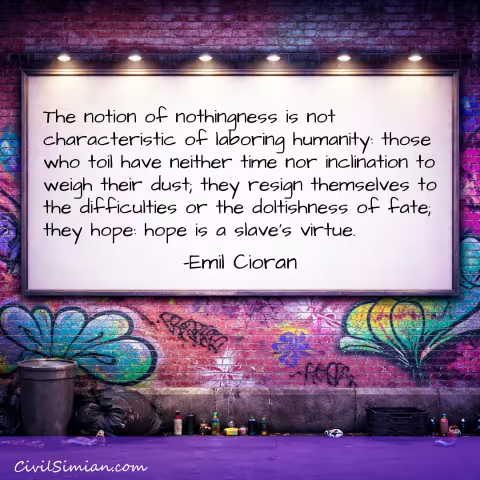
The more you live, the less useful it seems to have lived.

4 months 3 days ago
All that is solid melts into air, all that is holy is profaned, and man is at last compelled to face with sober senses, his real conditions of life, and his relations with his kind.
▼
Source
source
Section 1, paragraph 18, lines 12-14.
3 months 3 weeks ago
It is easy for us to criticize the prejudices of our grandfathers, from which our fathers freed themselves. It is more difficult to search for prejudices among the beliefs and values that we hold.
▼
Source
source
Ch. 3: Equality for Animals? (p. 49)

4 months 5 days ago
As for the Soothsayer, although I am certain no one feels the true beauties of that work better than I, I am far from finding these beauties in the same places as the infatuated public does. They are not the products of study and knowledge, but rather are inspired by taste and sensitivity.
▼
Source
source
First Dialogue; translated by Judith R. Bush, Christopher Kelly, Roger D. Masters
1 week 6 days ago
This is the real secret of life-to be completely engaged with what you are doing in the here and now. And instead of calling it work, realize it is play.
▼
Source
source
The Essence of Alan Watts

4 months 1 week ago
Death is a friend of ours; and he that is not ready to entertain him is not at home.
▼
Source
source
An Essay on Death, published in The Remaines of the Right Honourable Francis Lord Verulam (1648), which may not have been written by Bacon

4 months 4 days ago
In every province, the chief occupations, in order of importance, are lovemaking, malicious gossip, and talking nonsense.
3 months 1 week ago
The hatred that men bear to privilege increases in proportion as privileges become fewer and less considerable, so that democratic passions would seem to burn most fiercely just when they have least fuel. I have already given the reason for this phenomenon. [all conditions are unequal, no inequality is so great as to offend the eye, whereas the slightest dissimilarity is odious in the midst of general uniformity; the more complete this uniformity is, the more insupportable the sight of such a difference becomes.] Hence it is natural that the love of equality should constantly increase together with equality itself, and that it should grow by what it feeds on.
▼
Source
source
Chapter III.
2 days ago
Never put off till tomorrow what you can do to-day.

1 month 2 weeks ago
We share this planet, our home, with millions of species. Justice and sustainability both demand that we do not use more resources than we need. Restraint in resource use and living within nature's limits are preconditions for social justice. The commons are where justice and sustainability converge, where ecology and equity meet. The survival of pastures and forests as community property, or of a common good like a stable ecosystem, is only possible with social organizations with checks and controls on the use of resources built into their principles. The breakdown of a community, with the associated erosion of concepts of joint ownership and responsibility, can trigger the degradation of common resources.
▼
Source
source
(p.50)

2 months 3 weeks ago
Woe unto thee, Chorazin! woe unto thee, Bethsaida! for if the mighty works, which were done in you, had been done in Tyre and Sidon, they would have repented long ago in sackcloth and ashes. But I say unto you, It shall be more tolerable for Tyre and Sidon at the day of judgment, than for you. And thou, Capernaum, which art exalted unto heaven, shalt be brought down to hell: for if the mighty works, which have been done in thee, had been done in Sodom, it would have remained until this day. But I say unto you, That it shall be more tolerable for the land of Sodom in the day of judgment, than for thee.
▼
Source
source
11:21-24 (KJV)
4 months 1 day ago
The circumstances of justice may be described as the normal conditions under which human cooperation is both possible and necessary.
▼
Source
source
Chapter III, Section 22, pg. 126
4 months 3 weeks ago
It is said in the Book of Poetry, "In silence is the offering presented, and the spirit approached to; there is not the slightest contention." Therefore the superior man does not use rewards, and the people are stimulated to virtue. He does not show anger, and the people are awed more than by hatchets and battle-axes.
2 months 3 weeks ago
What, by a word lacking even in grammar, is called amorality, is a thing that does not exist. If you are unwilling to submit to any norm, you have, nolens volens, to submit to the norm of denying all morality, and this is not amoral, but immoral. It is a negative morality which preserves the empty form of the other.
▼
Source
source
Chapter XV: We Arrive At The Real Question
2 months 4 weeks ago
There is always someone above you: beyond God Himself rises Nothingness.

2 months ago
The alphabet, when pushed to a high degree of abstract visual intensity, became typography. The printed word with its specialist intensity burst the bonds of medieval corporate guilds and monasteries, created extreme individualist patterns of enterprise and monopoly.
▼
Source
source
(p. 23)

4 months 2 weeks ago
We are members of this Head, and this body cannot be decapitated. If the Head is in glory forever, so too are the members in glory forever, that Christ may be undivided forever.
▼
Source
source
p.433
4 weeks ago
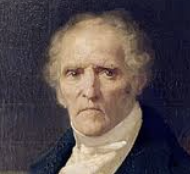
It is certain that nature inclines us toward the amorous orgy, just as much as toward the gastronomic orgy, and that while both are blameworthy in the excess, they would become praiseworthy in an order in which they could be equilibrated.
▼
Source
source
Charles Fourier: The Visionary and His World, J. Beecher (1986), p. 310
4 months 4 weeks ago
There is no mystery in humans creation. Will performs this miracle. But at least there is no true creation without a secret.

3 months 3 days ago
The Revolution and Hanover succession had been objects of the highest veneration to the old Whigs. They thought them not only proofs of the sober and steady spirit of liberty which guided their ancestors; but of their wisdom and provident care of posterity.-The modern Whigs have quite other notions of these events and actions. They do not deny that Mr. Burke has given truly the words of the acts of parliament which secured the succession, and the just sense of them. They attack not him but the law.
▼
Source
source
p. 436

3 months 2 days ago
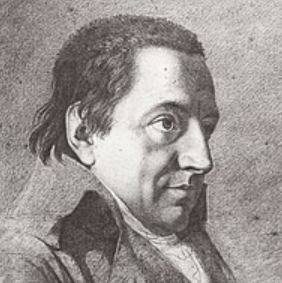
No nation which has sunk into this state of dependence can raise itself out of it by the means which have usually been adopted hitherto. Since resistance was useless to it when it was still in possession of all its powers, what can such resistance avail now that it has been deprived of the greater part of them?
▼
Source
source
Introduction p. 9-10
2 days ago
I think myself that we have more machinery of government than is necessary, too many parasites living on the labor of the industrious.
▼
Source
source
Letter to William Ludlow

3 months 3 weeks ago
This book, admirable in so many respects, power in its break and style, is even more intimidating for me in that, having formely had the good fortune to study under Michel Foucault, I retain the consciousness of an admiring and grateful disciple. Now, the disciple's consciousness, when he starts, I would not say to dispute, but to engage in dialogue with the master or, better, to articulate the interminable and silent dialogue which made him into a disciple-this disciple's consciousness is an unhappy consciousness.
▼
Source
source
Cogito and The History of Madness (Routledge classics edition)
2 months ago
The tribalizing power of the new electronic media, the way in which they return to us to the unified fields of the old oral cultures, to tribal cohesion and pre-individualist patterns of thought, is little understood. Tribalism is the sense of the deep bond of family, the closed society as the norm of community.
▼
Source
source
Tyuonyi, Volumes 1-2, 1985, p. 60

4 months 6 days ago
In ease of body and peace of mind, all the different ranks of life are nearly upon a level, and the beggar, who suns himself by the side of the highway, possesses that security which kings are fighting for.
▼
Source
source
Chap. I.
2 months ago
The city no longer exists except as a cultural ghost for tourists. Any highway eatery with its TV set, newspaper and magazine is as cosmopolitan as New York or Paris.
▼
Source
source
(p.12)

2 months 2 weeks ago
Yes, yes, I see it all! - an enormous social activity, a mighty civilization, a profuseness of science, of art, of industry, of morality, and afterwords, when we have filled the world with industrial marvels, with great factories, with roads, museums and libraries, we shall fall exhausted at the foot of it all, and it will subsist - for whom? Was man made for science or was science made for man?
3 months 1 week ago
History, it is easily perceived, is a picture-gallery containing a host of copies and very few originals.
▼
Source
source
p. 88

4 months 3 days ago
There's a Bible on that shelf there. But I keep it next to Voltaire - poison and antidote.
▼
Source
source
In Kenneth Harris Talking To: Bertrand Russell, 1971
2 months 2 weeks ago
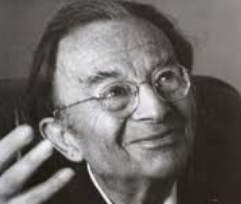
The narcissistic, the domineering, the possessive woman can succeed in being a "loving" mother as long as the child is small. Only the really loving woman, the woman who is happier in giving than in taking, who is firmly rooted in her own existence, can be a loving mother when the child is in the process of separation.
▼
Source
source
Ch. 2
4 months 2 days ago
If this life be not a real fight, in which something is eternally gained for the universe by success, it is no better than a game of private theatricals from which one may withdraw at will. But it feels like a real fight.
▼
Source
source
"Is Life Worth Living?"

2 days ago
The ecological teaching of the Bible is simply inescapable: God made the world because He wanted it made. He thinks the world is good, and He loves it. It is His world; He has never relinquished title to it. And He has never revoked the conditions, bearing on His gift to us of the use of it, that oblige us to take excellent care of it.
▼
Source
source
God and Country
4 weeks ago
Wisdom, virtue, morality, all these have fallen out of fashion: everybody worships at the shrine of commerce.
▼
Source
source
The Theory of the Four Movements (1808), G. Jones, ed. (1966), p. 269
4 months 3 days ago
A dog cannot relate his autobiography; however eloquently he may bark, he cannot tell you that his parents were honest but poor.
▼
Source
source
Human Knowledge: Its Scope and Limits (1948), part II, chapter 1, p. 74
2 days ago
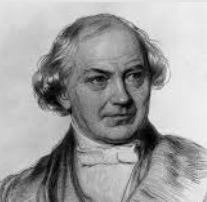
'The Law of Continuity' is this:-that a quantity cannot pass from one amount to another by any change of conditions, without passing through all intermediate magnitudes according to the intermediate conditions. It may often be employed to disprove distinctions which have no real foundation. 'The Method of Gradation' consists in taking a number of stages of a property in question, intermediate between two extreme cases which appear to be different. It is employed to determine whether the extreme cases are really distinct or not. 'The Method of Gradation', applied to decide the question, whether the existing phenomena arise from existing causes, leads to this result:-That the phenomena do appear to arise from existing causes, but that the action of existing causes have transgressed their recorded Limits of Intensity. 'The Method of Natural Classification' consists in classing cases, not according to any assumed definition, but according to the connexion of the facts themselves.
3 months 3 weeks ago
Complaints about the social irresponsibility of the intellectual typically concern the intellectual's tendency to marginalize herself, to move out from one community by interior identification of herself with some other community-for example, another country or historical period. ... It is not clear that those who thus marginalize themselves can be criticized for social irresponsibility. One cannot be irresponsible toward a community of which one does not think of oneself as a member. Otherwise runaway slaves and tunnelers under the Berlin Wall would be irresponsible.
▼
Source
source
"Postmodernist bourgeois liberalism," Objectivity, Relativism and Truth (Cambridge: 1991), p. 197

2 weeks 3 days ago
One crime has to be concealed by another.
CivilSimian.com created by AxiomaticPanic, CivilSimian, Kalokagathia