


3 months 3 weeks ago
The Guide sang: The new age, the new art, the new ethic and thought, And fools crying, Because it has begun It will continue as it has begun! The wheel runs fast, therefore the wheel will run Faster for ever. The old age is done, We have new lights and see without the sun. (Though they lay flat the mountains and dry up the sea, Wilt thou yet change, as though God were a god?)
▼
Source
source
Pilgrim's Regress 186-187

3 months 2 weeks ago
By convention sweet is sweet, bitter is bitter, hot is hot, cold is cold, color is color; but in truth there are only atoms and the void.
▼
Source
source
(trans. Durant 1939), Ch. XVI, §II, p. 353; citing C. Bakewell, Sourcebook in Ancient Philosophy, New York, 1909, "Fragment O" (Diels), p. 60

3 months 4 weeks ago
The instinctive foundation of the intellectual life is curiosity, which is found among animals in its elementary forms. Intelligence demands an alert curiosity, but it must be of a certain kind. The sort that leads village neighbours to try to peer through curtains after dark has no very high value. The widespread interest in gossip is inspired, not by a love of knowledge but by malice: no one gossips about other people's secret virtues, but only about their secret vices. Accordingly most gossip is untrue, but care is taken not to verify it. Our neighbour's sins, like the consolations of religion, are so agreeable that we do not stop to scrutinise the evidence closely.
▼
Source
source
On Education, Especially in Early Childhood (1926), Ch. 2: The Aims of Education, p. 50
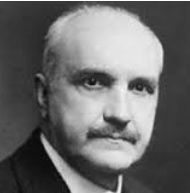
2 months 3 weeks ago
Our dignity is not in what we do, but in what we understand. The whole world is doing things.
▼
Source
source
p. 199
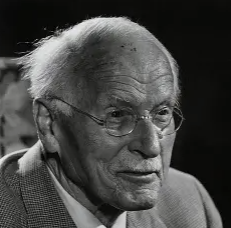
2 months 3 weeks ago
Emotion is the chief source of all becoming-conscious. There can be no transforming of darkness into light and of apathy into movement without emotion.
▼
Source
source
Psychological Aspects of the Mother Archetype
3 months 4 weeks ago
So that it will be found that the fundamental fault in the character of women is that they have no "sense of justice ." This arises from their deficiency in the power of reasoning already referred to, and reflection, but is also partly due to the fact that Nature has not destined them, as the weaker sex, to be dependent on strength but on cunning; this is why they are instinctively crafty, and have an ineradicable tendency to lie.
▼
Source
source
On Women
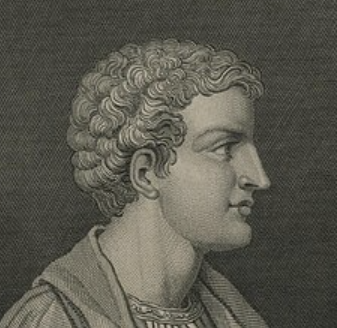
3 months 2 weeks ago
Force without wisdom falls of its own weight.

3 months 4 weeks ago
What the rest of us see only under the influence of mescalin, the artist is congenitally equipped to see all the time. His perception is not limited to what is biologically or socially useful.
▼
Source
source
Page 168

2 weeks 5 days ago
He that has a secret should not only hide it, but hide that he has it to hide.
▼
Source
source
Pt. II, Bk. I, ch. 7.
2 months 3 weeks ago
To covet truth is a very distinguished passion.
▼
Source
source
p. 48
2 months 2 weeks ago
Democracy means the belief that humanistic culture should prevail.
▼
Source
source
Democracy and Human Nature, Freedom and Culture

2 months 1 week ago
There is a quality of life which lies always beyond the mere fact of life; and when we include the quality in the fact, there is still omitted the quality of the quality.
▼
Source
source
Religion in the Making (February 1926), Lecture II: "Religion and Dogma".
2 months 2 weeks ago
The animating purpose of James was, on the other hand, primarily moral and artistic. It is expressed in his phrase, "block universe," employed as a term of adverse criticism. Mechanism and idealism were abhorrent to him because they both hold to a closed universe in which there is no room for novelty and adventure. Both sacrifice individuality and all the values, moral and aesthetic, which hang upon individuality; for according to absolute idealism, as to mechanistic materialism, the individual is simply a part determined by the whole of which he is a part. Only a philosophy of pluralism, of genuine indetermination, and of change which is real and intrinsic gives significance to individuality. It alone justifies struggle in creative activity and gives opportunity for the emergence of the genuinely new.
3 months 4 weeks ago
If, while hurrying ostensibly to the temple of truth, we hand the reins over to our personal interests which look aside at very different guiding stars, for instance at the tastes and foibles of our contemporaries, at the established religion, but in particular at the hints and suggestions of those at the head of affairs, then how shall we ever reach the high, precipitous, bare rock whereon stands the temple of truth?
▼
Source
source
E. Payne, trans. (1974) Vol. 1, pp. 22-23

4 months 6 days ago
Since the law is good, the will, which is hostile to it, cannot be good.
▼
Source
source
Thesis 87
3 months 2 days ago
The world is the house of the strong. I shall not know until the end what I have lost or won in this place, in this vast gambling den where I have spent more than sixty years, dicebox in hand, shaking the dice.
▼
Source
source
Conclusion
4 months 2 weeks ago
The kingdom, its states, and its families, may be perfectly ruled; dignities and emoluments may be declined; naked weapons may be trampled under the feet; but the course of the Mean cannot be attained to.

3 months 3 weeks ago
The aspects of things that are most important for us are hidden because of their simplicity and familiarity. (One is unable to notice something - because it is always before one's eyes.) The real foundations of his enquiry do not strike a man at all. Unless that fact has at some time struck him. - And this means: we fail to be struck by what, once seen, is most striking and most powerful.
▼
Source
source
§ 129
2 months 2 weeks ago
When language is used without true significance, it loses its purpose as a means of communication and becomes an end in itself.
4 months 1 day ago
Whatever concept one may hold, from a metaphysical point of view, concerning the freedom of the will, certainly its appearances, which are human actions, like every other natural event are determined by universal laws. However obscure their causes, history, which is concerned with narrating these appearances, permits us to hope that if we attend to the play of freedom of the human will in the large, we may be able to discern a regular movement in it, and that what seems complex and chaotic in the single individual may be seen from the standpoint of the human race as a whole to be a steady and progressive though slow evolution of its original endowment.
▼
Source
source
Introduction
3 months 4 weeks ago
The man who comes back through the Door in the Wall will never be quite the same as the man who went out. He will be wiser but less cocksure, happier but less self-satisfied, humbler in acknowledging his ignorance yet better equipped to understand the relationship of words to things, of systematic reasoning to the unfathomable Mystery which it tries, forever vainly, to comprehend.
▼
Source
source
Page 191

3 months 4 weeks ago
The national debt has given rise to joint stock companies, to dealings in negotiable effects of all kinds, and to agiotage, in a word to stock-exchange gambling and the modern bankocracy.
▼
Source
source
Vol. I, Ch. 31, pg. 827.

4 months 3 weeks ago
A sub-clerk in the post office is the equal of a conqueror if consciousness is common to them. All experiences are indifferent in this regard. There are some that do either a service or a disservice to man. They do him a service if he is conscious. Otherwise, that has no importance: a man's failures imply judgment, not of circumstances, but of himself.
2 months 2 weeks ago
A judgment, for me is not the mere grasping of a thought, but the admission of its truth.
▼
Source
source
Gottlob Frege (1892). On Sense and Reference, note 7.

3 months 4 weeks ago
We are as much as we see. Faith is sight and knowledge. The hands only serve the eyes.
▼
Source
source
April 9, 1841

5 months 1 day ago
One has attained to mastery when one neither goes wrong nor hesitates in the performance.
3 months 4 weeks ago
Rational and kindly behavior tends to produce good results and these results remain good even when the behavior which produced them was itself produced by a pill.
▼
Source
source
"Brave New World Revisited" (1956), in Moksha: Writings on Psychedelics and the Visionary Experience (1977), p. 99
3 months 2 days ago
In any country where talent and virtue produce no advancement, money will be the national god. Its inhabitants will either have to possess money or make others believe that they do. Wealth will be the highest virtue, poverty the greatest vice. Those who have money will display it in every imaginable way. If their ostentation does not exceed their fortune, all will be well. But if their ostentation does exceed their fortune they will ruin themselves. In such a country, the greatest fortunes will vanish in the twinkling of an eye. Those who don't have money will ruin themselves with vain efforts to conceal their poverty. That is one kind of affluence: the outward sign of wealth for a small number, the mask of poverty for the majority, and a source of corruption for all.
1 week 2 days ago
Until he extends the circle of his compassion to all living things, man will not himself find peace.
▼
Source
source
Variant translation: Until he extends his circle of compassion to include all living things, man will not himself find peace.
3 months 3 weeks ago
A man's thinking goes on within his consciousness in a seclusion in comparison with which any physical seclusion is an exhibition to public view.
▼
Source
source
Pt II, p. 189
3 months 2 weeks ago
'Tis well to restrain the wicked, and in any case not to join him in his wrong-doing.

2 months 3 weeks ago
To get up in the morning, wash and then wait for some unforeseen variety of dread or depression. I would give the whole universe and all of Shakespeare for a grain of ataraxy.

4 months 1 week ago
The very elements themselves, though repugnant in their nature, yet, by a happy equilibrium, preserve eternal peace; and amid the discordancy of their constituent principles, cherish, by a friendly intercourse and coalition, an uninterrupted concord.
3 months 4 weeks ago
The present hour is always wealthiest when it is poorer than the future ones, as that is the pleasantest site which affords the pleasantest prospect.
▼
Source
source
Pearls of Thought (1881) p. 210
1 month 2 weeks ago
Is Man so different from any of these Apes that he must form an order by himself? Or does he differ less from them than they differ from one another, and hence must take his place in the same order with them?
▼
Source
source
Ch.2, p. 86


3 months 3 weeks ago
Science is not a system of certain, or well established, statements; nor is it a statement which steadily advances towards state of finality. Our science is not knowledge (epistēmē): it can newer claim to have attained truth, or even substitute for it, such as probability. . . . We do not know; we can only guess.
▼
Source
source
Ch. 10 "Corroboration, or How a Theory Stands up to Tests", section 85: The Path of Science, p. 278.
2 months 3 weeks ago
First then, we find that when we regard ideas from a nominalistic, individualistic, sensualistic way, the simplest facts of mind become utterly meaningless. That one idea should resemble another or influence another, or that one state of mind should so much as be thought of in another is, from that standpoint, sheer nonsense.

3 months 4 weeks ago
There are two laws discrete Not reconciled, Law for man, and law for thing.
▼
Source
source
Ode: Inscribed to W. H. Channing, st. 9

1 week 6 days ago
He who receives a benefit with gratitude, repays the first installment of it.
▼
Source
source
De Beneficiis (On Benefits): Book 2, cap. 22, line 1.
2 months 3 weeks ago
There have always been poor and working classes; and the working class have mostly been poor. But there have not always been workers and poor people living under conditions as they are today.

3 months 5 days ago
When we consider the being and substance of that universe in which we are immutably set, we shall discover that neither we ourselves nor any substance doth suffer death; for nothing is in fact diminished in its substance, but all things, wandering through infinite space, undergo change of aspect.
▼
Source
source
Introductory Epistle
3 months 4 weeks ago
The entire process seems simple and natural, i.e., possesses the naturalness of a shallow rationalism.
▼
Source
source
Vol. II, Ch. III, p. 95.
1 month 3 weeks ago
Is it not the interest of the human race, that every one should be so taught and placed, that he would find his highest enjoyment to arise from the continued practice of doing all in his power to promote the well-being, and happiness, of every man, woman, and child, without regard to their class, sect, party, country or colour?
▼
Source
source
Paper Dedicated to the Governments of Great Britain, Austria, Russia, France, Prussia and the United States of America (1841) 17th of "20 Questions to the Human Race"
2 months 2 weeks ago
Why did we obey? The question hardly occurred to us. We had formed the habit of deferring to our parents and teachers. All the same we knew very well that it was because they were our parents, because they were our teachers. Therefore, in our eyes, their authority came less from themselves than from their status in relation to us.
▼
Source
source
Chapter I: Moral Obligation

4 months ago
There are two distinct classes of men in the nation, those who pay taxes, and those who receive and live upon the taxes.
2 months 1 day ago
It is the real, and not the map, whose vestiges persist here and there in the deserts that are no longer those of the Empire, but ours: The desert of the real itself.
▼
Source
source
"The Precession of Simulacra," p. 1
2 months 3 weeks ago
On the frontiers of the self: "What I have suffered, what I am suffering, no one will ever know, not even I."
2 months 2 weeks ago
The role of philosophy might be said to be to extend and deepen the self-awareness of mankind.
▼
Source
source
Ch. 9, p. 137
2 weeks ago
The characteristic mark of this age of dictators, wars and revolutions is its anti-capitalistic bias. Most governments and political parties are eager to restrict the sphere of private initiative and free enterprise. It is an almost unchallenged dogma that capitalism is done for and that the coming of all-round regimentation of economic activities is both inescapable and highly desirable.
CivilSimian.com created by AxiomaticPanic, CivilSimian, Kalokagathia