


2 months 3 weeks ago
The word "God," so "capitalised" (as we Americans say), is the definable proper name, signifying Ens necessarium; in my belief Really creator of all three Universes of Experience. I, Ens necessarium is a latin expression which signifies "Necessary being, necessary entity"
4 months 5 days ago
No doubt you know that Galileo had been convicted not long ago by the Inquisition, and that his opinion on the movement of the Earth had been condemned as heresy. Now I will tell you that all things I explain in my treatise, among which is also that same opinion about the movement of the Earth, all depend on one another, and are based upon certain evident truths. Nevertheless, I will not for the world stand up against the authority of the Church. ...I have the desire to live in peace and to continue on the road on which I have started.
▼
Source
source
Letter to Marin Mersenne (end of Feb., 1634) as quoted by Amir Aczel, Pendulum: Leon Foucault and the Triumph of Science
1 week 1 day ago
Wouldn't it be as farfetched to call birth the cause of death as to call the cat's head the cause of the tail? Lifting the neck of a bottle implies lifting the bottom as well, for the "two parts" come up at the same time. If I pick up an accordion by one end, the other will follow a little later, but the principle is the same. Total situations are, therefore, patterns in time as much as patterns in space.
▼
Source
source
p. 72

4 months 5 days ago
Why may not a goose say thus: "All the parts of the universe I have an interest in: the earth serves me to walk upon, the sun to light me; the stars have their influence upon me; I have such an advantage by the winds and such by the waters; there is nothing that yon heavenly roof looks upon so favourably as me. I am the darling of Nature! Is it not man that keeps and serves me?"
▼
Source
source
Book II, Ch. 12. Apology for Raimond Sebond
2 months 3 weeks ago
A finite interval of time generally contains an innumerable series of feelings; and when these become welded together in association the result is a general idea.

2 months 3 weeks ago
If there is anyone who owes everything to Bach, it is certainly God.

2 months 2 weeks ago
Suffer it to be so now: for thus it becometh us to fulfil all righteousness.
▼
Source
source
3:15 (KJV) Said to John the Baptist.
3 months 4 weeks ago
Men being, as has been said, by nature, all free, equal and independent, no one can be put out of this estate, and subjected to the political power of another, without his own consent.
▼
Source
source
Second Treatise of Government, Ch. VIII, sec. 95

1 week 5 days ago
But the wise man is fortified against all inroads; he is alert; he will not retreat before the attack of poverty, or of sorrow, or of disgrace, or of pain. He will walk undaunted both against them and among them.
3 months 4 weeks ago
It is from the Bible that man has learned cruelty, rapine, and murder; for the belief of a cruel God makes a cruel man.
▼
Source
source
A Letter: Being an Answer to a Friend, on the publication of The Age of Reason" (12 May 1797), published in an 1852 edition of The Age of Reason, p. 205

2 months 1 week ago
I too have a growing inner certainty that there is a deposit of pure gold in me which ought to be passed on. The trouble is that I am more and more convinced by my experience and observation of my contemporaries that there is no one to receive it.

1 month 3 weeks ago
Even the constantly reiterated insistence that we are miserable offenders, born in sin, is a kind of inverted arrogance: such vanity, to presume that our moral conduct has some sort of cosmic significance, as though the Creator of the Universe wouldn't have better things to do than tot up our black marks and our brownie points. The universe is all concerned with me. Is that not the arrogance that passeth all understanding? The Intellectual and Moral Courage of Atheism
▼
Source
source
Originally from 2007; quotes are from the slightly revised 2019 version on the website
2 months 3 weeks ago
People like us are unhappy in this world and in the next, I guess if we made it to heaven, we'd have to help make it thunder.
▼
Source
source
Scene VI.

1 month 3 weeks ago
Fortune is like glass-the brighter the glitter, the more easily broken.
▼
Source
source
Maxim 280
2 months 3 weeks ago
Whether or not there exists a solution to problems troubles only a minority; that the emotions have no outcome, lead to nothing, vanish into themselves - that is the great unconscious drama, the affective insolubility everyone suffers without even thinking about it.

3 months 3 weeks ago
Heroism feels and never reasons and therefore is always right.
▼
Source
source
Heroism
3 months 3 days ago
A Dialogue between two Infants in the womb concerning the state of this world, might handsomely illustrate our ignorance of the next, whereof methinks we yet discourse in Plato's Den, and are but Embryon Philosophers.
▼
Source
source
Chapter IV

2 months 1 week ago
The Outsider cannot accept life as it is, who cannot consider his own existence or anyone else's necessary. He sees 'too deep and too much'. It is still a question of self-expression.
▼
Source
source
Chapter Four The Attempt to Gain Control

3 months 2 weeks ago
About Pontus there are some creatures of such an extempore being that the whole term of their life is confined within the space of a day; for they are brought forth in the morning, are in the prime of their existence at noon, grow old at night, and then die.
4 months ago
Oh providence! Oh nature! Treasure of the poor, resource of the unfortunate. The person who feels, knows your holy laws and trusts them, the person whose heart is at peace and whose body does not suffer, thanks to you is not entirely prey to adversity.
▼
Source
source
Second Dialogue; translated by Judith R. Bush, Christopher Kelly, Roger D. Masters
1 week 1 day ago
We came to a tree which was still bare, and on which the birds were singing out gaily in the morning, without any fear of us. Then stooping over like an Indian on the hunt, my companion placed a pebble in the leather of his sling and stretched it. Obeying his peremptory glance I did the same, with frightful twinges of conscience, vowing firmly that I would shoot when he did. At that very moment the church bells began to sound, mingling with the song of the birds in the sunshine. It was the warning bell that came a half-hour before the main bell. For me it was a voice from heaven. I threw the sling down, scaring the birds away, so that they were safe from my companion's sling, and fled home. And ever afterwards when the bells of Holy Week ring out amidst the leafless trees in the sunshine I remember with moving gratitude how they rang into my heart at that time the commandment: Thou shalt not kill.

2 months 2 weeks ago
The only way to give finality to the world is to give it consciousness. For where there is no consciousness there is no finality, finality presupposing a purpose. And... faith in God is based simply upon the vital need of giving finality to existence, of making it answer to a purpose. We need God, not in order to understand the why, but in order to feel and sustain the ultimate wherefore, to give a meaning to the Universe.
2 months 6 days ago
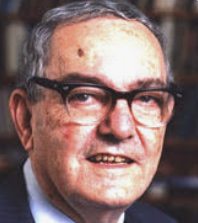
The function of knowledge in the decision-making process is to determine which consequences follow upon which of the alternative strategies. It is the task of knowledge to select from the whole class of possible consequences a more limited subclass, or even (ideally) a single set of consequences correlated with each strategy.
▼
Source
source
p. 78.
4 months 5 days ago
No proceeding is better than that which you have concealed from the enemy until the time you have executed it. To know how to recognize an opportunity in war, and take it, benefits you more than anything else. Nature creates few men brave, industry and training makes many. Discipline in war counts more than fury.
▼
Source
source
Book 7

3 months 4 weeks ago
I once received a letter from an eminent logician, Mrs. Christine Ladd Franklin, saying that she was a solipsist, and was surprised that there were no others. Coming from a logician, this surprise surprised me.
▼
Source
source
Human Knowledge: Its Scope and Limits (1948), Part III, chapter II, "Solipsism", p. 196
1 month 6 days ago
Our present-day neurochemical cocktail, we are asked to believe, is the medium through which alien realms of consciousness can be grasped and neutrally appraised from a third-person perspective. Empirical research suggests this optimism is at best naïve.
▼
Source
source
Storming Heaven: LSD and the American Dream, BLTC Research
2 months 2 weeks ago
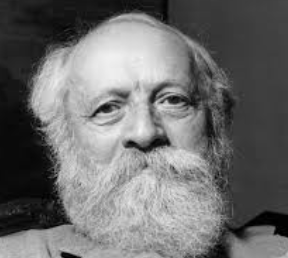
The world is not divine sport, it is divine destiny. There is divine meaning in the life of the world, of man, of human persons, of you and of me. Creation happens to us, burns itself into us, recasts us in burning - we tremble and are faint, we submit. We take part in creation, meet the Creator, reach out to Him, helpers and companions.

4 months 5 days ago
All the passages in the Holy Scriptures that mention assistance are they that do away with "free-will", and these are countless...For grace is needed, and the help of grace is given, because "free-will" can do nothing.
▼
Source
source
p. 270

1 month 4 days ago
The basis of science is the empirical method, which uses the senses to build up a picture of the world; but science tells us that our senses have evolved to help us get by, not to show us the world as it is. Science is only a systematic examination of our impressions, and in the end all each of us has left are our own sensations ... The end-result of the empirical method, then, is that each individual is left alone with their own experiences. We can escape this solitude, Balfour suggested, only if we accept that there is a divine mind.
▼
Source
source
Cross-correspondences (p. 69-70)
2 months 3 weeks ago
If I were to go blind, what would bother me the most would be no longer to be able to stare idiotically at the passing clouds.
2 months 2 weeks ago
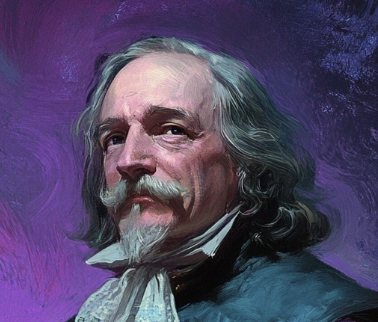
No man's error becomes his own Law; nor obliges him to persist in it.
▼
Source
source
The Second Part, Chapter 26, p. 144
2 months 1 week ago
Man's main task in life is to give birth to himself, to become what he potentially is. The most important product of his effort is his own personality.
▼
Source
source
Ch. 4 "Problems of Humanistic Ethics"

3 months 3 weeks ago
Be not afraid of life. Believe that life is worth living, and your belief will help create the fact.
▼
Source
source
"Is Life Worth Living?"

3 months 2 days ago
From fanaticism to barbarism is only one step.
▼
Source
source
Essai sur le Mérite de la Vertu (1745)
2 months 3 weeks ago
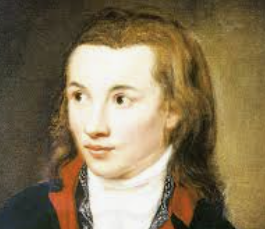
The division of Philosopher and Poet is only apparent, and to the disadvantage of both. It is a sign of disease, and of a sickly constitution.
3 weeks ago
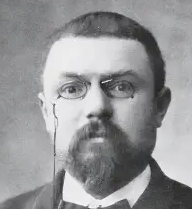
It is only through science and art that civilization is of value. Some have wondered at the formula: science for its own sake; an yet it is as good as life for its own sake, if life is only misery; and even as happiness for its own sake, if we do not believe that all pleasures are of the same quality...Every act should have an aim. We must suffer, we must work, we must pay for our place at the game, but this is for seeing's sake; or at the very least that others may one day see.
3 months 3 weeks ago
I find men victims of illusion in all parts of life. Children, youths, adults, and old men, all are led by one bawble or another. Yoganidra, the goddess of illusion, Proteus, or Momus, or Gylfi's Mocking, - for the Power has many names, - is stronger than the Titans, stronger than Apollo.
▼
Source
source
Illusions
1 month 3 weeks ago
Life is short, but its ills make it seem long.
▼
Source
source
Maxim 124

4 months 2 weeks ago
Benevolence is the characteristic element of humanity.
2 months 3 weeks ago
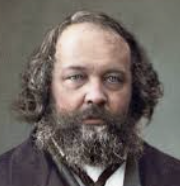
No theory, no ready-made system, no book that has ever been written will save the world. I cleave to no system. I am a true seeker.
▼
Source
source
As quoted in Michael Bakunin (1937) by E.H. Carr, p. 175
1 month 6 days ago
To recognize a difficulty is not to solve it.
▼
Source
source
Chapter 1, The Faces of Silence, p. 9

2 months 1 week ago
It is we who are the measure of what is strange and miraculous: if we sought a universal measure the strange and miraculous would not occur and all things would be equal.
▼
Source
source
A 26
6 days ago
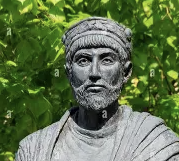
As a general rule, all that has been hitherto advanced respecting the nature of this deity, must be understood to refer to his properties: for the nature of the god is not one thing, and his influence another: and truly, besides these two, his energy a third thing: seeing that all things which he wills, these he is, he can, and he works. For neither doth he will that which he is not; nor is he without strength to do that which he wills; nor doth he will that which he cannot effect. Now this is very different in the case of men, for theirs is a double nature mixed up in one, that of soul and body; the former divine, the latter full of darkness and obscurity: hence naturally arise warfare and discord between the two.
4 months 6 days ago
There is a great difference between the Idols of the human mind and the Ideas of the divine. That is to say, between certain empty dogmas, and the true signatures and marks set upon the works of creation as they are found in nature.
▼
Source
source
Aphorism 23

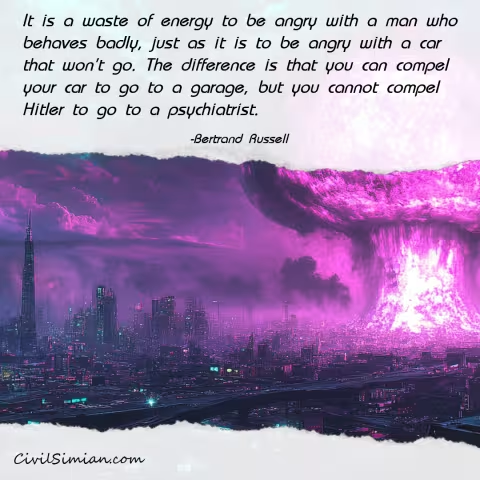

3 months 2 weeks ago
The friendship of one wise man is better than the friendship of a host of fools.

2 months 4 weeks ago
He was not merely a chip of the old Block, but the old Block itself.
▼
Source
source
On Pitt's First Speech (26 February 1781), from Wraxall's Memoirs, First Series, vol. i. p. 342

3 months 3 weeks ago
There are uncertain truths - even true statements that we may take to be false - but there are no uncertain certainties. Since we can never know anything for sure, it is simply not worth searching for certainty; but it is well worth searching for truth; and we do this chiefly by searching for mistakes, so that we have to correct them.
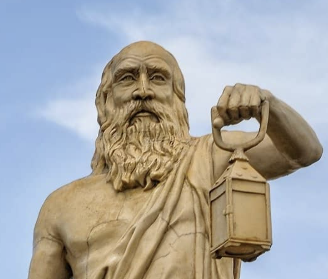
3 months 2 weeks ago
To the question what wine he found pleasant to drink, he replied, "That for which other people pay."
▼
Source
source
Diogenes Laërtius, vi. 54

4 months 1 day ago
The most perfect philosophy of the natural kind only staves off our ignorance a little longer: as perhaps the most perfect philosophy of the moral or metaphysical kind serves only to discover larger portions of it. Thus the observation of human blindness and weakness is the result of all philosophy, and meets us at every turn, in spite of our endeavours to elude or avoid it.
▼
Source
source
Section 4 : Sceptical Doubts Concerning The Operations of The Understanding
CivilSimian.com created by AxiomaticPanic, CivilSimian, Kalokagathia