



3 months 3 weeks ago
My friend Professor Tolkien asked me the very simple question, "What class of men would you expect to be most preoccupied with, and most hostile to, the idea of escape?" and gave the obvious answer: jailers.
▼
Source
source
"On Science Fiction". Of Other Worlds: Essays and Stories. Houghton Mifflin Harcourt (2002). p. 67.

4 months 1 day ago
But though there be naturally a wide difference in point of delicacy between one person and another, nothing tends further to encrease and improve this talent, than practice in a particular art, and the frequent survey or contemplation of a particular species of beauty.
2 months 1 week ago
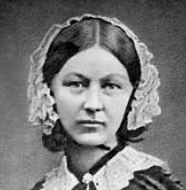
The martyr sacrifices herself (himself in a few instances) entirely in vain. Or rather not in vain; for she (or he) makes the selfish more selfish, the lazy more lazy, the narrow narrower.
▼
Source
source
As quoted in Forever Yours (1990) by Martha Vicinus and Bea Nergaard , p. 275. Letter, c. 1867, to the scholar Benjamin Jowett.

2 months 1 week ago
Human nature asserts itself regardless of all laws, nor is there any plausible reason why nature should adapt itself to a perverted conception of morality.
3 months 2 days ago
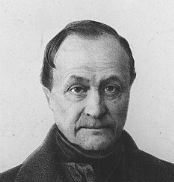
Thus the social position of women is in this respect very similar to that of philosophers and of the working classes. And we now see why these three elements should be united. It is their combined action which constitutes the moral or modifying force of society.
▼
Source
source
p. 235
2 months 2 weeks ago
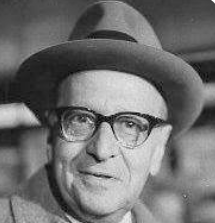
Every philosophical, ethical, and political idea-its lifeline connecting it with its historical origins having been severed-has a tendency to become the nucleus of a new mythology, and this is one of the reasons why the advance of enlightenment tends at certain points to revert to superstition and paranoia. The majority principle ... has become the sovereign force to which thought must cater. It is a new god, not in the sense in which the heralds of the great revolutions conceived it, namely, as a power of resistance to existing injustice, but as a power of resistance to anything that does not conform.
▼
Source
source
p. 30.

2 months ago
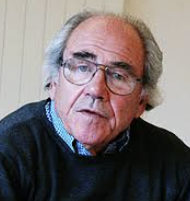
If every strategy today is that of mental terror and of deterrence tied to the suspension and the eternal simulation of catastrophe, then the only means of mitigating this scenario would be to make the catastrophe arrive, to produce or to reproduce a real catastrophe. To which Nature is at times given: in its inspired moments, it is God who through his cataclysms unknots the equilibrium of terror in which humans are imprisoned. Closer to us, this is what terrorism is occupied with as well: making real, palpable violence surface in opposition to the invisible violence of security. Besides, therein lies terrorism's ambiguity.
▼
Source
source
"The China Syndrome," p. 58

3 weeks 1 day ago
What we may be witnessing is not just the end of the Cold War, or the passing of a particular period of post-war history, but the end of history as such ... That is, the end point of mankind's ideological evolution and the universalization of Western liberal democracy as the final form of human government.

3 months 2 days ago
The whole life of an American is passed like a game of chance, a revolutionary crisis, or a battle.
▼
Source
source
Chapter XVIII.

2 weeks 4 days ago
We are to remember what an umpire Nature is; what a greatness, composure of depth and tolerance there is in her. You take wheat to cast into the Earth's bosom; your wheat may be mixed with chaff, chopped straw, barn-sweepings, dust and all imaginable rubbish; no matter: you cast it into the kind just Earth; she grows the wheat, - the whole rubbish she silently absorbs, shrouds it in, says nothing of the rubbish. The yellow wheat is growing there; the good Earth is silent about all the rest, - has silently turned all the rest to some benefit too, and makes no complaint about it! So everywhere in Nature! She is true and not a lie; and yet so great, and just, and motherly in her truth. She requires of a thing only that it be genuine of heart; she will protect it if so; will not, if not so. There is a soul of truth in all the things she ever gave harbor to. Alas, is not this the history of all highest Truth that comes or ever came into the world?

3 months 3 weeks ago
The history of science, like the history of all human ideas, is a history of irresponsible dreams, of obstinacy, and of error. But science is one of the very few human activities - perhaps the only one - in which errors are systematically criticized and fairly often, in time, corrected. This is why we can say that, in science, we often learn from our mistakes, and why we can speak clearly and sensibly about making progress there.
▼
Source
source
Ch. 1 "Science : Conjectures and Refutations"

3 weeks 2 days ago
It is a commonplace of the classical literature on Empire, from Polybius to Montesquieu and Gibbon, that Empire is from its inception decadent and corrupt.
▼
Source
source
201

2 months 3 weeks ago
How can you know if you are in the truth? The criterion is simple enough: if others make a vacuum around you, there is not a doubt in the world that you are closer to the essential than they are.
3 months 3 weeks ago
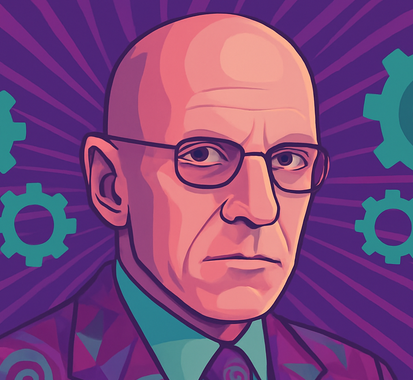
[W]hen a philosopher addresses himself to... a tyrant, and tells him... tyranny is incompatible with justice, then the philosopher speaks... [and] believes he is speaking the truth, and... takes a risk...
▼
Source
source
[T]hat was Plato's situation with Dionysius in Syracuse... reference... Plato's Seventh Letter, and... The Life of Dion by Plutarch. Ref: 1) Ludwig Edelstein, Plato's seventh letter (1966) 2) Plutarch, Life of Dion

3 months 3 weeks ago
Religion...is a man's total reaction upon life.
▼
Source
source
Lecture II, "Circumscription of the Topic"

3 months 3 weeks ago
The alleged power to charm down insanity, or ferocity in beasts, is a power behind the eye.
▼
Source
source
Behavior
2 weeks 4 days ago
Oceans of horse-hair, continents of parchment, and learned-sergeant eloquence, were it continued till the learned tongue wore itself small in the indefatigable learned mouth, cannot make unjust just.
2 months 1 week ago
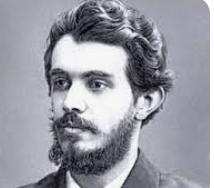
He was arrested twice; he was taken in 1922 for a midnight interrogation with Dzerjinsky; Kamenev was also there. ... But Berdyaev did not humiliate himself, he did not beg, he firmly professed the moral and religious principles by virtue of which he did not adhere to the party in power; and not only did they judge that there was no point in putting him on trial, but he was freed. Now there is a man who had a "point of view"!
▼
Source
source
Richard Schain, in In Love with Eternity : Philosophical Essays and Fragments (2005), Ch. 7 : Nikolai Alexandrovich Berdyaev - A Champion of the Spirit, p. 47
2 months ago
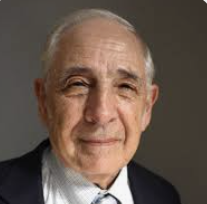
I cannot recall a time when American education was not in a "crisis." We have lived through Sputnik (when we were "falling behind the Russians"), through the era of "Johnny can't read," and through the upheavals of the Sixties. Now a good many books are telling us that the university is going to hell in several different directions at once. I believe that, at least in part, the crisis rhetoric has a structural explanation: since we do not have a national consensus on what success in higher education would consist of, no matter what happens, some sizable part of the population is going to regard the situation as a disaster. As with taxation and relations between the sexes, higher education is essentially and continuously contested territory. Given the history of that crisis rhetoric, one's natural response to the current cries of desperation might reasonably be one of boredom.
4 months 4 weeks ago
Wit is cultured insolence.
4 months 4 weeks ago
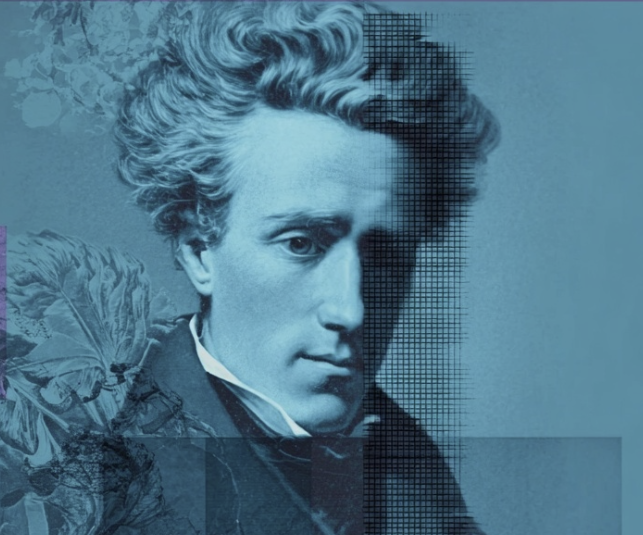
Out of love, God becomes man. He says: Here you see what it is to be a human being; but he adds: Take care, for I am also God - blessed is he who takes no offense at me.
▼
Source
source
As translated by Howard V. Hong and EdnaH. Hong (1980) Variant translation; Out of love, God becomes man. He says: "See, here is what it is to be a human being."
3 months 3 weeks ago
Every really able man, in whatever direction he work,-a man of large affairs, an inventor, a statesman, an orator, a poet, a painter,-if you talk sincerely with him, considers his work, however much admired, as far short of what it should be.
▼
Source
source
Immortality
4 months 6 days ago
Let great authors have their due, as time, which is the author of authors, be not deprived of his due, which is, further and further to discover truth.
▼
Source
source
Book I, iv, 10
4 months ago
It is difficult for the isolated individual to work himself out of the immaturity which has become almost natural for him. He has even become fond of it and for the time being is incapable of employing his own intelligence, because he has never been allowed to make the attempt. Statutes and formulas, these mechanical tools of a serviceable use, or rather misuse, of his natural faculties, are the ankle-chains of a continuous immaturity. Whoever threw it off would make an uncertain jump over the smallest trench because he is not accustomed to such free movement. Therefore there are only a few who have pursued a firm path and have succeeded in escaping from immaturity by their own cultivation of the mind.
2 weeks 6 days ago
If I work incessantly to the last, nature owes me another form of existence when the present one collapses.
▼
Source
source
Letter to Eckermann

3 months 4 weeks ago
Our inventions are wont to be pretty toys, which distract our attention from serious things. They are but improved means to an unimproved end, an end which it was already but too easy to arrive at.
▼
Source
source
pp. 60-61
1 month 1 day ago
Is not the minimal state, the framework for utopia, an inspiring vision? The minimal state treats us as inviolate individuals, who may not be used in certain ways by others as means or tools or instruments or resources; it treats us as persons having individual right with the dignity this constitutes. Treating us with respect by respecting our rights, it allows us, individually or with whom we please, to choose our life and to realize our ends and our conception of ourselves, insofar as we can, aided by the voluntary cooperation of other individuals possessing the same dignity. How dare any state or group of individuals do more. Or less.
▼
Source
source
Ch. 10 : A Framework for Utopia; Utopia and the Minimal State, p. 333

4 months 3 weeks ago
To become god is merely to be free on this earth, not to serve an immortal being.

4 months 2 weeks ago
Since, of desires some are natural and necessary; others natural, but not necessary; and others neither natural nor necessary, but the offspring of false judgment; it must be the office of temperance to gratify the first class, as far as nature requires: to restrain the second within the bounds of moderation; and, as to the third, resolutely to oppose, and, if possible, entirely repress them.

2 months 2 weeks ago
And yet Catholicism does not abandon ethics. No! No modern religion can leave ethics on one side. But our religion - although its doctors may protest against this - is fundamentally and for the most part a compromise between eschatology and ethics; it is eschatology pressed into the service of ethics. What else but this is that atrocity of the eternal pains of hell, which agrees so ill with the Pauline apocatastasis? Let us bear in mind these words which the Theologica Germanica, the manual of mysticism that Luther read, puts into the mouth of God: "If I must recompense your evil, I must recompense it with good, for I am and have no other." And Christ said: "Father, forgive them, for they know not what they do," and there is no man who perhaps knows what he does.
1 week 6 days ago
All right, men are as they should be, can be. What should they be? Surely not more than they can be! And what can they be? Not more, again, than they - can, than they have the competence, the force, to be. But this they really are, because what they are not, they are incapable of being; for to be capable means - really to be. One is not capable for anything that one really is not; one is not capable of anything that one does not really do. Could a man blinded by cataract see? Oh, yes, if he had his cataract successfully removed. But now he cannot see because he does not see. Possibility and reality always coincide. One can do nothing that one does not, as one does nothing that one cannot.
▼
Source
source
Cambridge 1995, p. 291

3 months 4 weeks ago
Don't think money does everything or you are going to end up doing everything for money.
2 months 3 weeks ago
Freedom and whores are the most cosmopolitan items under the sun. .
▼
Source
source
Act IV
3 months 3 weeks ago
Our minds thus grow in spots; and like grease-spots, the spots spread. But we let them spread as little as possible: we keep unaltered as much of our old knowledge, as many of our old prejudices and beliefs, as we can. We patch and tinker more than we renew. The novelty soaks in; it stains the ancient mass; but it is also tinged by what absorbs it.
▼
Source
source
Lecture V, Pragmatism and Common Sense

5 months ago
That immense framework and planking of concepts to which the needy man clings his whole life long in order to preserve himself is nothing but a scaffolding and toy for the most audacious feats of the liberated intellect. And when it smashes this framework to pieces, throws it into confusion, and puts it back together in an ironic fashion, pairing the most alien things and separating the closest, it is demonstrating that it has no need of these makeshifts of indigence and that it will now be guided by intuitions rather than by concepts. There is no regular path which leads from these intuitions into the land of ghostly schemata, the land of abstractions. There exists no word for these intuitions; when man sees them he grows dumb, or else he speaks only in forbidden metaphors and in unheard of combinations of concepts. He does this so that by shattering and mocking the old conceptual barriers he may at least correspond creatively to the impression of the powerful present intuition.
4 months 1 week ago
Certainly He says this for me, for thee, for this other man, since He bears His body, the Church. Unless you imagine, brethren, that when He said: My Father, if it be possible, let this cup pass away from (Matt. 26:39), it was the Lord that feared to die. . . . But Paul longed to die, that he might be with Christ. What? The Apostle desires to die, and Christ Himself should fear death? What can this mean, except that He bore our infirmity in Himself, and uttered these words for those who are in His body and still fear death? It is from these that the voice came; it was the voice of His members, not of the Head. When He said, My soul is sorrowful unto death (Matt. 26:38), He manifested Himself in thee, and thee in Himself. And when He said, My God, my God, why has Thou forsaken Me? (Matt. 27:46), the words He uttered on the cross were not His own, but ours.
1 month 2 weeks ago
It seems that the creative faculty, and the critical faculty, cannot exist together in their highest perfection.
▼
Source
source
p. 186
2 months 1 week ago
It belongs to the self-respect of intellect to pursue every tangle of thought to its final unravelment.
▼
Source
source
Ch. 12: "Religion and Science", p. 258
2 weeks 4 days ago
Unless some Hero-worship, in its new appropriate form, can return, this world does not promise to be very habitable long.
3 months 2 weeks ago
If it is in our power to prevent something bad from happening, without thereby sacrificing anything of comparable moral importance, we ought, morally, to do it.
4 months 2 weeks ago
The Path is not far from man. When men try to pursue a course, which is far from the common indications of consciousness, this course cannot be considered The Path.

3 months 4 weeks ago
It seems to me now that mathematics is capable of an artistic excellence as great as that of any music, perhaps greater; not because the pleasure it gives (although very pure) is comparable, either in intensity or in the number of people who feel it, to that of music, but because it gives in absolute perfection that combination, characteristic of great art, of godlike freedom, with the sense of inevitable destiny; because, in fact, it constructs an ideal world where everything is perfect and yet true.
▼
Source
source
Letter to Gilbert Murray, April 3, 1902
2 weeks 4 days ago
Every pitifulest whipster that walks within a skin has had his head filled with the notion that he is, shall be, or by all human and divine laws ought to be, 'happy.' His wishes, the pitifulest whipster's, are to be fulfilled for him; his days, the pitifulest whipster's, are to flow on in an ever-gentle current of enjoyment, impossible even for the gods. The prophets preach to us, Thou shalt be happy; thou shalt love pleasant things, and find them. The people clamor, Why have we not found pleasant things? ...God's Laws are become a Greatest Happiness Principle. There is no religion; there is no God; man has lost his soul.
▼
Source
source
Bk. III, ch. 4.

4 months 5 days ago
When I am attacked by gloomy thoughts, nothing helps me so much as running to my books. They quickly absorb me and banish the clouds from my mind.
3 months 3 weeks ago
When I was a student in the 1950s, I read Husserl, Sartre, Merleau-Ponty. When you feel an overwhelming influence, you try to open a window. Paradoxically enough, Heidegger is not very difficult for a Frenchman to understand. When every word is an enigma, you are in a not-too-bad position to understand Heidegger. Being and Time is difficult, but the more recent works are clearer. Nietzsche was a revelation to me. I felt that there was someone quite different from what I had been taught. I read him with a great passion and broke with my life, left my job in the asylum, left France: I had the feeling I had been trapped. Through Nietzsche, I had become a stranger to all that.
▼
Source
source
Truth, Power, Self : An Interview with Michel Foucault

2 months 1 week ago
I began to practice 'meditation', sitting cross-legged for hours, staring straight in front of me. The result was a sudden and total transformation of my inner-being. There was a sense of freedom from my personality -- from the being called Colin Wilson who was born in Leicester in 1931. I felt that 'he' was a series of responses and reactions, of ambitions and frustrations. But after half an hour of staring straight in front of me, of concentrating my attention 'at the root of my eyebrows', I felt in control of his responses and frustrations. This control brought such a sense of exhilaration and satisfaction that I often sneaked away from other people to spend just five minutes sitting cross-legged; when I was working as a labourer on a building site, I would find a quiet spot and, while the others were having a smoke, would sit in a position that could quickly be changed to an ordinary sitting posture if someone came by . . .
▼
Source
source
p. 87
CivilSimian.com created by AxiomaticPanic, CivilSimian, Kalokagathia