

1 month 4 weeks ago
One might expect that a consideration of grievability pertains only to those who are dead, but my contention is that grievability is already operative in life, and that it is a characteristic attributed to living creatures, marking their value within a differential scheme of values and bearing directly on the question of whether or not they are treated equally and in a just way. To be grievable is to be interpellated in such a way that you know your life matters; that the loss of your life would matter; that your body is treated as one that should be able to live and thrive, whose precarity should be minimized, for which provisions for flourishing should be available. The presumption of equal grievability would be not only a conviction or attitude with which another person greets you, but a principle that organizes the social organization of health, food, shelter, employment, sexual life, and civic life.
▼
Source
source
p. 59

3 months 3 weeks ago
Solvency is maintained by means of the national debt, on the principle, "If you will not lend me the money, how can I pay you?"
▼
Source
source
Ability
3 months 2 weeks ago
He was breakfasting in the marketplace, and the bystanders gathered round him with cries of "dog." "It is you who are dogs," cried he, "when you stand round and watch me at my breakfast."
▼
Source
source
Diogenes Laërtius, vi. 61

1 month 1 week ago
What could be a better indication of man's continued dependence on nature than the fact that today's so-called post-industrial societies satisfy most of their food needs through imports from so-called underdeveloped countries?
▼
Source
source
Staying Alive: Women, Ecology, and Development
1 month 4 weeks ago
What froze me was the fact that I had absolutely no reason to move in any direction. What had made me move through so many dead and pointless years was curiosity. Now even that flickered out.
1 month 3 weeks ago
Every day should be passed as if it were to be our last.
▼
Source
source
Maxim 633

4 months 3 weeks ago
In memory yet green, in joy still felt, The scenes of life rise sharply into view. We triumph; Life's disasters are undealt, And while all else is old, the world is new.

3 months 3 days ago
Times before you, when even the living men were Antiquities; when the living might exceed the dead, and to depart this world, could not be properly said, to go unto the greater number. Dedication
3 months 3 weeks ago
Our elucidations of the preliminary concept of phenomenology show that its essential character does not consist in its actuality as a philosophical "movement." Higher than actuality stands possibility. We can understand phenomenology solely by seizing upon it as a possibility.
▼
Source
source
Introduction: The Exposition of the Question of the Meaning of Being (Stambaugh translation)

2 months 3 weeks ago
I find in myself as much evil as in anyone, but detesting action - mother of all vices - I am the cause of no one's suffering.
4 months ago
In principle and in practice, in a right track and in a wrong one, the rarest of all human qualities is consistency.
▼
Source
source
Ch. 1: Of the Principle of Utility



2 months 4 weeks ago
What is Europe really but a sterile trunk which owes everything to oriental grafts?
▼
Source
source
Letter of 18 December 1806 to Windischmann, quoted by Rene Gerard, L'Orient et la pensée romantique allemande, Paris 1963,, p. 213. quoted in Poliakov, L. (1974).

3 weeks 1 day ago
Colonization on a grand scale is a political necessity of absolutely the first order. A nation that does not colonize is irrevocably vowed to socialism, to war between rich and poor. The conquest of a nation of inferior race by a superior race, which establishes itself as the ruler, has nothing shocking about it.
▼
Source
source
92-93

3 months 4 weeks ago
The method of "postulating" what we want has many advantages; they are the same as the advantages of theft over honest toil.
▼
Source
source
Ch. 7: Rational, Real and Complex Numbers
2 months 5 days ago
In conclusion, then, no satisfactory interpretation of quantum mechanics exists today. The questions posed by the confrontation between the Copenhagen interpretation and the hidden variable theorists go to the very foundations of microphysics, but the answers given by hidden variable theorists and Copenhagenists are alike unsatisfactory. Human curiosity will not rest until those questions are answered, but whether they will be answered by conceptual innovations within the framework of the present theory or only within the framework of an as yet unforeseen theory is unknown. The first step toward answering them has been attempted here. It is the modest but essential step of becoming clear on the nature and magnitude of the difficulties.
▼
Source
source
A philosopher looks at quantum mechanics

4 months 5 days ago
I am entirely of the opinion that the papacy is the Antichrist. But if anyone wants to add the Turk, then the Pope is the spirit of the Antichrist, and the Turk is the flesh of the Antichrist. They help each other in their murderous work. The latter slaughters bodily and by the sword, the former spiritually and by doctrine.
▼
Source
source
330

2 months 1 week ago
The chief impression left by a study of Crowley's life and works is that he wasted an immense amount of time and energy trying to shock everyone he came into contact with, and his dislike of orthodoxy turned him into an unconsciously comic figure, like Don Quixote.
▼
Source
source
pp. 153-154
3 months 3 weeks ago
Nature magically suits the man to his fortunes, by making these the fruit of his character.
▼
Source
source
Fate
3 months 4 weeks ago
Not only must philosophy be in agreement with our empirical knowledge of Nature, but the origin and formation of the Philosophy of Nature presupposes and is conditioned by empirical physics. However, the course of a science's origin and the preliminaries of its construction are one thing, while the science itself is another. In the latter, the former can no longer appear as the foundation of the science; here, the foundation must be the necessity of the Concept.

3 months 3 weeks ago
One always dies too soon - or too late. And yet, life is there, finished: the line is drawn, and it must all be added up. You are nothing other than your life.
▼
Source
source
Inès, Act 1, sc. 5
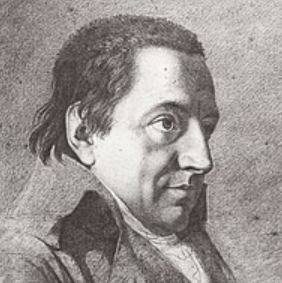
2 months 3 weeks ago
Upon the progress of knowledge the whole progress of the human race is immediately dependent: he who retards that, hinders this also. And he who hinders this, -what character does he assume towards his age and posterity? Louder than with a thousand voices, by his actions he proclaims into the deafened ear of the world present and to come -"As long as I live at least, the men around me shall not become wiser or better; - for in their progress I too, notwithstanding all my efforts to the contrary, should be dragged forward in some direction; and this I detest I will not become more enlightened, - I will not become nobler. Darkness and perversion are my elements, and I will summon all my powers together that I may not be dislodged from them."
▼
Source
source
Αs translated by William Smith, in The Popular Works of Johann Gottlieb Fichte (1889), Vol. I, Lecture IV, p. 188.

2 months 4 weeks ago
People will not look forward to posterity, who never look backward to their ancestors.
▼
Source
source
Volume iii, p. 274
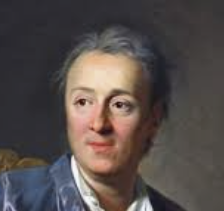
3 months 2 days ago
The purpose of an encyclopedia is to collect knowledge disseminated around the globe; to set forth its general system to the men with whom we live, and transmit it to those who will come after us, so that the work of preceding centuries will not become useless to the centuries to come; and so that our offspring, becoming better instructed, will at the same time become more virtuous and happy, and that we should not die without having rendered a service to the human race in the future years to come.
▼
Source
source
Encyclopédie

1 month 3 weeks ago
One of the many effects of television on radio has been to shift radio from an entertainment medium into a kind of nervous information system.
▼
Source
source
(p. 298)
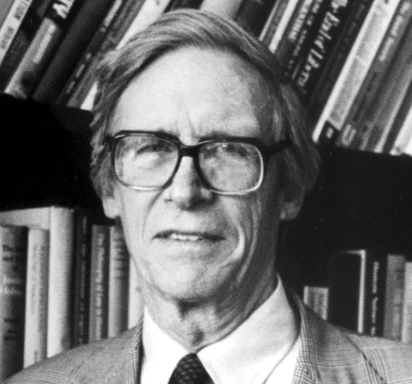
3 months 3 weeks ago
There are infinitely many variations of the initial situation and therefore no doubt indefinitely many theorems of moral geometry.
▼
Source
source
Chapter III, Section 21, pg. 126
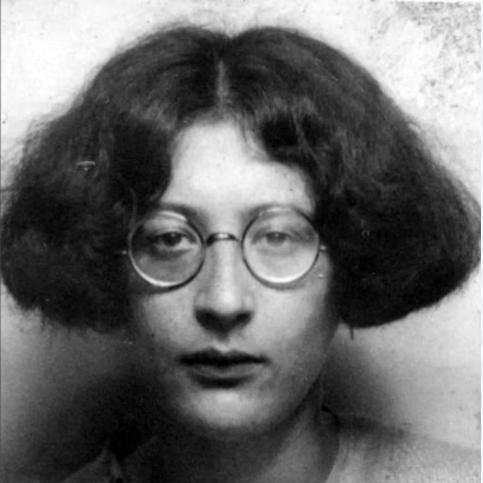
2 months 1 week ago
Attention consists of suspending our thought, leaving it detached, empty, and ready to be penetrated by the object; it means holding in our minds, within reach of this thought, but on a lower level and not in contact with it, the diverse knowledge we have acquired which we are forced to make use of.
2 months 2 weeks ago
The source of every Crime, is some defect of the Understanding; or some error in Reasoning, or some sudden force of the Passions. Defect in the Understanding, is Ignorance; in Reasoning, Erroneous Opinion.
▼
Source
source
The Second Part, Chapter 27, p. 152

4 months 1 day ago
In this consists the difference between the character of a miser and that of a person of exact economy and assiduity. The one is anxious about small matters for their own sake; the other attends to them only in consequence of the scheme of life which he has laid down to himself.
▼
Source
source
Chap. VI.

3 months 3 weeks ago
All war propaganda consists, in the last resort, in substituting diabolical abstractions for human beings. Similarly, those who defend war have invented a pleasant sounding vocabulary of abstractions in which to describe the process of mass murder.
▼
Source
source
"Pacifism and Philosophy", 1936
1 month 3 weeks ago
Non-literate societies cannot see films or photos without much training.
▼
Source
source
(p. 41)
2 months 3 weeks ago
The deepest and most organic death is death in solitude, when even light becomes a principle of death. In such moments you will be severed from life, from love, smiles, friends and even from death. And you will ask yourself if there is anything besides the nothingness of the world and your own nothingness.
3 months 3 weeks ago
There has been a general trend in recent times toward a Unitarian mythology and the worship of one God. This is the tendency which it is customary to regard as spiritual progress. On what grounds? Chiefly, so far as one can see, because we in the Twentieth Century West are officially the worshippers of a single divinity. A movement whose consummation is Us must be progressive. Quod erat demonstrandum.
▼
Source
source
"One and Many," p. 16

1 week 5 days ago
One crime has to be concealed by another.
1 week 5 days ago
If you see a man who is unterrified in the midst of dangers, untouched by desires, happy in adversity, peaceful amid the storm, who looks down upon men from a higher plane, and views the gods on a footing of equality, will not a feeling of reverence for him steal over you, will you not say: "This quality is too great and too lofty to be regarded as resembling this petty body in which it dwells? A divine power has descended upon that man."

2 months 2 weeks ago
The concept of freedom, as the Philosophy of Right has shown, follows the pattern of free ownership. As a result, the history of the world that Hegel looks out upon exalts and enshrines the history of the middle-class, which based itself on this pattern. There is a stark truth in Hegel's strangely certain announcement that history has reached its end. But it announces the funeral of a class, not of history.
▼
Source
source
P. 227
3 months 3 weeks ago
Each human reality is at the same time a direct project to metamorphose its own For-itself into an In-itself-For-itself, a project of the appropriation of the world as a totality of being-in-itself, in the form of a fundamental quality. Every human reality is a passion in that it projects losing itself so as to found being and by the same stroke to constitute the In-itself which escapes contingency by being its own foundation, the Ens causa sui, which religions call God. Thus the passion of man is the reverse of that of Christ, for man loses himself as man in order that God may be born. But the idea of God is contradictory and we lose ourselves in vain.
▼
Source
source
Man is a useless passion. Part 4, Chapter 2, III
2 months 2 weeks ago
Philosophers are adults who persist in asking childish questions.
▼
Source
source
As quoted in The Listener
3 months 2 weeks ago
Brave men were living before Agamemnon.
▼
Source
source
Book IV, ode ix, line 25

3 months 1 week ago
All things are full of gods.
▼
Source
source
As quoted in Aristotle, De Anima, 411a

1 month 3 weeks ago
Science has adapted itself entirely to the wealthy classes and accordingly has set itself to heal those who can afford everything, and it prescribes the same methods for those who have nothing to spare.
3 months 4 weeks ago
Philosophy of religion ... really amounts to ... philosophizing on certain favorite assumptions that are not confirmed at all.
▼
Source
source
E. Payne, trans. (1974) Vol. 1, p. 143
1 week 5 days ago
Why does God afflict the best of men with ill-health, or sorrow, or other troubles? Because in the army the most hazardous services are assigned to the bravest soldiers: a general sends his choicest troops to attack the enemy in a midnight ambuscade, to reconnoitre his line of march, or to drive the hostile garrisons from their strong places. No one of these men says as he begins his march, " The general has dealt hardly with me," but "He has judged well of me."
▼
Source
source
De Providentia (On Providence), 4.8, translated by Aubrey Stewart

5 months ago
The reasons and purposes for habits are always lies that are added only after some people begin to attack these habits and to ask for reasons and purposes. At this point the conservatives of all ages are thoroughly dishonest: they add lies.

4 months 1 week ago
The Heavenly City outshines Rome, beyond comparison. There, instead of victory, is truth; instead of high rank, holiness; instead of peace, felicity; instead of life, eternity.
▼
Source
source
Book II, Chapter 29
2 months 2 weeks ago
Whoever abhors the name and fancies that he is godless - when he addresses with his whole devoted being the Thou of his life that cannot be restricted by any other, he addresses God.
3 months 3 weeks ago
Proverbs are always platitudes until you have personally experienced the truth of them.
▼
Source
source
Part IV: America,Jesting Pilate: The Diary of a Journey, 1926
2 months ago
Well, what does "good" mean anyway...? As Wittgenstein suggested, "good," like "game," has a family of meanings. Prominent among them is this one: "meets the criteria or standards of assessment or evaluation."
▼
Source
source
P. 152.
3 weeks 6 days ago
What makes The Present Age and The Difference Between a Genius and an Apostle important is not so much that the former essay anticipates Heidegger and the latter, Barth: it would be more accurate to say that Heidegger's originality is widely overestimated, and that many things he says at great length in his highly obscure German were said earlier by various writers who had made the same points much more elegantly, and that some of these writers, including Kierkegaard, were known to Heidegger. Why should Kierkegaard's significance depend on someone else's, quite especially when many points that others copied from him may be wrong?
▼
Source
source
Walter Kaufmann, Preface to The Present Age, by Soren Kierkegaard, Dru translation 1962 p. 15-16

3 months 4 weeks ago
The question was, whether, if the reformers of society and government could succeed in their objects, and every person in the community were free and in a state of physical comfort, the pleasures of life, being no longer kept up by struggle and privation, would cease to be pleasures.
▼
Source
source
(pp. 145-146)
CivilSimian.com created by AxiomaticPanic, CivilSimian, Kalokagathia