

1 month 1 week ago
The history of almost every civilization furnishes examples of geographical expansion coinciding with deterioration in quality.
▼
Source
source
Abridgement of Vols. 1-6 by D. C. Somervell

3 months 3 weeks ago
Every time you make a choice you are turning the central part of you, the part of you that chooses, into something a little different from what it was before. And taking your life as a whole, with all your innumerable choices, all your life long you are slowly turning this central thing either into a heavenly creature or into a hellish creature: either into a creature that is in harmony with God, and with other creatures, and with itself, or else into one that is in a state of war and hatred with God, and with its fellow-creatures, and with itself. To be the one kind of creature is heaven: that is, it is joy and peace and knowledge and power. To be the other means madness, horror, idiocy, rage, impotence, and eternal loneliness. Each of us at each moment is progressing to the one state or the other.
▼
Source
source
Book III, Chapter 4, "Morality and Psychoanalysis"

2 months 1 week ago
But now we come to the real paradox: that something as explosive as sexual excitement can nevertheless become a matter of habit, But then that applies to all our pleasures. We discover some new product in the supermarket, and become addicted to it. Then our tastebuds become accustomed to its flavour, and or interest fades. In the same way a honeymoon couple may find an excuse to hurry off to the bedroom half a dozen times a day; but after a month or so sex has taken its place among the many routines of their lives. They still enjoy it, but it no longer has quite the same power to excite the imagination. Sex, like every other pleasure, can become mechanical.
▼
Source
source
p. 14

3 months 3 weeks ago
The silent organ loudest chants The master's requiem.
▼
Source
source
Dirge, st. 13

3 months 3 weeks ago
The more powerful and original a mind, the more it will incline towards the religion of solitude.

2 months 1 week ago
The Fathers of the Church can well afford to preach the gospel of Christ. It contains nothing dangerous to the regime of authority and wealth; it stands for self-denial and self-abnegation, for penance and regret, and is absolutely inert in the face of every indignity, every outrage imposed upon mankind.
3 months 1 week ago
Scilurus on his death-bed, being about to leave four-score sons surviving, offered a bundle of darts to each of them, and bade them break them. When all refused, drawing out one by one, he easily broke them,-thus teaching them that if they held together, they would continue strong; but if they fell out and were divided, they would become weak.
▼
Source
source
31 Scilurus

1 week 2 days ago
What man can you show me who places any value on his time, who reckons the worth of each day, who understands that he is dying daily?

3 months 3 weeks ago
How just, how suitable to our crime is the punishment with which Providence threatens us? We have enslaved multitudes, and shed much innocent blood in doing it; and now are threatened with the same. And while other evils are confessed, and bewailed, why not this especially, and publicly; than which no other vice, if all others, has brought so much guilt on the land?

2 days ago
When we come to think about the several benefits in regard to their cause, how have they arisen? Have they arisen out of hate of others and injuring others? Of course we should say no. We should say they have arisen out of love of others and benefiting others. If we should classify one by one all those who love others and benefit others, should we find them to be partial or universal? Of course we should say they are universal. Now, since universal love is the cause of the major benefits in the world, therefore Mozi proclaims universal love is right. And, as has already been said, the interest of the magnanimous lies in procuring benefits for the world and eliminating its calamities. Now that we have found out the consequences of universal love to be the major benefits of the world and the consequences of partiality to be the major calamities in the world; this is the reason why Mozi said partiality is wrong and universality is right.
▼
Source
source
Book 4; Universal Love III

2 months 2 weeks ago
Moses because of the hardness of your hearts suffered you to put away your wives: but from the beginning it was not so. And I say unto you, Whosoever shall put away his wife, except it be for fornication, and shall marry another, committeth adultery: and whoso marrieth her which is put away doth commit adultery.
▼
Source
source
19:8-9 (KJV)

3 months 3 weeks ago
I have no doubt that the present Prime Minister, for instance, is a most sincere Christian, but I should not advise any of you to go and smite him on one cheek. I think you might find that he thought this text was intended in a figurative sense.
▼
Source
source
"The Character of Christ"
1 month 3 weeks ago
Finally, and perhaps most importantly, you need to acquire the skills of writing and speaking that make for candor, rigor, and clarity. You cannot think clearly if you cannot speak and write clearly.
5 days ago
Very little of the great cruelty shown by men can really be attributed to cruel instinct. Most of it comes from thoughtlessness or inherited habit. The roots of cruelty, therefore, are not so much strong as widespread. But the time must come when inhumanity protected by custom and thoughtlessness will succumb before humanity championed by thought. Let us work that this time may come.

2 months 2 weeks ago
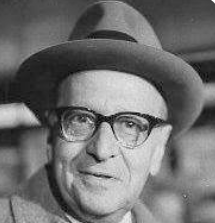
Death is too exact; it has all the reasons on its side. Mysterious for our instincts, it takes shape, to our reflection, limpid, without glamor, and without the false lures of the unknown. By dint of accumulating non-mysteries and monopolizing non-meanings, life inspires more dread than death: it is life which is the Great Unknown.
2 months 2 weeks ago
The disparagement of empirical evidence in favor of a metaphysical world of illusion has its origin in the conflict between the emancipated individual of bourgeois society and his fate within that society.
▼
Source
source
p. 138.

2 months 2 weeks ago
The real field of knowledge is not the given fact about things as they are, but the critical evaluation of them as a prelude to passing beyond their given form. Knowledge deals with appearances in order to get beyond them. .... The concept of reality has thus turned into the concept of possibility. The real is not yet 'actual,' but is at first only the possibility of an actual.
▼
Source
source
P. 145
1 month 3 days ago
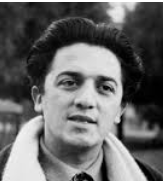
The public has lost the habit of movie-going because the cinema no longer possesses the charm, the hypnotic charisma, the authority it once commanded. The image it once held for us all - that of a dream we dreamt with our eyes open - has disappeared. Is it still possible that one thousand people might group together in the dark and experience the dream that a single individual has directed?
▼
Source
source
"Decline of Cinema"
2 months 2 weeks ago
The more you live, the less useful it seems to have lived.
1 month 1 week ago
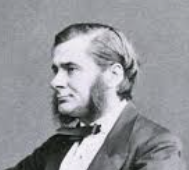
The question of questions for mankind-the problem which underlies all others, and is more deeply interesting than any other-is the ascertainment of the place which Man occupies in nature and of his relations to the universe of things.
▼
Source
source
Ch.2, p. 71
1 month 1 week ago
These immense cities lie basking on the beaches of the continent like whales that have taken to the land again. What do these great, sleek, well-fed creatures live on so sumptuously?
▼
Source
source
12. The Elusive Continent (on the six state capitals of Australia)
3 months 3 weeks ago
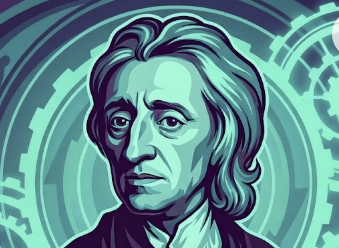
The three great things that govern mankind are reason, passion and superstition. The first governs a few, the two last share the bulk of mankind and possess them in their turns. But superstition most powerfully produces the greatest mischief.
▼
Source
source
Journal entry (16 May 1681), quoted in Maurice Cranston, John Locke: A Biography (1957; 1985), p. 200

2 months 4 days ago
Rational free spirits are the light brigade who go on ahead and reconnoitre the ground which the heavy brigade of the orthodox will eventually occupy.
▼
Source
source
H 36

2 months 1 week ago
The recognition of human wretchedness is difficult for whoever is rich and powerful because he is almost invincibly led to believe that he is something. It is equally difficult for the man in miserable circumstances because he is almost invincibly led to believe that the rich and powerful man is something.
▼
Source
source
p. 216
1 month 3 weeks ago
Money alone sets all the world in motion.
▼
Source
source
Maxim 656

1 month 3 weeks ago
The man is making preparations for a year, and does not know that he will die before evening. And I remembered God's second saying, "Learn what is not given to man." 'What dwells in man" I already knew. Now I learnt what is not given him. It is not given to man to know his own needs.
▼
Source
source
Ch. XI
3 months 3 weeks ago
The place of the father in the modern suburban family is a very small one - particularly if he plays golf, which he usually does.
▼
Source
source
Introduction to The New Generation, 1930
2 months 1 week ago
There is no reason whatever to assume that woman, in her climb to emancipation, has been, or will be, helped by the ballot.
1 month 2 weeks ago
In the greatest confusion there is still an open channel to the soul. It may be difficult to find because by midlife it is overgrown, and some of the wildest thickets that surround it grow out of what we describe as our education. But the channel is always there, and it is our business to keep it open, to have access to the deepest part of ourselves-to that part of us which is conscious. ... The independence of this consciousness, which has the strength to be immune to the noise of history and the distractions of our immediate surroundings, is what the life struggle is all about. The soul has to find and hold its ground against hostile forces, sometimes embodied in ideas which frequently deny its very existence, and which indeed often seem to be trying to annul it altogether.
▼
Source
source
pp. 16-17
1 month 3 weeks ago
Where conscious subjectivity is concerned, there is no distinction between the observation and the thing observed.
▼
Source
source
The Rediscovery of the Mind, p. 97, MIT Press (1992) ISBN 0-262-69154-X.

2 months 1 week ago
In a sense, all explanation must end in an ultimate arbitrariness.
▼
Source
source
Ch. 5: "The Romantic Reaction", p. 130
3 months 3 weeks ago
The sham cause in physical influence consists in rashly assuming that the commerce of substance and transitive forces is sufficiently knowable from their mere existence. Hence it is not so much a system as rather the neglect of all philosophical system as a superfluity in the argument. Freeing the concept from this defect, we shall have a species of commerce alone deserving to be called real, and from which the whole constituting the world merits being called real, and not ideal or imaginary.
3 months 3 weeks ago
Most kings and priests have been despotic, and all religions have been riddled with superstition.
▼
Source
source
Chapter 6 (pp. 52-53)

2 months 6 days ago
Women are never supposed to have any occupation of sufficient importance not to be interrupted, except "suckling their fools "; and women themselves have accepted this, have written books to support it, and have trained themselves so as to consider whatever they do as not of such value to the world or to others, but that they can throw it up at the first "claim of social life." They have accustomed themselves to consider intellectual occupation as a merely selfish amusement, which it is their " duty " to give up for every trifler more selfish than themselves.
2 months 2 weeks ago
History shows that the thinkers who mounted on the top of the ladder of questions, who set their foot on the last rung, that of the absurd, have bequeathed to posterity only an example of sterility.
2 months 1 week ago
It is not enough to accept a concept of order and live by it; that is cowardice, and such cowardice cannot result from freedom. Chaos must be faced. Real order must be preceded by a descent into chaos.
▼
Source
source
Chapter Three, The Romantic Outsider
2 months 3 weeks ago
To get to know a truth properly, one must polemicize it.
▼
Source
source
Quoted in The Viking Book of Aphorisms by Wystan Hugh Auden (1962) p. 323
2 months 2 weeks ago
Society is not a disease, it is a disaster. What a stupid miracle that one can live in it.
4 months 1 week ago
Anger is a weed; hate is the tree.
▼
Source
source
58 Alternate versions: Anger is a stem, hate is a trunk. Anger is the mote, hate is the beam.
4 days ago
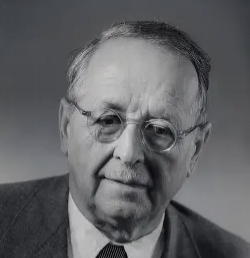
In these days the angel of topology and the devil of abstract algebra fight for the soul of each individual mathematical domain.
▼
Source
source
Weyl, Hermann. Invariants. Duke Math. J. 5 (1939), no. 3, 489--502. doi:10.1215/S0012-7094-39-00540-5. http://projecteuclid.org/euclid.dmj/1077491405.
1 month 3 weeks ago
Particularly in the case of all professional of press-images which testify of the real events. In making reality, even the most violent, emerge to the visible, it makes the real substance disappear. It is like the Myth of Eurydice : when Orpheus turns around to look at her, she vanishes and returns to hell. That is why, the more exponential the marketing of images is growing the more fantastically grows the indifference towards the real world. Finally, the real world becomes a useless function, a collection of phantom shapes and ghost events. We are not far from the silhouettes on the walls of the cave of Plato.
2 months 2 weeks ago
No system would have ever been framed if people had been simply interested in knowing what is true, whatever it may be. What produces systems is the interest in maintaining against all comers that some favourite or inherited idea of ours is sufficient and right.

3 months 3 weeks ago
Only a male intellect clouded by the sexual drive could call the stunted, narrow-shouldered, broad-hipped and short-legged sex the fair sex.
▼
Source
source
Vol. 2, Ch. 27, § 369
3 months 3 weeks ago
But these young scholars who invade our hills, Bold as the engineer who fells the wood, And travelling often in the cut he makes, Love not the flower they pluck, and know it not, And all their botany is Latin names.
▼
Source
source
Blight, st. 2

4 months 3 weeks ago
Now any dogma, based primarily on faith and emotionalism, is a dangerous weapon to use on others, since it is almost impossible to guarantee that the weapon will never be turned on the user.
2 months 6 days ago
By necrophilia is meant love for all that is violence and destruction; the desire to kill; the worship of force; attraction to death, to suicide, to sadism; the desire to transform the organic into the inorganic by means of "order." The necrophile, lacking the necessary qualities to create, in his impotence finds it easy to destroy because for him it serves only one quality: force.
5 days ago
Ego is a social institution with no physical reality. The ego is simply your symbol of yourself. Just as the word "water" is a noise that symbolizes a certain liquid without being it, so too the idea of ego symbolizes the role you play, who you are, but it is not the same as your living organism.
▼
Source
source
Buddhism : The Religion of No-Religion

3 months 3 weeks ago
Since labour is motion, time is its natural measure.
▼
Source
source
Notebook I, The Chapter on Money, p. 125.
1 month 1 week ago
Principles of Earth Democracy, #10: Earth Democracy connects people in circles of care, cooperation, and compassion instead of dividing them through competition and conflict, fear and hatred. In the face of a world of greed, inequality, and overconsumption, Earth Democracy globalizes compassion, justice, and sustainability.
▼
Source
source
(p. 11)
2 months 2 weeks ago
Judge not, that ye be not judged. For with what judgment ye judge, ye shall be judged: and with what measure ye mete, it shall be measured to you again.
▼
Source
source
(Matthew 7:1-2) (KJV)
CivilSimian.com created by AxiomaticPanic, CivilSimian, Kalokagathia