


3 months 1 day ago
If it is not true, it is a good story.
▼
Source
source
as quoted in A Book of Quotations, Proverbs and Household Words (1907) edited by Sir William Gurney Benham

3 months 3 weeks ago
But, in my state of mind, this appearance of superiority to illusion added to the effect which Bentham's doctrines produced on me, by heightening the impression of mental power, and the vista of improvement which he did open was sufficiently large and brilliant to light up my life, as well as to give a definite shape to my aspirations.
▼
Source
source
(p. 67)

2 months 1 week ago
Apart from the fact there is no normal standard of health, nobody has proved that man is necessarily cheerful by nature. And further, man, by the very fact of being man, of possessing consciousness, is, in comparison with the ass or the crab, a diseased animal. Consciousness is a disease.

1 month 2 weeks ago
Whenever you say anything good about East Germany, immediately somebody jumps up and says, "My God, you're a Stalinist..." I'm not defending everything about it, of course. But I laboured on the chapter that talks about the east. I fact-checked it; I had somebody else fact-check it. I knew that I was going to get a lot of flak for that. But in the beginning, East Germany did a better job. They just did.
▼
Source
source
From an interview with Alex Clark, as cited in "Nazism, slavery, empire: can countries learn from national evil?", The Guardian

4 months 3 weeks ago
These people who have fled inward for their freedom also have to live outwardly, become visible, let themselves be seen; they are united with mankind through countless ties of blood, residence, education, fatherland, chance, the importunity of others; they are likewise presupposed to harbour countless opinions simply because these are the ruling opinions of the time; every gesture which is not clearly a denial counts as agreement.
2 months 2 weeks ago
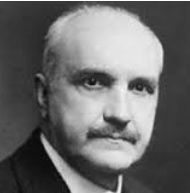
Everything ideal has a natural basis and everything natural an ideal development.
3 months 3 weeks ago
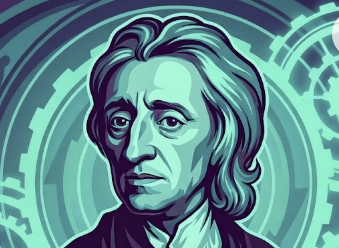
How much education may reconcile young people to pain and sufference, the examples of Sparta do sufficiently shew; and they who have once brought themselves not to think bodily pain the greatest of evils, or that which they ought to stand most in fear of, have made no small advance toward virtue.
▼
Source
source
Sec. 115

3 months 1 week ago
Authority and place demonstrate and try the tempers of men, by moving every passion and discovering every frailty.
▼
Source
source
Comparison of Demosthenes and Cicero 3 (Tr. Dryden and Clough)

2 months 3 weeks ago
When we speak of the commerce with our [American] colonies, fiction lags after truth, invention is unfruitful, and imagination cold and barren.

2 months 1 week ago
You've got the temperament of a scholar, and you live on your own and write books. You don't have anything to do with civilization. You've been in London a few days and you can't wait to get back home. But how about the people who can't write books -- people there's no outlet for in this civilization? What about your new men who don't know what to do?
▼
Source
source
p. 200


3 months 4 weeks ago
Grief and disappointment give rise to anger, anger to envy, envy to malice, and malice to grief again, till the whole circle be completed.
▼
Source
source
Part 1, Section 4

3 months 3 weeks ago
Compassion for animals is intimately connected with goodness of character, and it may be confidently asserted that he, who is cruel to living creatures, cannot be a good man. Moreover, this compassion manifestly flows from the same source whence arise the virtues of justice and loving-kindness towards men.
▼
Source
source
Part III, Ch. VIII, 7, p. 223
3 months 2 weeks ago
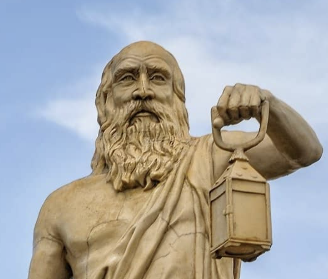
He lit a lamp in broad daylight and said, as he went about, "I am looking for a human."
▼
Source
source
Diogenes Laërtius, vi. 41. This line is frequently translated as "I am looking for an honest man."

3 months 3 weeks ago
Our age is retrospective. It builds the sepulchres of the fathers. It writes biographies, histories, and criticism. The foregoing generation beheld God and nature face to face; we, through their eyes. Why should not we also enjoy an original relation to the universe. Why should not we have a poetry and philosophy of insight and not of tradition, and a religion by revelation to us, and not the history of theirs?
▼
Source
source
Introduction

1 month 3 weeks ago
When we put our central nervous system outside us we returned to the primal nomadic state.

3 months 4 weeks ago
This I know, that between finite and infinite there is no comparison; so that the difference between God and the greatest and most excellent created thing is no less than the difference between God and the least created thing.
▼
Source
source
Letter to Hugo Boxel (October 1674) The Chief Works of Benedict de Spinoza (1891) Tr. R. H. M. Elwes, Vol. 2, Letter 58 (54).

4 months 3 days ago
This world, the whole of the planet called earth, is the common country of all who live and breathe upon it.

3 months 3 weeks ago
Human beings are not born identical. There are many different temperaments and constitutions; and within each psycho-physical class one can find people at very different stages of spiritual development. Forms of worship and spiritual discipline which may be valuable for one individual maybe useless or even positively harmful for another belonging to a different class and standing, within that class, at a lower or higher level of development.
1 month 3 weeks ago
Well, what does "good" mean anyway...? As Wittgenstein suggested, "good," like "game," has a family of meanings. Prominent among them is this one: "meets the criteria or standards of assessment or evaluation."
▼
Source
source
P. 152.
3 months 3 weeks ago
I needed to be made to feel that there was real, permanent happiness in tranquil contemplation. Wordsworth taught me this, not only without turning away from, but with a greatly increased interest in the common feelings and common destiny of human beings.
▼
Source
source
(p. 148)
4 months 2 weeks ago
Dogs, also, bark at what they do not know.

3 months 3 weeks ago
Surplus value is exactly equal to surplus labour; the increase of the one [is] exactly measured by the diminution of necessary labour.
▼
Source
source
Notebook III, The Chapter on Capital, p. 259.

3 months 3 weeks ago
Freedom of opinion can only exist when the government thinks itself secure...
▼
Source
source
A Fresh Look at Empiricism: 1927-42 (1996), p. 443

3 months 3 weeks ago
All human knowledge begins with intuitions, proceeds from thence to concepts, and ends with ideas.
▼
Source
source
B 730; Variant translation: All our knowledge begins with the senses, proceeds then to the understanding, and ends with reason. There is nothing higher than reason.
3 months 1 week ago
I think that when friendship and perception of kinship ruled everything, no one killed any creature, because people thought the other animals were related to them.
▼
Source
source
2, 22, 1
2 months 2 weeks ago
:...Vienna is the origin of so many schools of its own which were dominant in the 1920s. And one of the most fundamental and influential, in which we all were partially caught, was logical positivism. In fact, Mises' brother, Richard von Mises, became one of the leading figures. Now he and I all grew up in this Ernst Mach philosophy that ultimately everything must be rationally justified...
▼
Source
source
Friedrich Hayek, in 1985 interview, quoted in Alan Ebenstein, Hayek's Journey: The Mind of Friedrich Hayek (2003), Ch. 10. Epistemology, Psychology, and Methodology
2 weeks 4 days ago
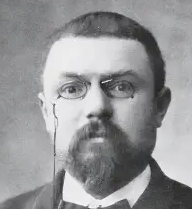
Behold... the only... rule we can follow: when a phenomenon appears... as the cause of another, we regard it as anterior. ...Therefore by cause... we define time; but...how do we recognize which is the cause and which the effect? We assume... the anterior fact, the antecedent, is the cause of the... consequent. It is then by time that we define cause. ...Shall we escape from this vicious circle?
1 month 2 weeks ago
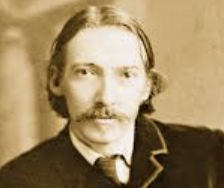
Decisive actions are often taken in a moment and without any conscious deliverance from the rational parts of man.
▼
Source
source
The Rajah's Diamond, Story of the Young Man in Holy Orders.
2 days ago
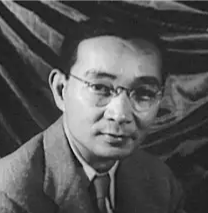
He who perceives death perceives a sense of the human comedy, and quickly becomes a poet.
▼
Source
source
pp. 39-40
2 months 6 days ago
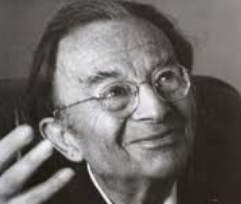
In spite of the universalistic spirit of the monotheistic Western religions and of the progressive political concepts that are expressed in the idea "that all men are created equal," love for mankind has not become a common experience. Love for mankind is looked upon as an achievement which, at best, follows love for an individual or as an abstract concept to be realized only in the future. But love for man cannot be separated from love for one individual. To love one person productively means to be related to his human core, to him as representing mankind. Love for one individual, in so far as it is divorced from love for man, can refer only to the superficial and to the accidental; of necessity it remains shallow.
▼
Source
source
Ch. 2
4 days ago
We have the right to conclude from this that syndicalist violence, perpetrated in the course of strikes by proletarians who desire the overthrow of the State, must not be confused with the acts of savagery which the superstition of the State suggested to the revolutionaries of 1793, when they had power in their hands and were able to oppress the conquered - following the principles which they had received from the Church and from the monarchy.
▼
Source
source
p. 108

4 months 1 week ago
To become like God is the ultimate end of all.

2 months 1 week ago
The most disheartening tendency common among readers is to tear out one sentence from a work, as a criterion of the writer's ideas or personality.

3 months 3 weeks ago
Use, do not abuse; as the wise man commands. I flee Epictetus and Petronius alike. Neither abstinence nor excess ever renders man happy.
▼
Source
source
"Cinquième discours: sur la nature de plaisir," Sept Discours en Vers sur l'Homme, 1738
4 months 3 days ago
As Christ had recommended peace during the whole of his life, mark with what anxiety he enforces it at the approach of his dissolution. Love one another, says he; as I have loved you, so love one another; and again, my peace I give unto you, my peace I leave you. Do you observe the legacy he leaves to those whom he loves? Is it a pompous retinue, a large estate, or empire? Nothing of this kind. What is it then? Peace he giveth, his peace he leaveth; peace, not only with our near connections, but with enemies and strangers!
1 month 3 days ago
Some days will be sublime. Others will be merely wonderful. But critically, there will be one particular texture ("what it feels like") of consciousness that will be missing from our lives; and that will be the texture of nastiness.
▼
Source
source
"Feeling Groovy, Forever", Institute for Ethics and Emerging Technologies, 14 Mar. 2012
1 month 2 weeks ago
The end of government is to make the governed and the governors happy. That government then is thebest, which in practice produces the greatest happiness to the greatest number; including those who govern, and those who obey.
▼
Source
source
Essay Fourth, The Principles of the Former Essays Applied to Government

4 months 2 weeks ago
When one cultivates to the utmost the principles of his nature, and exercises them on the principle of reciprocity, he is not far from the path. What you do not like when done to yourself, do not do to others.
2 months 3 weeks ago
Spirit: Do not be deceived by sophists and half philosophers; things do not appear to thee by means of any representatives. Of the thing that exists, and that can exist, thou art conscious immediately ; thou, thyself, art that of which thou art conscious. By a fundamental law of thy being thou art thus presented to thyself, and thrown out of thyself.
▼
Source
source
Jane Sinnett, trans 1846 p. 53
2 months 3 weeks ago
The End of the Life of Mankind on Earth is this,-that in this Life they may order all their relations with FREEDOM according to REASON.
▼
Source
source
p. 5

2 weeks 1 day ago
The English are a dumb people. They can do great acts, but not describe them.
▼
Source
source
Bk. III, ch. 5.
2 months 1 week ago
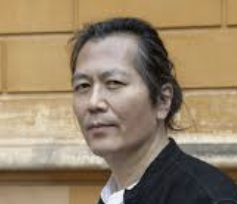
If things are deprived of memory, they become information or commodities. They are pushed into a time-free, ahistorical place.
1 month 3 weeks ago
Literate man, civilized man, tends to restrict and to separate functions, whereas tribal man has freely extended the form of his body to include the universe.
▼
Source
source
(p. 117)

3 months 3 weeks ago
I remembered the way out suggested by a great princess when told that the peasants had no bread: "Well, let them eat cake".
▼
Source
source
This passage contains a statement Qu'ils mangent de la brioche that has usually come to be attributed to Marie Antoinette; this was written in 1766, when Marie Antoinette was 10

2 weeks 5 days ago
After World War II, liberal rights were not something that were only deserved by white Europeans. ...There was a recognition that the black and brown peoples being held in colonial bondage could not consistently be held in that bondage, because liberalism was a universal doctrine. ...That's the other respect in which we can defend liberalism, a moral one.
▼
Source
source
10:30
2 months 1 week ago
"What I believe" is a process rather than a finality. Finalities are for gods and governments, not for the human intellect. While it may be true that Herbert Spencer's formulation of liberty is the most important on the subject, as a political basis of society, yet life is something more than formulas. In the battle for freedom, as Ibsen has so well pointed out, it is the struggle for, not so much the attainment of, liberty, that develops all that is strongest, sturdiest and finest in human character.
1 month 1 week ago
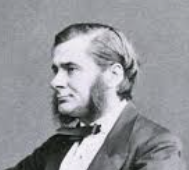
I cannot say that I am in the slightest degree impressed by your bigness, or your material resources, as such. Size is not grandeur, and territory does not make a nation. The great issue, about which hangs true sublimity, and the terror of overhanging fate, is what are you going to do with all these things?
▼
Source
source
"Address on University Education" (1876), delivered at the formal opening of Johns Hopkins University, Baltimore, Maryland, September 12, 1876. Huxley, American Addresses (1877), p. 125.
4 days ago
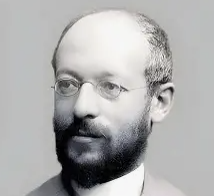
I understand the task of sociology to be description and determination of the historical-psychological origin of those forms in which interactions take place between human beings. The totality of these interactions, springing from the most diverse impulses, directed toward the most diverse objects, and aiming at the most diverse ends, constitutes "society."
▼
Source
source
p. 167

3 months 3 weeks ago
My thinking is first and last and always for the sake of my doing.
▼
Source
source
Sometimes paraphrased as "Thinking is for doing", perhaps originally by S.T. Fiske (1992) Ch. 22
CivilSimian.com created by AxiomaticPanic, CivilSimian, Kalokagathia