


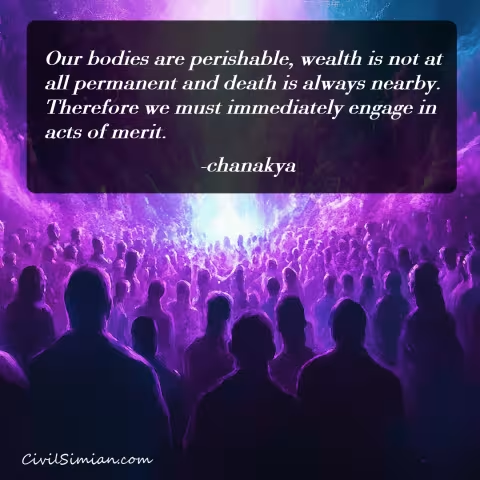

2 months 4 weeks ago
We have repeatedly observed that while any whole is evolving, there is always going on an evolution of the parts into which it divides itself; but we have not observed that this equally holds of the totality of things, which is made up of parts within parts from the greatest down to the smallest.
▼
Source
source
Pt. II, The Knowable; Ch. XV, The Law of Evolution (continued)
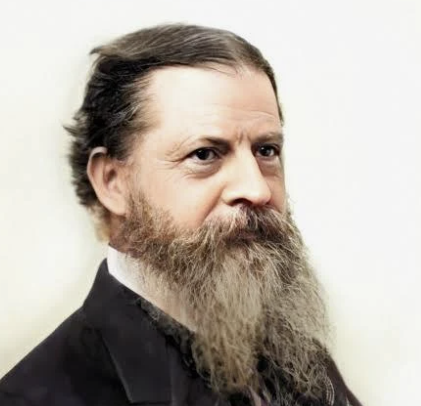
2 months 3 weeks ago
To say, therefore, that thought cannot happen in an instant, but requires a time, is but another way of saying that every thought must be interpreted in another, or that all thought is in signs.
▼
Source
source
Vol. V, par. 254

3 months 4 weeks ago
My thinking is first and last and always for the sake of my doing.
▼
Source
source
Sometimes paraphrased as "Thinking is for doing", perhaps originally by S.T. Fiske (1992) Ch. 22
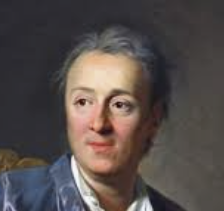
3 months 4 days ago
Impenetrable in their dissimulation, cruel in their vengeance, tenacious in their purposes, unscrupulous as to their methods, animated by profound and hidden hatred for the tyranny of man - it is as though there exists among them an ever-present conspiracy toward domination, a sort of alliance like that subsisting among the priests of every country.
▼
Source
source
"On Women" (1772), as translated in Selected Writings (1966) edited by Lester G. Crocker
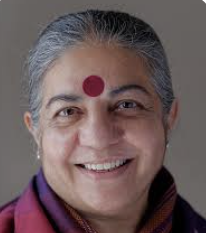
1 month 1 week ago
The system of technological production that we have today has been justified in terms of creating more goods to feed more people and to meet more needs. But it actually destroys more of the resources that we need in order to meet those multiple needs. If we shift to an ecological perception, a diversity perception, we realize that some of the instruments of which we are very proud are actually extremely primitive for dealing with nature. To me that is the great lesson of ecological awareness at the turn of the millennium.
▼
Source
source
1998
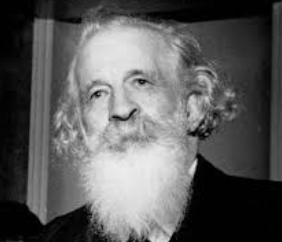
2 months 3 weeks ago
Man is a creation of desire, not a creation of need.
▼
Source
source
The Psychoanalysis of Fire, ch. 2, "Fire and Reverie"
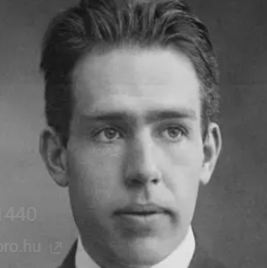
1 week ago
Some subjects are so serious that one can only joke about them.
▼
Source
source
As quoted in The Genius of Science: A Portrait Gallery (2000) by Abraham Pais, p. 24


5 months 2 days ago
The modern scientific counterpart to belief in God is the belief in the universe as an organism: this disgusts me. This is to make what is quite rare and extremely derivative, the organic, which we perceive only on the surface of the earth, into something essential, universal, and eternal! This is still an anthropomorphizing of nature!
4 months 2 weeks ago
Who is not tempted by attractive and wide-awake children to join their sports, and crawl on all fours with them, and talk baby talk with them?
▼
Source
source
Book II, ch. 24, 18

4 months 1 week ago
T is so much to be a king, that he only is so by being so. The strange lustre that surrounds him conceals and shrouds him from us; our sight is there broken and dissipated, being stopped and filled by the prevailing light.
▼
Source
source
Book III, Ch. 7. Of the Inconveniences of Greatness
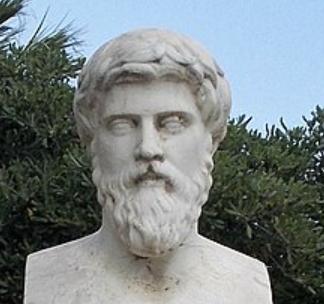
3 months 2 weeks ago
Scilurus on his death-bed, being about to leave four-score sons surviving, offered a bundle of darts to each of them, and bade them break them. When all refused, drawing out one by one, he easily broke them,-thus teaching them that if they held together, they would continue strong; but if they fell out and were divided, they would become weak.
▼
Source
source
31 Scilurus

2 weeks 6 days ago
It has ever been held the highest wisdom for a man not merely to submit to Necessity,-Necessity will make him submit,-but to know and believe well that the stern thing which Necessity had ordered was the wisest, the best, the thing wanted there. To cease his frantic pretension of scanning this great God's-World in his small fraction of a brain; to know that it had verily, though deep beyond his soundings, a Just Law, that the soul of it was Good;-that his part in it was to conform to the Law of the Whole, and in devout silence follow that; not questioning it, obeying it as unquestionable.
2 months 2 weeks ago
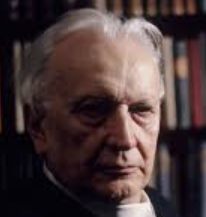
The possibility of peace, on whose behalf many are working, might perhaps become actual because the technical advances in offensive weapons make the prospect of a European war so disastrous, and because, if the nations were at grips again, even the victorious aggressor would be ruined. But there still remains open the possibility of a new war which, more dreadful than any that have preceded it would make an end of contemporary Europeans.
2 months 4 weeks ago
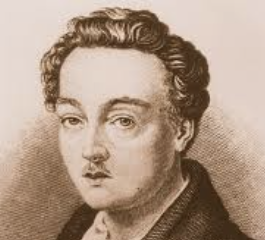
People like us are unhappy in this world and in the next, I guess if we made it to heaven, we'd have to help make it thunder.
▼
Source
source
Scene VI.
2 months 2 weeks ago
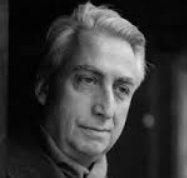
The petit-bourgeois is a man unable to imagine the Other. If he comes face to face with him, he blinds himself, ignores and denies him, or else transforms him into himself.
▼
Source
source
p. 151

3 months 2 weeks ago
I will now tell you who are assembled here the wise sayings of Mazda, the praises of Ahura and the hymns of the Good Spirit, the sublime truth which I see rising out of these flames. You shall therefore harken to the Soul of Nature. Contemplate the beams of fire with a most pious mind. Every one, both men and women, ought to-day to choose his creed. Ye offspring of renowned ancestors, awake to agree with us. So preached Zoroaster, the proph of the Parsis, in one of his earliest sermons nearly 3,500 years ago.
▼
Source
source
p. 15 (Introduction), S. A. Kapadia

3 months 3 weeks ago
Homosexuality appears as one of the forms of sexuality when it was transposed from the practice of sodomy onto a kind of interior androgyny, a hermaphroditism of the soul. The sodomite had been a temporary aberration; the homosexual was now a species.
▼
Source
source
Vol I: La volonté de savoir

2 weeks ago
We give voice to our trivial cares, but suffer enormities in silence.
▼
Source
source
line 607; (Phaedra)
2 months 2 weeks ago
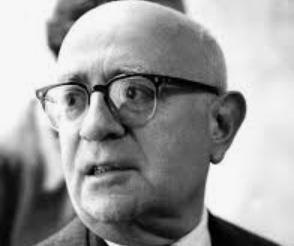
Elements of empirical language are manipulated in their rigidity, as if they were elements of a true and revealed language. The empirical usability of the sacred ceremonial words makes both the speaker and listener believe in their corporeal presence.
▼
Source
source
p. 7
2 weeks 1 day ago
With competition is connected less the intention to do the thing best than the intention to make it as profitable, as productive, as possible. Hence people study to get into the civil service (study in order to get a well-paid job), study cringing and flattery, routine and 'acquaintance with business', work 'for appearance'. Hence, while it is apparently a matter of doing 'good service', in truth only a 'good business' and earning of money are looked out for. The job is done only ostensibly for the job's sake, but in fact on account of the gain that it yields. One would indeed prefer not to be censor, but one wants to be - advanced; one would like to judge, administer, etc., according to his best convictions, but one is afraid of transfer or even dismissal; one must, above all things - live.
▼
Source
source
Cambridge 1995, p. 237
2 weeks ago
One crime has to be concealed by another.
3 months 2 weeks ago
"These Macedonians," said he, "are a rude and clownish people, that call a spade a spade."
▼
Source
source
39 Philip

2 months 3 weeks ago
Everyone who has left houses or brothers or sisters or father or mother or children or fields for my sake will receive a hundred times as much and will inherit eternal life.
▼
Source
source
19:29
2 months 2 weeks ago
The important thing is not the planning of an Index Verborum Prohibitorum of current noble nouns, but rather the examination of their linguistic function.
▼
Source
source
p. 6
2 months 2 days ago
The close-up of a face is as obscene as a sexual organ seen from up close. It is a sexual organ. The promiscuity of the detail, the zoom-in, takes on a sexual value.
▼
Source
source
(p. 43)

2 months 2 weeks ago
We must wish either for that which actually exists or for that which cannot in any way exist - or, still better, for both. That which is and that which cannot be are both outside the realm of becoming.
▼
Source
source
p. 154

2 months 3 weeks ago
My soul, my soul, where are you? Do you hear me? I speak, I call you-are you there? I have returned, here I am again. I have shaken the dust of all the lands from my feet, and I have come to you again, I am with you. After long years of long wandering, I have come to you anew. Shall I tell you everything I have seen, experienced, and drunk in? Or do you not want to hear about all the noise of life and the world? But one thing you must know, the one thing I have learned is that one must live this life. This life is the way, the long sought-after way to the unfathomable, which we call "divine". There is no other way. All other ways are false paths.
▼
Source
source
Book 2, 12. Nov. 1913
2 months 1 week ago
If we want a theory explaining how people play billiards, we do not want a theory of perfect billiard balls; we want a theory of what heuristics a human billiard player uses in order to plan and make a (often not quite accurate) shot. These heuristics and actions do not involve solving the differential equations of the billiard board; they involve rules of thumb and it is these practice guides to action we are trying to discover in order to explain the behavior.
▼
Source
source
An Empirically Based Microeconomics (1997), p. 173
3 weeks 2 days ago
Mathematics have a triple aim. They must furnish an instrument for the study of nature. But that is not all: they have a philosophic aim and, I dare maintain, an esthetic aim. They must aid the philosopher to fathom the notions of number, of space, of time. And above all, their adepts find therein delights analogous to those given by painting and music. They admire the delicate harmony of numbers and forms; they marvel when a new discovery opens to them an unexpected perspective; and has not the joy they thus feel the esthetic character, even though the senses take no part therein? Only a privileged few are called to enjoy it fully, it is true, but is not this the case for all the noblest arts?This is why I do not hesitate to say that mathematics deserve to be cultivated for their own sake, and the theories inapplicable to physics as well as the others. Even if the physical aim and the esthetic aim were not united, we ought not to sacrifice either.
▼
Source
source
Ch. 5: Analysis and Physics
2 months 3 weeks ago
Historians of ideas, however scrupulous and minute they may feel it necessary to be, cannot avoid perceiving their material in terms of some kind of pattern.

4 months 2 days ago
The universal and lasting establishment of peace constitutes not merely a part, but the whole final purpose and end of the science of right as viewed within the limits of reason.
1 week ago
I go into the Upanishads to ask questions.
▼
Source
source
As quoted in God Is Not One : The Eight Rival Religions That Run the World and Why Their Differences Matter (2010), by Stephen Prothero, Ch, 4 : Hinduism : The Way of Devotion, p. 144
2 months 3 weeks ago
This heaven will pass away, and the one above it will pass away. The dead are not alive, and the living will not die. In the days when you consumed what is dead, you made it what is alive. When you come to dwell in the light, what will you do? On the day when you were one you became two. But when you become two, what will you do?
4 months 1 day ago
Wealth is like sea-water; the more we drink, the thirstier we become.
▼
Source
source
E. Payne, trans. (1974) Vol. 1, p. 347

4 months 1 day ago
Most shocking of all is alledging the Sacred Scriptures to favour this wicked practice. One would have thought none but infidel cavillers would endeavour to make them appear contrary to the plain dictates of natural light, and Conscience, in a matter of common Justice and Humanity; which they cannot be. Such worthy men, as referred to before, judged otherways; Mr. Baxter declared, the Slave-Traders should be called Devils, rather than Christians; and that it is a heinous crime to buy them.

4 months 2 weeks ago
A thing therefore never returns to nothing.
▼
Source
source
Book I, line 248 (tr. Munro)

2 months 1 week ago
The cravings of love and sex are met with absolute ignorance by the majority of parents, who consider it as something indecent and improper, something disgraceful, almost criminal, to be suppressed and fought like some terrible disease. The love and tender feelings in the young plant are turned into vulgarity and coarseness through the stupidity of those surrounding it, so that everything fine and beautiful is either crushed altogether or hidden in the innermost depths, as a great sin, that dares not face the light.

4 months 3 weeks ago
The fall of Empire, gentlemen, is a massive thing, however, and not easily fought. It is dictated by a rising bureaucracy, a receding initiative, a freezing of caste, a damming of curiosity, a hundred other factors. It has been going on, as I have said, for centuries, and it is too majestic and massive a movement to stop.
2 months 4 weeks ago
The Age of Empty Freedom ... does not know that man must first through labour, industry, and art, learn how to know; but it has a certain fixed standard for all conceptions, and an established Common Sense of Mankind always ready and at hand, innate within itself and there present without trouble on its part;-and those conceptions and this Common Sense are to it the measure of the efficient and the real. It has this great advantage over the Age of Science, that it knows all things without having learned anything; and can pass judgment upon whatever comes before it at once and without hesitation,-without needing any preliminary evidence:-'That which I do not immediately comprehend by the conceptions which dwell within me, is nothing,'-says Empty Freedom.
▼
Source
source
p. 20
2 weeks 1 day ago
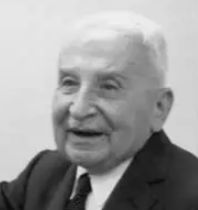
The capitalist system of production is an economic democracy in which every penny gives a right to vote. The consumers are the sovereign people. The capitalists, the entrepreneurs, and the farmers are the people's mandatories. If they do not obey, if they fail to produce, at the lowest possible cost, what the consumers are asking for, they lose their office. Their task is service to the consumer. Profit and loss are the instruments by means of which the consumers keep a tight rein on all business activities.
▼
Source
source
Chapter I: Profit Management, § 1: The Operation of The Market Mechanism

4 months ago
When I found myself regarded as respectable, I began to wonder what sins I had committed. I must be very wicked, I thought. I began to engage in the most uncomfortable introspection. Interview with Irwin Ross, September 1957;If there were a God, I think it very unlikely that he would have such an uneasy vanity as to be offended by those who doubt his existence.
▼
Source
source
Collected Papers of Bertrand Russell (2005), p. 385
5 months 2 days ago
Being silent is something one completely unlearns if, like him, one has been for so long a solitary mole.

2 weeks 6 days ago
Instruction, that mysterious communing of Wisdom with Ignorance, is no longer an indefinable tentative process, requiring a study of individual aptitudes, and a perpetual variation of means and methods, to attain the same end; but a secure, universal, straightforward business, to be conducted in the gross, by proper mechanism.
2 months 1 week ago
In an information-rich world, the wealth of information means a dearth of something else: a scarcity of whatever it is that information consumes. What information consumes is rather obvious: it consumes the attention of its recipients. Hence a wealth of information creates a poverty of attention and a need to allocate that attention efficiently among the overabundance of information sources that might consume it.
▼
Source
source
Simon, H. A. (1971) "Designing Organizations for an Information-Rich World" in: Martin Greenberger, Computers, Communication, and the Public Interest, Baltimore. MD: The Johns Hopkins Press. pp. 40-41.

4 months ago
Our inventions are wont to be pretty toys, which distract our attention from serious things. They are but improved means to an unimproved end, an end which it was already but too easy to arrive at.
▼
Source
source
pp. 60-61
2 weeks ago
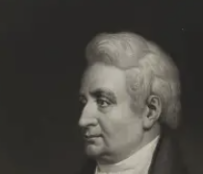
He not only overflowed with learning but stood in the slops.
▼
Source
source
On Macaulay; reported in Hesketh Pearson, The Smith of Smiths (London: Hamish Hamilton, 1934), p. 180
CivilSimian.com created by AxiomaticPanic, CivilSimian, Kalokagathia